
At WiseGEEK, we're committed to delivering accurate, trustworthy information. Our expert-authored content is rigorously fact-checked and sourced from credible authorities. Discover how we uphold the highest standards in providing you with reliable knowledge.
What Is the Interaction between Tramadol and Vicodin®?
Taking tramadol and Vicodin® together can cause many different side effects, but the combination is known for increasing the risk of patients having seizures. In addition, taking these substances together can increase the risk of breathing problems such as respiratory depression. These interactions mean that it is generally not advised to take tramadol and Vicodin® together, but reduced doses of tramadol can sometimes be suggested by doctors if the drug is being taken in conjunction with Vicodin®.
Tramadol works in a very similar way to opiates, but is entirely synthetic. Generally, it is prescribed for moderate to severe pain, usually at a dosage of between 50 and 100 milligrams (mg). These should be taken in the same way as over-the-counter painkillers, at every four to six hours, and patients should take a maximum of 400 mg per day. The more common side effects of tramadol include nausea, dizziness, headache and constipation. Less common side effects, such as visual disturbances, vertigo and rash, can also occur. Tramadol taken without any other medicines can cause seizures in some patients.

Vicodin® is in many ways similar to tramadol. The key difference between the two is that Vicodin® contains hydrocodone, which is an opiate painkiller. For this reason, there is a risk of addiction with Vicodin®, and taking it isn’t advised for anybody with a history of alcohol or drug problems. Vicodin® also contains acetaminophen, an ordinary pain reliever. Taking more than 4,000 mg of acetaminophen per day can cause possibly fatal liver problems, so it is vital that patients take this drug only as prescribed by their doctor. Common side effects that can occur when taking Vicodin® include mood changes, dizziness, drowsiness and constipation. More serious side effects include blurred vision, fear, interrupted breathing and anxiety.

Taking tramadol and Vicodin® together would ordinarily be unnecessary, as the usage and effects of the two drugs are relatively similar. The most important differences are that tramadol can cause seizures, and Vicodin® can interrupt breathing. Taking tramadol and Vicodin® together can make both of these serious effects more likely to occur, and this is the main reason it is unlikely that a medical professional would advise a patient to take them together. In previously or currently opiate addicted patients, tramadol is not advised in most cases.
AS FEATURED ON:
AS FEATURED ON:









-
![Taking tramadol and vicodin together may result in breathing difficulties.]() By: AntonioguillemTaking tramadol and vicodin together may result in breathing difficulties.
By: AntonioguillemTaking tramadol and vicodin together may result in breathing difficulties. -
![Doctors should carefully look at a patient's other medications before prescribing drugs that commonly interact.]() By: emiliauDoctors should carefully look at a patient's other medications before prescribing drugs that commonly interact.
By: emiliauDoctors should carefully look at a patient's other medications before prescribing drugs that commonly interact. -
![One side of effect of tramadol and Vicodin is constipation.]() By: Ljupco SmokovskiOne side of effect of tramadol and Vicodin is constipation.
By: Ljupco SmokovskiOne side of effect of tramadol and Vicodin is constipation. -
![The potentially serious side effects of Vicodin® include blurred vision and anxiety.]() By: bellemediaThe potentially serious side effects of Vicodin® include blurred vision and anxiety.
By: bellemediaThe potentially serious side effects of Vicodin® include blurred vision and anxiety. -
![Although commonly used to treat pain, some side effects of taking Tramadol can be beneficial in treating premature ejaculation.]() By: AmbroseAlthough commonly used to treat pain, some side effects of taking Tramadol can be beneficial in treating premature ejaculation.
By: AmbroseAlthough commonly used to treat pain, some side effects of taking Tramadol can be beneficial in treating premature ejaculation. -
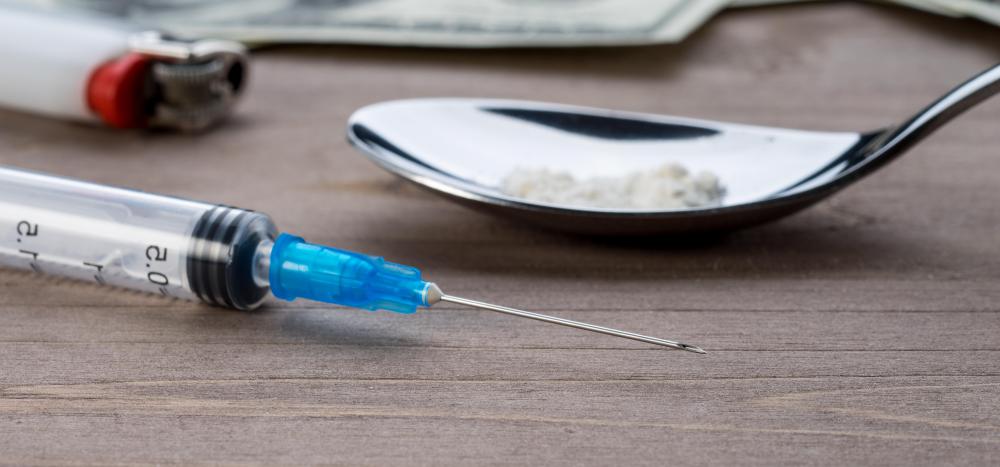
![People who abuse hydrocodone often crush, "cook," and then inject the substance.]() By: gawriloffPeople who abuse hydrocodone often crush, "cook," and then inject the substance.
By: gawriloffPeople who abuse hydrocodone often crush, "cook," and then inject the substance.


Discussion Comments
I accidentally mixed tramadol with Vicodin once. I had the worst nightmare of my life as a result, as well as nausea and dizziness. I had to have a family member take me to the hospital, it felt like I was poisoned.
I don't think doctors prescribe tramadol and Vicodin together ever. I've used both in the past, due to hernia pain, and they were never prescribed together. I was first given tramadol, which unfortunately did nothing for me. Then, I was given a different medication, which helped a little but not enough. Eventually, I was given Vicodin.
It's true that tramadol compared to Vicodin is a mild pain killer. So the effects of Vicodin will always overtake the effects of tramadol. But there can be sever side effects of combining them. So it's just a bad idea.
@pollick-- There are actually stronger pain killers than Vicodin. But they are used in extreme cases, for a very short duration, usually after surgery.
I agree that there is no point in mixing Vicodin and tramadol. Even though they work differently, they're both pain killers. Vicodin is just stronger than tramadol. So if tramadol is working, then Vicodin is not necessary. And if it's necessary to take Vicodin, then the tramadol should be stopped.
I don't know if doctors recommend one of these medications to help with withdrawal symptoms of the other however. This is not uncommon with opiates. If someone is addicted to an opiate and having a very hard time quitting, his or her doctor may prescribe a low dose of another opiate just to help that person get through withdrawals. So it's possible that tramadol could be used for Vicodin withdrawal but I'm not one hundred percent sure.
As strong as Vicodin is on its own, I can't imagine why anyone would even want to mix it with Tramadol. I can see where someone might want to avoid some of the addictive qualities of Vicodin, but the idea would be to stop taking Vicodin altogether. I've taken other medications that contained hydrocodone, and I have to say a person would have to be in serious pain to want something even stronger.
Post your comments