
At Sports&Hobbies, we're committed to delivering accurate, trustworthy information. Our expert-authored content is rigorously fact-checked and sourced from credible authorities. Discover how we uphold the highest standards in providing you with reliable knowledge.
What is the Infield Fly Rule?
 Malcolm Tatum
Malcolm Tatum
Malcolm Tatum
The infield fly rule in baseball and softball prevents a player from intentionally dropping or not catching a pop fly in certain situations in order to get two or three outs instead of one. This rule applies only when there is no more than one out, and only with runners on first and second, or all three bases. When a batter hits a pop fly in fair territory on the infield in one of these situations, the home-plate umpire immediately rules it an infield fly, the batter is out, and the runners can go back to their base or try to get to the next one. If this rule did not exist, a fielder could intentionally drop the ball or not catch it, then easily get more than one out by tagging out or forcing out the runners before they could reach the next base.
Why the Rule Exists
In baseball and softball, when a fly ball is caught in the air, any runners must return to their base before trying to advance. If a batted ball is not caught in the air, a runner must get to the next base before being tagged out or forced out, unless there was not a runner on the preceding base. When the preceding base is not occupied, then the runner does not have to advance. These situations are why the infield fly rule is necessary, and why it applies only under certain conditions.

Without the rule, the runners would not know whether to go back to the base or run to the next base until they saw whether the ball was caught. By that time, they probably would not have enough time to get to the base safely. Also, the fielders would be rewarded for dropping the ball or deceiving the runners into thinking it was caught, because they could more easily turn a double play or even a triple play. In the late 1800s, during baseball's early years, fielders began doing this to turn plays, so the rule was created.
Where the Rule Applies
Despite its name, the infield fly rule sometimes applies when the ball is hit past the infield, because there is no predetermined area where the pop fly must be hit for an infield fly to be called, other than in fair territory. If, in the home-plate umpire's judgment, the an infielder could have caught the ball in fair territory — including in the outfield — with normal effort, it can be ruled an infield fly. So, for instance, if a shortstop could easily catch a pop fly in shallow left field, the umpire could call it an infield fly, even if an outfielder eventually catches the ball. Likewise, even if an outfielder runs in and catches a pop fly on the infield, it still can be ruled an infield fly.
Exceptions to the Rule
Not every ball that is hit into the air on the infield falls under the infield fly rule, even if the other criteria are met. A bunt — essentially, when the batter holds the bat out instead of swinging it at the ball — that is popped into the air is not an infield fly. Line drives also do not fall under this rule. In addition, the rule does not apply when the ball is hit into foul territory, unless the ball hits the ground and bounces or rolls into fair territory before passing first base or third base. If the fly ball hits the ground in fair territory and then bounces or rolls foul before passing a base, then it is merely a foul ball, and the batter is not out.
Situations That Don't Apply

There is no need for the infield fly rule when there are two outs, because there is no incentive for the fielder not to catch the ball — that would be the third out, ending the inning. The rule doesn't apply when there is only one runner on base, either, because the batter should be able to run to first base before the fielders could complete a double play after not catching the pop fly. It also does not apply when there are runners on first and third, because there is no runner on second base, so the runner on third is not forced to advance on a batted ball that is not caught in the air.
Malcolm Tatum
After many years in the teleconferencing industry, Michael decided to embrace his passion for trivia, research, and writing by becoming a full-time freelance writer. Since then, he has contributed articles to a variety of print and online publications, including Sports&Hobbies, and his work has also appeared in poetry collections, devotional anthologies, and several newspapers. Malcolm’s other interests include collecting vinyl records, minor league baseball, and cycling.
Learn more...
Malcolm Tatum
After many years in the teleconferencing industry, Michael decided to embrace his passion for trivia, research, and writing by becoming a full-time freelance writer. Since then, he has contributed articles to a variety of print and online publications, including Sports&Hobbies, and his work has also appeared in poetry collections, devotional anthologies, and several newspapers. Malcolm’s other interests include collecting vinyl records, minor league baseball, and cycling.
Learn more...AS FEATURED ON:
AS FEATURED ON:


-
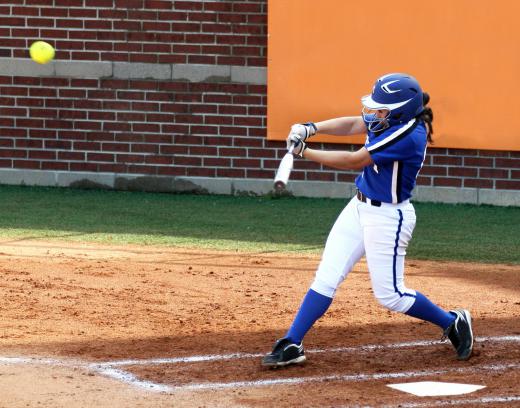
![The infield fly rule is used in softball to prevent a fielder from intentionally dropping a batted ball to get two or three outs instead of one.]() By: ActionpicsThe infield fly rule is used in softball to prevent a fielder from intentionally dropping a batted ball to get two or three outs instead of one.
By: ActionpicsThe infield fly rule is used in softball to prevent a fielder from intentionally dropping a batted ball to get two or three outs instead of one. -
![The infield fly rule is in effect regardless of whether the ball is caught.]() By: ASP IncThe infield fly rule is in effect regardless of whether the ball is caught.
By: ASP IncThe infield fly rule is in effect regardless of whether the ball is caught. -
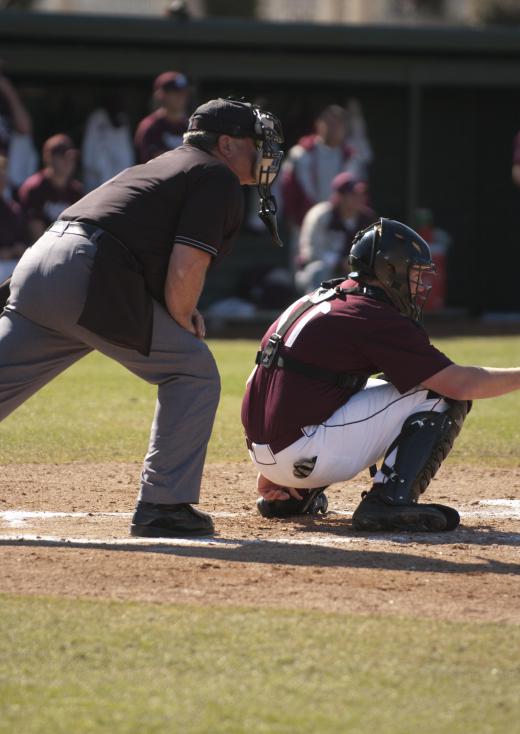
![The home plate umpire is responsible for calling the infield fly rule.]() By: AurumThe home plate umpire is responsible for calling the infield fly rule.
By: AurumThe home plate umpire is responsible for calling the infield fly rule. -
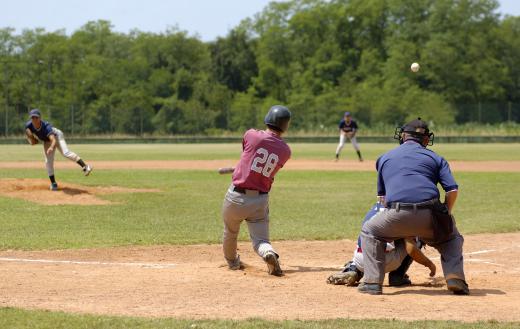
![The infield fly rule applies only under certain conditions.]() By: llandreaThe infield fly rule applies only under certain conditions.
By: llandreaThe infield fly rule applies only under certain conditions. -
![If the home-plate umpire calls an infield fly, the batter is out.]() By: ActionpicsIf the home-plate umpire calls an infield fly, the batter is out.
By: ActionpicsIf the home-plate umpire calls an infield fly, the batter is out.


Discussion Comments
@Anon270464: Whenever someone looks to make a change in the rules, the most extreme circumstances or situations expose the rule change to be flawed or validated. And we must look from all points of view, offensive and defensive and ridiculous.
For discussion, let's assume that all runners may advance on any fair ball. Is this a bad thing? Well yes, most definitely.
The situation: Men on first and second, one out. Batter hits an infield pop-up, really creams it, NASA thinks there might be a new satellite in orbit. On contact, the runners take off and start rounding the bases at full speed. The umpire calls, "Infield fly, the batter out". The runner on second scores and the runner on first ends up at third. The ball is caught by the second baseman near the pitching mound. Sounds good, eh? A runner scored on a badly hit ball that didn't make it past any base, it was just in fair territory, and a second runner advanced two bases to third. Not only did your new rule provide little incentive for the second baseman to catch the ball, since even if he didn't, the runners would advance anyway, but you just rewarded a really lousy hit after the pitcher threw a really good pitch to get the batter to pop-up! Why are you penalizing the pitcher for pitching really well?
A better hit ball to the outfield, where runners may advance after it is caught, at least gives some credit to the batter for hitting the ball a long way, but just to give carte-blanche to the runners and rape any defensive prowess is not a good idea.
It is a fundamental principle of baseball for the disposition of a batted ball be determined "fair", (hitting the ground, between the foul ball lines), or "out", (caught in flight, anywhere in playable territory), before any runners advance, and baseball would not be baseball without it. It is actually to the batters' advantage that baseball rules require the defense earn the "out" by catching fly balls. Only in infield fly rule situations an exception is made to assume a fly ball is caught, (for the disposition of the batter), so one side, (the defense), may not take unfair advantage from the other side, (base runners that are safely on their bases), by not catching a fly ball.
To simplify things, why not just eliminate the catch rule: Runners may advance any time the ball is hit fairly, whether it is caught in the air or not. It would change the game, make for more sacrifice runs, but that's not a bad thing.
Roger-dodger, your question has two possible answers; 1. An umpire who has “fair-play” in mind and will skirt the rules when he makes a mistake and 2. An umpire who follows the rules despite his errors. Your choice in this situation is to go with No. 1 (and I agree with you), but we both would be wrong if we follow the rules. And the only thing missing from No. 1's point of view is an appeal by the manager on the batter's side. But on appeal, an umpire should do whatever he thinks is right to “get things right”. It is up to the umpire to keep things fair for both sides.
If I were an umpire for Little League or Little Miss Softball, I would call time, (over the screams of the parents), and correct the play by myself. Just like you suggested, put the batter on first base and proceed.
But if I were an umpire for high school play, college or the pros, and the manager is not completely inept, the appeal will come swiftly and most likely in my face. So either way, the mistake will be corrected.
umpire calls infield fly inadvertently, with only runners on 2nd and 3rd, no outs. the ball falls between pitchers mound and 2nd base. all three infielders stand and watch it fall. batter starts to walk back to the dugout thinking he is out. runners stay on their bases. what call should be made.
i put the batter-runner on 1st and restarted play. --roger-dodger
@Anon149849: Take your situation one step at a time and it is very easy to get the call right. A good umpire will do this as it happens in real time and should have easily gotten this correct.
1. Bases are loaded, one out. Batter hits a high fly ball in front of the catcher. The ump should yell, "Infield fly, batter out". (If there is any doubt that the ball could be caught or touched in foul ground, the Ump yells, "Infield fly, batter out, if fair".) The batter is out and this is the second out of the inning.
2. The catcher trips, (oops), as the ball hits her, (Not his, but her, this is Girls youth softball?), leg in fair territory and rolls to the dugout, (fence). The ball is live and in play, touched in fair ground and no force plays are involved, the batter was called out on the pop up, so the runners don't have to run. No catch was made so all the runners do not have to tag their bases before advancing, if they don't want to, at the risk of being tagged out.
3. The girl on third scores, (smart girl). I'll assume the girl on second runs to third and the girl on first is a little slow going to second, and she is tagged out at second. That makes three outs and the end of the inning. One run scored before the third out was made, so it counts. Two runners are left on base. The inning is over and the pitcher and second baseman should be commended for their quick thinking in tagging out the runner from first.
@anon83167: You were beset by a really bad call! Let's look at the situation: two on second and third, two outs, pop up to the shortstop caught, the third out, end of inning. All the rest of your question is not necessary. Since the end of the inning occurred, it does not matter that the runner on third did not tag. It does not matter that short threw to the pitcher. Does not matter that the umpire called in his mind an infield fly. End of inning. End of story. After three outs, runners can't score, can't advance, but go to the dugout to get their gloves to go play defense.
But let's say that you got confused on the number of outs and there was only one out when this happened. A prerequisite of the IFR is that first base is occupied. Since first was open, the IFR was not an option. IFR needs a runner to be forced to run, to be called. If first base open, there's no IFR. For any fly ball, line drive or pop up that is caught, all runners must tag their base after the catch to advance, regardless of any halfway-to-the-next-base running rules. Some advice for next time: never play a game with that umpire again.
Bases are loaded, 1 out. Batter hits a high fly ball in front of the catcher- The catcher trips as the ball hits his leg in fair territory and rolls to the dugout. The runner on 3rd scores as the pitcher throws to 2nd where the runner from 1st is tagged out. What is the call? What is the outcome and why? Girls youth softball.
Fast-pitch softball with runners on second and third, none on first. The batter hit a pop fly and the ss caught it and threw it to the pitcher. After the ball was in the pitcher's hands the third base runner ran home but did not tag up. Ump did not say anything but the batter was out and it was the third out.
At the end of the game the ump said that the play was a IFR and that, because the runner was halfway home, she could score. I think our team got robbed! Poteau Oklahoma 10 under girls got robbed!
Jersey Joe, Thank you for using the Force to explain this - that should keep me from going to the Dark Side. TDS.
Runners at second and third, one out. Umpire calls infield fly as it is hit to the first basemen. Runner at third takes off when ball is hit and the runner scores and goes to the dugout. First basemen catches the infield fly and hands the ball to the pitcher. The pitcher tosses the ball over to third base and he tags the base for a double play. What is the rule for base running in this situation? Can the runner score without tagging up or does he score since he runs at his own risk?
Please include a graphic summary of the ncessary conditions for invoking the infield fly rule.
Infield fly rule for slow pitch softball. Pop-up between pitcher and catcher. Neither catches it, it spins back to the catcher in front of the plate, he steps on home and throws to third, double play. Appeal- should infield fly rule been called? Umpire said no he didn't think either was capable of catching the pop-up because they are slow and can't catch well. Question- Is it determined by the average player in that position or by the umps judgment of each one's ability?
Little league play.. bases are load with 1 out. Batter hits a soft flyball traveling up to about 8 feet in height. Pitcher is under short fly ball. Should umpires call it an infield fly?? how high up does the ball have to travel to be called an infield fly???
Anon25386--Major League Baseball (MLB) rules are designed to prevent trickery or deception, but do not protect a team or a player from ignorance of the rules. Review of the applicable rules:
With a runner on first base a FORCE is created when the batter-runner acquires the right to first base (MLB Rule 7.01). With only first base or first and third base occupied there is no advantage to be gained from letting a pop fly ball fall to the ground untouched therefore the IFR does not apply; however, a double FORCE is possible with first and second base occupied or first, second and third occupied the batting team needs protection from trickery by the defense, thus the need for the protection of the infield fly rule (IFR). Note: With first and third base, occupied the IFR does not apply (there is only a single FORCE possible) (MLB Rule 2 and Rule 6.05 (e)).
What protection does the IFR provide?
When the umpire declares IFR the batter-runner is out and that ends (repeat ends) the protection afforded by the IFR. What about protection for the base runners? Since the batter-runner is ruled out, the FORCE is relieved and the runners may (repeat may) advance at their JEOPARDY. What about when the fielder drops the ball on purpose. This was covered in a previous posting so read all these postings.-Jersey Joe
First and second 1 out. Batter pops up to shortstop. Umpire calls infield fly....runner on second cannot get back to second in time as shortstop makes the catch and throws to second for another out. Three outs. Is this a correct ruling?
Anon18474: When the IFR is invoked, the batter is out thus relieving any FORCE. The ball is dead as far as the batter is concerned, however, the ball is alive and in play for all runners who are then free to advance or return to a previously held base; however, they are in JEOPARDY and if tagged while off base are out. See comparison chart early in this posting for IFR details.
I understand that when the IFR is in effect runners are permitted to advance at their own risk, but do the runners have a free pass back to their previous base assuming the fly ball was caught?
"The batter has three strike zones: his own, the opposing pitcher's, and the umpire's. The umpire's zone is defined by the rule book, but it's also more importantly defined by the way the umpire works. A good umpire is consistent so you can learn his strike zone. The batter has a strike zone in which he considers the pitch the right one to hit. The pitchers have zones where they are most effective. Once you know the pitcher and his zone, you can get set for a particular pitch. ~ Ted Williams
Here’s No Fowl Tip. During a recent TV broadcast of a Major League baseball game (I neglected to note the date or the participants), I was slumbering in my recliner when I heard the announcer say that the plate umpire was hit by a foul tip. Jolted fully awake by his comment, I quickly checked the TV picture to ensure that the plate umpire and catcher had not exchanged positions. They had not. Therefore, I concluded that the announcer did not get the call right.
Why make a big deal over two little words, even at times, a hyphenated word at that?
As a Boys and Girls Club director of nearly 30 years, I can relate that youth baseball coaches and the kids themselves repeat what they hear on TV, many times unknowingly passing along misinformation.
Major League Baseball (MLB) Rules like the Commandments come in a set of ten. In addition, to ensure all who read MLB rules get “the proper word,” MLB Rule 2 Definitions of Terms serves that purpose: A FOUL TIP is a batted ball that goes sharp and direct from the bat to the catcher’s hands and is legally caught.
Here is the Gospel truth on the FOUL TIP:
--Despite the misleading term, a FOUL TIP is not a FOUL BALL.
--Any FOUL TIP is a strike and the ball is in play, base runners are in JEOPARDY.
--A FOUL TIP on the third strike is a strike out and the ball remains in play with runners in JEOPARDY.
--When the catcher fails to catch the ball, the potential FOUL TIP becomes an ordinary FOUL BALL.
SITUATION: On the “hit and run play,” the base runner times his departure from first base as the batter attempts to hit the ball to right field behind the runner, thus advancing the runner not only to second base, but to third base as well. When the batter tips the ball and the catcher catches it, it is a FOUL TIP and the runner is in JEOPARDY of being thrown out at second base. However, if the batter tips the ball, but the catcher fails to catch the ball, it is an ordinary FOUL BALL, a strike on the batter with the runner required to return to first base.
The Infield Fly Rule (IFR, 2.00) is related to the intentional dropping rule (6.05L). The following provides comparative items or actions under the Infield Fly Rule 2.00 and 6.05L.
ITEM or ACTION IFR / 6.05L Applies
Fair fly ball-------------------Yes / Yes
Foul ball-----------------------No / No
Line drive or attempted bunt----No / Yes
Less than two outs--------------Yes / Yes
Two outs------------------------No / No
Fly ball can be caught by infielder with ordinary effort—Yes / Yes
First base only occupied--------No / Yes
First and second bases occupied--Yes / Yes
First and third bases occupied—No / Yes
First, second, and third bases occupied------------------Yes / Yes
Umpire declares Infield Fly-----Yes / No**
Batter is out upon declaration of Infield Fly------Yes / No**
Batter is out upon declaration of intentional dropped fair fly ball
or line drive-------------------No / Yes**
Ball is alive, runners may advance at own risk, the same as on any fly ball-----Yes / No
Ball is dead; runners advance not permitted-----------No / Yes
Infielder intentionally drops any fair fly ball---------No** / Yes**
** The umpire may declare the batter-runner out on the intentional dropping of a fair fly ball or line drive (6.05L) on any play where at least first base is occupied (recap:1B; or 1&2B; or 1&3B; or 1,2&3B). When Infield Fly Rule criteria are met on the same play as for intentional dropped fair fly ball by an infielder, the IFR takes precedence. On any intentional dropping by an infielder, the ball is immediately dead (the batter-runner is out) runners stay put with no further play possible; however, when the IFR is applied it overrides the rule for intentionally dropped fair ball, (the batter-runner is out) but the ball remains “alive and in play” and runners may advance at their own risk. This is an important difference in applying the two rules: When applying the IFR the ball remains “alive and in play,” but under Rule 6.05L, for intentionally dropping a fair ball, the batter-runner is out, “the ball is dead” and no further play possible.
SITUATION: # 9: First base only occupied with one out. First baseman intentionally drops a fair fly ball. (IFR is not operative.)
RULING: Batter is declared out; ball is immediately dead; the runner remains on first base with no further play permitted.
SITUATION # 10: First and second bases occupied with one out (IFR operative). First baseman intentionally drops a fair fly ball.
RULING: Despite the intentional dropping of the ball, the IFR prevails. The umpire declares "Infield Fly," the batter-runner is out, the ball remains “alive and in play” and runners may advance at their own risk as on any play.
SITUATION: # 11: First and second bases occupied with one out. The second baseman (a) intentionally drops a line drive, recovers and throws to second base for a force out, the second baseman relays the ball to first base for an apparent double play or (b) the second baseman allows a fair fly ball to drop untouched, recovers and throws to second base, where the second baseman relays the ball to first base for an apparent double play.
RULING: Since the criteria for an IFR was not met because it was a line drive in (a) the umpire invokes Rule 6.05L, immediately declaring the batter-runner out; returning runners to first and second bases; the ball is dead with no further play possible. In (b) the IFR criteria was met, the batter is declared out on “Infield Fly,” the “ball is alive and in play,” Runners may advance at their own risk as on any play. JerseyJoe
Beam Me Up Scotty – but go easy with the Force! “May the Force be with you,” a popular phrase from Star Trek, implied that the power of the Force would accompany any person who was facing an imminent challenge. It is the nature of the task that baseball umpires face imminent challenges at every turn, nevertheless they are empowered by the baseball rules to deal with the Force and most important, when needed to remove the Force. What kind of Force challenges the umpire?
Any time a runner occupies first base, it presents an imminent challenge for the umpire.
When the batter hits an uncaught fair ball, he runs to first base. If a runner is all ready on first base, then a FORCE PLAY is created and the base runner loses his right to occupy that base and is forced to advance to second base. As additional base runners occupy bases, more FORCE PLAY possibilities arise.
As with Star Trek, baseball teams learned early on how to use the Force to their advantage. Baseball and its kin softball are unique within sport teams wherein the defensive team controls the ball and to some extent the tempo of play. For this reason, trickery and/or deception are most likely to be a venue of the team in the field. One nefarious deed by the team in the field involves the Force Play. There are two classes of FORCE PLAY – single and double.
A single force play is possible when only first base is occupied or runners occupy first and third bases.
A double force play is possible when runners occupy first and second bases or first, second and third bases.
Because the force play emanates from the batter, most acts by infielders involve intentionally dropping fair fly balls or line drives or allowing fair pop fly balls to fall untouched.
An imminent challenge that sometimes confuses umpires are the rules on intentionally dropping a fair fly ball or line drive (Rule 6.05L) and Infield Fly Rule (IFR) (Rule 2—Infield Fly, 6.05(e) & (L)
While these two acts are related, the rulings (or outcome) are vastly different.
Intentionally dropping a batted fair fly ball or line drive occurs with less than two outs; it may involve a single or double force play; upon the umpires call, the batter is out, the ball is “dead;” runners cannot advance and must return to their bases; and no further play is possible.
The IFR is also operative with less than two outs; however, the similarities with dropping the fair fly ball ends there, because the IFR requires a double force play; upon the umpire’s call of “Infield Fly,” the batter is out and the Force is removed. Because the force play was removed with the umpires call of “Infield Fly,” runners are not forced to advance, but may advance at their own risk as the ball remains in play.
Umpires should always “think ahead of the play” as his or her actions may be contingent upon how the infielders react to the situation. When conditions or criteria are met for the IFR (that is, less than two outs, and a double force play with a fair ball pop fly) but instead of letting the batted fair ball land untouched, the fielder elects to intentionally drop the batted ball. In this case, the IFR takes precedence, and the umpire declares “Infield Fly.” With the force play removed, the ball remains alive and in play. Runners may advance at their own risk.
Rationale for allowing the ball to remain alive and be in play on the IFR.
When an infielder intentionally drops a pop fair fly ball or line drive, especially the latter there is little time for runners to react or for the umpire to respond. In common-sense terms, the rule operates this way: had the infielder caught the ball it would be a putout, therefore, by calling the batter out – things are even -- and runners are protected by freezing all subsequent actions. The ball is “dead” and we begin again with a new batter.
Under the IFR there is more time for the runners and umpires to react; upon call of “Infield Fly,” the batter is out thus relieving the force, but the ball remains alive and in play. Runners may advance at their own risk.
The Imminent Challenge
There is no emotion; there is peace.
There is no ignorance; there is knowledge.
There is no passion; there is serenity.
There is no chaos; there is harmony.
There is no death; there is the Force.
-The Jedi Code Jersey Joe
Anon15059: See Situation #1 below. Jersey Joe
What happens if the the ball is popped up, the ump calls "Infield fly rule", the 3rd baseman allows the ball to fall to the ground in front of him (between 3rd base and home), then the ball rolls foul? Is the batter out, or is it a foul ball? Or what? (This really happened this weekend in a game my son was playing in and caused a big discussion.)
Strike Zone Elements
The baseball strike zone is composed of two elements. The first is the same for all batters with the second subject to the batters stance and physical features as spelled out in MLB Strike Zone.
MLB Rules define home plate as a 12-inch square with two of the corners filled in so that the leading edge is 17 inches wide, two edges are 8 1/2 inches and two edges are 12 inches (a pentagon if you will). Although the strike zone displayed on TV screens is one dimensional, the element is actually a rectangle and has depth with these measurements in inches, 17 x 8 1/2 x 17 x 8 ½. This element provides the pitcher with two front and two rear corners to deliver a strike. Jersey Joe
Consistency is a mark of a good plate umpire. Even if you are just getting started as an umpire, the batters will come to rely on your consistent decisions.
Here’s a technique taught to me in the late 1950s by Barney Finn a long-time umpire from North New Jersey.
With each delivery by the pitcher:
--You know definitely it is a BALL.
--You know definitely it is a STRIKE.
--You are unsure what to call.
To achieve consistency, one need only concentrate on the unsure option. Please be aware by using this system, you are not guessing. When you are unsure:
-- Call a BALL on high and low pitches. (Batter’s edge)
-- Call a STRIKE on pitches at or near the corners (pitcher’s edge)
On a 3-0 count be liberal in calling the strike. (Pitcher’s edge)
On a 3-1 count make the pitcher “bow his neck.” (Batter’s edge)
Baseball, A Square Deal -- Don't Bet On It
A recent sports trivia item caught my attention. The item said that the baseball home plate is 17 inches wide. This got me to thinking, so I decided to do a little checking. Major League Baseball (MLB) Rules define home plate as a 12-inch square with two of the corners filled in so that the leading edge is 17 inches wide, two edges are 8 1/2 inches and two edges are 12 inches (a pentagon if you will).
To verify the width of home plate, I calculated: 12 inches x 12 inches = 144 plus 144 = 288 inches. The square root revealed the width of home plate as 16.970562 inches, not 17 inches. The rule writers need to be more precise.
Flushed with my newly found success, I decided to examine a frequent comment made by baseball broadcasters. With a runner on third base they often state, "The winning or tying run, as the case may be, is just 90-feet away." Not so, but this time the rule writers get a pass and we must examine the rules more closely.
MLB Rules say, "The infield shall be a 90-foot square. And, it is, except for the placement of second base. Let's examine the rules further.
The 90-foot infield measurement is taken from the back or rear point of home plate to the back or rear of third base (and first base for that matter). Third base is a 15-inch square (as are 1st and 2nd bases) plus the 12-inch edge on home plate (remember the basic 12-inch square), so one must deduct 27 inches (15 inches for third base + 12 inches for home plate) from the 90-foot measurement to determine how far third base is from the nearer edge of the base toward home plate’s nearer edge: And, we have the true distance the runner must travel from third base to home plate is 87 feet, 9 inches.
First and third bases are placed within the 90-foot measurement; however, second base is positioned so that the center of the base is over the point where the 90-foot measurements from first and third bases join. So the distance the runner travels from first base to second base and second base to third base is 88 feet,1 1/2 inches (90-feet minus 22.5 inches --15 inches for first base (and third base) + 7.5 inches for second base).
To go the distance on this bit, MLB rules list the distance from the pitcher's plate to the rear of home base as 60 feet, 6 inches; however, 16.970562 inches must be deducted to find true distance from the pitcher's plate to the leading edge of home plate. And, that distance is 59 feet, 1.029432 inches.
Although I write somewhat with tongue in cheek, I hope readers may have learned some interesting points about America’s favorite pastime.
SITUATION # 7: First and second base occupied with one out. The batter lofts a high pop up over second base which the umpire calls Infield Fly. Immediately after the Infield Fly call, the runner standing on second base is hit (touched) by the ball as it falls. Is the runner out?
RULING: No, because the runner was touching second base. Had he been off the base, he would be out for being hit by a fair ball. In either case, the batter is ruled out. (7.08f)
SITUATION # 8: Runners on first and second base, none out. The defense expects a sacrifice bunt, however, the batter shortens up as if to bunt, but at the last moment draws back and swings away. He hits a looper no higher than ten feet off the ground toward the third baseman. The umpire calls “Infield Fly.” Is he right in doing so?
RULING: The IFR is silent on how high an Infield Fly must go. Since the batted ball was neither a line drive nor an attempted bunt, the umpire was correct as he or she felt the batted ball could be caught by an infielder “with ordinary effort.” (2.00—Infield Fly)
SITUATION # 5: Bases loaded and none out. The batter attempts to bunt but pops the ball into the air between the plate and pitcher’s mound. The ball strikes the ground and spins back to the catcher, who is standing on home plate when he scoops up the ball and tosses it to the third baseman, who is standing on third base. The third baseman then relays the throw to the second baseman, who is standing on second base. All runners held their bases, fearing the ball would be caught. What is the result of the play?
RULING: An attempted bunt can never be an Infield Fly. Therefore, this is a triple play. (2.00 Infield Fly – Force Play, 7.08e)
SITUATION # 6: Bases loaded and one out. The batter lofts a high pop up over second base. It appears the second baseman is in position to catch the ball, so the umpire calls “Infield Fly.” Whereupon the center fielder attempts to make the catch over the second baseman’s shoulder; however, he drops the ball, retrieves it and throws the ball to first base. The play ends with two runs being scored, and runners are on second and third. What about it?
RULING: Although an outfielder handled the ball, it remains an Infield Fly. Since the batter is out, he is ordered off second base. The other runners advanced legally since the ball remains in play on an Infield Fly and runners may advance at their own risk. (2.00—Infield Fly, 6.05e)
SITUATION # 3: Runners on first and second, one-out. Batted pop fly ball along the first base line. Umpire declares, “Infield Fly—If Fair.” Afterwards, the ball lands on foul ground halfway between home and first, then the ball spins into fair territory, where the pitcher picks up the ball and throws to third base where the base runner from second is attempting to advance to third base is tagged out. What is the decision?
RULING: Since no one touched the ball until it went fair, it is a fair ball. IFR is operative. The batter is out and so is the runner at third base who was not forced to advance, but elected to advance at his own risk.
SITUATION # 4: Youth baseball game. First and second bases occupied no outs. Batter hits high pop fly near pitcher’s mound, which the umpire calls of “Infield Fly.” At the batters swing, both base runners advance by running whereupon the first baseman fails to catch the fly ball. The runner from second base scores, the runner from first base goes to third base and the batter-runner ends up on second base. What is the decision?
RULING: The umpire’s call of “Infield Fly” caused the batter to be out thus providing protection for the runners from being forced to advance; however, on the IFR runners may advance at their own risk, which they did. Since this is a Youth Baseball game, the umpire should take time to explain his or her actions by tactfully removing the batter-runner from second base (because he is out) and instructing the scorer to count one run and there is a base runner on third base with one out.
Here are some IFR situations:
SITUATION # 1: Bases loaded, none out, umpire calls “Infield Fly” on batted fly ball that falls untouched within the infield in fair territory, and then bounces foul. Is the batter out?
RULING: No. The Infield Fly Rule is not operative on a foul ball and the umpire must rescind his or her “Infield Fly” call (2.00 – Infield Fly). Comment: The IFR provides two options for the umpire in declaring the batter out (1) Infield Fly, or (2) Infield Fly – If Fair. Some umpires use the declaration “Infield Fly, Batters Is Out,” however; this is not one of the options in Rule 2. In addition, there is less player confusion when the umpire has to rescind his or her call of batter out as was in the case in this Situation.
SITUATION # 2: Runners on first and second, none out. Batter hits low pop fly toward second base. The second baseman, who had been holding the runner on base, is out of position. Running at full speed, the second baseman dives for, but misses the fly ball. He recovers; throws the ball to third base, the third baseman then relays the ball to second base for a double play. What is the proper call?
RULING: This is a double play since the second baseman could not catch the ball “with ordinary effort,” the umpire did not call Infield Fly. (2.00—Infield Fly). Had the batter-runner not run at full speed to first base, this could have been a triple play.
Baseball and its kin softball are unique among team sports wherein the defensive team controls the ball and to some extent the tempo of play. Because of this, the defensive team is more likely to resort to trickery and deceit. Therefore, the baseball rules have placed restrictions on The Pitcher in Rule 8; Infielders Obstructing Base Runners in Rule 7.06; Infielders Intentionally Dropping Batted Fair Fly Balls in Rule 6.05L; Hidden Ball Tricks in Rule 5.11 -- Resuming Play After A Dead Ball; and lastly, Infield Fly in Rules 2.00, 6.05e and L, Note 7.08f.
The Infield Fly Rule (IFR) protects runners from defensive trickery, which, without invoking the IFR would routinely turn easy pop flies into double or even triple plays. IFR criteria:
-- The IFR is only operative with less than two outs. With two out there is little need for trickery by the defense.
-- As a minimum, first and second bases must be occupied (memory jogger, for the IFR to be operative there must be potential for a DOUBLE FORCE (1&2B, 1,2&3B). The umpires, being ever mindful of the IFR, exchange pre-arranged hand signals when conditions are present for possible IFR.
-- With only first base occupied or first base and third base occupied, there is little potential for a double force and the IFR is not (repeat is not) operative. If the batter-runner fails to run to first base on a batted fair ball, it creates an opportunity for the defense to turn in a double play. A cardinal rule of baseball is to run at full speed on every play.
-- Upon the umpire’s IFR call, the ball remains “alive and in play” (except for the batter-runner who is out) and runners may advance at their own risk.
-- IFR must be a fair ball and is not operative on a foul ball (same regular rules apply for fair and foul ball).
-- Closely associated with the IFR is another form of defensive trickery (See Rule 6.05L). When an infielder intentionally drops a fair fly ball or line drive, with less than two out with a minimum potential of a SINGLE FORCE play (bases occupied, 1B or 1&2B or 1&3B, or 1,2&3B), the batter is out, the ball is “dead,” and no further play is permitted. All runners are to hold or return to the base occupied.
-- When an IFR situation and an intentionally dropped fair ball occur on the same play, the IFR rule prevails with the ball remaining “alive and in play.” The runners may advance at the risk of the ball being caught or retouch and advance after the ball is touched, the same as on any fly ball.
To: anon14537. The IFR provides two declarations for use by the umpire: (1) Infield Fly or (2) Infield Fly – If fair. Declaration #2 is suggested on batted balls near the foul lines and/or on windy days.
Let’s take a look at a basketball rule which applies in this case, that states: A single infraction is not complicated by a second infraction UNLESS so stated or implied.
Now back to IFR. Without runners, how would you rule on the situation you have proffered? Since the umpire may have to negate the IFR, the use of “batter is out” is not one of the choices available. When a called IFR results a foul ball, the return on the runners to their bases and the batter is the same as any foul ball hit. Study and know each of the terms in Rule 2 and your knowledge of the IFR will improve greatly. Jersey Joe
What is the call on the infield fly rule if the ball lands in fair territory and then bounces foul in between home and first base? The ball was untouched by a fielder. Is the batter still out?
VERY helpful!!!!! Thanks!
Post your comments