
At WiseGEEK, we're committed to delivering accurate, trustworthy information. Our expert-authored content is rigorously fact-checked and sourced from credible authorities. Discover how we uphold the highest standards in providing you with reliable knowledge.
What is the Holy Trinity?
 Tricia Christensen
Tricia Christensen
Tricia Christensen
The Holy Trinity is part of many sects of Christian doctrine. The belief is that God is of three parts: God the Father; God the Son, as represented by Christ; and God the Holy Spirit. The key element of this belief is that God is at once a single God, but also that each aspect of Him is individual.
For some, the Holy Trinity represents polytheism, and is therefore not in keeping with the concept of the one God. Those who believe in the Trinity insist this is not a polytheistic view, however, and that it is part of God’s mystery that he presents as three discrete persons in one joined God.
Each part has its own will and personality, but each is also a part of the other. It is a rather difficult concept to understand for those unfamiliar with Christian doctrine on the term. It is thought of by most as part of the mystery of God.
In accordance with the Nicene Creed said by most Catholics during Mass, the following represents the Catholic view of the three aspects of God:
We believe in one God
The Father, the Almighty…
We believe in one Lord, Jesus Christ…
Eternally begotten from the Father…
One in being with the Father
We believe in the Holy Spirit, the Lord, the giver of life,
Who proceeds from the Father and the Son
With the Father and the Son he is worshiped and glorified...

Some other versions of the Nicene Creed are said during the church services of other Christian denominations. For example, many Protestants, Evangelical Christians, Methodists, and some Baptists say The Apostle’s Creed, which is a variant of the Nicene Creed.
It is important to note that not all Christians believe in the Holy Trinity, and they are called nontrinitarians. Some, like the early Christian group the Ebionites, believe that Jesus Christ was a prophet and not the Son of God. Others see Jesus as the Son of God but still do not teach or believe in the Trinity. These include Jehovah’s Witnesses, Mormons, and Christian Scientists. For example, most Mormons believe in the Father, Son and Holy Spirit as separate beings that can act in concert. When they do so, they are called the Godhead.

Muslims are also nontrinitarians. They accept Jesus Christ as an important prophet, but not as the Son of God. Mohammed is the most important of the prophets, and the Quran the basis for religious understanding of the world. Most are not aware that the Muslim religion acknowledges the importance of the Judeo-Christian tradition, however, and especially reveres Abraham, and Jesus.

Teaching of the Holy Trinity is often a dynamic process, and views on the Trinity tend to change. Women who wish for greater roles in the church often describe the Holy Spirit as feminine in nature, though there is not much scriptural basis for doing so. There is still huge theological debate on how to perceive the Trinity, or whether to discard the traditional understanding of it.

In Eastern Orthodox Churches, the debate about the Holy Trinity is ongoing, with some questioning whether the idea was taken from pantheistic religions in order to make Christianity more palatable, or whether it is the most accurate depiction of God. The resolution of this discussion might result in unification of the churches most similar to Roman Catholic Churches, but with several hundred years of discussion on this topic, this has yet to occur.
Tricia Christensen
Tricia has a Literature degree from Sonoma State University and has been a frequent WiseGEEK contributor for many years. She is especially passionate about reading and writing, although her other interests include medicine, art, film, history, politics, ethics, and religion. Tricia lives in Northern California and is currently working on her first novel.
Learn more...
Tricia Christensen
Tricia has a Literature degree from Sonoma State University and has been a frequent WiseGEEK contributor for many years. She is especially passionate about reading and writing, although her other interests include medicine, art, film, history, politics, ethics, and religion. Tricia lives in Northern California and is currently working on her first novel.
Learn more...AS FEATURED ON:
AS FEATURED ON:









-
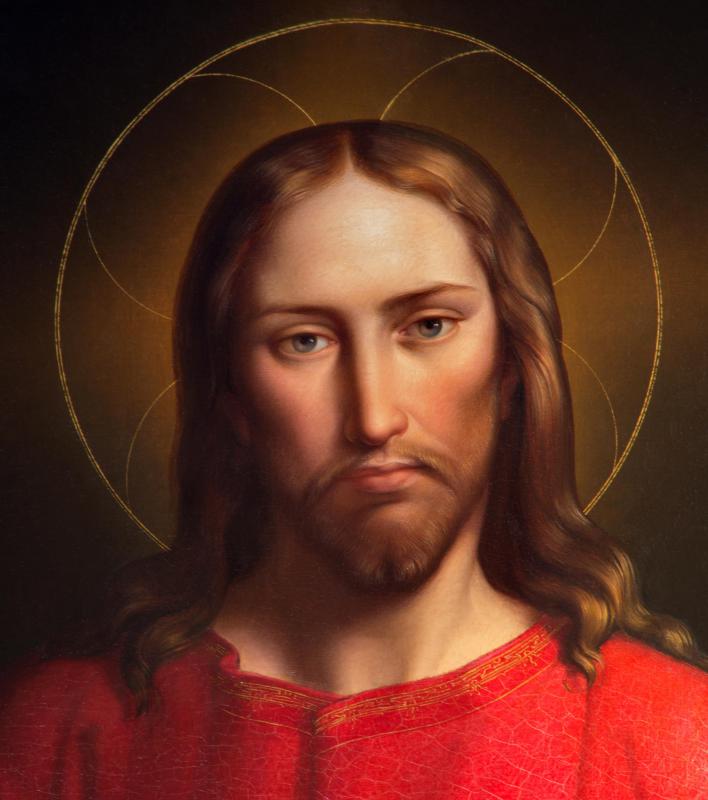
![Jesus is part of the holy trinity in Christian doctrine.]() By: Renáta SedmákováJesus is part of the holy trinity in Christian doctrine.
By: Renáta SedmákováJesus is part of the holy trinity in Christian doctrine. -
![In some Christian theology, God is both a father and a son.]() By: L. ShatIn some Christian theology, God is both a father and a son.
By: L. ShatIn some Christian theology, God is both a father and a son. -
![God the Son is represented by Christ.]() By: GG Pro PhotoGod the Son is represented by Christ.
By: GG Pro PhotoGod the Son is represented by Christ. -
![Islam acknowledges the importance of the Judeo-Christian tradition, with special respect given to Jesus and the prophet Abraham.]() By: ErayIslam acknowledges the importance of the Judeo-Christian tradition, with special respect given to Jesus and the prophet Abraham.
By: ErayIslam acknowledges the importance of the Judeo-Christian tradition, with special respect given to Jesus and the prophet Abraham.


Discussion Comments
@anon353545: The Scriptures reveals "God" to be our father and He sent his Son to die for us and the spirit is their spirit (Father and Son) which in their personality, mind or mental disposition.
I don't understand it. I am Roman Catholic, baptized, and still I search for understanding that makes sense to me. Being a down to earth and logical person, I find this a challenge. I also believe in evolution, so I am thinking the father is GOD, the son is Jesus, and the Holy Spirit should actually be Mary. That being said, I want to know who God is, and I think he is evolved from the scientific hypothesis -- a cell which had evolved into a human being with the innate ability to know right from wrong, good from evil, and gave up his life for his beliefs, his truth, and to forgive us our sins. He died on the cross for humanity.
But sadly, you cannot provide even one verse to provide your trinity while there are ample verses in the scriptures that proves that we have one Alahym, and that is the father.
Understanding the Holy Trinity is truth before your eyes. First accepting the existence of Yahweh [God] - look around you, look at yourself as a design.
Then think about the construct of society and state of things during the times of John and Jesus. Something was happening and Jews were expecting a messiah to, colloquially say, even the score. They weren't looking for a merciful God, but that's what they got and they failed the test miserably by killing him. That was the definition of an unjust trial. So that headlined to say that they were deaf to the word of God as it used to come direct to them through prophets. So they were given the Holy Spirit through Jesus as an inner guidance. Rightly so, for the people acted off of their feelings. They were not living righteously, yet were given a gift, which some of them rejected. Therefore, the Holy Trinity is the power of Yahweh that we have been given since the beginning.
The clarity comes from opening your mind and thinking about the context, not just scientifically like algebra because that is relatively simple compared to this cosmic scale reality. Science is a theory and all theories are not exactly fact when you think about it. We could wake up tomorrow and 2+2=5 or plants are not green because of chlorophyll reflecting light but because the minerals from soil overtime accumulate to green! If you catch my drift.
Hope that has enlightened some minds. Take care.
Ha'Mashyak talking to his father says this: Joh 17:3: And this is life eternal, that they might know thee the only true God, and Jesus Christ, whom thou hast sent.
He always says this concerning who the person "God", and whom he was to return to.
Joh 20:17: "Jesus saith unto her, Touch me not; for I am not yet ascended to my Father: but go to my brethren, and say unto them, I ascend unto my Father, and your Father; and to my God, and your God."
God is his Father. This is also our God and our Father to those whom accept him.
Who is the ruak quadush (holy spirit)?
According to Eph 4:4, there is one Master and One Spirit, according to Eph 4:5, there is One God and Father of all which backs up John 20:17
According to Gal 4:6, God sends the ruak (spirit) of his Son in us, according to Rom 8:9, if you do not have the spirit of God, then you do not have the spirit of Mashyak in you, this basically give you knowledge that they do not have a different spirit but they share the same spirit & also, according to strong's concordance, Spirit is liken to "Life, mind, mental disposition" G4151: pneuma
Read Joh 14:16-Joh 14:28 & in context, it will tell you who the Holy Spirit is.
Christ said you must be born again in order to see the kingdom of God. This is the indwelling of the Holy Spirit in a man at the moment of belief. Then God the Holy Spirit protects, guides and teaches us what he meant as he had men write the Bible.
If there is no Holy Spirit, there is no salvation and you are still lost. Why did Jesus say you can reject the Son or the Father, but not the Holy Spirit? True faith is determined by faith in the Trinity. All other is a lie of Satan.
The scriptures never reveal the kadush ruak (holy spirit) as a different being. Read over John 14 and re-read it over to see who the Mashyach says the kadush ruak is.
Take your time, start at verse 16
and also read Acts 20:28 & also 2 Corinthians 3:17
Then you can better understand who this ruak (spirit) that is with us and working within us truly is.
One Father God. One Lord Jesus. One Holy Ghost. Three separate beings. One subtance Father God creation of everything. Even Jesus said my Father is greater than I. We also become one as they are in one subtance which is God all in all.
You understand what the scriptures reveal to you about God, in his fullness. We will never understand him, but through his word we have an understanding of who he is.
Some say they fully understand the mystery of God or they understand the Bible or whatever, but they don't know. If you fully understand the mystery of God you also God, because God knows all. So I ask all of you are you a God? And who permits you to be one?
See these Scriptures: Exodus 20:3; Deuteronomy 6:4; Malachi 2:10; Mark 12:32,34; John 17:3; 1 Corinthians 8:4; 1 Corinthians 8:6; Ephesians 4:6;
1 Timothy 2:5; James 2:19; Romans 1:7; 1 Corinthians 1:3; 2 Corinthians 1:2; Galatians 1:3;
Galatians 1:4; Ephesians 1:2; Philippians 1:2; Colossians 1:2; 1 Thessalonians 1:1; 2 Thessalonians 1:2; Ephesians 1:3; John 20:17; Ephesians 4:6.
Conclusion: The Bible teaches that there is but one God, who is the Father of all.
there are three persons in God. every person is God and God is one. That's it.
God has made his three in one nature known throughout creation so we can understand him. St. Patrick used the three-leaf clover when he evangelized Ireland to explain this: three leaves but one clover. The universe has three parts: time space and matter, but one universe. Time has three: past, present, future. Space=LxWxH. Matter (the atom): each atom made of protons, neutrons and electrons but one atom.
In an elementary school textbook, there is a cross-section of a piece of fruit and related it to a cross-section of the Earth. The fruit has a seed, fruit and skin while the Earth has core, mantel and crust. Our environment has 3 parts: land sea and air but one environment. A textbook will show that a plant is made of three parts: roots stem and leaves.
I like this a lot because you can understand how each is separate with its own function, but are inseparable in purpose (one plant). Just some thoughts.
to bjshred and all others: Please read Exodus 3:14 where God calls himself I AM then go to John 8:58 where Jesus also calls himself I AM. In Genesis 1:26 God says "Let us make man in our image" (notice the us and our) He is talking about Himself and Jesus. Yes Jesus was God's son but he was also God in the flesh. Or Isaiah 9:6 reads " For unto us a child is born, unto us a son is given: and the government shall be upon his shoulder: and his name shall be called Wonderful, Counselor, The mighty God, The everlasting Father, The Prince of Peace."
The concept of trinity evolved out of our inability to understand the context of certain verses and the meanings of certain words.
In the original greek bible the pronoun 'IT' is used for Holy Spirit; clearly proving that Holy spirit is impersonal.
See the original Greek bible to know the real meaning of John 1:1
In the beginning was the Word (Logos), the Word was with The God (Ton Theon), and the Word was a god (Theos).
Also, the Trinity is the foundation for paganism in christianity.
Speaking as an A level religious studies and conformed by my very experienced teacher who is Christian the holy trinity has major flaws and does not make sense.
This is because, for us to understand religion, we must think about it logically or else there is no point of studying religion at all.
This is why I think the holy trinity does not make sense..
Firstly Christianity teaches god is limitless, bodiless and not subjected to time. If this is so, how can Jesus be god? By calling Jesus god Christianity contradicts the fact that god is all knowing.
by god being human his is subjected to time and he is also a learning god as Jesus also learned things I.E how to speak.
And the holy trinity is not mentioned by the bible.
Well in response to the opposition to the idea of the holy trinity and the "3 in 1" idea and that the holy trinity is polytheistic can be argued with the baptism of Jesus Christ. John the Baptist takes God's Son Jesus Christ and baptizes him in the Holy Spirit. All three are present and even after baptism of God's Son, the clouds part and the Son of God is touched by the Holy Spirit.
If a person can't understand the concept of a whole trinity being three separate parts but one at the same time think of it like this: When you decide to do a task, say pick up a cup. You must first have memory (Father) of where the cup is, what it looks like, etc. Then you must understand (son) how to pick it up, what it takes, etc. Finally you must will (Holy Spirit) your movements to physically pick up that cup.
So when God "does" it's not just him but the Trinity. All three elements can "be" in one action. This is all according to The Christian Orthodox Doctrine adopted at the Council of Nicea in 325 CE.
My wife is Jehovah’s Witness. They believe that Jesus is the son of God and that there is only one god. So what is the problem with this doctrine in comparative to the Catholic views? Can you give examples and scriptures please, so I can clearly define it for myself and my wife.
i really liked the explanation of amy pollick. It is such a nice interpretation of the Holy Trinity. I hope more Catholics come to view this explanation so that they would be able to understand the Trinity in a simpler way.
The Holy Trinity is how Trinitarian Christians believe God has revealed Himself to mankind, and how He has acted in history.
One good example of the nature of the Trinity is to look at H20 --water. Put a pan of water on the stove and heat it. The liquid turns to steam. Capture the steam and it becomes liquid again when cooled. Freeze it and it becomes ice. But it's all H2O and every form has a different use. But it's still all H20.
So it is with the Holy Trinity. God the Father is God; Jesus is God and the Holy Spirit is God. Three forms, but all God. Even as a Christian, I don't completely understand it. It certainly is a mystery, but it isn't insurmountable, and to my mind, explains much more than it obscures.
what exactly is the holy trinity in full detail?
Why is the holy trinity so important to catholic beliefs?
One section of Pentecostals, Oneness Pentecostals, do not believe in Holy Trinity.
I can not find adequate scriptural evidence to convince me to believe the Nicene Creed. It seems to be more of a compromise document developed by a large committee of politically motivated men. Tradition or no, It does not make a lot of sense to me.
Post your comments