
At Sports&Hobbies, we're committed to delivering accurate, trustworthy information. Our expert-authored content is rigorously fact-checked and sourced from credible authorities. Discover how we uphold the highest standards in providing you with reliable knowledge.
What is the History of Chess?
 Mary McMahon
Mary McMahon
Mary McMahon
Chess is a strategy board game with an ancient history and a long pedigree, although there is some dispute about its origin. Research into the history of chess has been unable to find firm evidence that provides an answer. Many historians believe that the game began in Persia and India as early as 600 AD, but others believe that it originated in China before spreading west. Historians believe that chess is one of the oldest strategy games still in play, although it has evolved greatly through the centuries. Indeed, the form of chess played in 700 AD, for example, probably would be utterly alien to modern players.
Origins and Spreading to the West
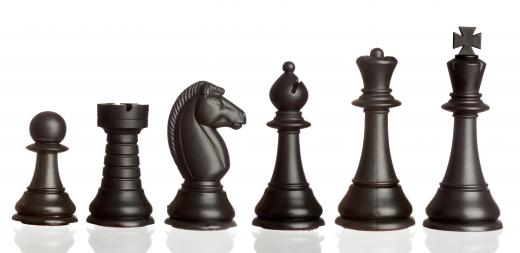
In ancient Persia, the game was known as shantraj, a Sanskrit word meaning “four divisions of the military,” a reference to the different types of pieces on the board. Shantraj was being played in China by 800 AD, and it reached Europe after the Muslim conquest of Persia. The Muslims picked up the game, spreading it as they traveled along trade routes and conquered countries such as Spain. It might be considered intriguing that the history of chess involves conquests, because it is a game about conquest and military strategy.
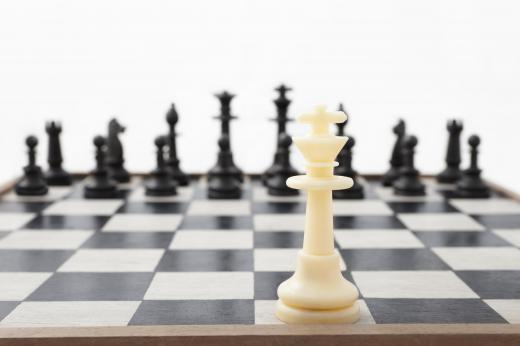
By the medieval period, chess was common throughout Europe, where it was thought of as the “king's game,” an object lesson in strategy and noble responsibilities. Chess was often incorporated into the education of aristocratic men, and it was featured in cultured evenings in wealthy homes. This form of chess, however, was still very different from the modern version.
Evolution of Playing Rules

Around the 13th century, the rules of chess began to evolve, more or less reaching their current state during the 15th century. These rule changes allowed more flexibility for pieces that previously had been less mobile, such as the queen. This was an important step in the history of chess, leading the game more toward being an exercise in complex theory and strategy.

By the mid-1800s, the history of chess had begun to include tournaments, which appear to have arisen in Great Britain. These tournaments allowed talented players and representatives of chess clubs to compete for honors and prizes. They also increased the theory aspect of chess, with many books being published on chess strategy, famous tournaments and famous chess players.
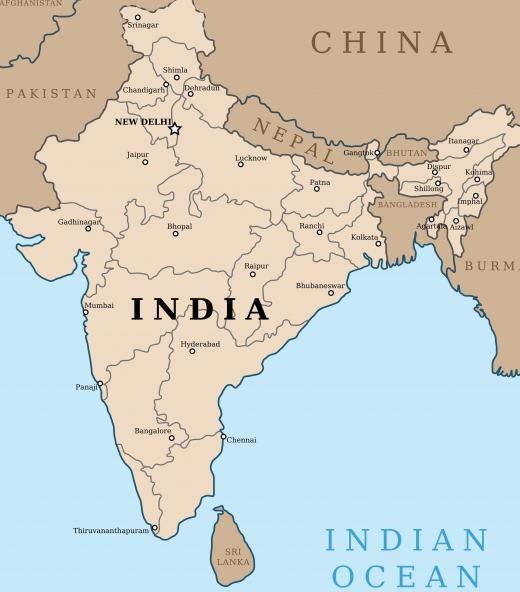
Although chess has evolved a great deal, the basic principle of the board and pieces remains the same; chess sets from ancient India are recognizable even today. In addition, the Persian roots of the game can be seen in the word shah, which is used in much of the world to mean “check.” Shah means "king," referring to the fact that the opposing player's king is in danger, with the phrase shah mat being used to mean “checkmate.”
Mary McMahon
Ever since she began contributing to the site several years ago, Mary has embraced the exciting challenge of being a Sports&Hobbies researcher and writer. Mary has a liberal arts degree from Goddard College and spends her free time reading, cooking, and exploring the great outdoors.
Learn more...
Mary McMahon
Ever since she began contributing to the site several years ago, Mary has embraced the exciting challenge of being a Sports&Hobbies researcher and writer. Mary has a liberal arts degree from Goddard College and spends her free time reading, cooking, and exploring the great outdoors.
Learn more...AS FEATURED ON:
AS FEATURED ON:


-
![Chess pieces, running, from left to right, from a pawn, a rook, a knight, a bishop, a queen, to a king.]() By: Jose Manuel GelpiChess pieces, running, from left to right, from a pawn, a rook, a knight, a bishop, a queen, to a king.
By: Jose Manuel GelpiChess pieces, running, from left to right, from a pawn, a rook, a knight, a bishop, a queen, to a king. -
![Chess is believed to be one of the oldest strategy games still played.]() By: ArtoChess is believed to be one of the oldest strategy games still played.
By: ArtoChess is believed to be one of the oldest strategy games still played. -
![IBM's Deep Blue was a supercomputer that exhibited artificial intelligence by playing chess against human Grand Masters.]() By: Pedro VillavicencioIBM's Deep Blue was a supercomputer that exhibited artificial intelligence by playing chess against human Grand Masters.
By: Pedro VillavicencioIBM's Deep Blue was a supercomputer that exhibited artificial intelligence by playing chess against human Grand Masters. -
![Chess was known as shantraj in ancient Persia.]() By: Chad McDermottChess was known as shantraj in ancient Persia.
By: Chad McDermottChess was known as shantraj in ancient Persia. -
![India is often considered the birthplace of chess.]() By: TupungatoIndia is often considered the birthplace of chess.
By: TupungatoIndia is often considered the birthplace of chess. -
![By the medieval period, chess was common throughout Europe.]() By: EklerBy the medieval period, chess was common throughout Europe.
By: EklerBy the medieval period, chess was common throughout Europe.


Discussion Comments
My dad was the one who taught me how to play chess and now I want to get him some cool chess sets for his birthday. This is really interesting. I'm sure he would love to learn more about it, too.
The "pawn" of chess was named to denote the role of a foot soldier: giving up his life for the nobility. At that time in history, the class distinction was so vast that a King's life was considered to be worth thousands of such pawns, and wars were often waged in the name of a single "divinely appointed" monarch.
Chess improves long-term focus and psychological understanding of the opponent. Anticipating another person's moves in response to your own is an important aspect of game theory and chess is a very effective exercise in understanding and managing people. This is probably why the nobility found it to be helpful.
Post your comments