
At TheHealthBoard, we're committed to delivering accurate, trustworthy information. Our expert-authored content is rigorously fact-checked and sourced from credible authorities. Discover how we uphold the highest standards in providing you with reliable knowledge.
What Is the Hilum of Lymph Node?
Lymph nodes are small organs of the lymphatic immune system located around the body and linked by their own lymphatic blood supply. The hilum of the lungs is also known as the pedicle and contains pulmonary arteries and veins, main bronchial stems for each lung and the hilum of lymph node for each lung. Fed by their own vessels and connected to other nodes throughout the body, this lymph node pair are carriers of immunity cells and functioning, and swell and/or show changes in consistency and inflammation in the presence of cancers. For this reason, they are of importance in determining the degree of any cancer present.
One of the signs of illness is the absence of a fatty filter inside of a lymph node, which can be revealed on an ultrasound. This can be benign, as rheumatoid arthritis and some autoimmune system disorders can cause this, but it is also an early sign of cancer that would need biopsy to be certain. The use of computed tomography (CT) can sometimes determine if the absence is due to calcification, which sometimes happens in tuberculosis, or if it is granuloma or sarcoid cancers, as they also lead to calcifications. If it is tuberculosis, it is often only localized to the one node; if found to be sarcoidosis, it often involves both of the pair.

One condition that can develop in the hilum of lymph node pair is known as lymphyadenopathy, which can be unilateral or bilateral. Spontaneous recovery from it may occur without a person even knowing it was there, but the node may remain enlarged for a period of time afterwards. If it only appears in one node or only in one node and also a nearby mediastinal node, it may only be due to a parenchymal lung disease from inflammation of lung tissues and spaces around air sacs. If both of the nodes have evidence of lymphyadenopathy, patients should have a biopsy to check for sarcoidosis.

Lymph nodes are sinus tissues and germinal centers encapsulated within a fibrous shell. White blood cells within the nodes scavenge for infections to attack and stop from spreading. They filter out pathogens and small microorganisms from the lymph fluids exiting the lungs, so if they swell up, this can also signal pneumonia, leukemia, lymphoma and lung cancers. Clinically, it is important to know before any surgeries whether cancer has spread to these nodes or whether they have been invaded by pulmonary arteries, as this will affect the surgery strategies.
AS FEATURED ON:
AS FEATURED ON:


-
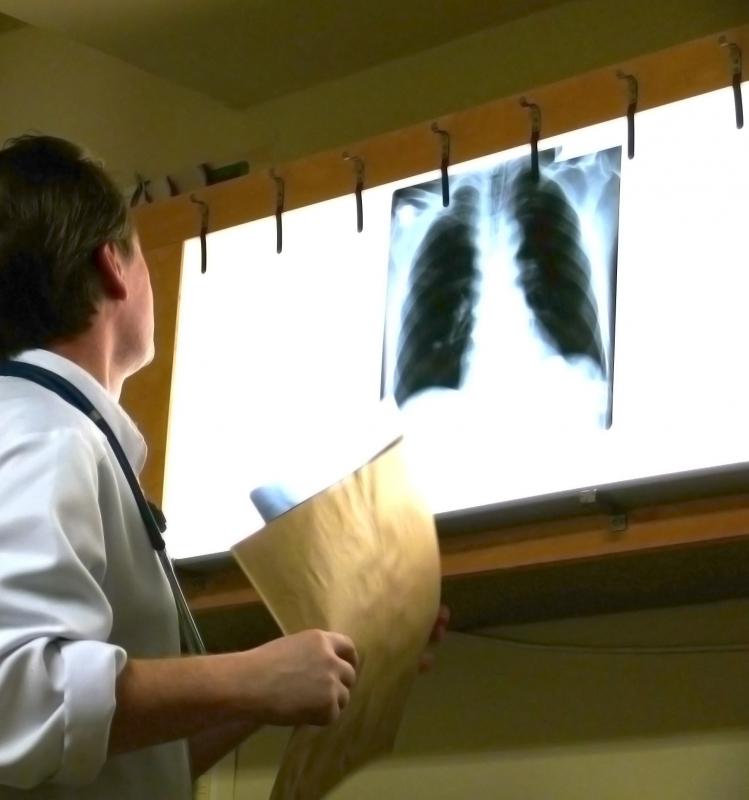
![X-rays may help doctors determine if the absence of a fatty filter inside of a lymph node is due to calcification.]() By: alma_sacraX-rays may help doctors determine if the absence of a fatty filter inside of a lymph node is due to calcification.
By: alma_sacraX-rays may help doctors determine if the absence of a fatty filter inside of a lymph node is due to calcification. -
![Swollen lymph nodes may signal the presence of pneumonia.]() By: Marin ConicSwollen lymph nodes may signal the presence of pneumonia.
By: Marin ConicSwollen lymph nodes may signal the presence of pneumonia. -
![Tuberculosis most commonly lives and thrives in the lungs, although it may disseminate to other areas such as the lymph nodes.]() By: stockdevilTuberculosis most commonly lives and thrives in the lungs, although it may disseminate to other areas such as the lymph nodes.
By: stockdevilTuberculosis most commonly lives and thrives in the lungs, although it may disseminate to other areas such as the lymph nodes. -
![A sample of a lymph node may be examined under a microscope if sarcoidosis is suspected.]() By: luchschen_shutterA sample of a lymph node may be examined under a microscope if sarcoidosis is suspected.
By: luchschen_shutterA sample of a lymph node may be examined under a microscope if sarcoidosis is suspected. -
![If lymph nodes swell, it can signal leukemia.]() By: joshyaIf lymph nodes swell, it can signal leukemia.
By: joshyaIf lymph nodes swell, it can signal leukemia.



Discussion Comments
Post your comments