
At WiseGEEK, we're committed to delivering accurate, trustworthy information. Our expert-authored content is rigorously fact-checked and sourced from credible authorities. Discover how we uphold the highest standards in providing you with reliable knowledge.
What is the GDP Gap?
The GDP gap is the difference between potential gross domestic product (GDP) and actual GDP. Potential GDP is defined as the maximum amount an economy could produce while maintaining reasonable price stability; it also is sometimes called the high-employment level of output. Actual GDP is the measure of a country's output at any given time, and it fluctuates with business cycles. The gap between the actual and potential GDP is often thought of as the amount of potential output lost by the economy's failure to provide jobs to all willing workers.
During times of recession, the GDP gap grows and unemployment increases. The productivity of workers willing but unable to find jobs is irrevocably lost to the economy. This loss of output has been used by economists and politicians as a reason to employ Keynesian economic policies.

The term is usually used in economics to refer to the relationship between actual and potential GDP, but it is often blended with recessionary gaps and expansionary gaps. Rather than comparing actual and potential GDP, one could compare actual to natural GDP, or the level of output for which there is zero inflation and zero deflation. If actual GDP is larger than natural GDP, the economy is producing lots of goods and services and employing lots of workers. As a result, the unemployment rate is below the natural rate of unemployment and inflation speeds up. This is known as an expansionary gap.

On the other hand, when actual GDP is smaller than the natural figure, the economy is producing less and employing fewer workers. As a result, the unemployment rate is higher than the natural rate of unemployment and inflation slows down. This is known as a recessionary gap. The term GDP gap can accurately be used to refer to either the gap between actual and potential GDP or the gap between actual and natural GDP.

The relationship between output and unemployment has long been a topic of interest to economists. Economist Arthur Okun introduced a mathematical representation of the relationship between unemployment and GDP that is commonly referred to as "Okun's Law" or "Okun's Rule of Thumb." Based on regression analysis of data from the United States, Okun suggested that a 1-point increase in the unemployment rate is associated with 2 percentage points of negative growth in real GDP. While straightforward and easy to understand, the accuracy of Okun's law has been disputed by other economists.
AS FEATURED ON:
AS FEATURED ON:









-
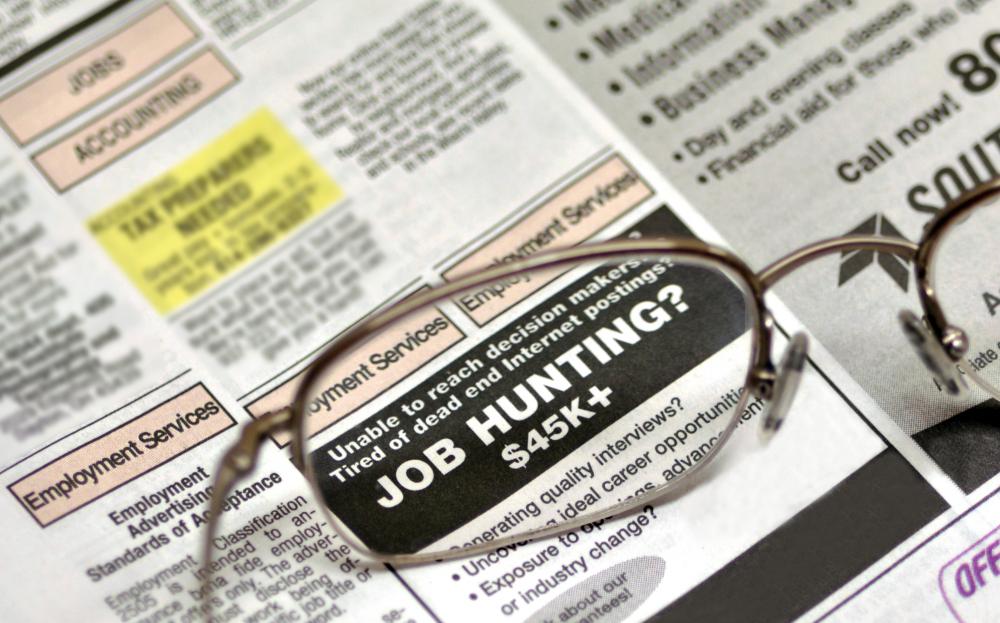
![The GDP gap represents a country's potential economic output lost by failing to provide jobs to all willing workers.]() By: Stephen VanHornThe GDP gap represents a country's potential economic output lost by failing to provide jobs to all willing workers.
By: Stephen VanHornThe GDP gap represents a country's potential economic output lost by failing to provide jobs to all willing workers. -
![John Maynard Keynes.]()
John Maynard Keynes. -
![During a recession, the GDP gap grows and unemployment increases.]() By: Dana HeinemannDuring a recession, the GDP gap grows and unemployment increases.
By: Dana HeinemannDuring a recession, the GDP gap grows and unemployment increases.


Discussion Comments
@turquoise-- Which economy course are you taking? It sounds like you're studying fiscal policy. I used to be a tutor for economy courses in graduate school. I know you got your answer, but I want to elaborate some more.
You don't have to think about the GDP gap as "good" or "bad." The GDP gap measures the difference between potential and equilibrium GDP. The fact that there is a GDP gap in the economy does not mean that the economy is not in equilibrium (in balance). It just means that the economy has potential for growth. In a way, the GDP gap shows economists how much growth (production) the economy should aim for to reach full potential.
An economy can be in balance while there is a GDP gap and while there is unemployment. In order for it to be in balance, it requires that the value of goods and services in the country be equal to real GDP. It also requires merchandise to remain the same and for lending and borrowing to be equal. These factors can exist while there is a GDP gap.
So an economy can be in equilibrium and in recession at the same time. A recession gap will exist as long as employment has not reached its full potential. The way that the GDP gap and the recession gap can be closed is to increase production. Production takes care of the unemployment problem and also eliminates or narrows the GDP gap.
Does that make sense?
@turquoise-- Yes, if the actual GDP is higher than natural GDP, inflation does rise. But it doesn't affect the economy too much, because unemployment rates are low. This is natural because when people have more money to spend, they buy more which increases competition for goods. When demand rises for a good, prices must increase. This is why inflation rises during an expansionary gap.
The biggest reason why governments must try to minimize the GDP gap is to lower unemployment. When there is less unemployment, the economy grows. And contrary to the common belief that only high inflation is bad, low inflation is bad as well. There are many economic depressions that have occurred in history because of it.
I missed my economy lecture last week and have homework on this subject. I understand what the GDP gap is but I'm not sure I understand why a GDP gap is so bad for the economy. Isn't this gap kind of inevitable in most cases?
And in relation to GDP gap and employment, if unemployment is low and actual GDP is higher than natural GDP, why is there so much inflation?
As far as I know, inflation is bad for the economy, it reduces buyer's potential to purchase. When the GDP gap is low or when there is no gap at all, doesn't that meant that the economy is doing even better than expected? Shouldn't there be no inflation in this situation?
Post your comments