
At TheHealthBoard, we're committed to delivering accurate, trustworthy information. Our expert-authored content is rigorously fact-checked and sourced from credible authorities. Discover how we uphold the highest standards in providing you with reliable knowledge.
What Is the Function of the Vagus Nerve?
The human body has 12 pairs of cranial nerves connecting the major body systems directly to the brain, and each pair of nerves serves a specific function. One of these is the vagus nerve, and its purpose is to innervate the organs of the body, known collectively as the viscera. Specifically, the function of the vagus nerve is to relay signals between the brain and various body systems to regulate heart rate, speech, sweating, blood pressure, digestion, glucose production, and certain aspects of breathing. Not only is the nerve responsible for innervating organs, but it also controls certain skeletal muscles, such as the larynx.
Cranial nerve X, as the vagus nerve is also known, serves as the communication pathway between the brain and the viscera. Both output from the brain and input from various organ systems travel along the various never fibers that make up this nerve, so communicating the status of various organs is the primary function of the nerve. Up to 90% of the nerve fibers associated with cranial nerve X are sensory or afferent nerves that relay information back to the brain.

Another name for the vagus nerve is the pneumogastric nerve, due to its responsibility for innervating the stomach and the lungs. In addition, the autonomic or involuntary function of the lungs is controlled by nerve fibers and branches associated with the vagus nerve. The sensory and motor functions of the stomach are also controlled by it; when eating, for example, the sensation of being full is transmitted to the brain by this nerve. Digestive enzymes are produced and released according to its input.

Parasympathetic fibers, sensory tissues in body areas between the neck to the lower trunk, oppose sympathetic fibers to help regulate various body functions. For example, the vagus nerve supplies parasympathetic fibers for the heart, in addition to other organs. Should the need arise, the nerve secretes neurotransmitters responsible for lowering the heart rate or reducing blood pressure through these fibers. Likewise, similar fibers act to open the larynx during breathing and move various mouth muscles to enable speech.

Many other systems rely on the proper functioning of the vagus nerve in order to communicate necessities to the brain. Innervation of the outer ear canal is its responsibility. Additionally, glucose production is decreased when the liver sends certain insulin and enzyme information to the brain along vagi fibers. Other functions include transmitting taste sensations, controlling the muscles responsible for swallowing and coughing, and triggering sweat glands to help regulate body temperature.
AS FEATURED ON:
AS FEATURED ON:


-
![A diagram showing the vagus nerve.]() By: AlilaA diagram showing the vagus nerve.
By: AlilaA diagram showing the vagus nerve. -
![The vagus nerve controls certain skeletal muscles, including the larynx.]() By: Alila Medical MediaThe vagus nerve controls certain skeletal muscles, including the larynx.
By: Alila Medical MediaThe vagus nerve controls certain skeletal muscles, including the larynx. -
![The vagus nerve is involved in triggering the sweat glands to help regulate body temperature.]() By: Jason StittThe vagus nerve is involved in triggering the sweat glands to help regulate body temperature.
By: Jason StittThe vagus nerve is involved in triggering the sweat glands to help regulate body temperature. -
![The vagus nerve relays signals between the brain and various body systems to regulate blood pressure.]() By: Photographee.euThe vagus nerve relays signals between the brain and various body systems to regulate blood pressure.
By: Photographee.euThe vagus nerve relays signals between the brain and various body systems to regulate blood pressure. -
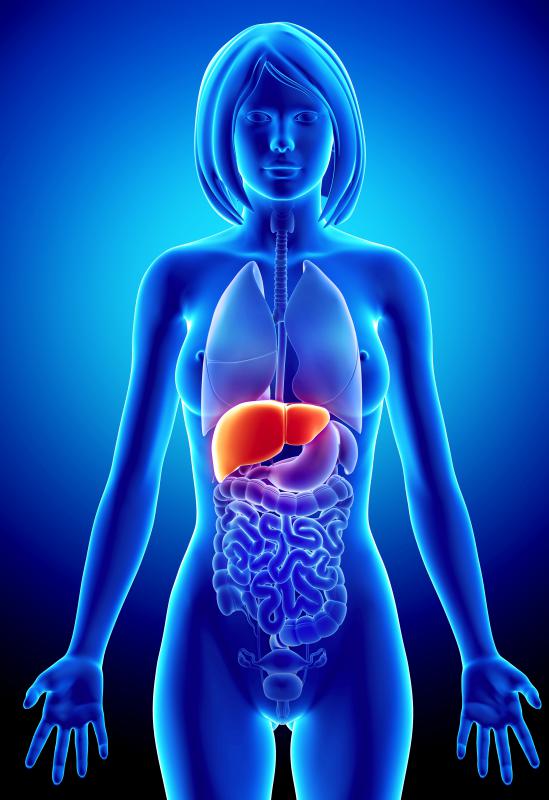
![Glucose production is decreased when the liver sends insulin and enzyme information to the brain along vagi fibers.]() By: pankajstock123Glucose production is decreased when the liver sends insulin and enzyme information to the brain along vagi fibers.
By: pankajstock123Glucose production is decreased when the liver sends insulin and enzyme information to the brain along vagi fibers. -
![The vagus is the longest of the cranial nerves.]() By: 7activestudioThe vagus is the longest of the cranial nerves.
By: 7activestudioThe vagus is the longest of the cranial nerves.





Discussion Comments
That depends on whether both vagus nerves are severed. If the right is severed then your heart's SA node won't function, but the AV node will take over, albeit at a slower heart rate (approx 40-60 bpm instead of 70-80). If the left one is severed in addition to the right, you are a dead duck.
There's a recent medical procedure where they will install a small gadget that will stimulate the vagus nerve to reduce chronic depression.
I've read that practitioners of yoga claim that they've been stimulating the vagus nerve in a similar way for years, with deep breathing and their bending exercises.
If you have a look online there are a few articles from people claiming that if you follow their instructions and breath deeply in a certain way, you can help to alleviate depression. I wouldn't rely on it, but honestly it can't hurt.
@umbra21 - Actually that's not entirely true. I guess it depends on where you cut it because I know they are currently studying whether or not it would be useful to cut the vagus nerve in order to curb obesity in certain patients. And I know they once used it as a treatment when people had peptic ulcers.
I think it's a pretty large nerve, connected to a lot of smaller ones and it's not as simple as just cutting it, of course.
The vagus nerve is the reason that breaking your neck can be both incredibly dangerous, and not that big of a deal.
The bones themselves are obviously important, but they can heal just as well as any other bone in the body. So breaking them isn't great, and obviously can lead to bigger problems if they don't heal properly, but otherwise it's OK.
However, if the vagus nerve gets severed, your body no longer has any means to keep the heart beating, or the lungs breathing, and so forth. You might otherwise be perfectly healthy, but if your vagus nerve is cut, then you will die.
Post your comments