
At WiseGEEK, we're committed to delivering accurate, trustworthy information. Our expert-authored content is rigorously fact-checked and sourced from credible authorities. Discover how we uphold the highest standards in providing you with reliable knowledge.
What is the French Paradox?
The French paradox refers to the fact that although the French consume three times as much saturated fat as Americans, one-third less French people die from heart attacks and obesity than American people. Puzzled American scientists and other health experts from around the world have tried to discover the "secret" behind the French paradox. Most French insist that the only "secret" is in watching portion sizes and daily fat intake as well as choosing fresh foods over processed foods and deny that there is a "French paradox."
The French eat rich foods such as cream, butter, pastry and rich cheeses, but they also consume red wine and olive oil. Researchers have found olive oil to be a heart-healthy source of fat. However, the olive oil the French consume does not rule out the high amounts of saturated fats they still eat, and therefore does not properly explain the French paradox. On the other hand, studies at Harvard Medical School have shown that a chemical in red wine called resveratrol reverses the coronary and obesity effects of a diet high in fat and calories in mice.

When resveratrol was given to lab mice, the mice ran twice as far on a treadmill than they had previously and also had a reduced heart rate. The mice also lived longer than mice who had not received the resveratrol. The findings led to a marked increase in red wine sales in the United States despite the fact that the amount of resveratrol given to the mice would be the human equivalent to drinking hundreds of glasses of wine a day. Once again, the French paradox was unsolved.

The French themselves tend to stress that they lower their coronary risks by watching portion sizes and the amount of fat eaten in a day. Discipline, moderation, and balance, many French insist, are the most important health "secrets" and they do not see a French paradox. Mireille Guiliano, in her 2004 best selling book, French Women Don't Get Fat, agrees that the "secret" to the coronary health of the French is eating whatever you want, but in moderation, and agrees there is no French paradox. Many French people are often appalled at American portion sizes.
AS FEATURED ON:
AS FEATURED ON:









-
![Olive oil is a heart-healthy fat source enjoyed by the French.]() By: Luis Carlos JiménezOlive oil is a heart-healthy fat source enjoyed by the French.
By: Luis Carlos JiménezOlive oil is a heart-healthy fat source enjoyed by the French. -
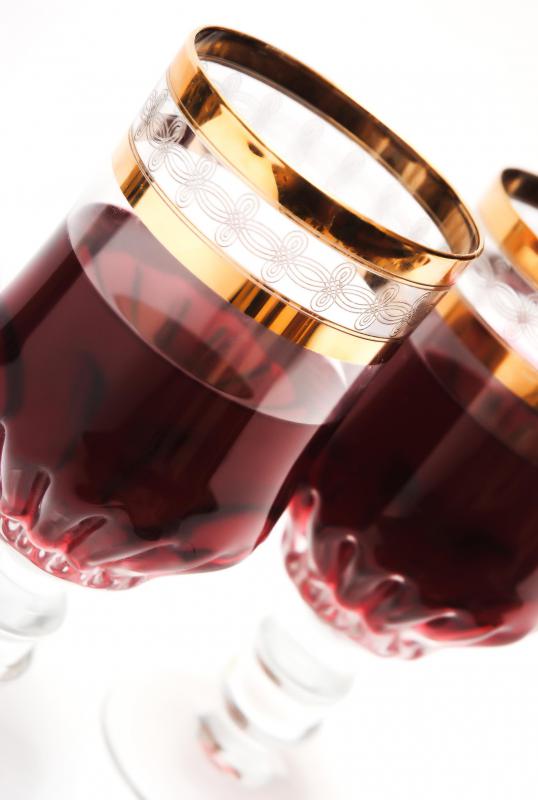
![The French diet typically includes moderate amounts of red wine, a powerful antioxidant that benefits cardiovascular health.]() By: Andres RodriguezThe French diet typically includes moderate amounts of red wine, a powerful antioxidant that benefits cardiovascular health.
By: Andres RodriguezThe French diet typically includes moderate amounts of red wine, a powerful antioxidant that benefits cardiovascular health. -
![When resveratrol, a chemical in red wine, was given to lab mice, they ran twice as far on a treadmill than they had previously and also had a reduced heart rate.]() By: FikMikWhen resveratrol, a chemical in red wine, was given to lab mice, they ran twice as far on a treadmill than they had previously and also had a reduced heart rate.
By: FikMikWhen resveratrol, a chemical in red wine, was given to lab mice, they ran twice as far on a treadmill than they had previously and also had a reduced heart rate. -
![A Harvard Medical School study suggests that the resveratrol in red wine could help reverse some negative effects of a high-fat diet.]() By: Irina RedkoA Harvard Medical School study suggests that the resveratrol in red wine could help reverse some negative effects of a high-fat diet.
By: Irina RedkoA Harvard Medical School study suggests that the resveratrol in red wine could help reverse some negative effects of a high-fat diet. -
![The French believe portion size is the key to staying healthy.]() By: Boyarkina MarinaThe French believe portion size is the key to staying healthy.
By: Boyarkina MarinaThe French believe portion size is the key to staying healthy.


Discussion Comments
Oh--and red wine doesn't explain the ease of maintaining weight for the French who don't drink. They do exist, you know (wine is expensive).
Did anyone ever think that not every French person drinks wine every chance they get?
No, the calorie argument is stupid and a lie. It's been proven over and over and over and over and over again that calories consumed/expended has zero bearing on weight. It's been demonstrated numerous times and stupid Americans refuse to accept that reality.
When I was fat, I expended more energy every single day than any skinny person. I was on my feet moving and lifting eight hours a day -- or more. I was on the filth low-fat diet, and this was my diet, every stinking day, for months: one piece of whole wheat toast and a piece of fruit for breakfast. Lunch: A salad. Dinner: Pasta with no oil on it, only a "light" low-fat filth marinara, or maybe a piece of chicken cooked in a little water. My average daily calorie count was about 900 a day. I was working out constantly, thanks to having a physically demanding job. I took a pedometer to work. I found out I was walking four miles, minimum, every single day. I was lifting 30-70 pound items over and over and over and over for hours.
And I gained weight even though I was eating less and worked out more than just about anyone else I knew.
I got a desk job, and was terrified of how much fatter I'd get. I couldn't work out eight hours a day and hold down a full time job. I was at my wits' end and decided I might as well do the go on the Atkins diet, a.k.a., the French diet. Surprise, surprise: my weight plummeted, my blood pressure normalized (115/85), my cholesterol was dead normal and my insulin returned to normal.
The French are starting to gain weight as they start eating the American diet filth of low-fat garbage, processed crap and reams of junk food, laden with sugar and worthless carbs.
The French who are still eating the old (Atikins) way? They're still able to maintain their weight.
What's making Americans so repulsively fat is their obsession with eating trash. Worse, as they get fatter and fatter and need to consume more and more carbs not to feel like they're starving (vegetarians are *all* starving), they have to suck up more resources than several nations combined. Their gluttony is obscene.
The real secret is that they work less, take time to relax when eating and they worry and talk less about their careers and mortgages. Voila!
Simply put: the solution to the "paradox" is simple. Saturated fat does not cause heart disease! This is a fallacy that has been promoted since the 50s, and it has been shown many times to be untrue.
You know why the French have lower rates of heart disease than Americans? Because they eat fewer carbs! That's right, carbs, not fat, are your enemy.
The idea of calorie burning being simple basic math is a fallacy. There are many factors that control how each human being utilizes the food, and thus calories, she or he consumes.
For example, metabolisms vary quite a bit, as is evidenced by what we see when someone has reduced thyroid function and is then gaining weight on a calorie total that "shouldn't" result in gaining weight based upon the "basic math" myth.
There are many people with undiagnosed thyroid issues in the U.S., possibly exacerbated by our mass forced dosing with fluoride (known to reduce thyroid function) in our water. Fluoride is generally not added to water supplies in Europe. That is just an example.
Others include the wide-spread use of excitogens in our foods - things like MSG, which is given to cattle to fatten them up, because it makes the body put on weight.
How does that fit with the simplistic calorie-in, calorie-out explanation of weight? It doesn't, of course. The obesity epidemic in the U.S. is caused by many complex factors and if there are no efforts to determine what these are, nothing will be solved.
I am a frenchman, more precisely coming from the South-west part of France where food is reputed to be very fat (we use to eat a lot of various meat loafs preserved in coagulated animal fat like pig fat, duck fat, etc...).
Actually, I am rather a big eater, I mean I don't care the size of the portions I eat or whatsoever.
Even in times where I eat much fat or almost none, my average weight doesn't change at all.
I don't know if it has something with genetics but I really can eat anything and as much as I want and I barely get fat.
For precision, I don't drink wine nor use olive oil at all. Nonetheless, I tend to eat self prepared fresh food and almost never eat pre-processed food.
The basic math of calories, and amount of fat calories, consumed versus exercise expended definitely matters in weight maintenance, gain and loss. I enjoy rich cheese and my other favorite foods while I work on my health and weight loss issues, but I watch portion sizes and have increased my physical activity and have lost 10 lbs. in a little over a month.
I think a big part of the equation is the amount of calories consumed vs the amount of calories expended. Even though French diet includes butter, cheeses, creams, pastry etc, at the end of the day, it matters how much of it is consumed, and how much physical activity is involved.
I am not surprised though at the fact that red wine plays a part in the French paradox too. Alcohol I believe breaks down the fatty cells, and on top of that resveratrol has its own unique healthy characteristics.
Post your comments