
At TheHealthBoard, we're committed to delivering accurate, trustworthy information. Our expert-authored content is rigorously fact-checked and sourced from credible authorities. Discover how we uphold the highest standards in providing you with reliable knowledge.
What is the Femoral Artery?
The femoral artery is one of the biggest arteries in the body and is the primary means through which blood circulates in the legs. It runs from the external iliac artery, which is near the stomach, down both legs and carries oxygen and vital nutrients to the cells located along the way. People who injure or rupture this artery usually require immediate medical attention. The volume of blood flowing through it at any given time means that even small punctures can cause someone to bleed to death relatively quickly. It is for this reason that most medical professionals treat leg injuries very seriously, and arterial damage is also a concern during surgery almost anywhere on the lower body. The artery’s ability to quickly pump blood through most of the body also makes it a good place to insert cardiac catheters, and it is commonly used as an entry point for chemotherapy drugs and embalming fluids for corpses, too.
Location and Primary Function

When the heart pumps blood, that blood then circulates through almost all parts of the body through a complex network of veins and arteries. The femoral artery is one of the biggest, and is usually responsible for blood flow for roughly everything below the waist. It splits below the navel into two branches, one of which runs down each leg all the way to the toes. In most cases it largely parallels the femur, which is the leg’s longest and the body’s strongest bone, and this is where it gets its name.
Consequences of Injury

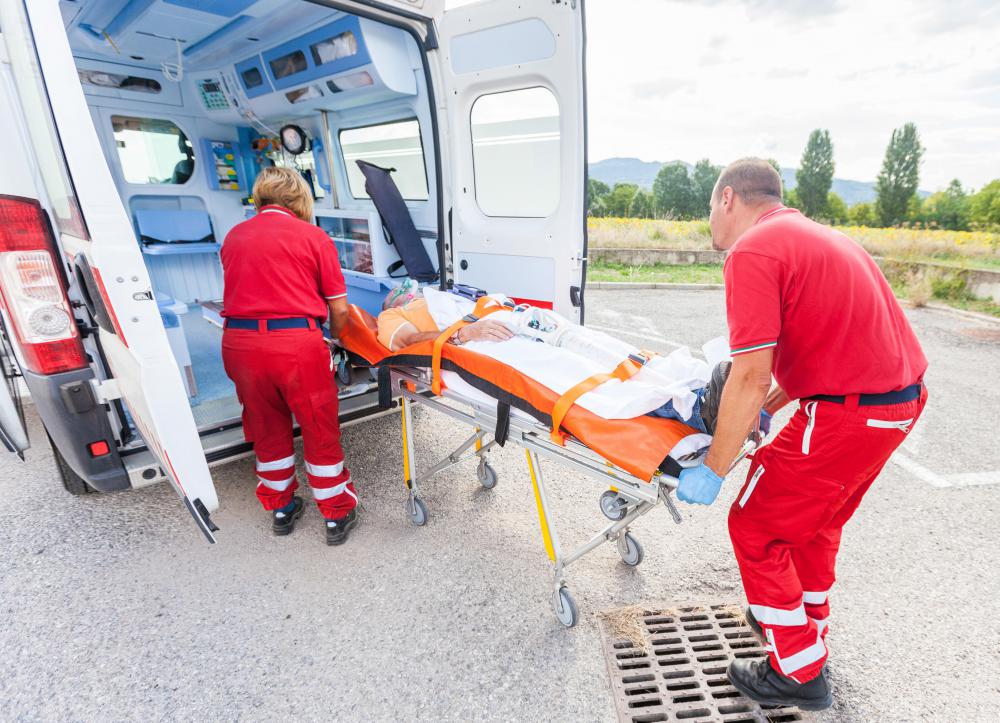
Injuries to this artery are generally very serious. People who break their legs, who are shot in the leg, or who are involved in any sort of trauma impacting the lower body are usually monitored really carefully to make sure the artery is still in tact. It pumps so much blood so quickly that even small punctures or lacerations can mean that a person will bleed to death in a matter of minutes. External injuries like gunshot wounds or serious accidents often produce a lot of blood externally, but fatal bleeding can be completely internal, as well. If a piece of bone fragment severs the artery on the inside, for instance, blood can leak out to the other organs and never make it back to the heart, which will usually end in death.

Surgeons also usually have to exercise special caution when operating near the artery. There is a triangular shaped region in the upper thigh, next to the groin area, where the artery intersects with the femoral vein and the femoral nerve that can serve as a landmark for incisions. This area is known as Scarpa's triangle for the Italian surgeon Antonio Scarpa who first identified it, but it can also simply be called the “femoral triangle.” Using the triangle as a reference point enables surgeons to make more accurate cuts and can also help prevent injury to the femoral region during surgery. The femoral pulse is also taken from this region, which is a quick way for medical providers and responders to get a quick sense of whether blood is flowing normally.
Importance for Catheters

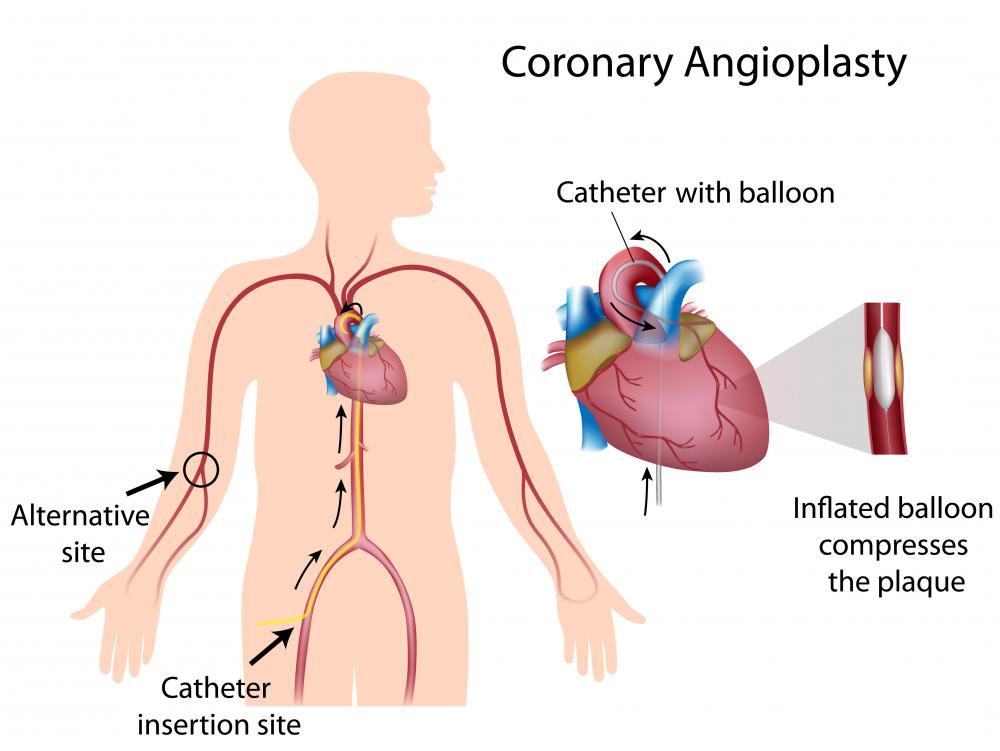
Traditionally almost all cardiac catheters are inserted through the femoral artery, since it is a wide terrain that gives comparably easy access to most of the vascular system. In the hands of trained practitioners femoral catheters are often some of the most efficient despite the risks. Just the same, some experts look for alternative means of administering catheters since the pressure that is needed to stop bleeding after the procedure sometimes cause relatively serious complications.
Chemotherapy Applications

Many of the same reasons the artery is so valuable for catheterizations also make it a good choice for injecting certain chemotherapy drugs. Chemotherapy is an intensive regimen designed to kill cancerous cells and growths, and it often involves a number of different injections. Being able to introduce drugs directly into the main arterial bloodstream can make certain compounds more effective more quickly, which can in some cases shorten treatment time.
In Embalming
Many professional embalmers also use this artery to introduce preservative chemicals into the body after death. Most of these chemicals are designed to help delay the decomposition process, and usually need to spread throughout the corpse in order to create a realistic and lasting effect. The body's blood supply is typically drained before this happens, though, and in most cases that draining happens from the jugular vein, not from any of the arteries.
AS FEATURED ON:
AS FEATURED ON:


-
![The femoral artery carries blood to the lower part of the body.]() By: snapgalleriaThe femoral artery carries blood to the lower part of the body.
By: snapgalleriaThe femoral artery carries blood to the lower part of the body. -
![Most cardiac catheters are inserted in the upper part of the femoral artery, including those used in coronary angioplasties.]() By: Alila Medical MediaMost cardiac catheters are inserted in the upper part of the femoral artery, including those used in coronary angioplasties.
By: Alila Medical MediaMost cardiac catheters are inserted in the upper part of the femoral artery, including those used in coronary angioplasties. -
![Cuts to the femoral artery are always fatal unless they receive immediate medical attention.]() By: william87Cuts to the femoral artery are always fatal unless they receive immediate medical attention.
By: william87Cuts to the femoral artery are always fatal unless they receive immediate medical attention. -
![Most arteries, including the femoral artery, are responsible for distributing oxygenated blood throughout the body.]() By: stockshoppeMost arteries, including the femoral artery, are responsible for distributing oxygenated blood throughout the body.
By: stockshoppeMost arteries, including the femoral artery, are responsible for distributing oxygenated blood throughout the body. -
![The femoral pulse is taken from the femoral artery.]() By: joshyaThe femoral pulse is taken from the femoral artery.
By: joshyaThe femoral pulse is taken from the femoral artery.



Discussion Comments
@JimmyT - Well to half answer your question, when the leg is removed they simply stop the blood flow of the artery by clamping it, then they cut off the leg.
I am not a medical person, but I am figuring they can attach the open end of the femoral artery to another artery or find a way to loop it back to connect.
Since the leg is gone there is no reason to provide blood flow to it, so that is how this procedure is possible, but I am also wondering exactly what else the femoral does in regards to the upper part of the body and if there are any long term consequences to the body in general if this particular artery were to be severed, but the person was saved.
@Emilski - One thing I do not understand is that since the femoral artery is so important, then how can it be removed without future problems for the patient?
I know that if the artery is removed, it almost always results in an amputation, but what happens to the blood flow that the artery supplies the body?
I really would find it to be very odd if there are not any long lasting effects, like prolonged circulation problems or lack of blood flow to the body that is usually supplied by this artery, along with the missing appendage.
@titans62 - You are correct, although I think a gunshot wound is serious anywhere. None the less this artery is very vital for blood flow and if severed can cause death very quickly.
This is a major problem with soldiers becoming shot in the leg, as the larger bullets which are used in warfare have a greater chance of severing the artery and causing death to the victim.
Also, if this artery is severed, what usually results is amputation, after the artery is clamped off to prevent the loss of blood.
The reason for the amputation is because if the artery is not clamped off and the blood flow stopped then the patient will bleed to death, so that is why they usually just remove the leg when the artery is severed beyond repair.
The only things that I know about the femoral artery in the human body is that it is important and it can cause death very quickly if it is severed.
I have heard stories of people being shot in the leg and they end up succumbing to their wound and dying quickly simply due to the fact that the femoral artery was severed and they lost too much blood too quickly.
I know very little about this artery and the fact that if it is severed causes a quick death makes it seem like getting shot or wounded in the leg does not necessarily mean you are fine and makes the situation very serious if it is anywhere near the area this particular artery is located.
Post your comments