
At MyLawQuestions, we're committed to delivering accurate, trustworthy information. Our expert-authored content is rigorously fact-checked and sourced from credible authorities. Discover how we uphold the highest standards in providing you with reliable knowledge.
What is the Failure to Yield?
 Mary McMahon
Mary McMahon
Mary McMahon
Failure to yield is a traffic infraction where a driver does not yield to traffic with the right of way. This can result in a ticket and a fine, and in regions where a point system is used to track traffic infractions, a point may be added to the driver's license. If too many points accrue within a set time period, the government can suspend or revoke the license. Traffic laws vary by region, and it is advisable to check on right-of-way laws before driving in a different area.
Traffic can have the right of way under a number of circumstances. At a four-way stop, the driver who arrives first has the right of way. At an intersection where some drivers have a stop sign and others do not, the through traffic has the right of way and the drivers at the stop must wait. Likewise, some intersections use yield signs, where people are allowed to go straight through the intersection if no traffic is present, but otherwise must stop and yield right of way. A driver who ignores these signs can be charged with failure to yield.

Traffic lights have similar rules. In many regions, pedestrians always have the right of way and drivers may receive a failure to yield ticket if they do not allow a pedestrian to cross the street. Emergency traffic, including fire trucks, police cars, and ambulances, also has the right of way if the lights and/or sirens are on. All traffic on the road must pull over to allow the emergency vehicles through, and the fine for failing to yield in this situation is sometimes very high because of public safety concerns.

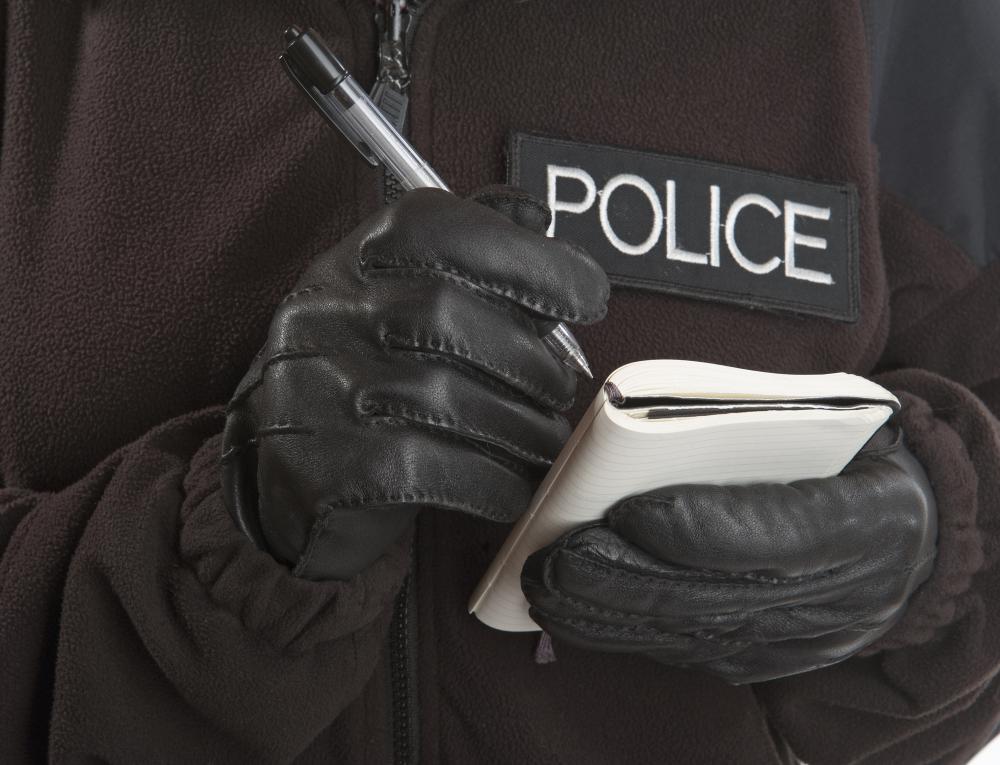
A police officer who notices a failure to yield may simply warn the driver rather than writing a ticket, depending on the circumstances. Drivers should not count on warnings when they are stopped. If a ticket is written, the driver has the option of pleading guilty and paying the ticket on the court date or by mail, or the driver can contest the claim. Drivers charged with failure to yield will need some supporting evidence to bring to court or to present in a letter if the court allows drivers to contest by mail.

In many regions, drivers can erase minor traffic infractions from their records by attending a court-approved traffic school after pleading guilty and paying for the ticket. Drivers may want to take advantage of this, as infractions on a driver's record can result in higher insurance rates, in addition to potentially endangering her license. Courts usually only allow traffic court once within a set period of time; if a driver gets another ticket within this time period, the second ticket will go on the record.
Mary McMahon
Ever since she began contributing to the site several years ago, Mary has embraced the exciting challenge of being a MyLawQuestions researcher and writer. Mary has a liberal arts degree from Goddard College and spends her free time reading, cooking, and exploring the great outdoors.
Learn more...
Mary McMahon
Ever since she began contributing to the site several years ago, Mary has embraced the exciting challenge of being a MyLawQuestions researcher and writer. Mary has a liberal arts degree from Goddard College and spends her free time reading, cooking, and exploring the great outdoors.
Learn more...AS FEATURED ON:
AS FEATURED ON:


-
![Drivers must yield to a firetruck if its lights and sirens have been activated.]() By: konstantin muchnikDrivers must yield to a firetruck if its lights and sirens have been activated.
By: konstantin muchnikDrivers must yield to a firetruck if its lights and sirens have been activated. -
![Failure to yield the right of way at a traffic light can result in a ticket.]() By: HappyAlexFailure to yield the right of way at a traffic light can result in a ticket.
By: HappyAlexFailure to yield the right of way at a traffic light can result in a ticket. -
![Police cars have the right of way if its lights and/or sirens are on.]() By: travis manleyPolice cars have the right of way if its lights and/or sirens are on.
By: travis manleyPolice cars have the right of way if its lights and/or sirens are on. -
![A failure to yield infraction can result in a ticket and a fine.]() By: petert2A failure to yield infraction can result in a ticket and a fine.
By: petert2A failure to yield infraction can result in a ticket and a fine. -
![A police officer who notices a failure to yield may simply warn the driver rather than writing a ticket.]() By: LukaTDBA police officer who notices a failure to yield may simply warn the driver rather than writing a ticket.
By: LukaTDBA police officer who notices a failure to yield may simply warn the driver rather than writing a ticket.



Discussion Comments
I have occasionally seen drivers receive tickets for failure to yield to an emergency vehicle, which surprises me a little. I guess a police officer who is not part of the emergency run can cite drivers who fail to pull over for the other emergency responders. The only other scenario I could imagine is a driver causing an accident with an emergency vehicle because he failed to pull over in time. Someone might get cited for failure to yield after the traffic investigation was finished.
Post your comments