
At DelightedCooking, we're committed to delivering accurate, trustworthy information. Our expert-authored content is rigorously fact-checked and sourced from credible authorities. Discover how we uphold the highest standards in providing you with reliable knowledge.
What is the Difference Between White Meat and Dark Meat?
 Tricia Christensen
Tricia Christensen
Tricia Christensen
White meat and dark meat are different in a number of ways, but color, chemical make-up, and nutritional composition are usually the most important. When most people talk about white and dark meats, they are referring to poultry like chickens, turkeys, and ducks. The muscles that the birds use constantly — the legs, for instance, and the thighs — usually make up the dark meat, which is brown or tan in color and somewhat rough. On the other hand, the muscles that are used only occasionally tend to produce lighter, “white” tissues with a softer texture. Both are edible and can typically be used interchangeably, although they do have a slightly different taste.
Biological Reasons for Color Shift

The chemical difference between white meat and dark meat usually has to do with how the animal used the different parts of its body during life. Chickens and turkeys, for example, spend most of their time walking. Their thigh muscles are often very well developed as a result, and they are accordingly rich in dark meat. Wings and breasts, on the other hand — which are rarely used in most of these birds — tend to be primarily white meat, which is softer and less dense.

Things are different in ducks, geese, and other animals that spend most of their time in flight. The breasts and wings of these birds are predominantly dark, and particularly active birds may yield entirely dark meat. White meat is found in the legs and thighs if it is present at all. Almost all of this can be explained with biology.
Muscles that are used rarely or for quick escapes, like the breast of a chicken, are made up of what is known as “fast-twitch” fibers. These produce the chemical glycogen, which is stored in the muscle tissue and is easily accessible in case of emergency. It is used predominantly for short burst of energy. Fibers in this category have very little pigmentation.

In comparison, muscles that fuel sustained activity contain predominantly “slow-twitch” fibers that are fueled not through glycogen but through stored fat. Fat allows the muscles to keep energy levels up for long periods of time, but this process requires a near constant supply of oxygen. Myoglobin, a protein, stores oxygen in these muscle cells to facilitate the energy conversion. It has quite a bit of pigment, which makes the meat appear darker in color.
Nutritional Differences

Both white and dark meats are generally considered rather healthful, at least in comparison to other meats like beef. Dark meat often contains slightly more calories than its lighter counterparts because it tends to be higher in fat, but it is also widely believed to contain more helpful vitamins and minerals. Chicken drumsticks contain almost 10 times the amount of folate that breasts do, for instance, and nearly double the concentrations of iron and zinc. These proportions are comparable for other bird types.
Taste Profile

White meat typically has a milder flavor than its darker counterparts, and is often what people associate with the “standard” taste of chicken, turkey, or other poultry. When cooked properly, it can be tender and juicy, and it can blend well with a variety of flavors and sauces. It's easy to overcook the breast meat, however, and many people find it too dry. Darker cuts have more fat and take longer to cook, so they tend to be juicier, but they also have a more pronounced game taste. They are often less expensive to purchase as well, and are sometimes considered inferior as a consequence.
Questions Surrounding Caging

People often wonder why there are distinct differences between the muscle tones of animals that grow up in cages, as is common in commercial poultry farms. These birds rarely get to use any of their muscles, which would seem to suggest that they should produce all white meat. In most cases, though, the differences in fast-twitch and slow-twitch composition are genetic more than anything. A chicken that rarely if ever gets to walk around will typically still have a lot of myoglobin in its legs as an evolutionary matter, which will lead to pockets of dark meat when it is eventually cooked.
Poultry Meat Classifications
There are a lot of ways to classify meat products, though the terms “white” and “dark” are almost exclusively used in the context of poultry. Saying that something is “white meat” is often a way of distinguishing it from beef, venison, and other large game that are typically known as “red.” There is some controversy when it comes to how pork should be described, but it is usually considered red based on its color before cooking. Farmers in the United States have pushed to have pork labeled as “The Other White Meat®,” in part as a way of associating it more with chicken than beef where health and calories are concerned. Most food experts teach that the only “true” white meat is poultry. Fish can sometimes be considered under this category, but the distinction between white and dark meat is limited to birds.
Tricia Christensen
Tricia has a Literature degree from Sonoma State University and has been a frequent DelightedCooking contributor for many years. She is especially passionate about reading and writing, although her other interests include medicine, art, film, history, politics, ethics, and religion. Tricia lives in Northern California and is currently working on her first novel.
Learn more...
Tricia Christensen
Tricia has a Literature degree from Sonoma State University and has been a frequent DelightedCooking contributor for many years. She is especially passionate about reading and writing, although her other interests include medicine, art, film, history, politics, ethics, and religion. Tricia lives in Northern California and is currently working on her first novel.
Learn more...AS FEATURED ON:
AS FEATURED ON:


-
![Duck is generally considered dark meat.]() By: Glen MacLartyDuck is generally considered dark meat.
By: Glen MacLartyDuck is generally considered dark meat. -
![Red meat.]() By: Giovanni BurliniRed meat.
By: Giovanni BurliniRed meat. -
![Venison stew is a rustic dish popular in many countries.]() By: BillVenison stew is a rustic dish popular in many countries.
By: BillVenison stew is a rustic dish popular in many countries. -
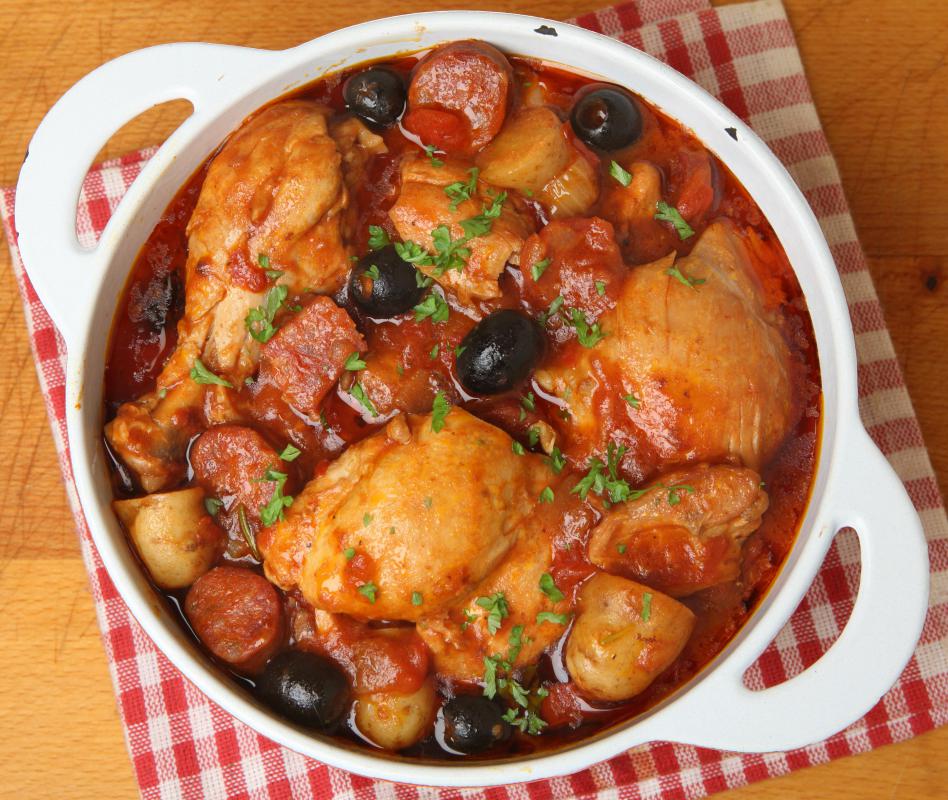
![Leg quarters are often used to make slow-simmering chicken cacciatore.]() By: Joe GoughLeg quarters are often used to make slow-simmering chicken cacciatore.
By: Joe GoughLeg quarters are often used to make slow-simmering chicken cacciatore. -
![Many food experts say that the only “true” white meat is poultry.]() By: Minerva StudioMany food experts say that the only “true” white meat is poultry.
By: Minerva StudioMany food experts say that the only “true” white meat is poultry. -
![Chicken wings fall under the dark meat category.]() By: VitosChicken wings fall under the dark meat category.
By: VitosChicken wings fall under the dark meat category.




Discussion Comments
@ parmnparsley- You ask an interesting question, and I wonder what the answer is. I am not sure, but now that I think about it, I have observed similar differences in in the poultry you find at the local grocery store, and wild game like quail and pheasant meat. The meat from these animals seems a little darker, a little more stringy, and it definitely poses a gamy flavor not present in store bought poultry.
I would be curious to know the answer to this too. I second your inquiry. Maybe a biochemist or biologist could answer this question.
I wonder if the dark meat vs white meat debate has anything to do with the domestication of animals. Wild boar meat is much darker than domesticated pig meat, but wild boars are simply feral pigs. They are genetically the same as pigs that are raised in captivity. I wonder if the diet, activity level, and muscle use has anything to do with this observable difference. Does anyone know if this is the case?
Post your comments