
At WiseGEEK, we're committed to delivering accurate, trustworthy information. Our expert-authored content is rigorously fact-checked and sourced from credible authorities. Discover how we uphold the highest standards in providing you with reliable knowledge.
What Is the Difference between the Anterior and Posterior Pituitary?
The essential differences between the anterior and posterior pituitary start as each part forms in an embryo. The posterior pituitary forms from neurons in the evolving hypothalamus forming at the base of the human brain, while the anterior pituitary forms from skin tissue that originates in the roof of the mouth. The anterior pituitary becomes an endocrine gland producing and secreting hormones for the body and connects to the posterior pituitary when fully formed. Meanwhile, the posterior pituitary remains connected to the hypothalamus, functioning as a repository for hormones produced by the hypothalamus and receiving messages from it that regulate when hormones are to be released to and through the anterior pituitary. Though the anterior and posterior pituitary organs work closely together for hormone regulation, they are essentially two different organs in physiology and function.
The medical term for the pituitary is the hypophysis. It is made up of the adenohypophysis, or the anterior lobe, and the neurohypophysis, or posterior part. Both are controlled directly by neurons and axon messenger pathways from the hypothalamus, and share a local vascular network with the hypothalamus. This network of arteries, veins, and capillaries connects to the body's bloodstream, and transports hormones to other endocrine organs, such as the thyroid, ovaries, adrenal, and other glands. These glands also send feedback signals to the posterior pituitary that adjust hormone releases relative to the body's needs.

Hormones developed in the anterior pituitary regulate physiological processes related to growth, reproduction, and metabolism. For example, it secretes hormones when it gets a signal from the hypothalamus to deliver growth hormones to bones; or when oxytocin is released from another part of the body, which stimulates the anterior pituitary to release hormones to stimulate milk gland contractions in breast-feeding mothers. In the anterior pituitary, adrenocorticotropic hormone (ACTH) is sent to the adrenal glands to stimulate the production of glucocorticoids to respond to stress reactions or fear. Endorphin releases produce a sense of well-being to counterbalance pain or danger signals that trigger adrenaline releases.

The posterior pituitary, unlike the anterior, is not a gland; this organ is a collection of vascular network and neural pathways from the hypothalamus to the anterior pituitary. It produces no hormones; rather, it stores them for the hypothalamus, which can secrete them when signaled to work in conjunction with other anterior pituitary hormones. From the storage in the posterior, vasopressin hormones that regulate water retention with the kidneys or that can elevate blood pressure can be released by hypothalamic signal.

Under high-powered electron microscopes, the physiological differences between the anterior and posterior pituitary cells are readily apparent. The cells of the anterior are clearly endocrine cells, and the cells of the posterior are clearly neural cells. The controls of the anterior and posterior pituitary also show that the anterior is controlled by bloodborne release factors from the hypothalamus, while nerve signals control the posterior pituitary.
AS FEATURED ON:
AS FEATURED ON:









-
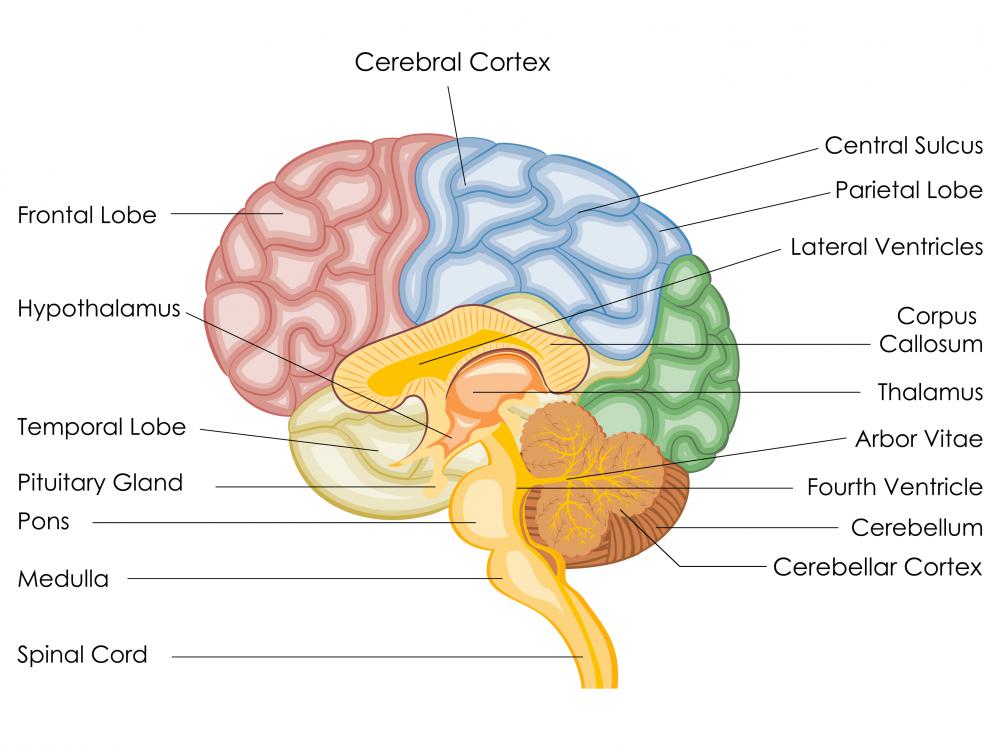
![The pituitary is controlled directly by neurons and axon messenger pathways from the hypothalamus.]() By: stockshoppeThe pituitary is controlled directly by neurons and axon messenger pathways from the hypothalamus.
By: stockshoppeThe pituitary is controlled directly by neurons and axon messenger pathways from the hypothalamus. -
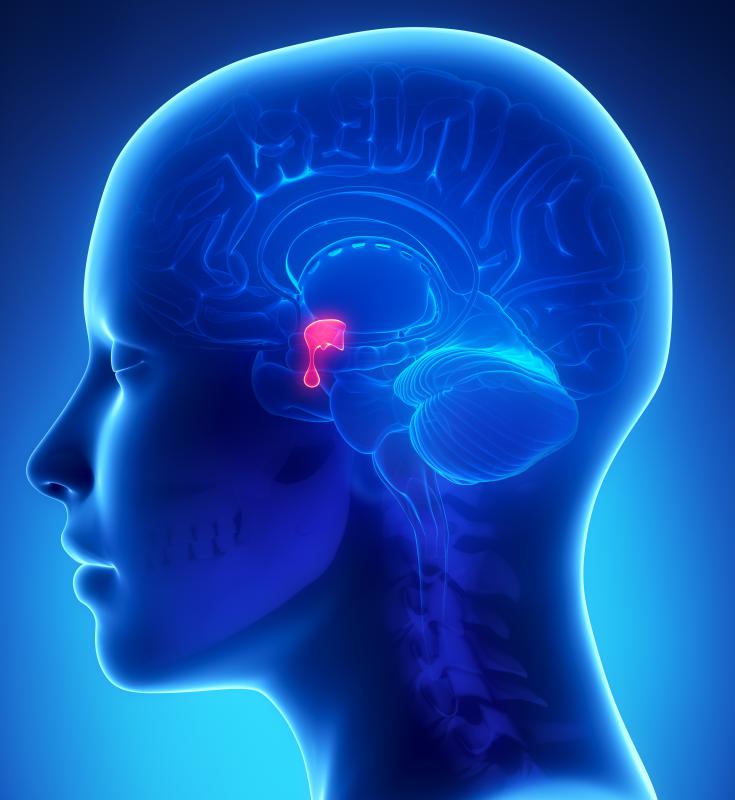
![Located in the head, the pituitary gland produces hormones and regulates several other glands of the body's endocrine system.]() By: CLIPAREA.comLocated in the head, the pituitary gland produces hormones and regulates several other glands of the body's endocrine system.
By: CLIPAREA.comLocated in the head, the pituitary gland produces hormones and regulates several other glands of the body's endocrine system. -
![Endorphin releases produce a sense of well-being to counterbalance pain.]() By: dmitrimarutaEndorphin releases produce a sense of well-being to counterbalance pain.
By: dmitrimarutaEndorphin releases produce a sense of well-being to counterbalance pain. -
![ACTH is sent to the adrenal glands to stimulate the production of glucocorticoids to respond to fear.]() By: nerthuzACTH is sent to the adrenal glands to stimulate the production of glucocorticoids to respond to fear.
By: nerthuzACTH is sent to the adrenal glands to stimulate the production of glucocorticoids to respond to fear. -
![The anterior pituitary stimulated milk gland contractions in nursing mothers.]() By: doble.dThe anterior pituitary stimulated milk gland contractions in nursing mothers.
By: doble.dThe anterior pituitary stimulated milk gland contractions in nursing mothers. -
![Vasopressin hormones that can elevate blood pressure can be released by hypothalamic signal.]() By: stevemVasopressin hormones that can elevate blood pressure can be released by hypothalamic signal.
By: stevemVasopressin hormones that can elevate blood pressure can be released by hypothalamic signal. -
![Secondary hyperthyroidism may occur when the pituitary gland produces an excessive amount of thyroid-stimulating hormone.]() By: lom123Secondary hyperthyroidism may occur when the pituitary gland produces an excessive amount of thyroid-stimulating hormone.
By: lom123Secondary hyperthyroidism may occur when the pituitary gland produces an excessive amount of thyroid-stimulating hormone.





Discussion Comments
A tumor on the pituitary gland in the brain can sometimes lead to a condition known as gigantism or giantism. This affliction causes excessive growth generally significantly above most others of the same ancestry, age, race and sex.
The increased infusion of growth hormone generally through childhood from the pituitary gland can cause a person's height to skyrocket over nine feet.
Gigantism isn't simply given to someone who is just tall. There are tests that can be run to test for high levels of growth hormone.
Increased growth hormone after puberty can lead to a condition called acromegaly. This condition causes a number of disfigurements as well as possibly leading to early death.
Post your comments