
At DelightedCooking, we're committed to delivering accurate, trustworthy information. Our expert-authored content is rigorously fact-checked and sourced from credible authorities. Discover how we uphold the highest standards in providing you with reliable knowledge.
What is the Difference Between Soup and Stew?
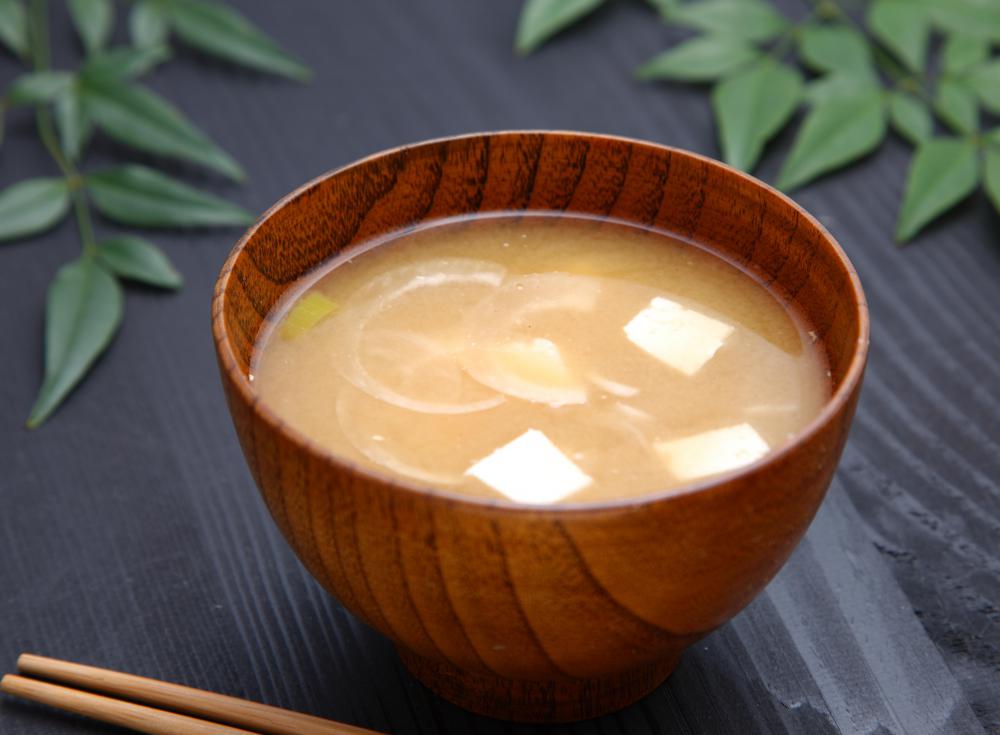
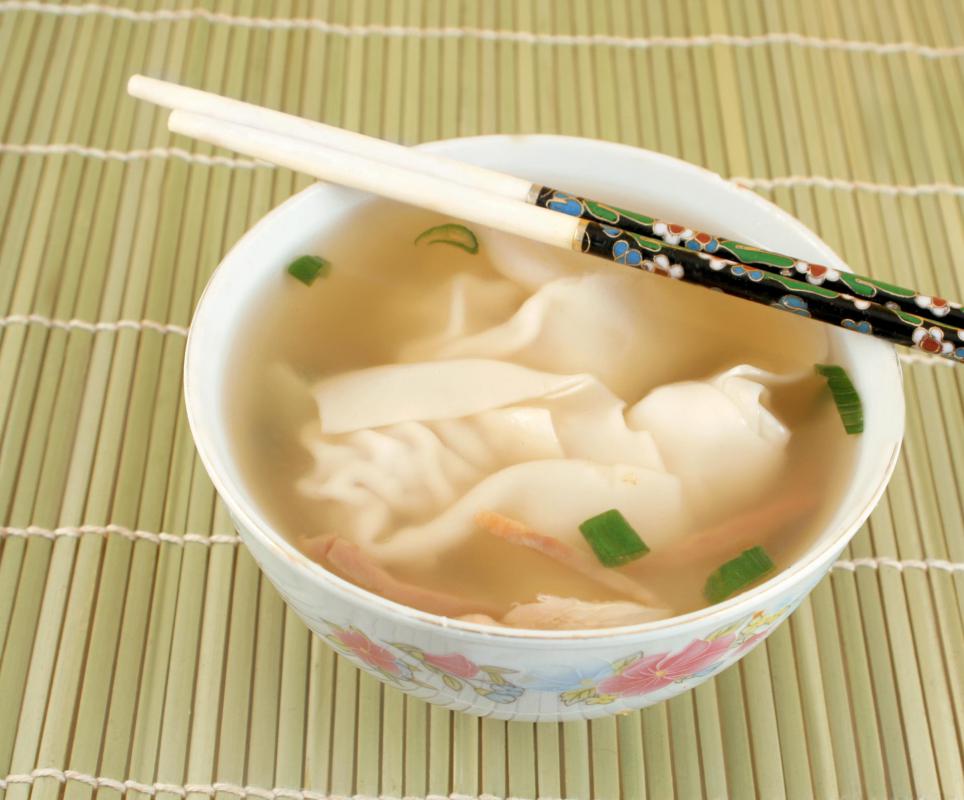
The terms soup and stew can get confusing and some dishes are referred to as either, depending on the cook. There are some dishes that can be made as a soup or a stew, such as wonton soup, gumbo stew, miso soup, and Brunswick stew. While the two types of foods may seem similar, there are some ways to differentiate between them. First, most soups are thin compared to thick stews; second, stews are almost always served warm while some soups can be served hot or cold; and third, stews are typically slow-cooked as opposed to soups that can be prepared and heated fairly quickly, depending on the recipe.
Thick or Thin

One of the most important differences between soup and stew is the thickness — when compared to one another, soups are considered thin while stews are thought to be thick. A soup is basically any combination of pasta, meat, or vegetables cooked in liquid. Most soups are "thin," as the ingredients typically include several cups of water or some type of broth; it is also possible to make soups using milk or even fruit juices. Soup is best served in a bowl or deep plate, since most of it is basically liquid.

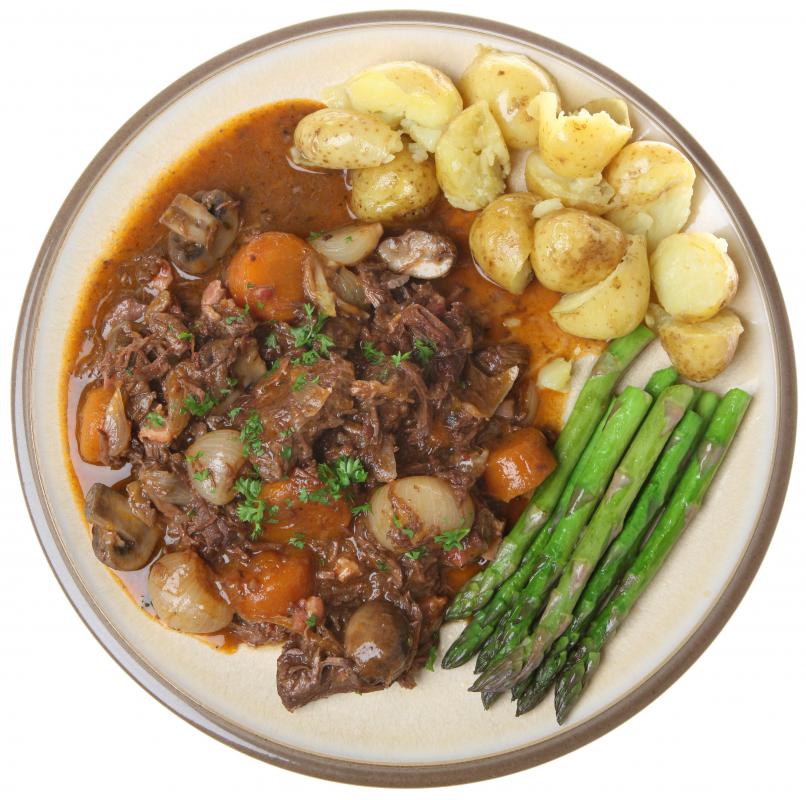
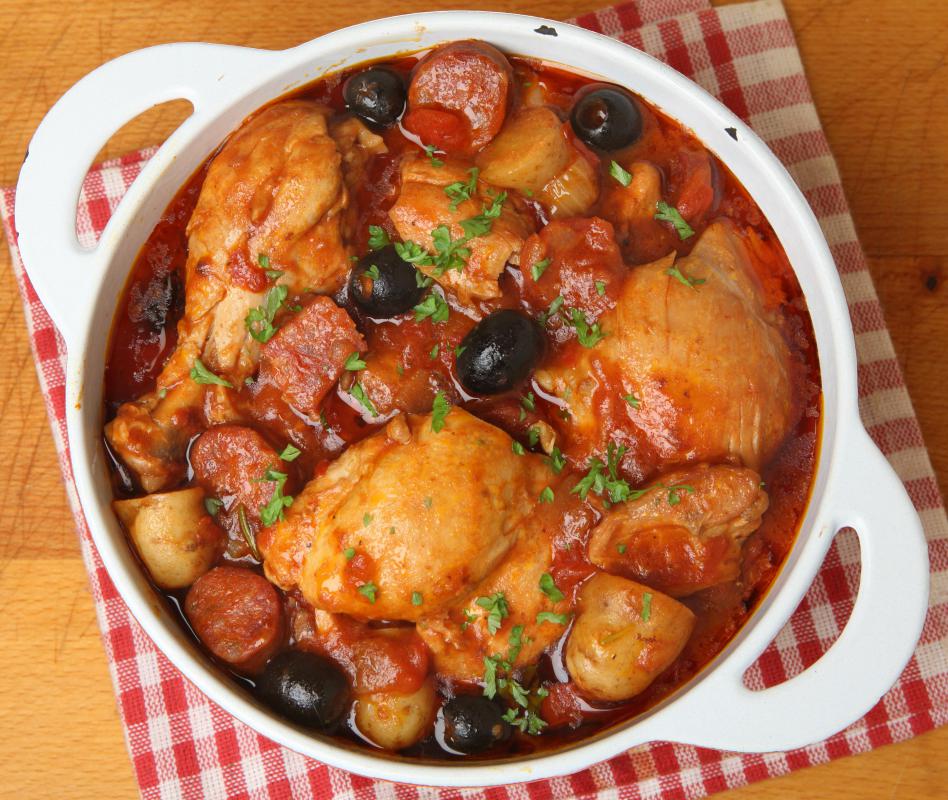
Stews can be simply described as "hearty soups," often with meats and vegetables, including potatoes. When comparing soup and stew, the latter is usually considered a main dish and soup a side dish, because stew is typically more filling than soup. The liquid in a stew is minimal, and any liquid is usually thickened to the point of being more of a gravy than a broth, making stew thicker than soup. Some thickening methods include blending some of the vegetables and adding the puree to the stew, adding an equal mixture of flour and water to act as a thickening agent, or gently boiling the stew to reduce the liquid.
Temperature

Another difference between soup and stew is the temperature at which it is served. Most soups can be eaten as either hot or cold dishes, can be cooked or uncooked, and some are even considered a dessert such as fruit soup. Stews, on the other hand, are almost always consumed hot. This is partly due to preference and partly due to the slow-cooking method of stew that usually leaves the stew warm after it is cooked and served.
Cooking Time

The time it takes to prepare and cook soup and stew is another way the two dishes are different; soup is generally quicker to make, while stew requires a longer cooking time. Part of the characteristic flavor of a stew stems from the slow cooking process, which allows the natural flavorings of the foods being simmered stay in the stew; while this process does take longer, it is thought to make the stew more flavorful. Sometimes a thickening agent is added to make the stew more gravy-like, which can take several minutes to actually thicken, adding to the length of the cooking time. Soup, on the other hand, usually relies on added flavorings, such as condiments and garnishes that do not require slow-cooking, and can be put together quickly to be heated and consumed later.
AS FEATURED ON:
AS FEATURED ON:


-
![Beef bourguignon is a classic French stew.]() By: Joe GoughBeef bourguignon is a classic French stew.
By: Joe GoughBeef bourguignon is a classic French stew. -
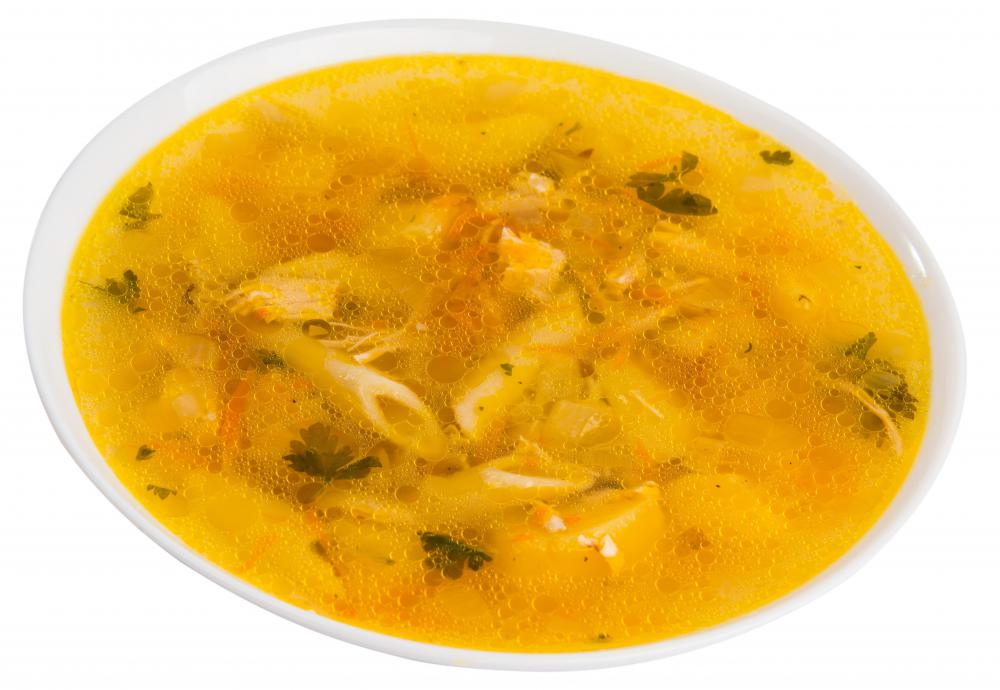
![Chicken soup.]() By: ksena32Chicken soup.
By: ksena32Chicken soup. -
![Fruit soups are often served cold and, like other pureed soups, garnished attractively.]() By: ViktorFruit soups are often served cold and, like other pureed soups, garnished attractively.
By: ViktorFruit soups are often served cold and, like other pureed soups, garnished attractively. -
![Vegetable noodle soup.]()
Vegetable noodle soup. -
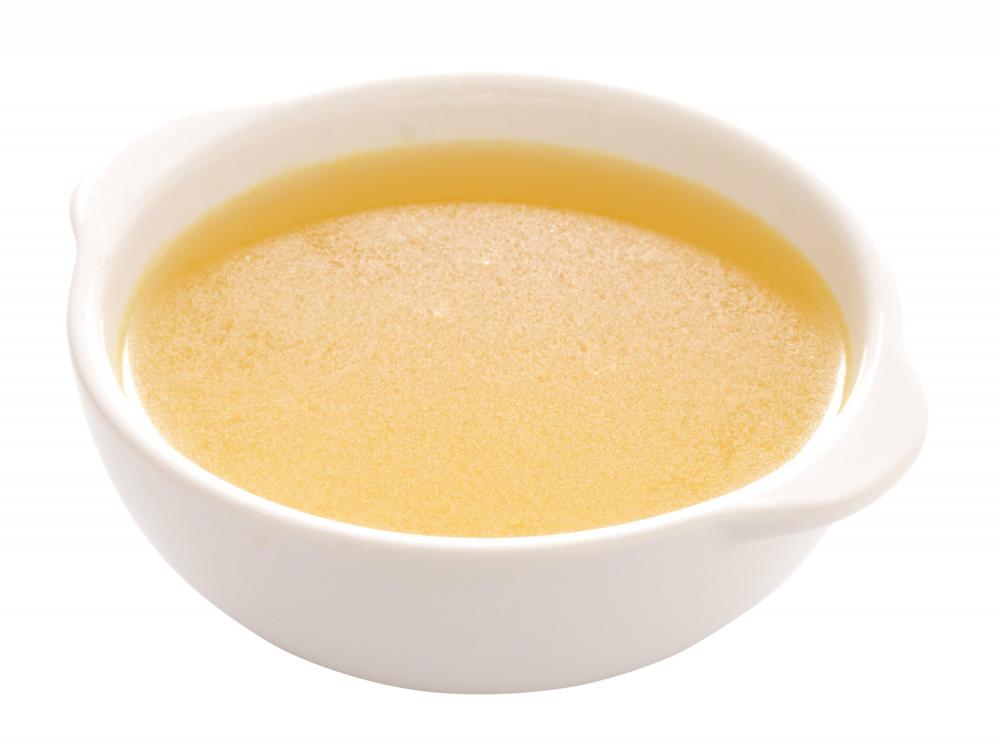
![Broth has a soft texture and mild flavor and can be used in many soups.]() By: fkrugerBroth has a soft texture and mild flavor and can be used in many soups.
By: fkrugerBroth has a soft texture and mild flavor and can be used in many soups. -
![Miso soup can also be made into miso stew.]() By: jedi-masterMiso soup can also be made into miso stew.
By: jedi-masterMiso soup can also be made into miso stew. -
![Gumbo can be a stew or a soup.]() By: cobraphotoGumbo can be a stew or a soup.
By: cobraphotoGumbo can be a stew or a soup. -
![Wonton soup can be made as a soup or stew.]() By: Graça VictoriaWonton soup can be made as a soup or stew.
By: Graça VictoriaWonton soup can be made as a soup or stew. -
![Bisque is a type of rich, creamy soup.]() By: Boris RyzhkovBisque is a type of rich, creamy soup.
By: Boris RyzhkovBisque is a type of rich, creamy soup. -
![Chicken cacciatore is a well-known Italian stew often served over pasta.]() By: Joe GoughChicken cacciatore is a well-known Italian stew often served over pasta.
By: Joe GoughChicken cacciatore is a well-known Italian stew often served over pasta. -
![Stews feature an extremely thick broth base that is more akin to a gravy than the thin broth found in soups.]() By: ViktorijaStews feature an extremely thick broth base that is more akin to a gravy than the thin broth found in soups.
By: ViktorijaStews feature an extremely thick broth base that is more akin to a gravy than the thin broth found in soups. -
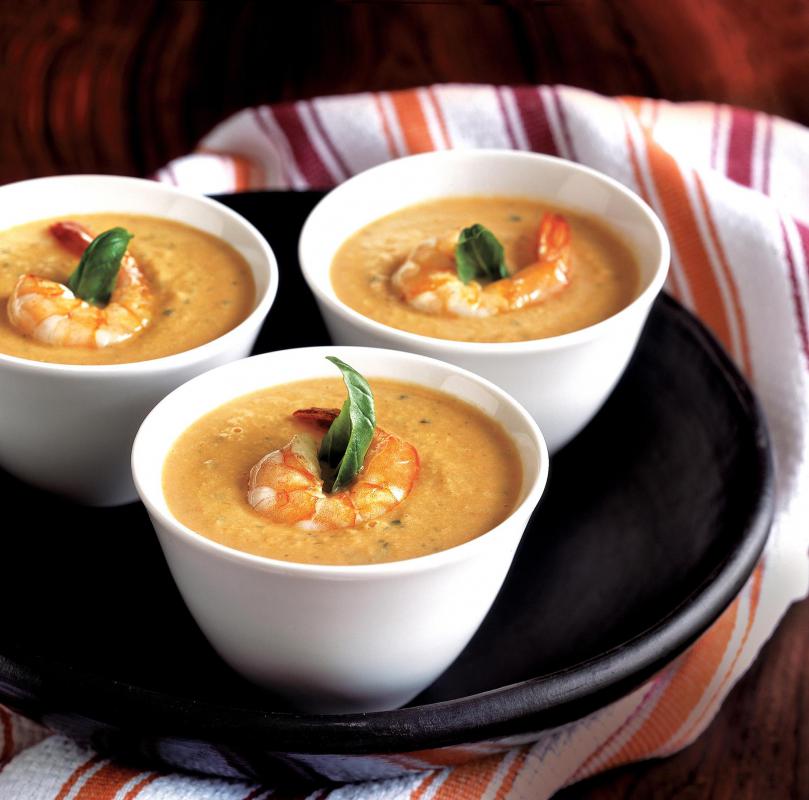
![Shrimp bisque is a thick, creamy soup consisting of diced shrimp served in a liquid of shrimp pureed with various vegetables.]() By: blueeeShrimp bisque is a thick, creamy soup consisting of diced shrimp served in a liquid of shrimp pureed with various vegetables.
By: blueeeShrimp bisque is a thick, creamy soup consisting of diced shrimp served in a liquid of shrimp pureed with various vegetables.





Discussion Comments
So a soup has more liquid and a stew has less and is more hearty.
Settled an argument. Thank you.
@orangey03 – I feel the same way. I have weekend stew during the winter, and I use a crockpot to make it, since it needs to be cooked slowly.
My favorite soup for a quick dinner is chicken noodle soup. I use either canned or steamed chicken, bouillon cubes for flavor, water, celery, carrots, pasta, black pepper and salt.
I start by dissolving the bouillon cubes in boiling water. Then, I boil the carrots and celery for ten minutes. Next, I add the pasta for ten minutes, and finally, I will add the precooked chicken, which I allow to boil in the soup for about five minutes.
It's excellent with toasted French bread for dipping. I get full off of just one bowl and a couple of slices of bread.
One big deciding factor for me in what to make for dinner is how much time it will take. Stew takes so long that I can only make it on a weekend, but soup is quick and easy.
I have been known to make a good chicken stew on a Sunday if family is coming over. It's worth investing a little time to have something hearty to serve to everyone.
@Kristee – I don't think that stew is as good after being reheated as the first time it was served. Because it is thick like gravy, you can get some weird textures going on in the refrigerator. The thickening agent will turn kind of grainy and look strange.
My mother made beef stew a lot, and it was always best the first time around. After she refrigerated it, the corn starch that she used to thicken the liquid would appear white on top, and the whole thing would look like a congealed mess.
This might not be the case with every stew, though. Some people say that leftover stew takes on a better flavor after the ingredients have more time to mesh. I just think it's hard to mesh well in a refrigerator.
I know that soups can be reheated easily, because my family used to get several meals out of one soup. We never ate stew, though.
Is stew good after being reheated? I probably won't go to the trouble of making it if I can't get more than one meal out of it.
@anon51843 and anon132320: FYI, that post on the rice is correct. It is usually served with rice, and the potatoes are cooked in the stew in the last couple of hrs. The main difference between a soup and a stew is a stew is made starting off with a roux (browned flour and oil in equal parts).
@anon235681: You know, it all comes down to personal preference. Some people serve an exceptionally thick, hearty stew in a dish, some in a bowl. Some eat it with a spoon, others with a fork. It all depends on how you prefer to eat the food. There is no particular etiquette connected with serving stew in a bowl or on a plate. So yes, I think the article answered the question about the difference between soup and stew. It all just is based on what the host or hostess, or the diner prefers.
Question still not answered. If the stew is served in a soup bowl, should it be and what utensil would be the proper one for eating, that is, a fork or a spoon? If the stew is served on a dinner plate, same question: fork or spoon?
Actually, stew is served with rice and potatoes a lot, depending on which country that you live in. It is not as common in America like it is in Western Europe. I eat rice and potatoes with stew quite often but picked up the habit in the United Kingdom. It is quite nice and is actually quite a bit healthier.
I would disagree with obsessedwithloopy's post. I have very rarely seen a stew served with rice, or pasta or potatoes (as generally stew contains potatoes) or polenta. I have, however, almost always seen it served with either crusty bread rolls or doorstep slices of fresh bread or baguette.
Sounds like the only difference is: If you can serve it on a plate, it's a stew. If you need a bowl to serve it, it's a soup.
Is it proper etiquette to serve stew on a plate or in a bowl?
Thank you. a friend of mine did not know the difference and this site really helped. I was telling him the difference and I found out that i was about 99.9 percent right.
I would add that usually, stew can not be eaten all by itself. It is richer than soup, and you usually pair it with pasta, rice, potatoes or polenta.
Post your comments