
At HomeQuestionsAnswered, we're committed to delivering accurate, trustworthy information. Our expert-authored content is rigorously fact-checked and sourced from credible authorities. Discover how we uphold the highest standards in providing you with reliable knowledge.
What is the Difference Between Propane and Natural Gas?
While natural gas occurs in nature as a mixture of methane and other gases, propane is actually a byproduct of both petroleum refining and natural gas processing. Natural gas must be cleaned before being used, and byproducts of this process include hydrocarbons like propane in addition to butane, ethane, and pentane. The difference between propane and natural gas in domestic use comes down to their energy efficiency, cost, compression, storage, and risk factors. There is very little difference, however, when it comes to how well they perform in appliances for heating, cooking, or drying.
Energy vs. Cost

Propane provides more energy per unit of volume than does natural gas. While propane is usually measured in gallons (or liters), natural gas is found in cubic feet (or cubic meters). Heat is measured in British Thermal Units (BTUs), which is the amount of heat needed to increase the temperature of 1 pound (0.5 kg) of water by 1°F (0.56°C). When the amount of energy each produces is compared, both are measured in their gaseous form.

Natural gas provides just over 1,000 BTUs per cubic foot (0.0283 cubic meters); the same volume of propane in gaseous form provides about 2,500 BTUs. This means that propane contains about 2.5 times more usable energy content. So, less propane is needed to produce the same amount of energy as natural gas.
With that said, natural gas tends to be less expensive, at up to 1/6 the cost of propane, depending on the region. Cost considerations depend on the prices of local utility companies and propane companies, however. To compare values, it is typically necessary for a user to convert gallons (or liters) to cubic feet (or cubic meters); 1 US liquid gallon (3.785 liters) is equal to about 0.133 cubic feet (0.0037 cubic meters). Utilities in colder climates might supply natural gas for less money, especially during winter months, though some rural areas may not have access to a utility company that provides gas service. In most areas, however, availability and local laws will be the determining factors.
Performance and Preference

When used for heating or cooking, most people cannot tell much difference between propane and natural gas. Some barbecue enthusiasts prefer natural gas because it is a cleaner burning fuel, meaning that it doesn't release as many pollutants into the air. Exhaust from propane might affect the taste of food, but this is also considered to be part of the charm of grilling.

Both propane and compressed natural gas (CNG) can also be used to power alternative fuel vehicles. Vehicles that run on either type require special tanks to hold the fuel; many cars are actually bi-fuel, which means they have additional tanks to hold gasoline. CNG must be kept at much higher pressure than propane, also called liquid petroleum gas (LPG), so the tanks are often larger and heavier, which can lower the vehicle's mileage. Vehicles that run on CNG tend to be more expensive than those that use LPG, as are vehicle conversion kits, but the natural gas used as fuel costs less. This makes CNG a better choice for vehicles like buses or taxis that are on the road a lot.
Storage

One difference in the physical properties of propane and natural gas is how easily they liquefy and are transported. Propane turns into a liquid at -46°F (-43°C), but when it's held under pressure, it will stay a liquid even at much higher temperatures, allowing it to be stored and carried in the portable steel tanks that can be purchased at most gas stations. Once the pressure is released, as through a valve on a barbeque grill, the propane immediately becomes a gas as long as the temperature is above -44°F (-42°C). Though most often used with portables stoves or grills, propane also can be used as a fuel for heating elements.

Natural gas can be stored in several forms, including as compressed natural gas (CNG), liquified natural gas (LNG), and in an uncompressed form. In most cases, natural gas is compressed before it can be stored or transported; it is much easier to move and extract in this form, as it can be pushed through pipes and out of valves. While it is most often supplied via a public utility company using pipes, CNG can be put into storage tanks for use in those locations where it cannot be piped in. Gas in this form is under extremely high pressure, so there is a small risk that the storage units could burst if not properly maintained.
To turn natural gas into a liquid (LNG), it must be cooled to -260°F (-162°C). At such low temperatures, it takes up even less space than CNG, so larger amounts can be put into insulated tanks and transported. Although special insulated containers must be used to keep LNG in liquid form, this type of storage is safer because any leaks will evaporate into the air.
Risk Factors
Propane is heavier than air, which is heavier than natural gas. Both propane and natural gas will dissipate into the air if they are released in an open environment, and both can pose an explosive risk if they concentrate enough and are ignited. Because propane is heavier, however, it tends to fall to the ground, collect, and pose a greater explosive risk than natural gas, which tends to rise and dissipate into the air. CNG, which is stored at very high pressure, is more likely to explode if storage tanks are damaged.
AS FEATURED ON:
AS FEATURED ON:


-
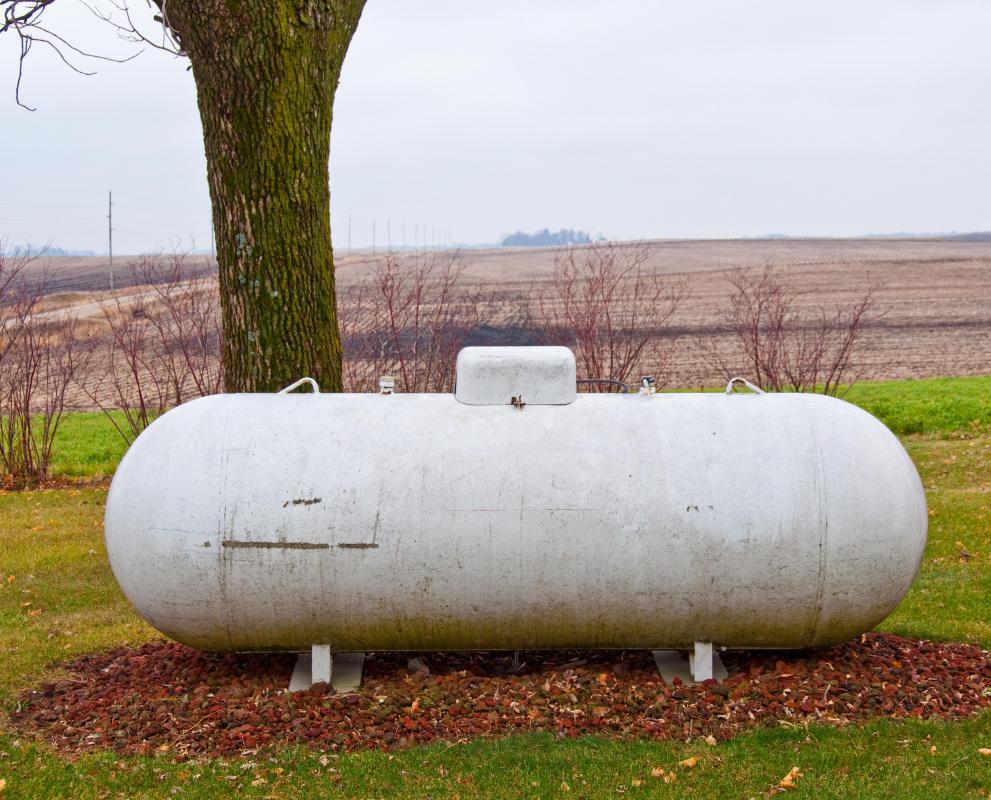
![A propane tank.]() By: Ty KonzakA propane tank.
By: Ty KonzakA propane tank. -
![A side view of a residential propane tank.]()
A side view of a residential propane tank. -
![Both propane and natural gas can be liquefied and transported by rail or pipeline.]() By: Dmitriy SladkovBoth propane and natural gas can be liquefied and transported by rail or pipeline.
By: Dmitriy SladkovBoth propane and natural gas can be liquefied and transported by rail or pipeline. -
![Propane is commonly used for outdoor grills.]() By: Jim LambertPropane is commonly used for outdoor grills.
By: Jim LambertPropane is commonly used for outdoor grills. -
![Both propane and natural gas appliances can pose a risk of carbon monoxide poisoning.]() By: jokerproBoth propane and natural gas appliances can pose a risk of carbon monoxide poisoning.
By: jokerproBoth propane and natural gas appliances can pose a risk of carbon monoxide poisoning. -
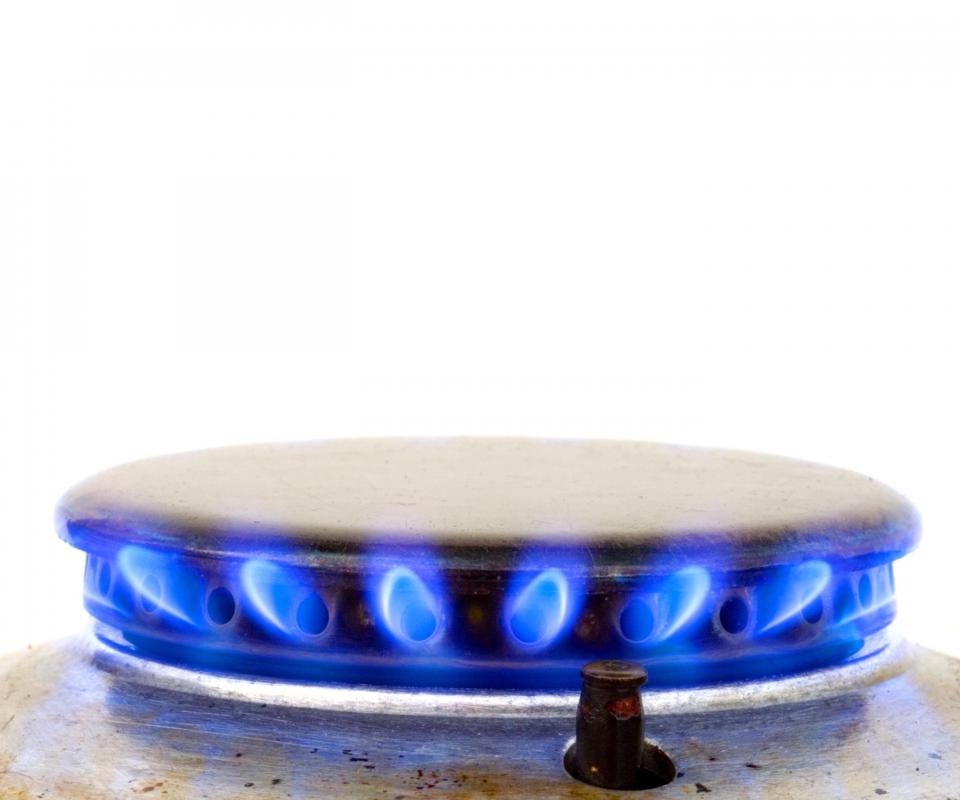
![Propane provides more energy per unit of volume than does natural gas.]() By: Mario LopesPropane provides more energy per unit of volume than does natural gas.
By: Mario LopesPropane provides more energy per unit of volume than does natural gas.



Discussion Comments
Can someone get 'high' from sniffing the mercaptan additive?
LPG: Liquefied petroleum gas. is also lp, or liquefied propane. It's just propane sold in bulk or in tanks of one pound and 20 pounds, which is the most common for barbecue torches and heaters, or the big white tank next to the house.
Butane is normally sold in lighter refills and single burner chef stoves.
CNG: compressed natural gas. LNG: liquified natural gas,
usually for truck and fleet use and occasional marine use.
NG: natural gas pipeline gas.
All have odorants added and they are not interchangeable without modification, as they all have different flow rates. Just because the threads fit, it's not the same. If in doubt, contact the maker of the appliance.
Tanks in the images severely breach H&S laws due to the surface they are installed into. There has to be a solid, thick concrete base.
Some companies would fill a bucket with LPG if they were offered money. For installations, I would suggest contacting a company strict with installations and who will refuse a new customer site which has *any* un-fixable flaw. These companies need to be serious about safety.
What I've discovered is this: if you want to heat with natural gas, then property taxes will normally be more expensive in those places than in rural places that use LP/propane gas or home heating oil, probably around $500.00 to $2500.00 more in property taxes each year, depending upon where you decide to live.
There are special cases that provide lower property taxes, but there are not many of them. Generally speaking and based on the observations I have seen through online home searching, the homes with lower property taxes may not be a good match for a single family when you take into account other things that higher property taxes provide like schools, infrastructure and community resources if you are willing to pay for these things.
I have been looking for a home for over seven years and each time I look at a home, I check the property tax costs then see what type of heating fuel the home has to do a comparison and assume natural gas is cheaper to use.
What is propane and what is LPG?
I have an old RV with a water heater that recently went "south". The problem in the Temperature control valve. The physical space is extremely limited, and the only Control valve I can find which will hook up without "adapting" just happens to be set up for NG and has a rating of 4"WC. Of course, my RV uses LP gas which is rated at 11" WC. What does this pressure measurement mean? Is it the "upstream" pressure of the orifice?
Anytime you're dealing with a flammable gas any answer that states "your probably fine" means clearly that you are also probably not fine. Engage a professional if you have doubts.
How can I domestically (self) convert a natural gas equipment to use propane gas? I recently purchased a tankless NG water heater that I need to convert to PG use.
@Anon151474: Yes, propane is dangerous but so is gasoline. But we are so used to using gasoline that we have forgotten just how dangerous it is. Any time you place a large amount of energy in a small package: propane, LNG, gasoline, batteries, etc. then you have a potentially dangerous situation.
I am an engineer and recognize that if we want to move something from place A to place B, it takes energy. The real challenge is to store, control and utilize that energy in a safe responsible manner.
Clean natural gas does not have any odor and is difficult to detect without specialized equipment. So, for safety, the gas company adds an odorant, mercaptan, to the natural gas before it is distributed to their customers. The distinctive smell you associate with natural gas is actually the mercaptan to make the dangerous leaks easily detectable.
When any gas expands from a high pressure to a lower pressure, it causes cooling. If the expansion is at the orifice in your appliance, any water in the gas has the potential of freezing. Therefore both gasses must be dry, free of any water to avoid blockage due to ice formation. The molecules of both gasses are made up of atoms of hydrogen and carbon. When they burn, water is produced, which can cause rusting of burners and exhaust systems.
Yes the tank for LNG is heavier due to the increased pressure but that does not make them more dangerous. The real danger for either of them in an accident is the possibility of breaking off the valves or fittings releasing large volumes of toxic and explosive gases. The reason for cooling LNG for transportation in large ships is to keep the pressures down so that less weight is needed for the containers. With properly designed and maintained tanks, neither product is more dangerous than the other in a accident, it is the pipe fittings and valves that are of concern.
I decided to get rid of the natural gas to my home. The energy company raised the cost of simply having the service before you even use any from $6, to $22, per month. Seems like a lot, if I only use it December through March, and I may decide to not stay there during winter, and would only need heat in a rare case.
I thought I would change to propane if I need to heat the entire house. Wouldn’t the cost of a 100-pound tank of propane offset the cost of simply having natural gas service before I would even use any?
How can you convert methane to propane?
Can you tell how the smell of propane differs from natural gas?
I bought a 20 pound tank from a junk yard and it came out of a camper. It was full of gas and I assumed it was propane. The fitting had left hand threads. Could it possibly be natural gas?
We bought a heater and its fitting goes right into the fitting on the bottle counterclockwise. We just don't want to blow ourselves up. One has to live on.
I have a new gas fireplace and it came natural gas can I convert it to propane? I live too far out to get gas service.
what is the difference between a propane shipping tanker and LPG shipping tanker? --Anil
Can I connect propane to a natural gas heater?
Natural gas is a green house gas that hurts the atmosphere when released but propane is not a green house gas. Both are explosive when they cannot escape. but propane may me slightly more since it is heavier than air. it may settle and build up, where natural gas has a greater chance of escaping.
I'm not pleased with the article. My thoughts are that safety is at the top of any priority. Propane gas is extremely dangerous!
Propane is a byproduct of the oil refining process and therefore fluctuates in price more so than natural gas.
Since the USA is the "Saudi Arabia" of natural gas, it should be cheaper per BTU than propane. But you need to do the calculation. Just remember you have to compare apples to apples. If you buy 50 gallons of L.P. and you buy natural gas by the cubic foot you have to convert one of the measurements to the other before you can compare.
What would be the effects of using a propane gas in a natural gas furnace? And why should you convert a natural gas furnace to a propane if that is what you're using, a propane tank.
I have been trying to find out how the burners on my gas range translate from the natural gas btus posted by the manufacturer to lp btus. For instance, if a burner puts out 17000 btus using natural gas, what is the equivalent for lp. Somebody please help!
i have a cng truck that i would like to convert to propane. if i just fill the tank will it have any kind of damage?
The United States needs cheap alternative fuel for
transportation. We have abundant reserves of natural gas, but, it lacks the power of
gasoline or diesel. Propane is relatively clean
and powerful.
Why aren't we chemically converting
our natural gas to propane and using it for transportation? It would be cheap, available in
huge quantities and we already have technologies
to make it happen tomorrow?
Somebody tell T. Boon Pickens to get on the stick and make a few more billions before he dies (Mr.Pickens owns huge reserves of natural gas).
Also, natural gas should not be used as a fuel
because it takes a high level of technology to get
any range out of it. And, the lowest human common
denominator will blow himself and those around him
to smithereens, with natural gas.
Fuel is fuel. The chemical bonds are broken when ignited which generates the heat, so fuel is fuel.
However, natural gas (NG) is lighter in a utility supply line. It is very important to keep pressure in mind when discussing the differences. A regulator controls the flow of gas, or the delivery pressure, which generates the heat.
Propane is regulated to a lower delivery pressure and the orifice controls the velocity of the leaving fuel. The regulator and orifice are matched to deliver a range of temperatures. A therm is 100,000 BTUs or 100 cubic feet of natural gas.
Don't waste your time figuring carbon footprints.
Please advise: What is the concern of installing wall-mounted space heaters in each large area room operating off a single propane supply line. I also have added carbon monoxide detectors. I have also installed fresh air floor vents drawing air from beneath the entire crawl space which is also vented to the outside.
Each wall-mounted space heater includes its own emergency shut off valve and each heater has a built in ODS (oxygen depletion safety shutoff), which shuts off the heater/pilot light whenever there is not enough fresh air.
All roof overhang eves around the house are vented and open into the attic. We have a metal roof with a vapor barrier and insulation for breathing purposes and venting. No odor of LPG is present and each area is comfortably controlled. Am I wrong or does make sense for a cabin in the woods?
I have a house in a remote area so I have propane delivered like many people do.
I installed a direct-vent gas fireplace and converted it to propane. It works fine, but the flames are low and I can't get that "roaring fire" look that the same fireplace produced in the showroom.
I am thinking this may be because propane burns hotter and more importantly, is heavier than air as opposed to natural gas. Perhaps pressure is lower too. Is there any way to get natural gas delivered in a tank? It would just be for the one appliance, the fireplace.
when using lp gas for heating in the home, should you use copper or black pipe inside the home?
Marvelous explanation! Very professional and well done! I totally have the points, thanks a lot!
When I bought a water heater recently at Home Depot, there were units made for natural gas and different units sold for use with propane. They were not interchangeable.
I live in an area that permits fireplace burning on a no-burn day if there is no natural gas service. We have a propane tank. Is this the same as natural gas service or can we burn our fireplace?
Does propane contain more moisture than natural gas? We have a Jenn-Air stovetop that has rusted out and were told that propane could be the issue.
Collegeville, PA
Since propane and natural gas are measured and priced differently, which one in your opinion is a cheaper way to heat your home? I have both options.
Hi, I just purchased a vent free fireplace online and when i got home I discovered it was lp gas or propane. how do I use that? i was going to get a gas line connected in my house for natural gas, but this unit cannot be converted, it has to be propane. So how does that work?
Can I provide propane as a back up fuel source for boilers and water heaters that are now connected to natural gas? Is it fair to say that I will lose 20% to 30% capacity? Are there special devices that need to be connected to provide the ideal back up support fuel?
I seriously need to know if Natural Gas is less expensive than Propane in the long run. If Natural gas gives off less BTU's than propane, does it really save you money to run all of your appliances on it? Right now we have propane and we are thinking of getting a new furnace which they are telling us will save us approximately $1200 a year. Is this true?
In order to compare costs of the different gases we need to be able to compare how much gas is used to boil say, 1 liter of water. However when I buy LPG (Propane) I buy 45kg. When I buy Natural Gas (Methane) I buy kWh. Is there any way to compare the energy output of the two products?
The article above talks about the same volume of gas providing 2500 BTUs for LPG and 1000 BTUs for Natural Gas. How do I know what volume I have burned from Kg and kWh measures?
Why do butane and propane have the same uses but different sources of supply?
If LP gas contains more energy than NG, why do most of the appliance manufacturers (the ones who list the BTU ratings of the burners) have a much lower BTU rating for LP? Many list only the Natural Gas numbers. The ones that list both usually show the LP numbers to be 60% to 80% of the Natural Gas numbers (so your gas kitchen range running on LP takes much longer to heat up the item being cooked). For an example, look up the specs for a GE model J2S968SEKSS range.
Some high-end range manufacturers make the LP version a special order and (supposedly) resize the internal plumbing to get the same BTU output.
I just installed a barbecue grill set up for lpg/propane. we installed in on natural gas. The jets in the burners had to be removed. To burn on natural gas it requires more fuel. If we were to put it back on propane we would have to reinstall the jets to reduce the fuel flow.
In an industrial heat tempering oven, where temperatures need to constantly run in the 500 degree range, how would natural gas compare to propane? Since propane provides more energy per unit, which would be the better and least costly alternative?
Aaron, you can NOT use propane on a natural bbq as the orifice size and inches of water column ( pressure ) and btu content of the two fuels are different. It is a safety issue, do not attempt it.
OK, all you guys have to read up before you start piping in those gas appliances. LP gas (usually propane) and natural gas are very different as to the burn, and the air mix has to be changed in order for them to work interchangeably. many appliances can be converted, some not. you have to check with the manufacturer, or you will get toasted, or it won't burn at all.
This information is very helpful; it leaves me with a question, though. If LPG is harder to compress, how does it get transported? Is it always by pipe in gas form, or is it trucked to distribution facilities in liquid (or gas) form, then piped around cities in gas form.
Also, if I live where it is not available (piped around the city), is there any way I can get it?
What is the difference in using LPG from the petrol station to natural gas in your household heater? Can it pose a health risk?
Mercaptan is added to the gas, what about propane, is mercaptan added to propane?
I am trying to calculate my carbon footprint. The worksheet asks for therms of natural gas, but I use propane, and it is sold in gallons. Is there a formula for converting gallons of LP gas to therms of natural gas?
can i use lpg or natural gas on a bbq that says to use propane gas?
i have bought a propane gas smoker from the USA, but i live in Australia and here we only have natural gas.
what to do?
A gas appliance designated specifically for "natural gas" can usually be converted to an appliance capable of burning "propane" by the appropriate swapping out of certain elements in the air mixing system. There are conversion kits available at hardware stores. In many states you may be required to hire a plumber to perform the conversion. The components can be identified by different sized orifices. You cannot simply hook up an appliance designated for one type of gas to be fueled by a different type of gas without courting disaster.
can i use lpg or natural gas on a bbq that says to use propane gas?
I know that natural gas is far better than heating oil in terms of CO2 emissions (global warming). How does propane compare to natural gas in this regard?
Actually, according to my research, liquid petroleum gas is the name for the larger family of gases that include propane and butane.
That means that the answer to your question is, probably.
I'm not an engineer or anything, but I'd check the specs on the grill and the specs on the lpg canister and make sure they're compatible. If everything checks out, you're probably fine.
can grills that are set up for propane tanks, used lpg without any risk? thank you
Post your comments