
At DelightedCooking, we're committed to delivering accurate, trustworthy information. Our expert-authored content is rigorously fact-checked and sourced from credible authorities. Discover how we uphold the highest standards in providing you with reliable knowledge.
Pickling Cucumbers vs Regular: Unveiling the Key Differences for Your Kitchen

While all cucumbers share a common lineage, not all are created equal when it comes to their culinary destiny. According to the University of Missouri Extension, pickling cucumbers vs regular cucumbers differ primarily in size, shape, and skin texture, with pickling varieties typically being shorter, thicker, and bumpier. The United States Department of Agriculture reports that in 2020, cucumber production for fresh market and pickling totaled 793 million pounds and 47,200 acres respectively. This highlights a tailored cultivation for each cucumber's purpose. For consumers, the distinction is crucial: while freshness and crispness are universal indicators of quality, the best pickling cucumbers possess a firmness and flavor profile that withstands the pickling process, whereas regular, or slicing, cucumbers are valued for their immediate texture and taste. Choosing the right cucumber can elevate your culinary experience, whether it's a crunchy salad or a jar of tangy pickles.

Certain varieties of cucumbers have been bred specifically for use in pickling. By using these varieties, the home pickling enthusiast will end up with a crisper and more flavorful result. If growing these vegetables at home, be sure to select seeds that are labeled as "pickling" or "good for pickling" on the seed packet. Good choices include Pioneer, National Pickling, Saladin, Bush Pickling, County Fair Hybrid, Liberty Hybrid, Ballerina, Boston Pickling, and Eureka Hybrid. For salad cucumbers, recommended varieties include Sweet Slice Burpless, Salad Bush, Straight 8, Burpee Hybrid, Sweet Success, Poinsett, Indio, and Dasher II.

Pickling cucumbers typically have thinner skins than the salad type, allowing for the vinegar, brine, or other pickling solution to better penetrate the skin and flavor the meat. They are short and squat, instead of long and lean. Pickling cucumbers also usually have "warts," the little bumps on the skin that are the trademark of the classic dill pickle; salad cucumbers usually have much smoother skins. Good pickling varieties will also have fewer seeds as well, unless they have been left too long to ripen.

Cucumber varieties bred for pickling are typically gradient in color: dark green at the stem end that fades to light green at the blossom end. Salad types will be a more uniform dark green from tip to tip. The belly is the side where the growing vegetable was in contact with the soil before harvest. A pickling cucumber will typically be a lighter green in that area than a salad cucumber.

As a general rule, salad and burpless varieties do not make outstanding pickles, except for relishes or bread-and-butter pickles where a softer texture is desirable. Garden-grown cucumbers should be refrigerated immediately upon harvesting, and at least within 24 hours. Refrigeration will minimize moisture loss, which is the key to crispness. Store-bought pickling cucumbers should always be refrigerated as soon as possible in order to increase the likelihood of producing a crispy, crunchy pickle.
AS FEATURED ON:
AS FEATURED ON:


-
![A pile of pickling cucumbers.]() By: ElenathewiseA pile of pickling cucumbers.
By: ElenathewiseA pile of pickling cucumbers. -
![A sliced salad cucumber.]() By: KenishirotieA sliced salad cucumber.
By: KenishirotieA sliced salad cucumber. -
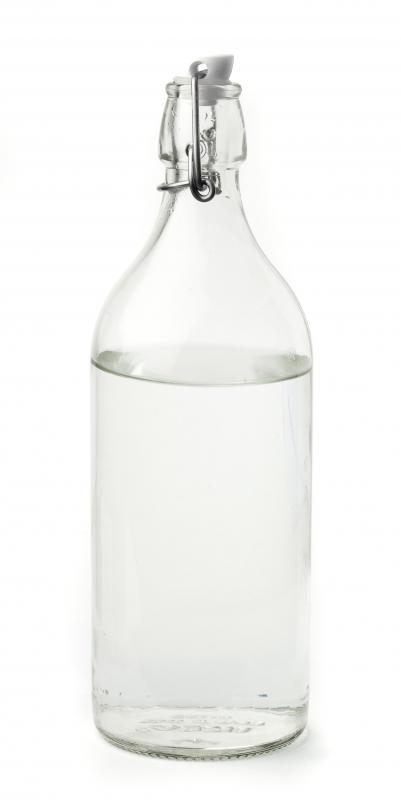
![Vinegar for pickling cucumbers.]() By: Aaron AmatVinegar for pickling cucumbers.
By: Aaron AmatVinegar for pickling cucumbers. -
![Sliced cucumbers are often featured in salads.]() By: Gennadiy PoznyakovSliced cucumbers are often featured in salads.
By: Gennadiy PoznyakovSliced cucumbers are often featured in salads.



Discussion Comments
I worked in a cucumber breeding program and the main difference was the aspect ratio (length to width. Simply put, picklers were broader and shorter and spininess (bumpiness) was allowed. Slicers were longer and thinner and spininess was less desirable.
@LisaLou: Salad cucumbers are also great in refreshing dips, chopped in chicken/tuna salad sandwiches, and sprinkled with lime and salt and served with tacos. I have found that pickling cucumbers are found in abundance at farmer's markets! They are typically fresher, and they are grown locally (usually a "rule" in farmer's markets that the produce is grown within a certain distance).
My husband's family sprinkles vinegar, pepper and salt on cucumbers, lets them sit for a few minutes, then eats them as a snack.
My ex, from Nicaragua, put lime juice and hot sauce on his and loved them.
They are also an interesting vegetable to juice (it has a distinct, clean flavor). There are lots of uses for regular cucumbers out there!
@SarahGen-- Shorter varieties of cucumbers do make better pickles and you can select them depending on how flavorful and sweet you want the pickles to be. But aside from this, there isn't that much difference between pickling and salad cucumbers. The major difference is how soon you pick them and how soon you pickle them.
If you make a "pickling cucumber" wait too long, it's going to look more and more like a salad cucumber with larger bodies, larger seeds, less flavor, less crispness and change in color. The trick is to pick he cucumbers when they're still small and fresh and pickle them right away.
@SarahGen-- I would grow either Pickle Bush, Saladin or County Fair 83. All of these are small, short cucumbers and make really good, crisp, sweet pickles.
I want to grow my own cucumbers for the purpose of making pickles. Which type of cucumber should I grow?
It seems like it is a lot harder to find pickling cucumbers than it is salad cucumbers. I imagine there is not as much of a demand for the pickling cucumbers.
I am not very creative when it comes to different ways of eating cucumbers. With a lot of foods, there are several different ways to fix and prepare them. About the only way I eat cucumbers is on a salad.
Are there other things you can do with a salad cucumber?
@ankara-- I know what you're talking about. The really long, narrow cucumbers that are individually packaged in the produce isle right?
Those are called English cucumbers. I like those too because they have very little seeds. The bigger salad cucumbers are usually soft inside and have huge seeds. English cucumbers tend to be crisper.
I think the biggest difference between pickling cucumbers and salad cucumbers is the size. When it comes to seeds and crispness, there are cucumbers that go either way in both categories. But pickling cucumbers are always going to be smaller and shorter than salad cucumbers.
Planting pickling cucumbers is something I have never done either. Do these take up about the same amount of space as salad cucumbers?
I also grow a lot of my vegetables in containers, and wonder how many pickling cucumber seeds I would need to plant to get enough for a few batches of pickles?
I grow a lot of cucumbers in my garden every year, but have never planted pickling cucumbers. I like the burpless variety the best, and always plant way more than I need.
I never have any trouble giving away fresh cucumbers. There is nothing quite like a fresh, crisp cucumber from your own garden to top your salads with.
The first time I thought about making my own pickles, and had no idea you needed to use small pickling cucumbers instead of a salad cucumber.
If you are wondering where to buy pickling cucumbers, I have had the best luck buying these at local farmers markets. Once I find a good source, I will buy from them every year.
I have found the smaller pickling cucumbers to work best. My family members really look forward to a jar or two of my homemade pickles every year.
Are there any pickling cucumber varieties that don't have these bumps? Or are pickles always made from these cucumbers?
Since I usually buy my pickles thinly sliced, the bumps are never apparent to me. But it would be weird to eat them fresh like that. Maybe I could try it if I peeled the skin.
I don't know what they're called, but the type of cucumber I like for salads is the really long ones at the grocery store. Those are more flavorful than the thicker, shorter salad cucumbers.
I agree that salad cucumbers don't make good pickles. I tried that once and the pickles came out too soft and didn't have much flavor.
However, I have eaten pickle cucumbers in salads and have liked those a lot. In fact, I think some pickle cucumbers make much better salad cucumbers. I'm not too familiar with all the different varieties, but from my experience pickling cucumbers tend to be sweeter and more flavorful and I like that.
I'm sure some people would advise strictly against using pickling cucumbers for salads. But at the end of the day, if you like the taste, then why not?
Thanks for the information. It was just what I was looking for!
I love to make pickles. I found your article about the differences in cucumbers very informative.
Thanks, Kent K.
Post your comments