
At WiseGEEK, we're committed to delivering accurate, trustworthy information. Our expert-authored content is rigorously fact-checked and sourced from credible authorities. Discover how we uphold the highest standards in providing you with reliable knowledge.
What Is the Difference between Neck and Throat Cancer?
There is often a lot of overlap between neck and throat cancer, but the biggest differences usually concern origins: each tends to start in a slightly different place, and some symptoms are more common for one over the other, too. Neck cancer, which is sometimes more generally referred to as head and neck cancer, is cancer of the oral cavity, salivary glands, paranasal sinuses and nasal cavity, as well as the larynx and lymph nodes. Throat cancer concerns the pharynx, vocal cords and sometimes the lower larynx. When either is caught really early, growths can sometimes be eradicated immediately at their point of origin. In most cases, though, the condition isn’t discovered until it has spread to the surrounding tissues, which means that the coverage areas can actually be identical. Getting an accurate diagnosis is usually a matter of looking closely at the symptoms and possible causes. Treatment and prognosis are usually similar for both, though, so there isn’t always a pressing need for a firm identification.
Classification and Overlap

The tissues of the throat and neck are very similar in many ways. Cancers that begin growing in one place often spread very quickly to other nearby areas, which is part of the reason why neck and throat cancers seem identical — in many advanced cases, their reach and symptoms are the same, and in some respects the conditions can be seen to have actually morphed into each other as things progress. The difference usually lies in discerning an origin and assigning a basic classification to the disease’s earliest formation.

There are six types of identifiable throat cancer: nasopharyngeal, oropharyngeal, hypopharyngeal, supraglottic, glottic and subglottic. Nasopharyngeal cancer affects the uppermost part of the throat, behind the nose. Oropharyngeal cancer affects middle area behind the mouth. Hypopharyngeal cancer is cancer located at the bottom of the throat. Supraglottic, glottic, and subglottic cancers affect the top, middle and bottom of the vocal cords, respectively.
Cancers of the head and neck, by contrast, usually start in the moist tissues lining the mouth, the nose, and sinuses. They can also grow in the salivary glands, though this tends to be uncommon.
Symptoms

Both of these types of cancer share the symptoms of voice changes, swelling, and persistent ear pain. They differ when it comes to some of the smaller things, though. Neck cancers often feature a lump in the neck that will not go away or growths that form in the mouth; painful sinus pressure is also common. Sufferers often find themselves coughing and throwing up blood, as well, and may also notice changes in the skin.

Throat cancer symptoms include a persistent sore throat and difficulty swallowing. It’s important to keep in mind that none of these symptoms is definitively linked to cancer, and can actually be caused by a range of much more benign illnesses and conditions. Getting an accurate diagnosis from a healthcare provider is the only way to be sure whether something is serious or not.
Causes

There can often be subtle differences when it comes to cause, too. Neck and throat cancer are often caused by excessive tobacco and alcohol usage, since these substances are usually first introduced to the mouth then travel down the throat. Throat cancer can also be caused by a mutation developed by cells in the throat. Risk factors for both include sun exposure, human papillomavirus (HPV) infection, radiation, inhalation of industrial materials such as wood dust, and unhealthy oral hygiene. Plummer-Vinson syndrome and exposure to asbestos have also been linked to both types of cancers, as has a diet that lacks fruit and vegetables.
Common Treatments

The most common treatments for neck and throat cancer are surgery, radiation therapy, and chemotherapy. Of these, chemotherapy tends to be the most common. It uses very strong chemicals to kill cancer cells at a rapid pace and is often combined with other drugs to work more effectively. Chemotherapy carries both harsh and mild side effects that might or might not be treatable.
Proton therapy and brachytherapy are forms of radiation therapy that are effective but are not as powerful or as common as chemotherapy. Surgery to remove growths is usually reserved for instances when the cancer is isolated enough to make surgical removal practical, and when it looks like other less invasive options aren’t working. Tracheostomy, for instance, is a surgical procedure that creates a hole in the patient's neck and into the trachea, and is usually considered a sort of “last resort” treatment for people with cancerous growths that are impacting their ability to breath. The procedure allows a person to breathe when the airway is blocked or otherwise damaged, but permanently alters the voice and ability to eat and swallow with ease.
AS FEATURED ON:
AS FEATURED ON:









-
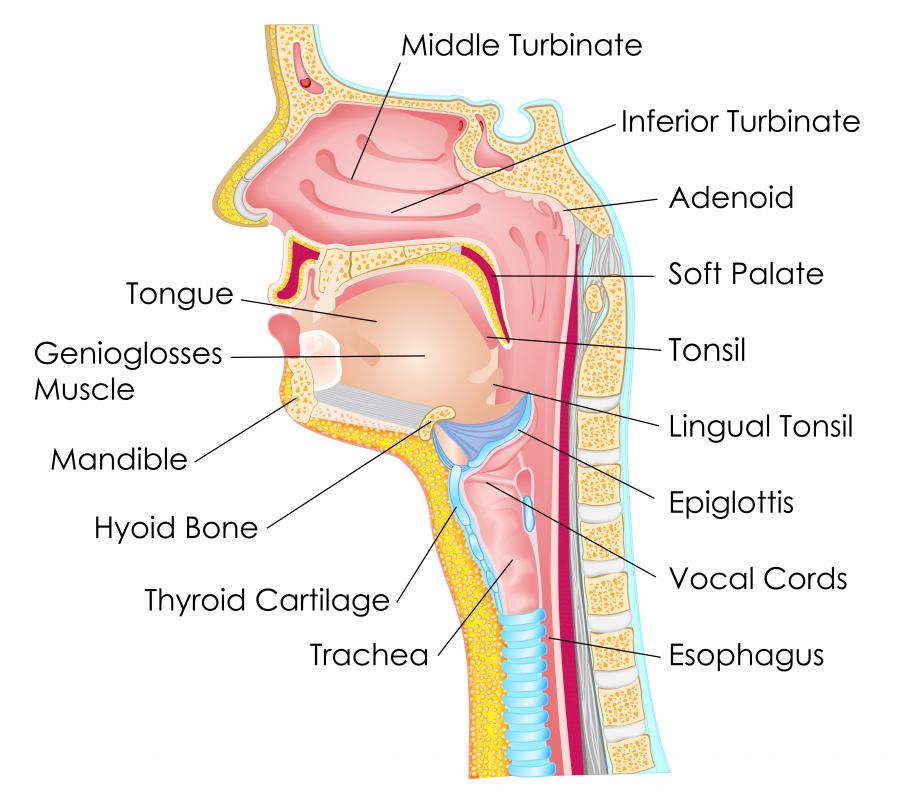
![Neck and throat cancers affect different organs and structures of the head and neck.]() By: Kasia BialasiewiczNeck and throat cancers affect different organs and structures of the head and neck.
By: Kasia BialasiewiczNeck and throat cancers affect different organs and structures of the head and neck. -
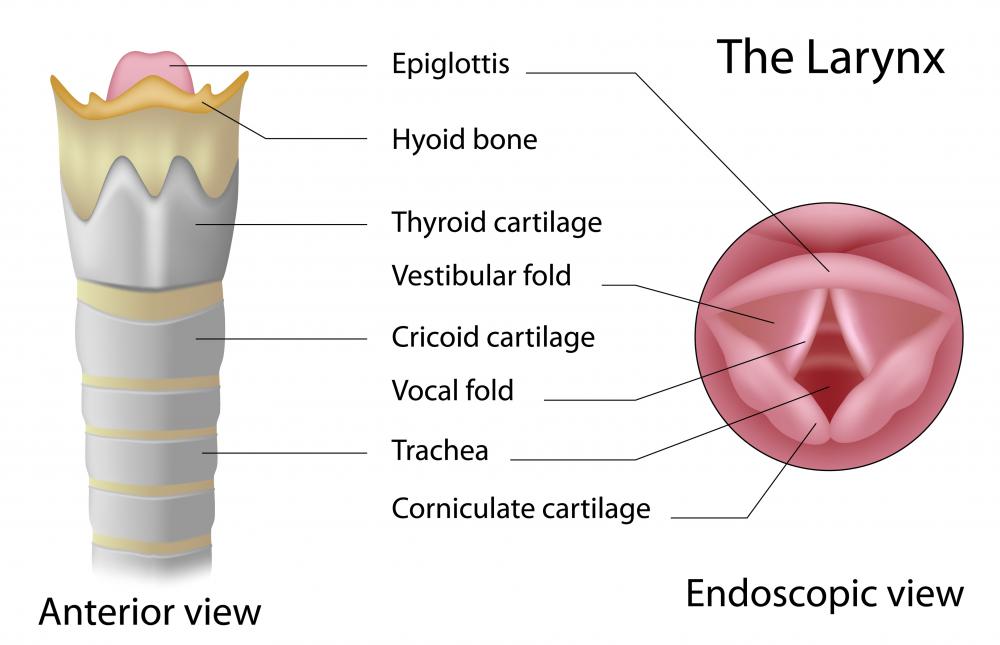
![Cancer of the larynx is one type of throat cancer.]() By: Alila Medical MediaCancer of the larynx is one type of throat cancer.
By: Alila Medical MediaCancer of the larynx is one type of throat cancer. -
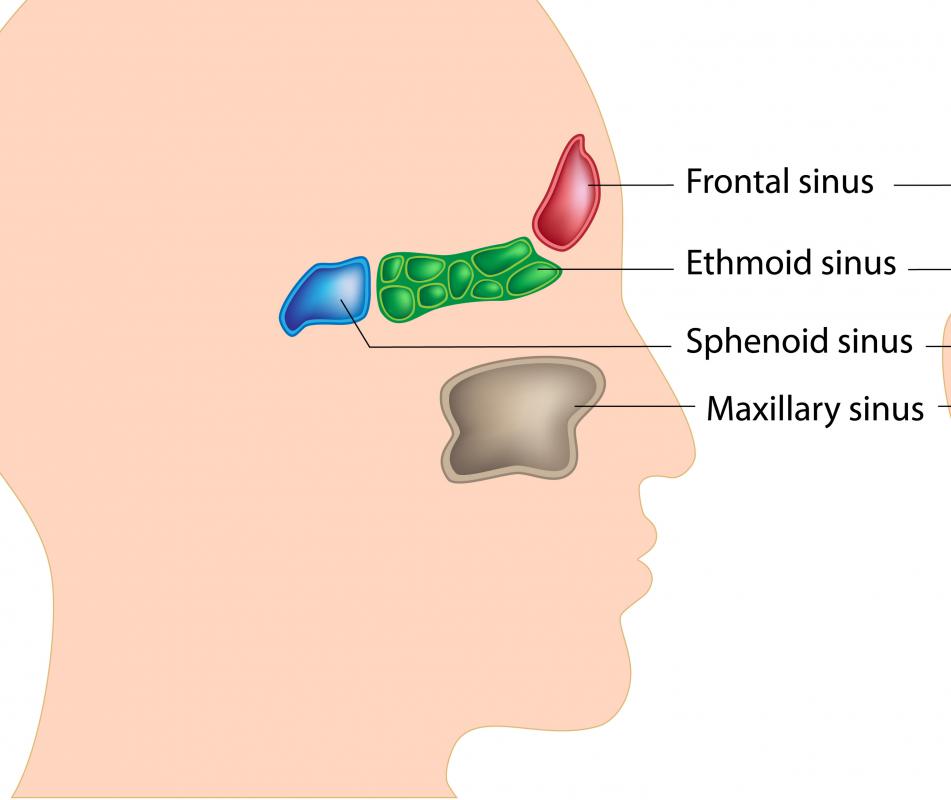
![Neck cancer, also known as neck and head cancer, can affect the paranasal sinuses.]() By: Alila Medical MediaNeck cancer, also known as neck and head cancer, can affect the paranasal sinuses.
By: Alila Medical MediaNeck cancer, also known as neck and head cancer, can affect the paranasal sinuses. -
![Coughing and a persistent sore throat can be symptoms of throat cancer.]() By: zebrikCoughing and a persistent sore throat can be symptoms of throat cancer.
By: zebrikCoughing and a persistent sore throat can be symptoms of throat cancer. -
![Pain or paralysis in the facial muscles could be a sign of throat cancer.]() By: snapgalleriaPain or paralysis in the facial muscles could be a sign of throat cancer.
By: snapgalleriaPain or paralysis in the facial muscles could be a sign of throat cancer. -
![Both neck and throat cancer are both accompanied by symptoms of difficulty swallowing and voice changes.]() By: Max TacticBoth neck and throat cancer are both accompanied by symptoms of difficulty swallowing and voice changes.
By: Max TacticBoth neck and throat cancer are both accompanied by symptoms of difficulty swallowing and voice changes.



Discussion Comments
I'm still not too convinced about the difference between neck and throat cancers. Most sources actually describe neck cancers as cancer of the throat, mouth, nose, salivary glands, sinuses, etc. Moreover, the causes of throat and neck cancers are basically the same.
The only difference seems to be where the cancer starts and which areas it affects. But eventually, if the cancer isn't diagnosed and treated, it will spread to other areas. So neck cancer may be throat cancer eventually even though it may have started at the salivary glands or the mouth.
@fBoyle-- That's a good question. I'm not a doctor though so I'm not sure. Cancer located in the neck could probably affect the throat if it spreads.
One easy way to remember that neck and throat cancer are different is to actually refer to neck cancer as head and neck cancer. I think this is the accurate name for this type of cancer in medical literature. Throat cancer is pharynx cancer, pharynx is the Latin name for throat.
Can one of these cancers spread and develop into the other?
I too made the mistake of thinking that neck and throat cancer was the same. I should have known actually because my uncle had throat cancer many years ago due to tobacco use. He had surgery and radiotherapy and survived. But he lost his voice so he has to use a little gadget for people to understand him when he speaks.
Post your comments