
At AllThingsNature, we're committed to delivering accurate, trustworthy information. Our expert-authored content is rigorously fact-checked and sourced from credible authorities. Discover how we uphold the highest standards in providing you with reliable knowledge.
What is the Difference Between Lichen and Moss?
 Mary McMahon
Mary McMahon
Mary McMahon
Mosses and lichens are often confused, in part because many common names for lichens include the word “moss.” In fact, the two organisms are radically different and are not even in the same kingdom. Both are fascinating organisms, often overlooked because they are small and not very showy. They grow all over the world and are used for dyes, animal fodder, ornamentation, medicines, and religious practices.
Lichens are perhaps the most amazing living things on Earth, because they represent a symbiotic relationship between a fungus and either algae or cyanobacteria. The symbiotic nature of lichen was not fully understood until the 19th century, when the idea was first proposed. They form a fascinating example of cooperative relationships in nature, with the fungus using the algae or bacteria to produce energy, while the algae or bacteria enjoys the protection the fungus provides.

These organisms reproduce in several ways. Many produce spores that attempt to capture partner algae or bacteria, while others reproduce through fragments of the lichen that break off and scatter. They can grow almost anywhere in the world, from extremely acidic soil to freezing arctic conditions, and are found growing on trees, rocks, and everything in between. Contrary to popular belief, the lichens that colonize trees, such as members of the Usnia family, are not harmful to their hosts, and in fact, they often capture valuable nutrients.

Lichens take three forms. Crustose lichens, often found growing on rocks, are characterized by a crusty appearance. They are often vividly colored and create the bright streaks seen on rocks from a distance. Foliose lichens are leafy or stringy and are often found growing on the ground or around trees. Fruticose lichens form stalks, which sometimes form bright fruiting bodies.

Most observers don't even notice the small and ubiquitous lichen, but a determined searcher can find hundreds of species on a short walk in any region, from the depths of the woods to the streets of a major urban area. They can be extremely difficult to properly identify, often requiring the use of a microscope and specialized staining to discover the mingled identities coming together to make the lichen.

Moss, on the other hand, is a plant. It belongs to the bryophyta division, which is one of the most genetically diverse on Earth, including 10,000 species in 700 genera. These organisms can be found all over the world as well, and they form a major part of many ecologies by holding back erosion, retaining water, and feeding many animal and insect species. Moss is an archaic non-vascular plant, meaning that it has been around in various forms for millions of years, and it reproduces by casting out spores. Like lichen, it can also reproduce from broken off parts of the parent plant.

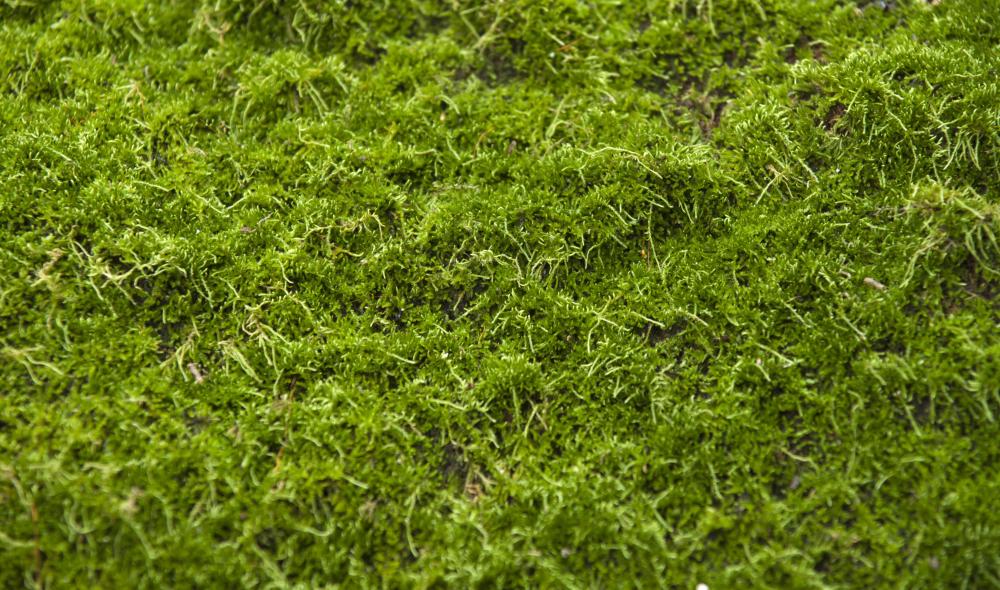
Physically, these two organisms can be difficult to distinguish. In general, mosses are green, grow in moist dark areas, and have small leaf-like structures, in addition to stems. Lichens often appear grey or pale white in appearance, and many also create disc-shaped fruiting bodies.
Frequently Asked Questions
What are the basic differences between lichen and moss?
Lichen is a symbiotic partnership between a fungus and an alga or cyanobacterium, while moss is a simple, non-vascular plant. Lichens are known for their ability to colonize harsh environments and can be found on rocks, trees, and soil. Mosses, on the other hand, typically require more moisture and are commonly found in damp, shaded areas. They have tiny leaves and stem-like structures, which lichens do not.
How do lichen and moss contribute to their ecosystems?
Lichens play a crucial role in ecosystems by breaking down rocks into soil and providing food for animals like reindeer. They are also important bioindicators of air quality. Mosses contribute by retaining moisture, preventing soil erosion, and serving as a habitat for microfauna. Both are pioneer species, often the first to inhabit barren environments, initiating ecological succession.
Can lichens and mosses be used to determine environmental conditions?
Yes, both lichens and mosses are excellent bioindicators. Lichens are particularly sensitive to air pollution; their presence or absence can indicate air quality. Certain lichen species will not grow in areas with high levels of sulfur dioxide, for instance. Mosses can indicate soil and air moisture levels, as they thrive in damp conditions and can absorb pollutants like heavy metals from the environment.
What are the reproductive differences between lichen and moss?
Mosses reproduce both sexually, through spores produced in capsules that extend on stalks called setae, and asexually, by fragmentation. Lichens primarily reproduce asexually through fragmentation or by producing soredia, small clusters of algal cells surrounded by fungal filaments. Some lichen species also have the ability to reproduce sexually through fungal spores, but this is less common.
How do lichen and moss differ in terms of growth and lifespan?
Lichens grow extremely slowly, often less than a millimeter per year, and can live for very long periods, with some species surviving for thousands of years. Mosses grow faster than lichens but still at a slow rate compared to higher plants. Their lifespan varies widely, with some mosses living for only a few years, while others may persist for decades.
Are lichens or mosses more resilient to environmental stress?
Lichens are generally more resilient to environmental stress than mosses. They can survive in extreme conditions, such as arid deserts and the Arctic tundra, where mosses would struggle due to their need for moisture. Lichens can endure long periods of drought by going dormant and then quickly reactivating with the slightest moisture, a trait that mosses do not possess to the same extent.
Mary McMahon
Ever since she began contributing to the site several years ago, Mary has embraced the exciting challenge of being a AllThingsNature researcher and writer. Mary has a liberal arts degree from Goddard College and spends her free time reading, cooking, and exploring the great outdoors.
Learn more...
Mary McMahon
Ever since she began contributing to the site several years ago, Mary has embraced the exciting challenge of being a AllThingsNature researcher and writer. Mary has a liberal arts degree from Goddard College and spends her free time reading, cooking, and exploring the great outdoors.
Learn more...AS FEATURED ON:
AS FEATURED ON:









-
![Lichen is typically a pale grey color and can have disc shape fruiting bodies.]() By: alessandrozoccLichen is typically a pale grey color and can have disc shape fruiting bodies.
By: alessandrozoccLichen is typically a pale grey color and can have disc shape fruiting bodies. -
![Moss on stones around a waterfall.]() By: magannMoss on stones around a waterfall.
By: magannMoss on stones around a waterfall. -
![A layer of moss.]() By: k_kronA layer of moss.
By: k_kronA layer of moss. -
![A microscope is often needed to tell the difference between lichen and moss.]() By: WavebreakMediaMicroA microscope is often needed to tell the difference between lichen and moss.
By: WavebreakMediaMicroA microscope is often needed to tell the difference between lichen and moss. -
![Lichens form through a symbiotic relationship between algae and fungus.]() By: linjerryLichens form through a symbiotic relationship between algae and fungus.
By: linjerryLichens form through a symbiotic relationship between algae and fungus.




Discussion Comments
Biologist here! I disagree that a microscope is needed to distinguish lichens from mosses. I could be wrong, but I've personally never encountered a species of lichen that looked like a moss or vice versa. (What is true is that a microscope is often needed to distinguish different species of moss from each other, or different species of moss from each other.)
If you examine them closely, mosses are distinctly plant-like, consisting of a stem or stems lined with primitive leaves. (Many of them looks like miniature vines or palm trees.) They're typically soggy in rainy weather, and stringy/feathery in very dry weather (although they hold on to moisture better than lichens do). Most mosses are some shade of green, but bog moss can be white or reddish.
Lichens don't really resemble any proper plants. For one thing, the consistency is off -- they're either hard and crusty, seemingly one with the surface they grow on, or leathery, or sometimes papery dry. They become springier and less brittle in rainy weather.Grey, brown and yellow are typical lichen colors -- usually not bright green, although some of them do turn green in moist weather.
The main thing that could be confused for a lichen is a liverwort -- which are true plants -- but they're less common than mosses and lichens.
I found all the information very interesting. I will add one more comment about lichens that they are good pollution detectors. They grow only in a clean environment free of lead. They develop slowly, only 3 mm every year. I will think twice before I burn it or remove it from its habitat!
This is good for my science homework tonight.
I know that a lot of people only think of buying moss for decorating, or ways to get rid of lichen clinging to their home, but I really think that these two cryptograms are so fascinating.
For instance, did you know that lichen and moss both existed before humans? That puts a whole new spin on their look. Before I knew that, I always thought of lichen and moss as just another plant -- the wall flowers of the plant world, as it were -- but once you realize how old they are, they start to look kind of cool and primeval.
It's also interesting to see how lichen and moss play a role in the ecosystem. For example, one of the main sources of nutrition for reindeer is lichen. Likewise, sheet moss can help provide nesting material as well as a shelter for smaller animals. Not to mention that both dried lichen and moss are great fire-starters when you're camping.
So I'm really glad that you wrote this article. These two amazing entities are all too often under-appreciated, and I think you did a great job of bringing out some of the more interesting aspects of lichen and moss.
I'm so glad that you mentioned all these fascinating facts about lichen. It's so easy to get caught up in only moss, since it's more common in some areas, and moss pictures generally look prettier than those of lichen. But knowing all this information about lichens makes them so much more interesting!
Thanks for not getting caught up in the moss bias -- I really enjoyed this article as a result.
Wow -- I had no idea there was so much to know about lichen and moss. We have a ton of lawn moss on my property, and I always kind of overlooked it, since it's just always there, but now I'm really interested in identifying it and learning more about it.
Could you give me some good tips for identifying lichen and moss, and what basic structures or types I should be looking for? Also, is it possible to identify most species of lichen and moss without advanced equipment like a microscope? Would a magnifying glass work, or does lichen and moss identification require more high-powered equipment?
This would be a great science project to do with my kids, thanks so much for the inspiration!
Post your comments