
At EasyTechJunkie, we're committed to delivering accurate, trustworthy information. Our expert-authored content is rigorously fact-checked and sourced from credible authorities. Discover how we uphold the highest standards in providing you with reliable knowledge.
What is the Difference Between Hardware and Software?
Hardware and software work together in digital devices and systems to provide computerized functionality. Hardware includes the physical components, such as the motherboard, chips, memory, and hard drives, while software includes the programs. Though both are most often associated with computers, software also runs on other hardware, such as cellular phones, personal digital assistants (PDAs), Global Positioning Satellite (GPS) units, medical equipment, and air traffic control systems. Modern cash registers are also computerized with software to better organize sales-related issues like inventory, tax, and coupon discounts.
Hardware and software are constantly improving in a kind of leapfrog fashion. The former is most often the bottleneck when it comes to data transfer speeds, or how fast a program can work. Therefore, as hardware improves, it becomes capable of running more robust programs. Old hardware from just ten years ago may not run current software, as the programs might be designed to take advantage of hardware in ways that older pieces of equipment cannot support.

For this reason, when shopping for software, the buyer should check the specifications for recommended minimal hardware requirements. The central processing unit (CPU) of a computer is nearly always mentioned, as this hardware is responsible for the overall speed of the computer, generally speaking. The amount of Random Access Memory (RAM) is another factor, and graphics capability or video card requirements might also be mentioned.

If you would like to purchase software but are not sure what hardware you have, most operating systems have a built-in program for displaying hardware and software system information. In Windows XP, navigate by clicking the Start button, then All Programs, Accessories, System Tools, and System Information. You may want to print the initial system summary page, then click on the appropriate heading in the tree to the left to see new information displayed on the right. For example, click on “Components” then “Display” to see details about the video card in your computer.
AS FEATURED ON:
AS FEATURED ON:









-
![A computer motherboard.]() By: VIA GalleryA computer motherboard.
By: VIA GalleryA computer motherboard. -
![A dual core CPU mounted to a motherboard.]()
A dual core CPU mounted to a motherboard. -
![RAM, a type of hardware.]() By: Sergey DashkevichRAM, a type of hardware.
By: Sergey DashkevichRAM, a type of hardware. -
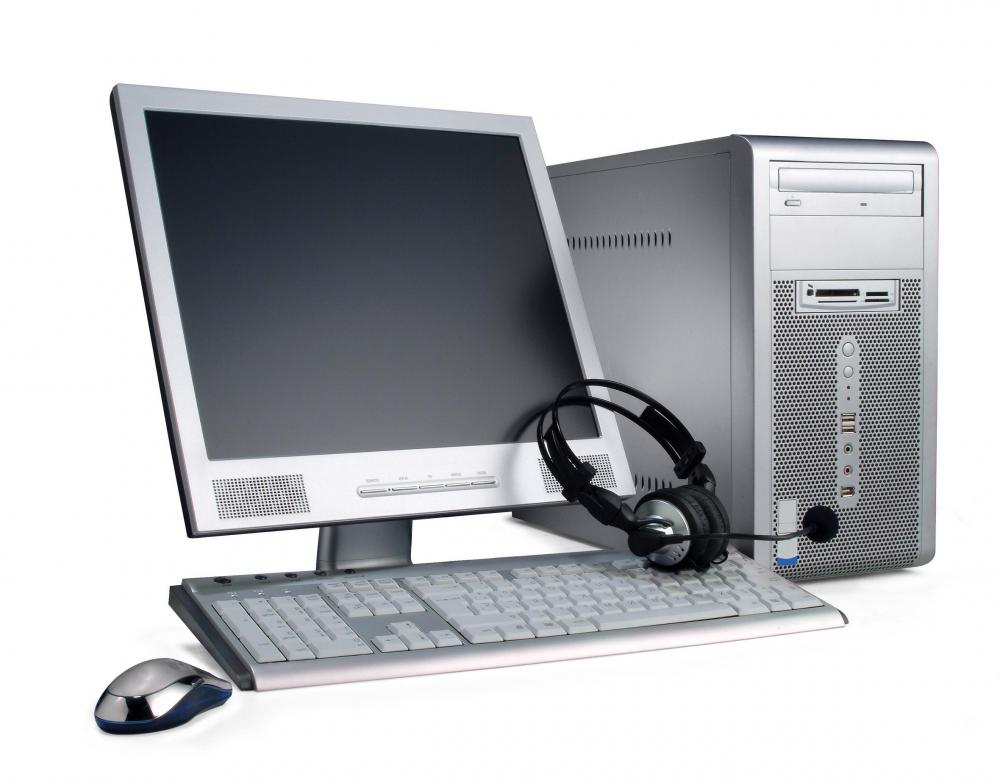
![A desktop PC.]() By: enensA desktop PC.
By: enensA desktop PC. -
![Some IT professionals specialize in hardware, while others focus on programming software.]() By: Monika WisniewskaSome IT professionals specialize in hardware, while others focus on programming software.
By: Monika WisniewskaSome IT professionals specialize in hardware, while others focus on programming software.



Discussion Comments
well I guess that the software can be more protected than the hardware.
Though it's true that hardware is usually the cause of performance issues, software can just as well be a problem. In fact a bigger problem, take for example someone still running a software program that is no longer supported and upgrades are no longer available, installing it on a new PC can in fact crash the computer due to incompatibility issues between the hardware on the computer and the operating system.
Post your comments