
At AllThingsNature, we're committed to delivering accurate, trustworthy information. Our expert-authored content is rigorously fact-checked and sourced from credible authorities. Discover how we uphold the highest standards in providing you with reliable knowledge.
What is the Difference Between Generalist and Specialist Animals?
 Michael Anissimov
Michael Anissimov
Michael Anissimov
Generalist animals are those adapted to a wide range of environmental circumstances and food sources, while specialist animals are really good at one narrow thing they do. An example of a generalist would be mice, which can adapt to practically any environment and consume a variety of seeds, grains, and nuts. An example of a specialist would be the koala, which lives in eucalyptus trees and exclusively consumes eucalyptus leaves, one of the only animals capable of doing so.
In general, generalist animals appear to be more successful than specialists, as they can take advantage of a wider range of circumstances. The downsides of generalism are stress and competition — because they compete in crowded biological niches, generalists have to elbow other generalists out of the way to survive on a fixed amount of nutrients. An example of this behavior is found in rats, which habitually kill mice. This behavior, known as muricide, is partially about eating the mouse for food, but only a portion of the mouse is usually consumed, signifying it may be more about eliminating competition. Being a generalist is tough work.

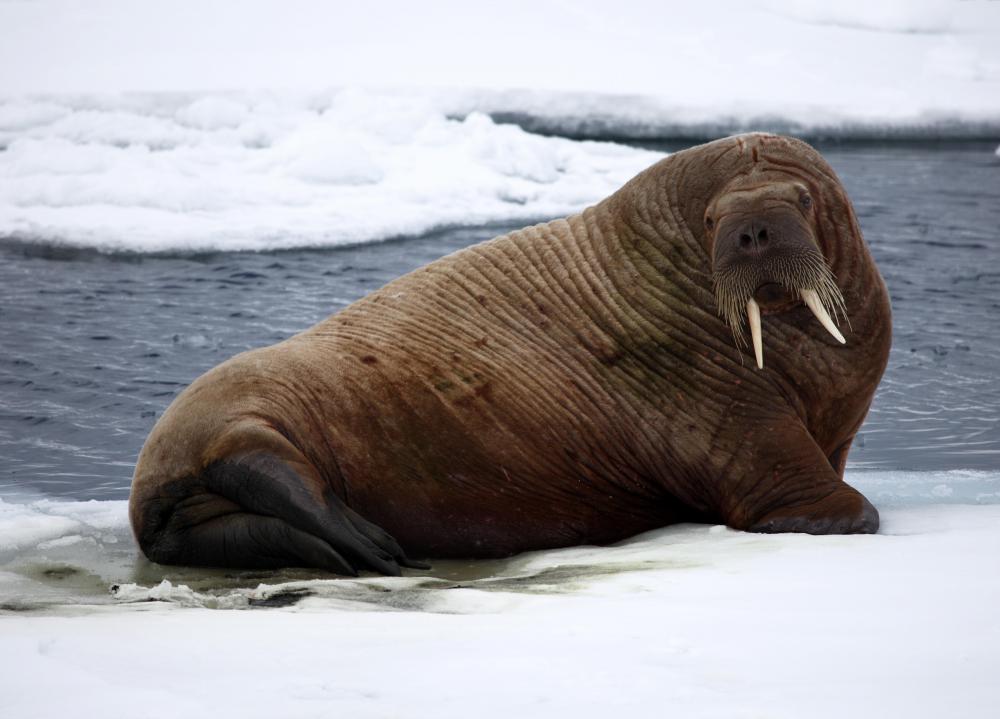
Meanwhile, specialists can pretty much enjoy their narrow niche without much competition. Koalas, for instance, stay high up in the trees doing little but sleeping and eating, and they are too large for anything there to predate on them. Walruses are specialist animals that live in the far north, surviving the freezing cold with a layer of blubber several inches thick. They use their snouts and specialized mouths to dig molluscs out of the sea bed and suck them out of their shells. The giraffe would be another specialist, picking succulent leaves off the tallest trees using its extremely long neck.

Examining the adaptations used by both generalists and specialists can be informative from an evolutionary perspective. Specialists have evolved to adapt to thousands of unique niches, while generalists compete in huge numbers for the easy-to-get resources of central niches. Generalists tend to evolve somewhat more quickly than specialists, being put under greater evolutionary pressures. When a specialists' niche is disturbed — say through deforestation — it can suffer terribly and even go completely extinct, however. Without flexibility in its diet or mode of living, the specialist dies. Either immediately or in a few million years, some other animal may evolve to take over that empty niche.
Frequently Asked Questions
What defines a generalist animal?

A generalist animal is characterized by its adaptability to a wide range of habitats and varied diet. These animals are not dependent on any single source of food or specific environmental conditions, which allows them to thrive in multiple ecosystems. For example, raccoons are generalists because they eat plants, insects, and small animals, and can live in forests, cities, and suburbs.
Can you give an example of a specialist animal?

A specialist animal has a narrow ecological niche, often requiring a specific habitat or diet. The Giant Panda is a classic example, relying almost exclusively on bamboo for food, which makes up about 99% of its diet. This specialization can make them more vulnerable to changes in their environment or food availability.
Why might an animal evolve to be a specialist rather than a generalist?
Animals may evolve to become specialists when there is a consistent advantage in exploiting a particular resource that few other species can use. This can lead to less competition for food and a higher efficiency in resource utilization. For instance, some hummingbirds have evolved specialized beaks perfectly suited to extract nectar from flowers that other species cannot access.
Are generalist species more resilient to environmental changes than specialists?
Generally, yes. Generalist species tend to be more resilient to environmental changes due to their flexible diet and habitat requirements. They can adapt to a variety of conditions, which helps them survive when their ecosystem changes. Specialists, on the other hand, may struggle if their specific needs are not met, leading to a higher risk of extinction.
How does human activity impact specialist and generalist animals differently?
Human activity often impacts specialist animals more severely because they rely on specific habitats or food sources that can be destroyed or diminished by development, pollution, or climate change. Generalists, like urban-dwelling pigeons or raccoons, may actually benefit from human environments, as they can exploit a range of resources provided by these altered landscapes.
What role do generalist and specialist species play in an ecosystem?
Both generalist and specialist species play crucial roles in maintaining the balance of an ecosystem. Specialists can be key pollinators or seed dispersers for certain plants, while generalists can help control a variety of prey populations and contribute to nutrient cycling. Their interactions ensure ecosystem resilience and the continuation of various ecological processes.
Michael Anissimov
Michael is a longtime AllThingsNature contributor who specializes in topics relating to paleontology, physics, biology, astronomy, chemistry, and futurism. In addition to being an avid blogger, Michael is particularly passionate about stem cell research, regenerative medicine, and life extension therapies. He has also worked for the Methuselah Foundation, the Singularity Institute for Artificial Intelligence, and the Lifeboat Foundation.
Learn more...
Michael Anissimov
Michael is a longtime AllThingsNature contributor who specializes in topics relating to paleontology, physics, biology, astronomy, chemistry, and futurism. In addition to being an avid blogger, Michael is particularly passionate about stem cell research, regenerative medicine, and life extension therapies. He has also worked for the Methuselah Foundation, the Singularity Institute for Artificial Intelligence, and the Lifeboat Foundation.
Learn more...AS FEATURED ON:
AS FEATURED ON:









-
![A specialist animal, the koala only lives in and eats the leaves of eucalyptus trees.]() By: hotshotsworldwideA specialist animal, the koala only lives in and eats the leaves of eucalyptus trees.
By: hotshotsworldwideA specialist animal, the koala only lives in and eats the leaves of eucalyptus trees. -
![The walrus, which uses layers of blubber to keep warm, is only adapted to arctic environments.]() By: MAKThe walrus, which uses layers of blubber to keep warm, is only adapted to arctic environments.
By: MAKThe walrus, which uses layers of blubber to keep warm, is only adapted to arctic environments. -
![Rats are good examples of generalist animals.]() By: Ilia ShcherbakovRats are good examples of generalist animals.
By: Ilia ShcherbakovRats are good examples of generalist animals. -
![Giraffes are specialist animals, picking leaves off the tallest trees.]() By: David_SteeleGiraffes are specialist animals, picking leaves off the tallest trees.
By: David_SteeleGiraffes are specialist animals, picking leaves off the tallest trees.



Discussion Comments
Do those animals that are considered specialist species ever change to become generalist animals?
I am doing some research on animals before I teach a biology unit next semester, and I really need all the information I can get!
Thanks!
@googlefanz -- I don't know for sure the answer to your question, but I would think that you would be correct.
It comes down to survival of the fittest, right, and adaptation.
Those animals that cannot adapt, like those specialist species, would be unable to survive, I would think.
That's why people make so much effort when it comes to the conservation of specialist animals like pandas or giraffes, since we know that if humans didn't help them out, then they might not adapt and survive.
Of course, it's kind of like giving a Band-aid to somebody after you hit them, since many animals facing extinction are doing so because of humans. However, that's a point for another time and place.
Would you say that specialist animals become endangered more easily than generalist animals?
For instance, I know that giant pandas are endangered partially because of their extreme pickiness when it comes to what kind of bamboo they eat.
They only eat a very specific kind of bamboo, and as that becomes increasingly scarce, pandas become more endangered and in need of animal extinction prevention programs.
Because of their specialization, I would assume that it's easier for specialist animals to go extinct, and it's harder to save animals when they die if you can't provide exactly what they need.
That's why so many animals in captivity don't survive as long as the wild animal counterparts, right?
So do specialist species tend to go extinct more easily than generalist species?
Post your comments