
At HomeQuestionsAnswered, we're committed to delivering accurate, trustworthy information. Our expert-authored content is rigorously fact-checked and sourced from credible authorities. Discover how we uphold the highest standards in providing you with reliable knowledge.
What is the Difference Between Annual and Perennial Plants?
 Niki Foster
Niki Foster
Niki Foster
The difference between annual and perennial plants is simple: annuals complete their life cycle within a year, while perennials live for over two years. A third classification, biennial plants, refers to plants with a two-year life cycle. Annuals may have a life cycle of any duration under a year; some have life cycles of only a few weeks. Perennials may live for just a few years or for well over 20 depending upon the species of plant.
Annual plants that naturally complete their life cycle in under a year are known as true annuals, but some biennials and perennials may be grown as annuals in certain contexts. For example, some annual plants may be perennial in their native habitat, but are not hardy enough to survive winter in the environment in which they are grown. Certain root vegetables, such as carrots, are biennials that are treated as annuals, harvested in their first year for the strong root that grows to provide nourishment to the plant in the second year.
Annual plants fall into two major groups: summer annuals and winter annuals. Summer annuals go from germination to death within a single season, be it summer, spring, or fall. Many summer weeds are of this variety.

Winter annuals are longer lived. They germinate in the fall or winter, blooming later in the season or even as late as early spring. Winter annuals fill an important niche in many ecological systems, as they provide ground cover when perennials are dormant.
The term perennial is often understood to refer to perennial herbaceous plants, as all woody plants are perennial by definition. Perennial plants are very diverse. Some, called monocarpic plants, bloom and fruit only once, while most, called polycarpic, do so every year. Perennials, as you may imagine, are hardier than annual plants and have evolved structures that enable them to survive for many years, such as bulbs and rhizomes. Perennials may be deciduous, alternating periods of growth and dormancy in response to climate changes, or evergreen, growing year round.
Niki Foster
In addition to her role as a HomeQuestionsAnswered editor, Niki enjoys educating herself about interesting and unusual topics in order to get ideas for her own articles. She is a graduate of UCLA, where she majored in Linguistics and Anthropology.
Learn more...
Niki Foster
In addition to her role as a HomeQuestionsAnswered editor, Niki enjoys educating herself about interesting and unusual topics in order to get ideas for her own articles. She is a graduate of UCLA, where she majored in Linguistics and Anthropology.
Learn more...AS FEATURED ON:
AS FEATURED ON:


-
![Petunias, shown in a flat, are popular annual plants for gardens and containers.]() By: sbgoodwinPetunias, shown in a flat, are popular annual plants for gardens and containers.
By: sbgoodwinPetunias, shown in a flat, are popular annual plants for gardens and containers. -
![Lavender is a fragrant perennial popular in gardens.]() By: Jeanette DietlLavender is a fragrant perennial popular in gardens.
By: Jeanette DietlLavender is a fragrant perennial popular in gardens. -
![Perennials, like the tulips that blossom near the U.S. Capitol Building, regrow every year without needing to be replanted.]() By: zimmytwsPerennials, like the tulips that blossom near the U.S. Capitol Building, regrow every year without needing to be replanted.
By: zimmytwsPerennials, like the tulips that blossom near the U.S. Capitol Building, regrow every year without needing to be replanted. -
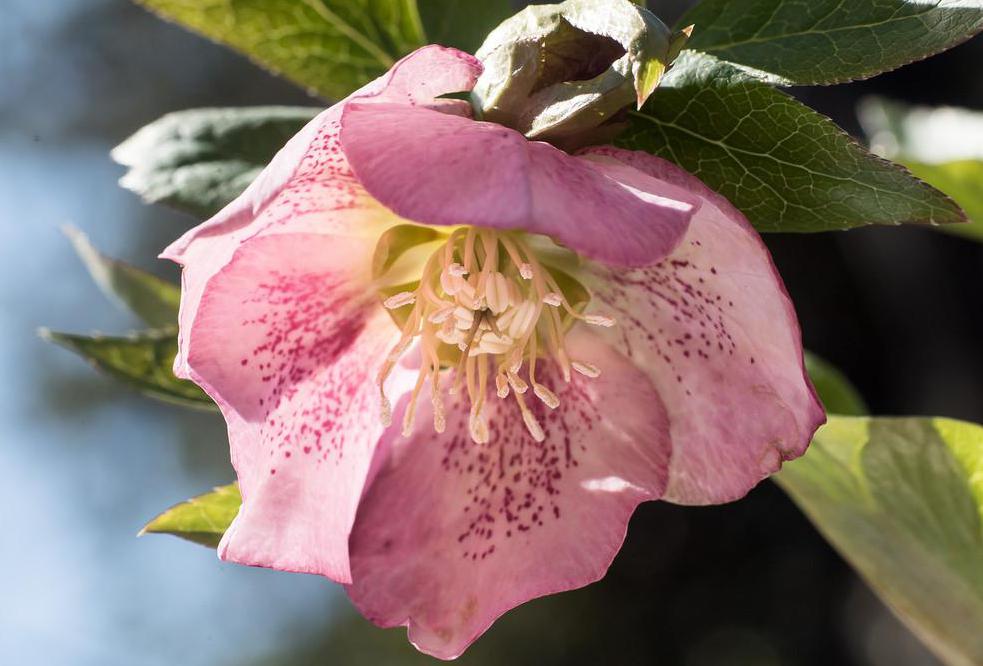
![The lenten rose, which flowers in early spring, is a type of perennial flowering plant.]()
The lenten rose, which flowers in early spring, is a type of perennial flowering plant. -
![Lomandra longifolia is an example of a perennial.]()
Lomandra longifolia is an example of a perennial.



Discussion Comments
I plant both annuals and perennials, because I have favorites in each category. My favorite annual plants are begonias, and my favorite perennials are daylilies.
The begonia petals actually glitter in the sun, and the stems and leaves have a purplish tint to them. They are very interesting looking and can grow in shade, sun, or a combination of both.
Daylilies are available in such a wide range of colors. I have several different varieties. The green leaves sprout in the spring, and the flowers last until fall.
@giddion – Dianthus is a wonderful flowering perennial that will live throughout the year. The flowers are bright pink with white fringe on the edges.
I have some dianthus in my yard, and I was astonished to find that the leaves stayed green even when the temperature dipped below freezing. I planted them next to a tree in the shade, so they did have some shelter from the cold. However, I think they have a reputation of living through the winter, anyway.
They are so easy to grow. All you do is set them out and water them a couple of times a week or less, depending on the rainfall.
Can anyone tell me what some perennial plants that stay green year round are? I'm wanting to grow flowering plants that won't die during the winter.
I am living in a rental home right now, so I buy only annual plants. I would hate to invest a lot of money and time on perennial plants and find out that I had to move and leave them behind. I wouldn't be too upset about leaving annuals behind, because they would die out in a year, anyway.
I can understand why gardening is such a popular hobby. Flowers add so much beauty to our surroundings and I find myself adding more flowers every year.
I also love annuals because of how long they stay in bloom. One way I have been able to save some money is by using annual plant seeds.
I will start these indoors several weeks before the first of May, and then I have many plants to put in the ground at a fraction of the cost.
It helps if you have a warm, sunny spot to keep these in until you are ready to plant them. It also gives me something to look forward to when winter seems like it will never be over.
Some annual flowers will also re-seed and come back every year. Most years, I have had zinnia, snapdragons and even some petunia plants come back the next year.
I have a mixture of both annual and perennial plants, but find that I usually prefer annual garden plants.
I like planting something that I know is going to be in bloom all season long. Most perennials only bloom for a few weeks and then they are done for the season.
I think that annuals give you more bang for your buck, and I love their bright colors. It seems like there are more choices for annual plants that need to be in the sun.
If you are looking for annual shade plants, impatiens will never disappoint you. They bloom all season long in the shade, and come in all kinds of beautiful colors.
You can save yourself a lot of money when you use perennial plants. I like to buy them at the end of the season when they are marked down and plant them in the fall.
That way when spring comes around, most of them will be ready to bloom and they keep coming back year after year.
Many perennial plants can also be divided as they continue to grow. One good example of this are hosta plants.
These make great shade plants, and actually do better when they are divided from time to time. In a few years, you can have twice as many plants without spending any more money.
I had a large shady area that I wanted to cover with some plants. I started out with 4 hosta plants, and now a few years later, I have more than 12 of them.
My mom always had a lot of flowers and I never paid much attention to them, except knew they always looked nice.
When I got a place of my own and wanted to plant some flowers, I had no idea what the difference was between annual plants and perennial plants.
Once I figured out what the difference once, it all started to make some sense.
I like to use a combination of both types of plants. That way I have something in bloom all season long without needing to plant everything new every year.
Thank you! I kept on getting the two mixed up and someone even explained it to me wrong, who worked in a plant shop! ugh! I am just starting this year and wanted something easy that would not die on me right away! I did buy some annuals and they are nice. We have had a late summer, it really has not started yet.
You use "hardy" and "hardier" where you mean "hearty" and "heartier."
Now I know the difference.
ty i understood the article an it explained everything i needed to know. again ty
Post your comments