
At HomeQuestionsAnswered, we're committed to delivering accurate, trustworthy information. Our expert-authored content is rigorously fact-checked and sourced from credible authorities. Discover how we uphold the highest standards in providing you with reliable knowledge.
What Is the Difference between a Wardrobe and an Armoire?
A wardrobe and an armoire are usually very similar pieces of furniture, and differentiating them can sometimes be a matter of opinion or favored terminology rather than some particular characteristic or feature. In most cases, an armoire is actually a type of wardrobe. It’s usually a bit bigger and may be more ornate, and it also typically has shelves in addition to hanging rails; wardrobes are often designed more with hanging clothes in mind, though there can be exceptions. Armoires are usually a bit more flexible, too, at least when it comes to what they can be used for. Although clothing storage may be the intended purpose, people can and often do use these pieces to house all sorts of things, including televisions and electronic equipment. Opening the armoire doors when these devices are in use makes them immediately accessible, but they can then be closed away to give a more formal look to the room or living space. This is often more challenging with wardrobes, which are usually smaller and may not have as much shelf space.
Core Characteristics

In general these two types of furniture share more commonalities than differences. Both tend to be large and somewhat bulky, and they’re generally characterized by two doors that open outwards. Wardrobes almost always have a rail crossing at least half of the unit in order to facilitate the hanging of clothes; armoires only sometimes do. Both usually have some shelves or drawers, too.
Basic Purpose

Wardrobes are almost always used for storing clothing and accessories, and they are usually intended to serve as external closets. Rooms without closets or with insufficient closet space often include a wardrobe to give more flexibility. It’s not uncommon to find mirrors affixed on the inside of the doors, along with small shelves for accessories and basic toiletries. In this way, the piece can serve as something of a prepping station to help people get ready.

The term “armoire” means “cupboard” in French. Like a wardrobe, an armoire typically is built as a tall cabinet with two doors and a long rod for hanging clothing. It might contain shelving, and it usually features much more ornate designs. These pieces tend to be bigger and bulkier, too, and are often incorporated within the décor of the room. In other words, they’re more than just functional; in most cases they’re also stylistic. Centuries ago, armoires were primarily used to store weapons and armor, which may explain why they’re normally bigger and heavier.
Styling Differences

Both a wardrobe and an armoire are usually built from wood, such as oak or mahogany. Some modern versions made from plastic or wood veneer cost less but might not provide the same look or sturdiness. In general, a wardrobe is rather simple; the wood may be paneled, but otherwise the piece is usually somewhat plain. Armoires, especially those that are antiques, are often carved or intricately crafted. Antique armoires can be quite expensive and usually are quite large. Wardrobes tend to be less expensive than armoires because of the simplistic nature of their design and their smaller size.
Use in Entertainment
Another potential difference between a wardrobe and an armoire is that some varieties of armoire incorporate a large central shelf that makes the piece useful as a storage area for a television or computer. This is often referred to as an “entertainment armoire” or a “computer armoire. Sometimes pieces are made with this in mind, but more often people repurpose antique pieces for these more modern uses. The doors of this type of armoire can remain open when the television or computer is in use, then can be closed afterward to conceal the equipment. This can give a room a more formal look than a typical entertainment center or computer desk.
It’s often harder to use wardrobes for anything other than clothing or linen storage for no other reason than that wardrobes often aren’t big enough to hold much equipment. Having a hanging bar above or to the side of the television or computer can be distracting, as well.
AS FEATURED ON:
AS FEATURED ON:


-
![Armoires are typically larger and more detailed than wardrobes.]() By: MAXFXArmoires are typically larger and more detailed than wardrobes.
By: MAXFXArmoires are typically larger and more detailed than wardrobes. -
![Both pieces of furniture traditionally used primarily for storing clothing.]() By: Richard VillalonBoth pieces of furniture traditionally used primarily for storing clothing.
By: Richard VillalonBoth pieces of furniture traditionally used primarily for storing clothing. -
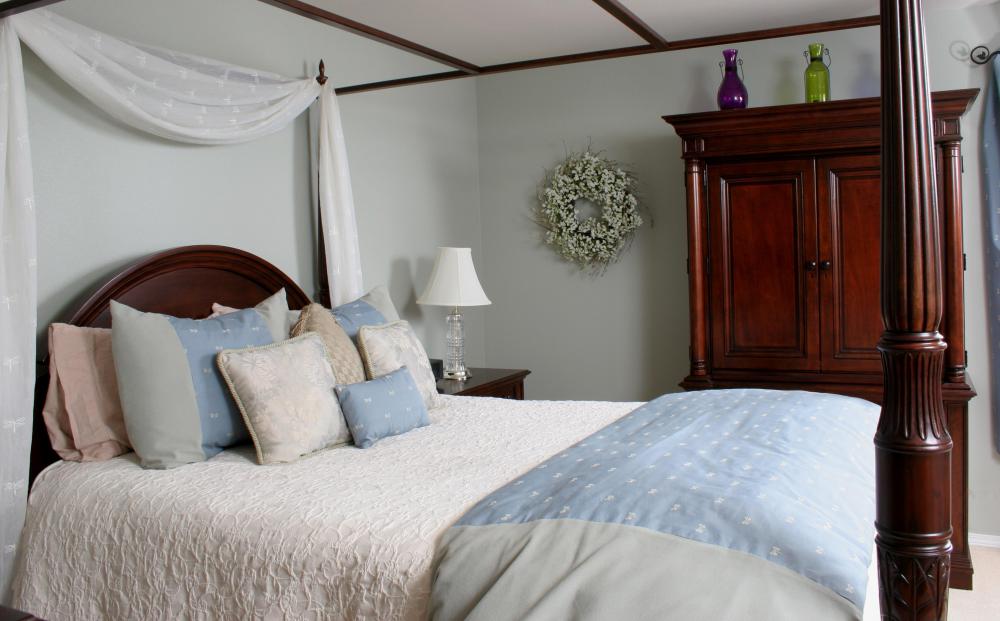
![Armoires and wardrobes are both typically found in the bedroom.]() By: Lisa TurayArmoires and wardrobes are both typically found in the bedroom.
By: Lisa TurayArmoires and wardrobes are both typically found in the bedroom. -
![A wardrobe may include drawers for storing accessories.]() By: Paul MaguireA wardrobe may include drawers for storing accessories.
By: Paul MaguireA wardrobe may include drawers for storing accessories.



Discuss this Article
Post your comments