
At AllThingsNature, we're committed to delivering accurate, trustworthy information. Our expert-authored content is rigorously fact-checked and sourced from credible authorities. Discover how we uphold the highest standards in providing you with reliable knowledge.
What is the Difference Between a Reptile and an Amphibian?
 Mary McMahon
Mary McMahon
Mary McMahon
Reptiles and amphibians are similar in many ways, and they are in fact distantly related, but there are several primary distinguishing features that clearly separate the two. There are a number of typical physical differences between the two types of animals, they often live in different environments, and they have different life stages. The animals' relationship with water is at the heart of many of these characteristics. At the most basic level, amphibians must spend at least some of their time in water, whereas reptiles do not have this requirement.
The Role of Water

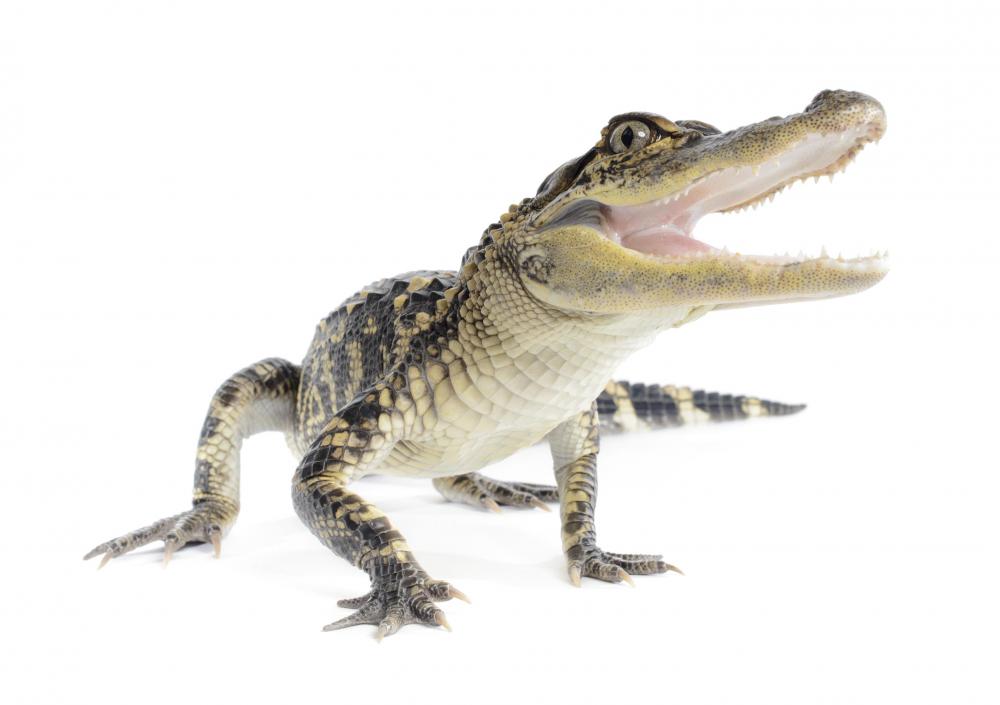
It is true that many reptiles live in the vicinity of water, and some, such as alligators, strongly prefer a watery habitat, but this is not strictly essential for them to stay alive. Some, including certain lizards and snakes, are ideally suited to dry environments such as deserts, and rarely encounter moist areas. By contrast, many amphibians must remain moist in order to breathe; although they do have lungs, they also take in oxygen through their skin. This thin skin means that they lose moisture easily as well, and some will even die if their skin dries out completely.
Life Cycles
When reptile eggs hatch, the young look like miniature adults. As the young grow up, they will mature into scaly animals with fully developed lungs and dry skins.

An amphibian initially emerges from an egg in the form of an aquatic larva, like a tadpole, that breathes through gills. Tadpoles and other larvae cannot survive out of water, and as they grow and mature, they get bigger, grow limbs, and may lose their tails. Ultimately, most species develop lungs and turn into adults that spend much of their lives in and around the water. This means that amphibians will always spend the first part of their lives completely submerged in water, and essentially living like fish; indeed the word is Greek for "two lives," referring to dual staged life cycle that most amphibians go through.
Physical Characteristics

Although both species are cold blooded, meaning that that their body temperatures fluctuate depending on their environment, the two are very different in appearance and physical makeup. Reptiles are covered in distinctive scales, and some may even have a rough texture. This is not true of amphibians, which typically have smooth, moist skin.
Reptiles also have more diverse body types than amphibians. They may or may not have limbs, and can range in size from very small to substantially larger and heavier than humans. Most adult amphibians have four limbs, and while their size varies, very few grow larger than a man’s arm. A rare exception, the Chinese giant salamander, occasionally grows as long as 6 feet (1.5 m.)
Eggs and Mating Habits

The vast majority of both types of animals lay eggs, but they are quite different in both quality and quantity. Amphibians lay large numbers — sometimes as many as hundreds or thousands at a time — of soft eggs that don't have an external membrane. They are usually attached to the stems of aquatic plants. The eggs of a reptile typically have hard leathery shells designed to protect the young inside from predators, and are often laid only a few dozen at a time at most in buried, insulated nests. It should be noted that a handful of reptile and amphibian species do not lay eggs, but have live birth.

Reptiles typically use internal mating mechanisms that are somewhat similar to those used by mammals. Amphibians usually mate externally, meaning that the female first lays her eggs in a large clutch, and the male then fertilizes them where they lay. Numerous rituals are specific to each individual species, but do not necessarily help distinguish a reptile from an amphibian.
Touch and Observation
Because of their major physical differences, handling or closely observing the animal in question is often enough to determine whether it is a reptile or an amphibian. Reptiles usually feel dry and scaly, and some species have very smooth skins while others have knobbles and horns. An amphibian will typically feel moist and sometimes rather sticky. Even from a photograph, the scales of a reptile should be clearly distinguishable, while amphibians have skin that usually looks slightly shiny, although depending on the species, the skin may be dull and without luster.
Frequently Asked Questions
What are the main differences between reptiles and amphibians?
Reptiles and amphibians are distinct in their skin, reproduction, and habitat preferences. Reptiles have scaly, waterproof skin and lay eggs with leathery shells, often on land. Amphibians have moist, permeable skin and typically lay eggs in water. Reptiles are ectothermic but can regulate their temperature somewhat through behavior, while amphibians often require wet environments to support their skin's needs.
Can reptiles and amphibians live both on land and in water?
While both reptiles and amphibians can live in diverse environments, amphibians are more dependent on aquatic habitats, especially for breeding. Many amphibians have an aquatic larval stage and metamorphose into land-dwelling adults, yet they still need moisture. Reptiles are generally more adapted to terrestrial life, although some, like turtles and crocodiles, are aquatic or semi-aquatic.
How do reptiles and amphibians regulate their body temperature?
Reptiles and amphibians are both ectothermic, meaning they rely on external sources to regulate their body temperature. Reptiles bask in the sun or seek shade to thermoregulate, while amphibians may use the temperature of their aquatic environment or damp habitats to maintain their body temperature. They do not have the internal mechanisms to regulate temperature as mammals do.
What are some examples of reptiles and amphibians?
Examples of reptiles include snakes, lizards, turtles, and crocodiles. These creatures are often found in a variety of ecosystems, from deserts to forests. Amphibians include frogs, toads, salamanders, and newts. They are commonly associated with wetlands, ponds, and streams, especially during their breeding season when they return to water to lay eggs.
How do the life cycles of reptiles and amphibians differ?
The life cycle of amphibians typically includes an aquatic larval stage, where they may have gills and later undergo metamorphosis into air-breathing adults. Reptiles, on the other hand, generally hatch from their eggs as smaller versions of their adult forms, with no dramatic metamorphosis. Their development is more direct, and they are self-sufficient much earlier than amphibians.
Are reptiles or amphibians more sensitive to environmental changes?
Amphibians are often more sensitive to environmental changes due to their permeable skin, which can easily absorb pollutants and is susceptible to dehydration. This sensitivity makes them excellent bioindicators of ecosystem health. Reptiles, with their scaly skin, are somewhat more resilient to habitat changes but can still be affected by alterations in their environment, such as climate change.
Mary McMahon
Ever since she began contributing to the site several years ago, Mary has embraced the exciting challenge of being a AllThingsNature researcher and writer. Mary has a liberal arts degree from Goddard College and spends her free time reading, cooking, and exploring the great outdoors.
Learn more...
Mary McMahon
Ever since she began contributing to the site several years ago, Mary has embraced the exciting challenge of being a AllThingsNature researcher and writer. Mary has a liberal arts degree from Goddard College and spends her free time reading, cooking, and exploring the great outdoors.
Learn more...AS FEATURED ON:
AS FEATURED ON:









-
![A snake is a reptile, and spends most if its time on land.]() By: fivespotsA snake is a reptile, and spends most if its time on land.
By: fivespotsA snake is a reptile, and spends most if its time on land. -
![A frog is an amphibian, and lives both on land and in water.]() By: Martin ValigurskyA frog is an amphibian, and lives both on land and in water.
By: Martin ValigurskyA frog is an amphibian, and lives both on land and in water. -
![Alligators are reptiles that prefer life in water.]() By: eastmanphotoAlligators are reptiles that prefer life in water.
By: eastmanphotoAlligators are reptiles that prefer life in water. -
![A salamander is an amphibian.]() By: Eric IsseléeA salamander is an amphibian.
By: Eric IsseléeA salamander is an amphibian. -
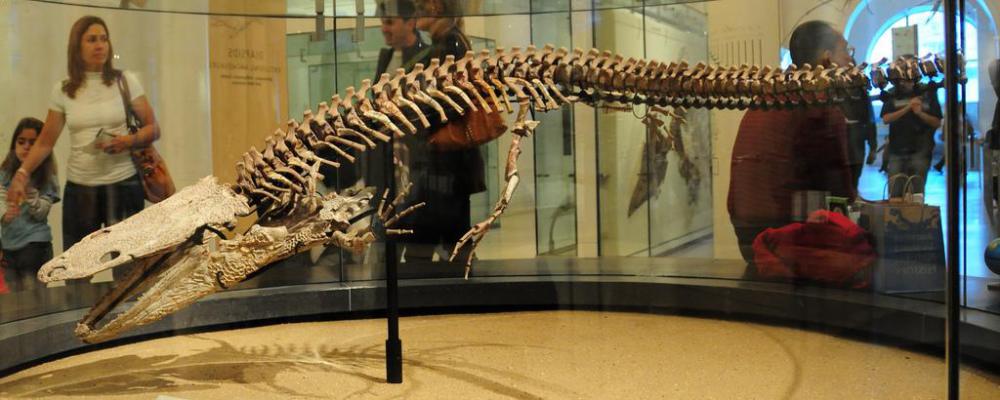
![The earliest amphibians, called temnospondyls, were typically 1.5 to 5 feet long and the first tetrapods to walk on land.]() By: Vince SmithThe earliest amphibians, called temnospondyls, were typically 1.5 to 5 feet long and the first tetrapods to walk on land.
By: Vince SmithThe earliest amphibians, called temnospondyls, were typically 1.5 to 5 feet long and the first tetrapods to walk on land.



Discussion Comments
reptiles vs amphibians: scales vs no scales. Eggs have shells vs eggs don't have shells. Don't need water to survive (besides drinking) vs needs to have a body of water to soak in. Breathe through mouth/nose vs breathe through skin.
Note that some reptiles/amphibians give live birth, but the platypus is an egg-laying mammal, so don't freak over getting everything to match.
I think that if you keep a keep a pet at your home then it is necessary that proper care should be taken of that pet.There are various sites that provide information about your pet's habitat, food etc.
One of these things don't belong and I can't figure it out and why: frog, turtle, lizard, alligator. Help, please.
@anon27381 crocodiles are reptiles. they're born on land, have scales and have eggs with hard shells.
Thanks a lot. it helped me in my studies. But can you tell more differences between amphibians and reptiles?
i was wondering about that, but i believe reptiles have hard scales and amphibians have soft, moist skin.
Thanks, this helped me lot. but I need similarities more.
Now the things really help. I got no checks on worksheet.
I need help with homework. does anyone know if a crocodile is an amphibian?
what types of reptiles would you find in an aquarium? Please help me. thanks
this has really helped with my homework. thanks a bunch, pal!
This was very helpful for the project I am doing. Thanks!
@ Nicolagi: Toads are amphibians. Amphibians lay eggs, as do reptiles, but the distinguishing thing is the Kingdom, Phylum, Class, and Order. They are the same. In reptiles, it changes from amphibian's order, I believe. Hope this helps! Good question.
We have pet frogs in our class and are wondering what we should feed them besides crickets/any bug in general.
Thanks!
can you keep toads as pets?
i used to have a pet frog but it died. what should i do next time?
i don't know anything about differentiating amphibians and reptiles. Please help me.
why do toads give people warts?
why do toads have warts?
Hey, umm i don't have a pet one or anything, but i was just wondering:
Is a toad an amphibian or a reptile? and are there any distinguishing features (i.e. bones in them or habitat)?
because someone told me that they are reptiles because they lay eggs, but i though they laid eggs like frogspawn (toadspawn??). so please help me! thanks.
I was wondering which frogs fall into the category of small meaning no larger then 2” in length. And if I have two different types of frogs as long as they are the same size is that OK to put in the same tank?
I have a 55 gallon tank with an expanded screen top on the land side of the tank. Half of the tank is land and half is water. I would like to know if it’s OK to mix African dwarf frogs with red eye tree frogs or with tree frogs in general or at all. I have a lot of experience with the African dwarf frogs but not tree frogs.
Post your comments