
At WiseGEEK, we're committed to delivering accurate, trustworthy information. Our expert-authored content is rigorously fact-checked and sourced from credible authorities. Discover how we uphold the highest standards in providing you with reliable knowledge.
What Is the Difference between a Preschool and Nursery School?
Preschool and nursery school both provide excellent opportunities for children five years and younger to get a head start on the expectations of kindergarten and beyond. Although neither is required by law, children who attend one of the two tend to have a far better chance of not having to repeat kindergarten — a tendency that is becoming the norm for thousands of children nationwide each year. For parents, it is important to understand the differences between the two environments, and to carefully check that potential preschools and nursery schools carry the proper credentials and follow proper guidelines.
Nursery school is primarily a day care facility with a few important touches. In the US, education departments of individual states determine regulations for nurseries. In the UK, nursery schools, unlike day care facilities, are required to be registered and inspected by the Office for Standards in Education, and parents can expect that most of the staff will be trained and certified in childcare. Most private facilities will provide age-appropriate educational components, and parents can now find many public programs following suit.
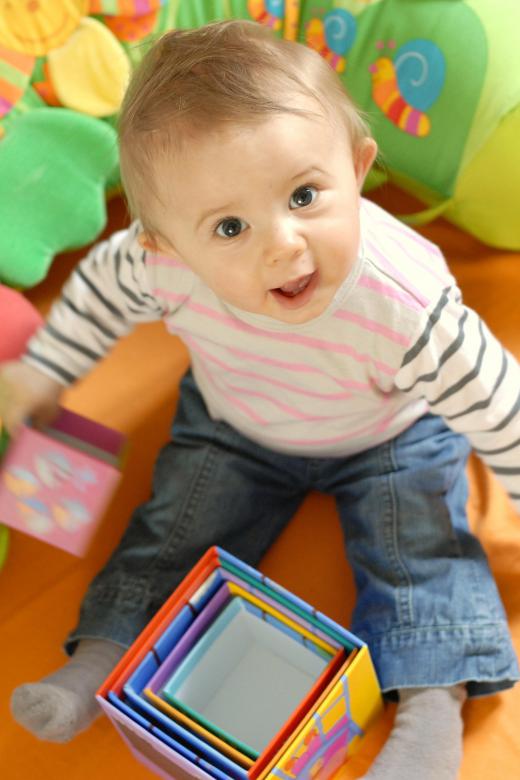
These schools will typically accept enrollment for babies as young as six weeks through children up to four or five years. The accepted ages will often vary depending upon the physical layout of the school building. Those large enough to provide an established baby unit separate from a unit for older children will, obviously, be able to accept a wider age range as well as provide a preschool-style educational curriculum.

Nursery schools may be public or private, and may be run by the state, the local community, the local church, a company employer, or a business-for-profit enterprise. Like day care facilities, the hours of care provided by nursery schools tend to begin early and end late in order to accommodate the schedules of busy parents. In the US, state run programs may stay open as late as 8:00 p.m. to allow mothers and fathers time to tend to important issues after the workday. Nursery schools generally provide full days for the children in a scheduled manner, and usually include meals, snacks, outside activities, arts and crafts, and nap time.

Preschool, as the name implies, is an educational setting intended for children who are too old or advanced for nursery school but too young to enroll in kindergarten. In the US, states establish standards and preschools have to be certified or licensed. The license is usually provided by the Department of Education, or the Department of Social Services of that state. In the UK, preschools will be registered with the Office for Standards in Education and should follow a prescribed national curriculum designed to teach children the basic skills needed for kindergarten.

Ideally, a school will provide the type of activities and lessons that enhance and develop a child’s ability to become successful at the next level. This means preparing the children for academic readiness by teaching letters, numbers, and shapes, and designing age-appropriate social activities that stimulate self-esteem and encourage social and emotional maturity.

Privately-run facilities may offer both types of services in one building. While this is certainly convenient for parents, it is often costly, and many facilities carry long waiting lists. Many of the larger nursery schools will accept children up until they must enroll in kindergarten and, while these are not officially considered to be certified preschools, they do provide the same structured curriculum. These facilities offer longer care hours and typically cost less than a separate preschool program.
AS FEATURED ON:
AS FEATURED ON:









-
![Nursery schools provide licensed day care and activities for young children from six weeks to age four or five years.]() By: sebastien nardotNursery schools provide licensed day care and activities for young children from six weeks to age four or five years.
By: sebastien nardotNursery schools provide licensed day care and activities for young children from six weeks to age four or five years. -
![Children in preschools receive education that prepares them for kindergarten.]() By: Monkey BusinessChildren in preschools receive education that prepares them for kindergarten.
By: Monkey BusinessChildren in preschools receive education that prepares them for kindergarten. -
![Preschool helps children develop social skills needed for kindergarten.]() By: Petro FeketaPreschool helps children develop social skills needed for kindergarten.
By: Petro FeketaPreschool helps children develop social skills needed for kindergarten. -
![Nursery schools generally provide full days for children, and usually include some arts and crafts.]() By: vodolejNursery schools generally provide full days for children, and usually include some arts and crafts.
By: vodolejNursery schools generally provide full days for children, and usually include some arts and crafts. -
![Preschools are focused on academic readiness rather than child daycare.]() By: micromonkeyPreschools are focused on academic readiness rather than child daycare.
By: micromonkeyPreschools are focused on academic readiness rather than child daycare.


Discussion Comments
I think "office for standards in education" is a British institution. The article says that there is one in the US.
I think the correct name for the agency in the US is the Department of Health, Education and Welfare. States have their own agencies, too. California has the Dept. of Education.
My daughter will be entering the two year old class at my college's daycare in the spring semester. It is called a daycare, but the program sounds more like a nursery school or preschool to me. I can drop her off or pick her up anytime between 7:00 am and 6:00 pm, but her days are structured.
The care providers read the children a book each week, and they center the activities throughout the week on the theme of the book. Her day will be filled with activities, but will not be loaded with television, and movies. Maybe this is how daycares are in the city, but when I used to live in a rural area, all of the daycares were simply group babysitters. I was also surprised to find the cost of this daycare is about the same as daycares that do half as much. It is nice to see daycares that focus on preschool activities.
Many preschools also offer phonics instruction and develop reading readiness, since this is the primary academic focus in kindergarten.
Usually kids learn letter sounds and later advance to simple phonics readers. Usually books with very simple text that reinforce word families are used.
For example, the Bob Books series have a few pages that have maybe one or two word sentences. A typically book might read, “Mat sat”, and then it continues, “Mat sat on the hat” the “at” sound is repeated throughout the book until the child understands the sound.
This exercise with the combined knowledge of the initial letter sounds helps children begin to read their first words which usually happens in preschool.
Post your comments