
At PracticalAdultInsights, we're committed to delivering accurate, trustworthy information. Our expert-authored content is rigorously fact-checked and sourced from credible authorities. Discover how we uphold the highest standards in providing you with reliable knowledge.
What is the Difference Between a PA, NP and RN?
 Nicole Madison
Nicole Madison
Nicole Madison
It's sometimes difficult to distinguish between a Physician's Assistant (PA), a Nurse Practitioner (NP), and a Registered Nurse (RN), since they often play similar roles in examining and treating patients. Generally speaking, though, these positions differ in terms of the scope of services they can legally provide, the minimum education required, and the licensing required. National and regional requirements vary, but generally speaking, an entry-level RN requires fewer years of education than either an entry-level PA or NP, and may not be able to perform certain tasks.
What They Do
RNs

An RN performs a range of duties, including recording medical histories, examining patients, providing treatment, and assisting in the administration of diagnostic tests, among many other things. He or she may also analyze the results of certain tests, operate medical machinery, and administer medications. RNs often play active roles in helping patients with follow-up care, as well as educating them about various medical conditions. They generally cannot prescribe medication, but they can provide input into a patient's care program.

Most RNs work in hospitals, but they can also work in doctor's offices and local clinics. Some also provide home care or work in nursing homes. They can also work in schools, prisons, and even cruise ships. Not ever person who has a nursing license actually practices as a nurse — some teach other nurses, give presentations to groups about hygiene and disease, help with outreach programs, or work for pharmaceutical companies. Additionally, nurses may work in screening or immunization clinics.
NPs

An NP can do all of the things that an RN can do, but they can also order diagnostic tests and interpret test results. Some states also allow NPs to prescribe medicine, though this varies. Additionally, NPs can have their own private practices in some areas. Though some choose to do this, it can be difficult to start up, since some insurance companies do not reimburse NPs as much as they do doctors or hospitals, and some states have laws limiting what they can do on their own. Those NPs who choose not to set up a private practice often choose to work in units or clinics that are focused on their particular specialty — for instance, a Pediatric NP might choose to work in a maternity ward.
PAs

A physician assistant performs many of the same tasks as an RN or NP, but he or she must work under the supervision of a physician or surgeon and cannot operate an independent practice. Many areas allow PAs to prescribe medications. They can also order diagnostic tests, perform physical exams, and help in surgery. Most PAs work in private offices along with the doctor who supervises them. Others work in hospitals, nursing or palliative care facilities, or in clinics.
Education
RNs

To become an RN in the US, a person has to have at least an Associate Degree in Nursing (ADN), which usually takes about two years to complete, or a diploma from an accredited nursing program, which generally takes two to three years to complete. The diploma type of program was common before the 1970s, but now the associate's type of program is more common. Many have more advanced education, such as a Bachelor of Science in Nursing (BSN), which usually takes about four years to complete. Some nurses also use previously earned educational credits to work towards their BSN. For instance, a person with a bachelor's degree in another subject may be able to qualify for an accelerated BSN program, or a nurse with a previous qualification like an ADN or diploma can often take a shorter, specialized transition program.
NPs
NPs are actually a type of RN called an Advanced Practice Registered Nurse (APRN). Any person wanting to become an NP in the US must have passed all of the educational requirements to become an RN and also have either a master's or doctoral degree. Nurses who became NPs before APRN training programs became common in the 1980s are excluded from this requirement. NPs generally have to get additional training to get certification in a certain area, such as pediatrics or oncology.
PAs
A PA has to have at least two years of college in a science-related major, but most have at least a bachelor's degree. After getting the bachelor's degree, a prospective PA has to enroll in an accredited PA training program, which usually takes a little over two years to complete. The training in this program is more similar to that of a medical school program than a nursing degree. After completing a training program, they are eligible to test for licensing. Many nurses get their bachelor's degrees and a few years of work experience first and then apply for a PA program.
Licensing
RNs
All RNs in the US must pass the National Council Licensure Examination (NCLEX-RN), and some also have to get state certification, depending on where they live. Those who fail the NCLEX-RN may have the opportunity to retake it, but they usually have to wait a few months. Many nurses also choose to get certification in other areas, since this can greatly increase their job prospects.
NPs
NPs have to have passed the NCLEX-RN as well as the additional certification needed to become an APRN. Many NPs also have to get further licensure at the state level, but the requirements for this vary from place to place. Some areas require NPs to work with a doctor for a certain amount of time to get their license, and others don't have any specific licensure requirements besides the national requirements.
PAs
PAs have to get national and state licensure, similarly to RNs, but they must also pass the Physician Assistant National Certifying Exam (PANCE). To maintain their licensure, they must take at least 100 hours of continuing education every two years, and they must also recertify for their national license every six years.
Nicole Madison
Nicole’s thirst for knowledge inspired her to become a PracticalAdultInsights writer, and she focuses primarily on topics such as homeschooling, parenting, health, science, and business. When not writing or spending time with her four children, Nicole enjoys reading, camping, and going to the beach.
Learn more...
Nicole Madison
Nicole’s thirst for knowledge inspired her to become a PracticalAdultInsights writer, and she focuses primarily on topics such as homeschooling, parenting, health, science, and business. When not writing or spending time with her four children, Nicole enjoys reading, camping, and going to the beach.
Learn more...AS FEATURED ON:
AS FEATURED ON:


-
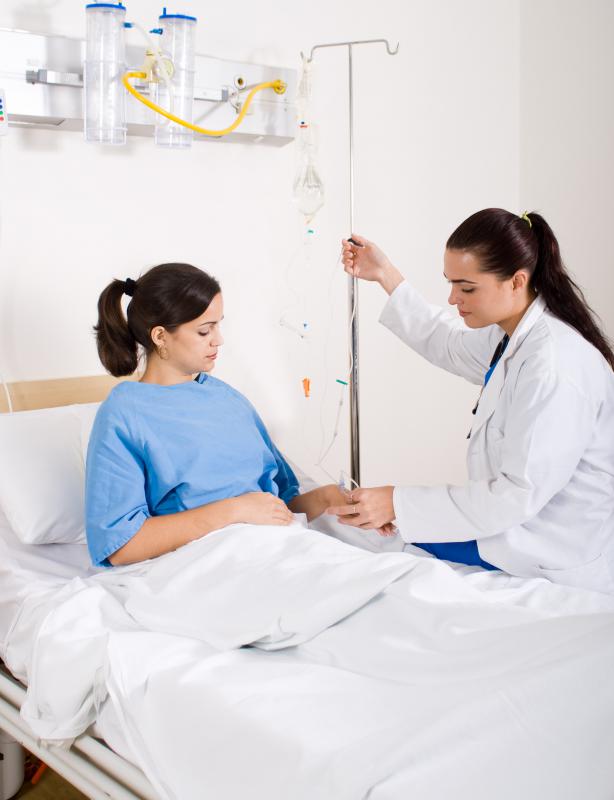
![RNs can take a patient's history.]() By: michaeljungRNs can take a patient's history.
By: michaeljungRNs can take a patient's history. -
![A PA might help in surgeries.]() By: Gennadiy PoznyakovA PA might help in surgeries.
By: Gennadiy PoznyakovA PA might help in surgeries. -
![Many RNs work in clinics, hospitals and nursing homes.]() By: michaeljungMany RNs work in clinics, hospitals and nursing homes.
By: michaeljungMany RNs work in clinics, hospitals and nursing homes. -
![PAs may work in palliative care facilities for the terminally ill.]() By: artushPAs may work in palliative care facilities for the terminally ill.
By: artushPAs may work in palliative care facilities for the terminally ill. -
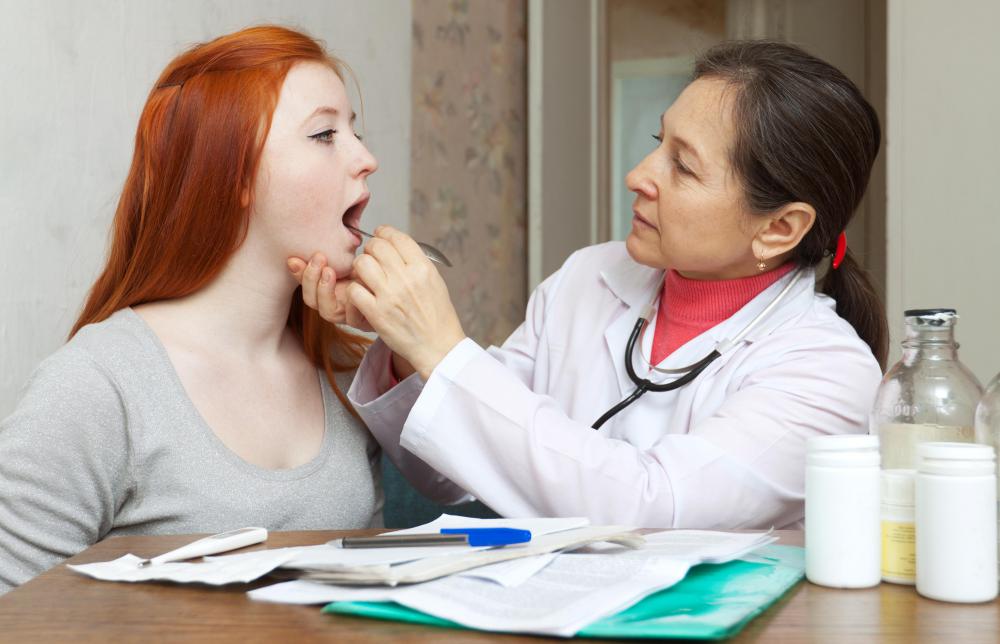
![A nurse practitioner can evaluate symptoms and test for common infections.]() By: JackFA nurse practitioner can evaluate symptoms and test for common infections.
By: JackFA nurse practitioner can evaluate symptoms and test for common infections.



Discussion Comments
How can you say NPs are better than PAs? Lets look at the training. To get a masters in PA studies, most programs average over 100 credit hours of graduate school in 24 months. That is 70-80 percent of medical school in just two years.
Now let's look at how many credits it takes to be an NP. Most programs I have researched average between 40-50 credits. If you throw in a DNP degree on top of that, you have another 40 or so credits for a grand total of 80-90 graduate credits. Plus they have online classes. How hard could they be?
So a PA-C upon graduation has more credits than an DNP and way more than a masters level NP. I am not saying that makes PAs better, but it helps their credibility.
Look at some of the courses NPs get. Advanced nursing statistics, NURS637 - Introduction to Research Methods and Design, NURS663 - Advanced Concepts in Primary Care.
Look at some courses that PAs get. Human Gross Anatomy (full cadaver dissection), Clinical Medicine I (9 credits of hell) etc. See the difference? The scary thing is some states allow NPs to practice independent of a physician's supervision. Keep that in mind next time you slam a garbage man or some other person busting their butt to feed their family. Instead you should be impressed that a person decided to make their life better. They probably had the choice to become a PA or NP and chose the one they liked the most.
I know a lot of RNs who became PAs because they like the training better! Put that in your pipe and smoke it.
Both are great choices! I think part of it has to do with who you are too. Some minds think more scientifically and methodically. Some minds want to love and heal. Both are to be respected and appreciated for what they are! Nurses spend their whole career learning about holistic caring. When I think of PA's, I think they had to pass organic chemistry -- and praise them for that.
Great article. A PA could be anyone with a sufficient science background in chemistry, math and biology. I saw a problem with PA instruction model after I saw my neighbor with a background in music and literature become a PA. I believe you could be a janitor and become a PA after completing deficiency courses.
NPs have to spend rigorous clinical hours as RNs and in their Masters curriculum before they become board certified.
NPs are above MD in some ways since they believe in healing and providing optimal care to their patients. They don't see patients as "mutton chops" for their time. I fired my MD physician and now have a FNP physician.
You can definitely get your license as an RN with a DUI. Getting a job might take a lot more searching and you definitely will need to have an exceptional application and be able to explain that DUI. Maybe you can get that charge lessened. But don't listen to people when the only advice they have to give is negativity because there are lots of people who are RN's who don't have a perfect background.
Some people just have no hope in their lives and honestly want to bring other people down with them, but don't let them get to you. Just do some research. Call hospitals and ask them how they approach applicants with a background such as yours. You should still go to school! You have the whole world to work where you want. Do you think someone in Africa, India, Thailand, etc., will tell you that you can't help their people because you have a DUI? No. Please. Believe and have hope in yourself because in this day an age, hope is all we have.
PA-C's do not do any of the task that a nurse does.. I teach clinical medicine at a prominent medical school in california..i teach PP and Md students the exact same lectures and clinical skills ...
our nursing school instructs our nurses and Np sare in a graduate nursing program
Our staff PA's practice medicine and prescribed in the same way as a md does
but because their licencing is different, they must have a working relationship with an MD
called a supervising physician
the SP is usually just available by phone for consult but is rarely used..
NPs and PAs make the exact same pay in NC. As a FNP, I will say that PAs are much more recognized by non-medical people. I really don't see much of the different accept in some states NPs can practice independently. Honestly, there are several supervising physicians that are willing to supervise just for income. Either way, you can't go wrong with advancing your career as an NP or PA.
There's a lot of negative feedback in these posts! NP, PA -- either one you choose is very prestigious and requires a lot of schooling! Like others have said, the difference is the model of schooling (medical model for PA, nursing model for NP)
However, for those who posted that "construction workers" and "garbage men" can become PAs after two years of schooling, I dearly hope that you are just exhibiting jealousy and aren't really that uninformed. Every single PA school in my state requires a baccalaureate degree and extensive science prerequisites (chemistry, biology, anatomy and physiology) as well as experience in the medical field (they're looking for at least 2,000 hours).
I'm getting my undergrad in chemistry and plan on getting my masters degree to become a PA. There's nothing wrong with construction workers or garbage men, but you don't just hop from that field right into treating and diagnosing patients!
To the person who said you can go from garbage man to PA, you need a reality check! Yes, not all programs require a bachelors of science, but they still require all the science pre-reqs! And if you have any experience you would know that it is crazy competitive. Without a quality GPA, decent test scores, patient care hours, and experience, you won't have a shot.
I am currently interviewing for PA programs. One school sent me my packet that stated out of 1,200 applicants they are interviewing 100 for 44 spots. You must be qualified to be one of those 44! I am hoping my 5000-plus hours working on an ambulance will show them my competency. In addition, most programs are going to Master's programs only and requiring at least 1,000 hours.
Working in a community clinic with both PAs and NPs as well as CNM-APNs, as a patient, I'd go with an Advanced Practice Nurse. I understand the PA is trained under the medical model for 2 years but they can also move from garbage man with a BA in anything into the PA program. With APNs, they are experienced BSNs with Advanced Practice experience.
For me, it fleshes out this way: MD-BA, four years of medical school which includes hospital experience via rotations, a residency (at least two years, sometimes an MPH and or Fellowship to specialize).
APN-BSN, Nursing Experience (at least a year) MA to achieve APN (two years and includes clinicals), sometimes an MPH and or additional training for a specialty like CMN-APN (OB).
PA-BA (doesn't require BA in any sciences), PA-C with MA in any area, or receives a PA-C with MA (this includes one year classroom and one year clinical).
Some PAs, especially those who were medics in the US, services are phenomenal, but they've also received that real life patient care experience, much like RNs who have nursing experience.
When I compare the APNs and PA that I work with, hands down, the APNs seem to be providing care based on more clinical experience.
It really boils down to personal preference and choices.
Typical for the disillusion of the nursing profession. Look at your state statutes. Although NP's claim independence, they are committed to a collaborative agreement with a physician.
Good question MakemeNP, I want to know the same info.
This board is awesome. I've learned a lot already.
Although most NPs would like everyone to think they
can practice without supervision, this is absolutely not true in many states, and Texas is one of them. I am a PA, and ran a clinic for 15 years with no doctor present, and only visiting once every two weeks.
I was trained in Cardiac CCU, ER with casting and splinting, advanced suturing including tendons and ligaments, and every FNP that has come to relieve me while on vacation was never taught to suture, splint, or many of the things PAs are taught.
PAs are taught like medical students, and get rotations in all areas of medicine, many NPs do not. And quit spreading the misconception that NPs don't need to be supervised. They do!
I must comment that while as a few people pointed out above that NP's have undergone many clinical hours due to their clinical rotations for becoming an RN, BSN, then MSN, there are a large number of direct entry nurse practitioner programs in the US these days.
These direct entry programs simply have significantly less clinical rotation hours then a PA program of the same length.
Having been accepted to both a quality PA program and a quality direct entry NP program that are both 2.5 years in length and both start June 2011, I am likely to choose the PA program because it has more than double the clinical hours compared to the NP. My assumption is that this will allow me to leave the gate running harder and stronger than the NP program.
Most everyone is so biased toward nursing on this website that i actually had a good hearty laugh while reading your attempts at trying to distinguish these two professions from one another. Feel free to continue generalizing about physician assistants and lobbying the nursing agenda.
I am going to enter the PA program next year, however I'm wondering whether it is possible to obtain experience before getting a license? so it would be easier to find a job as PA?
I'm not sure where some have the idea that a PA is paid more than an NP. Actually, many surgical groups are looking to hiring NP's now and pay more.
I thought there are some PA programs that accept people without any degree and just some college, which I found disturbing, seeing they are getting paid the same as an NP and performing much of the same duties! Is this true?
I am a 39 year old female RN with an associate degree in nursing. I have 20 years experience, and I have worked in both hospitals and doctor offices, in almost every specialty area.
I have worked for a large medical practice/physician group (with 37 primary and multi-specialty MDs, nine PA's and six P's) for 11 years now, and I have moved up in position and authority. Even with (just) an associate's degree (and because of experience and performance), I supervise other RN's (some with BSN), LPNs, NAs and medical assistants, as well as other clinical and clerical personnel. I am one of three lead nurse supervisors, and I train the new hires. I have trained resident MD's, PAs, NP's and even new physicians in certain areas (mainly in the specialty areas), and for the many different procedures, diagnostic tests and research the group does.
I have my own 20-minute appointments with patients for diabetic teaching and instruction, nutritional ed and counseling, home-care instruction for various equipment, wound care and proper bandage/packing instruction, and other teaching needs as they arise. I have had training and certification in most area's, but a lot of the specialty area things were learned only from hands-on experience, working with and learning directly from the MD or other health care professional.
I am also the personal nurse to two MD's and one NP, working the full day, doing all the regular RN responsibilities in addition to supervising, patient appointments, scheduling and problem-solving as needed through out the day.
Like most RN's, I am overworked and underpaid. The mental and physical demands are so stressful and exhausting, there is little left at the end of the day. Yet you somehow find the strength. As a single mother of two, it just doesn't seem fair to my precious children. I am often too exhausted and drained to fairly devote the quality time and attention I so want to give.
My kids are in no way neglected, nor do they go without a thing. Actually, they probably get more time and attention than most. We are an extremely close and loving family. But like most nurses and caregivers -- I always feel like I should do more, and I am constantly thinking of ways to better multi-task and care for others. I just want to provide a happy, healthy and well-rounded environment for my family, and I always see room for improvement. This is my biggest struggle and sacrifice.
If I had to do it all over again, I would definitely get a NP or PA degree. Most likely a PA, even though I value the nursing experience of a NP a little bit more. I think I would just be more comfortable as a PA, working directly under an MD. Although I do trust my judgment, I would feel better knowing an MD reviewed and agreed with my diagnosis and treatment.
As an RN, I work extremely hard both mentally and physically. A PA and NP work hard as well, no doubt, but not as much physically. On an average day, I put 40-45 patients in rooms, take their vitals, review their meds and chief complaint. I am constantly on my feet, moving quickly to keep up with schedules, and I usually always work through lunch. If another RN calls in sick or has to go home early, the supervisor usually covers their area- unless there are enough NAs or MAs on hand that day. Unfortunately, it is rare that we are fully staffed. There are no breaks in nursing, especially supervising.
As I am getting older, and coping with lupus and RA, I realize that the extra schooling and education for a PA or NP would have made (the physical aspect of patient care) much easier.
So much of the patient care is delegated to the RN, with strict time restraints and quality of care guidelines, being very difficult to juggle both at the same time. Between the tremendous amount of paperwork, patient care, medical procedures, patient teaching and counseling, triage/phone calls, urgent and unexpected issues, seeing that the work day runs smoothly and on time, to being the first one there in the morning and the last one to leave for the day, it doesn't always feel worth it.
But as a true and natural caregiver and nurse -- the simplest accomplishment, and that one patient who acknowledges or appreciates your genuine intent -- the one that you know you have made a difference for and a positive impact on- makes it all worthwhile and keeps you going. Knowing that you have helped and made a difference in someone's life is such an incredible, satisfying and truly awesome feeling.
My 13 year old son wants to be a pediatric neurologist or a gastroenterologist when he "grows up". He has gone back and forth between the two for over a year now. I know he is young and will likely change his mind several times, but I am so glad he is interested in the medical field, and has set a high goal for himself. He is a straight-A student, in all honor's classes, and has scored high on his SATs. I know he will do well whatever he decides.
Right now, my daughter, five years old, wants to be an RN- just like "Mommy". Before that, she wanted to be an astronaut :). I know that she will change her mind 50 times before she finally decides a career, but if she should still want to be an RN, I will strongly encourage her to go for an NP or PA degree. I so wish that someone had encouraged me to do so. I was the first one in my family to go to college, and an RN seemed like a far reach at the time.
My school grades weren't the greatest, and I was a pretty feisty teenager, not the best behaved. But when I went to college, and knew that I was paying for the student loan myself, I became a straight-A student. I always knew I wanted to go into health care. From the age of 7 to 13, I often accompanied my grandmother to her "private-duty nursing" (companion) jobs, and I truly enjoyed it. She would give me a couple of dollars for "helping", and I felt so good helping these elderly clients of hers. They were always so happy to see me, and they just adored my grandmother. I have some very fond memories with her.
So, in short, if you already know that you don't want to be a doctor, but you want to be in the medical field and have a higher degree, you should shoot straight for either a PA or NP. If you aren't sure which, and you prefer the nursing aspect, then get an NP. You will first get your RN, and go on to masters and NP training. You will have more responsibility, and be held more accountable, being able to practice on your own. If you are like me, and would feel better having the supervision and review of an MD, then get a PA. Whatever you do, don't sell yourself short or settle for what you think is only possible. Go for it. Best of luck to you!
There are some misconceptions posted about the difference between PA and NP's on this board. It has been suggested that despite the equal number of years of school that PA program require less clinical experience than NP programs. This is not true, as most masters level PA programs require a minimum of three years of clinical experience prior to entry.
In addition, PA education is based off of the medical school model or a generalist approach vs NP school which usually involved a more narrow area of study, unless of course it is a family NP program.
From my experience, PA school tends to be a bit more rigorous than NP school -- my experience being that I am in PA school and my wife is an NP. She agrees with this statement and this is not meant to be antagonistic.
I am in the classroom on average 32 hours a week and studying approximately 20 hrs/wk. My wife's program was not like this. In addition, her practicum was three months, whereas the PA clinical practicum is a full year. I feel the need to post this mostly because NP's tend to not be aware of these differences and often downplay the role of the PA simply because we accept our role as team players with physicians, whereas they tend to want to be viewed as independent.
I I am looking for best PA school in NYC, could you recommend me something?
Nurse Practitioner vs Physician Assistance is Oranges vs Apples
Education:
NP: Four-year Bachelor degree in nursing (this means classroom as well as clinical rotation) and two years in Masters Program (also clinical and classroom). Total school six years.
PA: Four years of any bachelors degree (must have all prerequisites before applying to PA school; Anatomy and Phys, Biology, etc.) plus two years of Masters PA school (one year classroom and one year clinical). Total school six years.
Education: Very similar however, it can be argued that Nurse Practitioners have more clinical education, which they do. Also, must schools require RNs to have at least one year of experience before applying to NP school. Therefore, you can become a PA quicker. Unfortunately, PA school is more difficult to get into because there are fewer schools.
Work: PAs specialize (that is why they make more money), most PAs are males- males get paid more without justification than women, which is true in every profession.
PAs are Physician Assistants, they do not work independently, hence the assistant name. They can see patients without the MD, they can write orders, etc, but always under the license of the doctor they assist. PAs cannot start their own practice unless they partner with a physician.
NP: most NPs work in family practice (FNP), which is the lowest pay. Most NPs are females (lower pay). NPs that specialize in field such as critical care, OB, Peds, make more money.
NPs CAN start their own clinics in some states. In Iowa, for example, NP can write for controlled substance, be primary care and work under their own license and prescribe under their own DEA number.
Missouri- tough luck, must do everything under a collaborating physician, much like a PA.
They both are different but similar.
Major difference also is training model:
PA - Medical model (disease and diagnosis focus)
NP- Nursing model ( Patient and holistic approach)
Maybe in the past about 30 years ago PAs had only a certificate but now and you can look it up on the national AAPA website. PA's have to have a Masters! NP's have a masters too. PAs are actually nowadays have more training than NPs. Remember NP is trained in nursing model and PA is trained in medical model. As a result PA are paid more. However they are not independent providers. NP can be independent.
The big difference is patient safety, outcomes and satisfaction. There has been research done on this as long as there have been NP's And t\Np's patient safety and outcomes are the same as MD's and patient satisfaction for NP's is higher than MD's. PA's lag behind in all three categories.
Regarding the DUI question. You can practice with a DUI. I've been practicing nursing for seven years now. I very seldom drink and had three glasses of wine which impaired my judgment and I drove home. I got pulled over, taken to jail and was treated like a criminal. This was my first time offense and ever getting into any type of trouble.
However, you must report it immediately to the BON where you are licensed. They did a extensive background investigation, I had to submit a lot of paperwork, a letter explaining and had an interview with the board. They dismissed it and nothing happen to my license. As a matter of fact, I recently relocated and I got a license out of state for CA, and DC; however, I did have to go through the same process for them to investigate to see it was a one time isolated event.
I learned my lesson and haven't had a drink since. Hope this helps.
to answer malaikanz #6): the certification is given in recognition of finishing the PA program, if the program gives a certification.
All certification programs are associated with a master's degree granting university and hence the PA graduates with a certification from the university they attended, and a master's degree from the distance learning university they were also enrolled in for their graduate studies.
All PAs need to finish their program with a master's degree, no if, ands or buts about it.
I myself have a certificate and my bachelors from a PA program 20 years ago. I also have my masters from a public health program.
So if you apply to a PA program, have your bachelor's in hand and then acquire your masters from the PA program. That's the norm these days.
-sharon, pace, mph
I work in a rural area hospital and would tell you that most PA's do all the work that MD's would do in big cities. NP's have more training but don't usually get the credit they deserve. I've known PA's who were once construction workers who got certified in two years and are then able to manage a hospital with all RN's and NP's working under them.
I would like to say that PA's make more money as well as get more credit than the nursing profession. Even though their training is much different from each other.
I don't think it is right for someone who has little less than two years of training in the medical field to have RN's and NP's working under them. Sad but true.
I've been looking at the difference between an NP and a PA.
Here is the pay scale difference:
PA: $90,900/$124,000
NP: $85,200/$113,000
You can become an RN and even an NP with a DUI. Contact your state board of nursing for details.
I am interested in becoming trained in sonography/Ultrasound technician. At the same time, I want to have career advancement leading to better pay. I have to take care of myself and my family.
Should I become a medical assistant and then specialize in sonography or should I become a Registered Nurse and then specialized in sonography?
I am on a tight budget also. So I may initially only be able to go into a two-year program and once I am more stable then continue to get my bachelor's degree.
I also hear that these days companies that are hiring are paying more attention to where your degree came from.
I don't want to waste my time and money if I'll have to compete with people who have degrees from Harvard, Yale or some other prestigious college.
Somebody please help me out. Thank you.
If you have a DUI you're out of luck. There's no room for you in nursing. You will not get a license, and it doesn't matter if it was 18 months ago or 18 years ago. Sorry.
Do not enter school and hope that they will change their minds. They won't and you will have a useless degree.
I think there are some misunderstandings between the educational difference in NP (however you want to deem it) and a PA. There is a difference in the education model used in the educational process.
An NP is taught using the nursing model (governed state to state) whereas a PA is taught using the medical model (the same model used in the education of MDs) which is determined by the American Medical Association (AMA), which is the organization who, by majority, fashioned the PA profession.
The PA profession was designed to produce medical professionals who work in conjunction with physicians. PAs most certainly can operate a clinic without a physician physically present.
I work in Arkansas, and yes, APNs can practice "independently" with the stipulation that their collaborative physician be no more than 60 miles from their practice and be available at all times for phone consultation.
The exact same guidelines are in place for Physician Assistants. As a chairperson of the Arkansas Academy of Physician Assistants board of legislation and reimbursement and a seasoned lobbyist, I have done extensive research on the difference in the professions from state to state (and to add, there are states that do not recognize Advanced Practice Nurses, whereas the PA profession is recognized with prescriptive privileges in all 50 states of the U.S. as well as Guam, and will soon been recognized in certain areas of Europe).
Finding the difference is about as complicated as separating each individual hair on a person's head, but there are certain clear cut differences.
I am a family nurse practitioner student graduating this June 2010. To become a NP, you must be an RN, compete another two years of bachelors degree in nursing then an additional two years of Master's Degree.
I currently am in graduate school for FNP and my advice for those that want an advanced nursing career is don't waste your time with an associate's degree, just do the little extra work for the BSN. It will save you time and money in the long run. If you're going to have to do the work eventually why not do it all at once? Besides, a BSN pays more and some hospitals these days only want to hire BSN RN's.
I am an RN and would also like to get my NP or PA. As far as I know, you would be getting your bachelors degree while on your way to your NP, like a stepping stone.
Does anyone know how a DUI can impact a licensure as an RN in another state? The DUI happened eighteen months ago.
Thank you!
After reading the explanation on the difference between NP's and PA's, I believe that the main difference in the 2 is that a NP does not need to be supervised. Is that correct?
What is the difference in the pay scale and what are the obligations to keeping your certification?
Thank you for your help. --Irish79
Hello, I am simply trying to find out the differences between a Bachelors, Masters and Certificate of Completion regarding physician's assistants. If you already have a Bachelor's degree, is the best option to get a Master's or a Certificate of Completion? Thanks in advance for any help.
Hello....I too am interested in becoming a NP. I have an RN associates degree currently and am looking for the most convenient path to becoming a NP.
Can you advise on the path I should take? I would certainly appreciate any help you can offer.
Thank you..
Hello, i am interested in becoming an RN at my local community college. Once i become an RN with an associates degree, i would like to become a Nurse Practitioner. I understand that to become a NP, I need to have a bachelors degree, so i can then go for my masters in NP. Are there programs available that can take me from an RN (associates) straight to NP; meaning a program that i could get that takes me from my associates, and gives me both my bachelors and masters together (and grants me my NP degree)?
Thank you!!
Post your comments