
At TheHealthBoard, we're committed to delivering accurate, trustworthy information. Our expert-authored content is rigorously fact-checked and sourced from credible authorities. Discover how we uphold the highest standards in providing you with reliable knowledge.
What is a Cowper's Gland?
A Cowper’s gland, or bulbourethral gland, is one of two pea-sized organs found at the base of the penis that produce secretions necessary for fertile sexual activity. Together with the prostate and seminal vesicles, these glands make a mucus-like substance that goes into semen and also acts as a lubricant during sex. They also makes pre-ejaculate fluid, which is the primary lubricant secreted by men during sex and also helps with fertilization and keeps the urethra clear of debris. The amount of fluid secreted varies depending on how old a man is, how long it's been since he ejaculated, and how aroused he is.
Function of Secretions

Pre-ejaculate fluid, produced solely by the Cowper’s gland, serves three main functions. It's slightly alkaline, so it neutralizes acid levels in a man's urethra so that his sperm can move freely. It also flushes the urethra of debris like pathogens. This fluid may sometimes pick up sperm left over from previous ejaculations and bring them into the vagina. Once the pre-ejaculate fluid reaches the vagina, it raises its pH slightly, which makes it more hospitable to sperm. This increases the chances of conception.
Other Components

A glycoprotein called Prostate Specific Antigen (PSA) is also present both in the pre-ejaculation fluid produced by the Cowper’s gland and in semen. PSA keeps semen in a highly versatile liquid form, which helps sperm reach the egg when a woman is fertile. It also makes sperm clot and form structures near a woman's cervix, which is the entrance to the uterus. The sperm can survive in these structures for up to five days, which also increases the chance of conception.
Problems

Cowper's glands rarely have serious problems, but they can become infected if a person contracts a Sexually Transmitted Disease (STD). In this case, a man may have painful urination, abdominal discomfort, or discharge from the penis. These glands can also get abscesses or cysts, which can be painful. This is more common in adolescents than in adults though. People should not try to drain these types of lesions at home, as they can damage the urethra, but a healthcare provider can usually drain them easily.

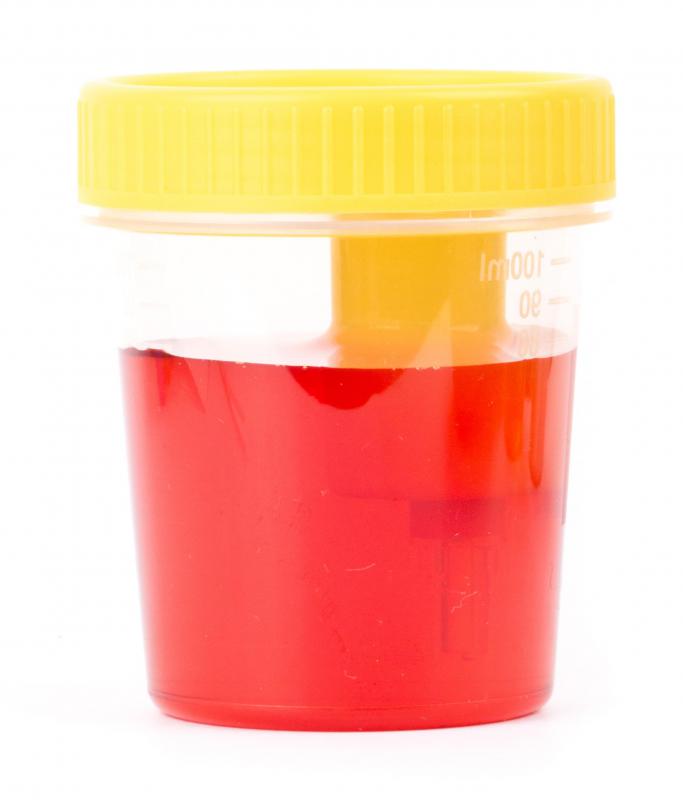
Additionally, some men have a rare condition called Cowper's syringocele, in which the duct of a Cowper's gland becomes swollen. This usually causes things like bloody urine, lower stomach pain, painful urination, and continued dribbling after urination. In some cases, it resolves spontaneously, but in others, surgery may be required to keep the duct open and functioning properly.
Sexual Dysfunction

Sexual dysfunction in men sometimes happens when the Cowper's gland is producing pre-ejaculation fluid. This is sometimes called the plateau phase. In this phase, both physical or psychological stress can prevent the gland from functioning properly. For example, muscle tension can cause it to produce less fluid, as can emotional distress. Since less fluid is produced, the urethra and vagina will be less hospitable to sperm. When combined with the lack of adequate lubrication, this can lead to problems with conception.
AS FEATURED ON:
AS FEATURED ON:


-
![Diagram of the male reproductive system showing Cowper's, or bulbourethral, gland.]() By: peterjunaidyDiagram of the male reproductive system showing Cowper's, or bulbourethral, gland.
By: peterjunaidyDiagram of the male reproductive system showing Cowper's, or bulbourethral, gland. -
![Problems with the Cowper's gland may be signaled by bloody urine.]() By: tomschoumakersProblems with the Cowper's gland may be signaled by bloody urine.
By: tomschoumakersProblems with the Cowper's gland may be signaled by bloody urine. -
![Abdominal discomfort may occur as a result of a sexually transmitted disease.]() By: Klaus EppeleAbdominal discomfort may occur as a result of a sexually transmitted disease.
By: Klaus EppeleAbdominal discomfort may occur as a result of a sexually transmitted disease. -
![Cowper's glands can become infected if a person contracts a sexually transmitted disease.]() By: Ivan MonteroCowper's glands can become infected if a person contracts a sexually transmitted disease.
By: Ivan MonteroCowper's glands can become infected if a person contracts a sexually transmitted disease. -
![Inflammation of the Cowper's gland may result in painful urination.]() By: arturas kerdokasInflammation of the Cowper's gland may result in painful urination.
By: arturas kerdokasInflammation of the Cowper's gland may result in painful urination.



Discussion Comments
I'm going to have a cleaning of my prostate and I just found out there are two cowper glands at the base of my penis. Wow! They must have been there more than 75 years and I never heard about it. I followed all the nonsense of my biology teacher, but he didn't know this himself, I'll bet. Over and over he rambled about his Harley with one explosion per km, etc. Thank you for the info on the cowper's glands and how important they are.
Question: As they have nerves in them, are they the cause of the bad lowdown feeling I have seeing, for instance a soccer player getting hit in the groin with a ball?
Two years after my prostate and sperm sac were removed, my erections and orgasms are back to normal, and now sperm like fluid comes out of my penis, maybe a few drops. It is coming from the cowper's gland and I feel it coming up the urethra.
@anon279368: I assume you mean semen, not sperm. Your sperm make up less than 10 percent of your ejaculation, and their quantity and quality can only be determined by a lab test. Sperm are so small they are virtually invisible, and so are not responsible for the familiar white color. I'm your age(slightly older), race, and health status, so I'll give you my personal experience.
After three to five days abstinence, I find my volume of semen ejaculated is not all that different than when I was middle-aged. It does tend to be thinner and in greater volume after prolonged mental arousal prior to ejaculating. Dehydration will lower the volume and make it commensurately thicker. So you're on the right track about water intake.
From what I've read, the thicker whitishness is caused by the nutrients in the semen, designed to keep sperm healthy. Therefore, when it comes to semen, you are what you eat. A balanced diet should consistently supply the proteins, fructose, and other nutrients that produce the whitish, heavy cream consistency that you are familiar with from youth to your present age.
If you truly have a problem, my guess would be your seminal vesicles are slowing down production for some reason. This should not be a health concern unless you are trying to father a child. Hope this helps.
I'm a 65 year old straight Caucasian male, in good health, but I don't produce as much sperm as when I was much younger. It's a very small amount, mostly clear, unlike the usual white color, and I drink a lot of water daily which I was told can help produce sperm. So what can be the cause and anything I can do to remedy this?
Question: Is semen being produced continuously? If so, where and how is it stored and/or how is it discharged without ejaculation? If stored, does it have a "shelf life"?
Also, what role does a normal prostate play in this process, other than semen production, especially in elderly men.
Am I the only one who is wondering how Dr. Cowper even got the idea to start looking for something like a Cowper's gland? I mean, it's not like gland histology was that big at the time, so how on earth did he get so far in his study of the endocrine system glands to get to that one?
I would love to know the backstory behind that!
Isn't the human body so amazing? I think it's a shame that so many people are afraid to talk about the body, especially the reproductive system, when it really is such a complex and beautiful thing.
I mean, who would have thought that the body would have developed so far to deal with little things like lubrication? I am really curious now to know if female animals have Cowper's glands as well, or if it's just a human thing.
But seriously, people shouldn't be ashamed to talk about the human body, whether that's seminal vesicles or Cowper's glands or what. I think that women especially are taught to be ashamed of their bodies, when they really should be proud at all the amazing things that it can do! The fact that we have vagina glands should be a thing to celebrate, not one to be ashamed of.
You don't see men getting embarrassed because they have a prostate gland, right? I wish that one day, people will be able to talk about all their glands in the same disinterested manner as they do say, the hypothalamus gland.
We should all be more at peace with our bodies -- celebrate yours, don't hide it!
Namaste.
Wow. Really great article, but I have to say that I'm pretty much horrified at the human body.
The more I read about the body the more grossed out I get -- I mean, it's one thing to know of reproductive glands in theory, but then to read about them in detail (not to mention squishy bone marrow, the what the depths of a staph infection look like, or the function of the protate gland spelled out in detail) gets to be a little much for me at times.
I mean, I know we all have them and the body is a beautiful and complex thing, etc, etc, but now whenever I'm around a group of older men all I'll be able to think about is their Cowpers fluid glands not working properly!
The price I pay for my wealth of trivia knowledge...
Very informative article. Thanks for the great information!
Post your comments