
At TheHealthBoard, we're committed to delivering accurate, trustworthy information. Our expert-authored content is rigorously fact-checked and sourced from credible authorities. Discover how we uphold the highest standards in providing you with reliable knowledge.
What Is the Connection between the Cell Cycle and Cancer?
The most significant connection between the cell cycle and cancer is usually that cancer, in any of its various forms, causes disruptions in the cycle to the effect that cells are no longer able to reproduce and divide in a normal way. There are many different kinds of cancers, and likewise many different sorts of cells. The two don’t always go hand in hand, but when they do, the effects are usually profound. One of the most basic ways most cancers operate is to “reprogram” cells at the molecular level to regenerate endlessly, instead of making one or two copies of themselves as they would following a normal cell cycle. This often results in tumors and other growths, and can also lead to mutations that work sort of like “time bombs” waiting for some triggering event in the future to activate them. Many cancer drugs and treatments look for ways of keeping the disease out of the cell cycle or at least limiting the damage it can do, though the problem is often a lot more complicated than it seems at first glance.
Understanding a Healthy Cell Cycle

Cells in humans, animals, and plants all use what’s known as the “cell cycle” to grow and regenerate. What exactly this cycle looks like can vary a little bit between organisms and even between parts of a single body, but in general it centers on programmed and systematic reproduction. Something in the DNA of the cell’s nucleus triggers copies to be made of all important cellular material; these copies then grow and ultimately split off into what are known as “daughter cells.”

Daughter cells grow and, in turn, reproduce themselves according to the overall growth plan for the body or organism at issue. In nearly all cases cells will only divide when there are certain hormones present. These hormones are usually triggered by growth centers in the brain.
When they’re healthy, cells are able to determine there is enough space and nutrition to support two cells where there has only been one. They can also determine whether the DNA has replicated properly; if it hasn’t, the body will usually order the destruction of the faulty cell. Programmed cell death is also a part of the cycle, and happens when a cell reaches the end of its useful life. In this way, cells are able to regenerate organs and grow things like hair and fingernails without losing control.
Cancer’s Impact on Cell Division
In cancerous cells the cell cycle no longer operates normally, and the resulting abnormal cells grow uncontrollably. These rapidly growing cells become tumors and cause damage to various organs and organ systems. Cancerous cells divide in the same manner as other cells, but because of an error in their genetic coding they divide without the numerous safety measures that prevent normal, healthy cells from dividing too frequently.
In part this is because cancerous cells are able to divide without the presence of hormones that usually regulate healthy cell division. These cells also do not respond to the proximity of other cells, which means they are able to continue replicating even when there is no space for them to do so. Faulty DNA is ignored in cancer cells so the cells continue the division process even when the daughter cells will be damaged.
DNA Mutations
The DNA of the damaged cells often lacks the gene responsible for producing a protein that inhibits cell division. Cancerous cells may also produce substances that are actively harmful to normal cells and that allow the cancerous cells to spread beyond the boundaries in which the normal cells were contained.
Understanding Common Causes
In order for an uncontrolled cell cycle and cancer to develop, the DNA in a cell must have mutated. There are a number of reasons why this happens, and researchers don’t usually have a comprehensive list of cancer causes. As best they can surmise, some types of cancers just simply happen, often as a result of something genetic or some inherited trait.
Depending on the type of cancer, though, certain environmental factors are known to contribute to a person’s risk. Carcinogens, for instance, can be responsible for creating mutations. These are known toxins present in things like smoke and charred foods, and also in certain highly processed foods. Constant exposure to these and other toxic chemicals can sometimes cause cancer to develop in people who otherwise had no predisposition for the disease.
AS FEATURED ON:
AS FEATURED ON:


-
![A cell dividing into two daughter cells.]() By: Luk CoxA cell dividing into two daughter cells.
By: Luk CoxA cell dividing into two daughter cells. -
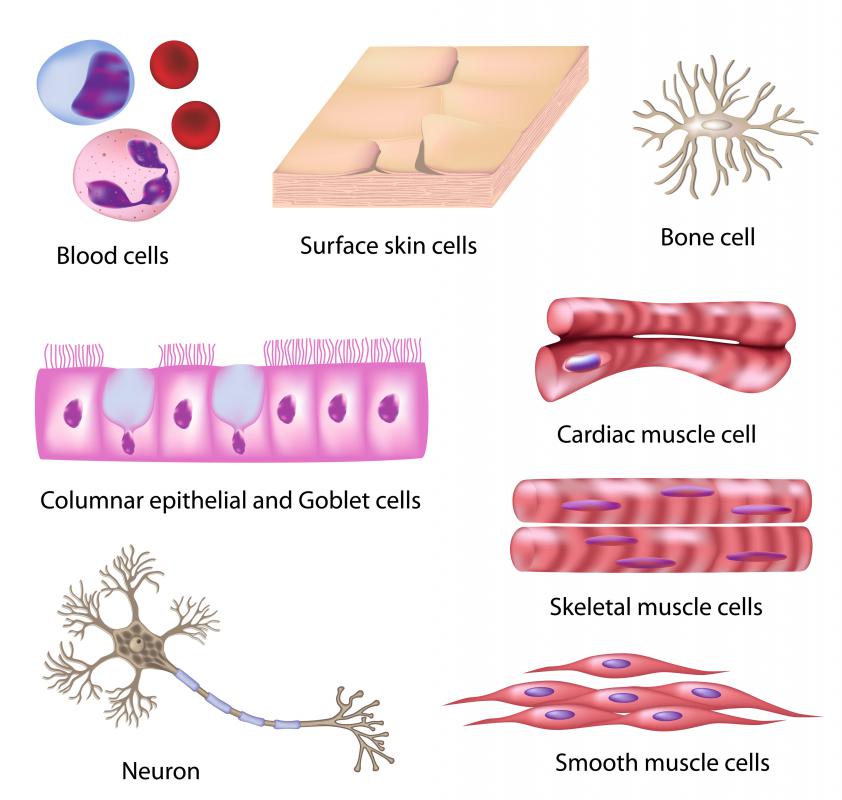
![Different types of cells.]() By: AlilaDifferent types of cells.
By: AlilaDifferent types of cells.

Discussion Comments
Isn't the very definition of cancer the condition in which abnormal cells grow out of control? The difficult thing about cancer is that we don't have the basic knowledge about how to effectively reverse that condition in a way that is "safe." Some of the best tools we have to combat those cells in an attempt to return the cell cycle to normal also cause damage. Chemotherapy is effective but it is also very harmful to humans -- truly, it will either kill you or cure you.
Post your comments