
At TheHealthBoard, we're committed to delivering accurate, trustworthy information. Our expert-authored content is rigorously fact-checked and sourced from credible authorities. Discover how we uphold the highest standards in providing you with reliable knowledge.
What Is the Connection between Casein and Cancer?
In the scientific and nutritional communities, there are reasons to suggest that casein, a milk protein, is linked to cancer development in some animals and humans. Some studies have shown that casein and cancer are linked in rats, yet it is unclear if these findings hold true in the human population. Nutritional research that studies the correlation between casein and cancer has generalized findings to suggest that all animal protein helps cancer flourish. These generalizations have led to many objections and criticisms, as more research on all types of protein should be studied thoroughly before claiming a hypothesis is true.
Casein is the protein found in milk and other dairy products, and is sometimes allergenic to those who suffer from food intolerances such as gluten or lactose. Both casein and cancer have been linked in a few nutrition studies on rats, such as The China Study by Dr. T. Colin Campbell, suggesting a possible link in humans as well. In these studies, researchers fed a group of rats isolated casein and tried to determine its effect on cancer cells. Many researchers claim that increasing casein protein in the rats' diet caused cancer cells to activate and grow.

The rats fed isolated casein powder differ from the other rat subjects fed wheat or soy, as these rats showed no alteration in immune system status and cancer growth. Results like these led many of the researchers to determine that introducing a plant-based diet into animal and human diets can decrease the likelihood of cancer. It is unknown if casein and cancer are linked in the majority of the population; however, it is accepted that there is a slight link between dairy protein and cancer. Research studies on this correlation still contain some flaws, which present a number of scientific objections and criticisms.

Many critics to the studies on the relationship between cancer and casein point out that rats are often fed a diet consisting of powdered isolated casein in casein studies, which doesn't occur naturally in human or animal diets. In fact, many objections stem from the fact that casein is consumed as part of a whole food, along with naturally occurring fatty acids as well as carbohydrates. Also, the generalization that stems from these studies that all humans should avoid animal protein needs to be thoroughly examined, as this claim is only a hypothesis. Pasteurizing, heating and fermentation can also change the structure of casein, leading many critics to believe that other variables should be analyzed in future research.
AS FEATURED ON:
AS FEATURED ON:


-
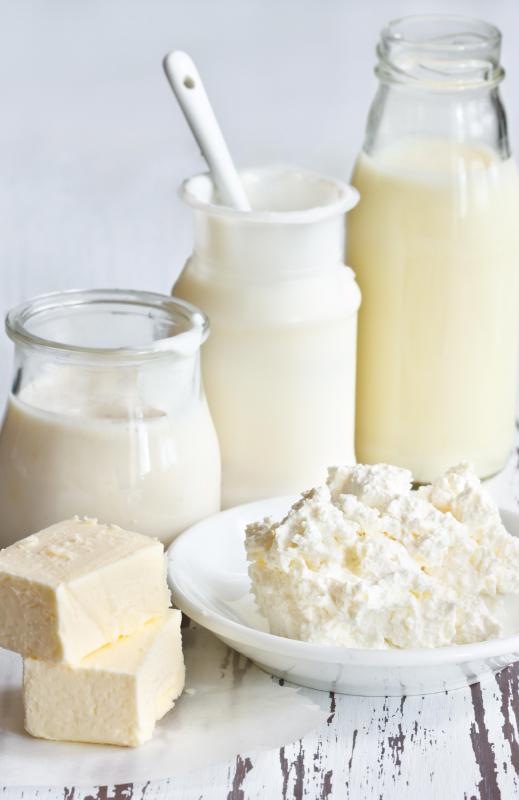
![Casein is a protein found in milk.]() By: HyrmaCasein is a protein found in milk.
By: HyrmaCasein is a protein found in milk. -
![Rats were fed casein protein powder in some cancer studies.]() By: lculigRats were fed casein protein powder in some cancer studies.
By: lculigRats were fed casein protein powder in some cancer studies. -
![Some people with dairy allergies are sensitive to casein, a protein found in milk products.]() By: lidanteSome people with dairy allergies are sensitive to casein, a protein found in milk products.
By: lidanteSome people with dairy allergies are sensitive to casein, a protein found in milk products. -
![Nutrition studies performed on laboratory rats have linked casein and cancer.]() By: lculigNutrition studies performed on laboratory rats have linked casein and cancer.
By: lculigNutrition studies performed on laboratory rats have linked casein and cancer. -
![Some bodybuilders supplement their diets with casein protein.]() By: ArenaCreativeSome bodybuilders supplement their diets with casein protein.
By: ArenaCreativeSome bodybuilders supplement their diets with casein protein. -
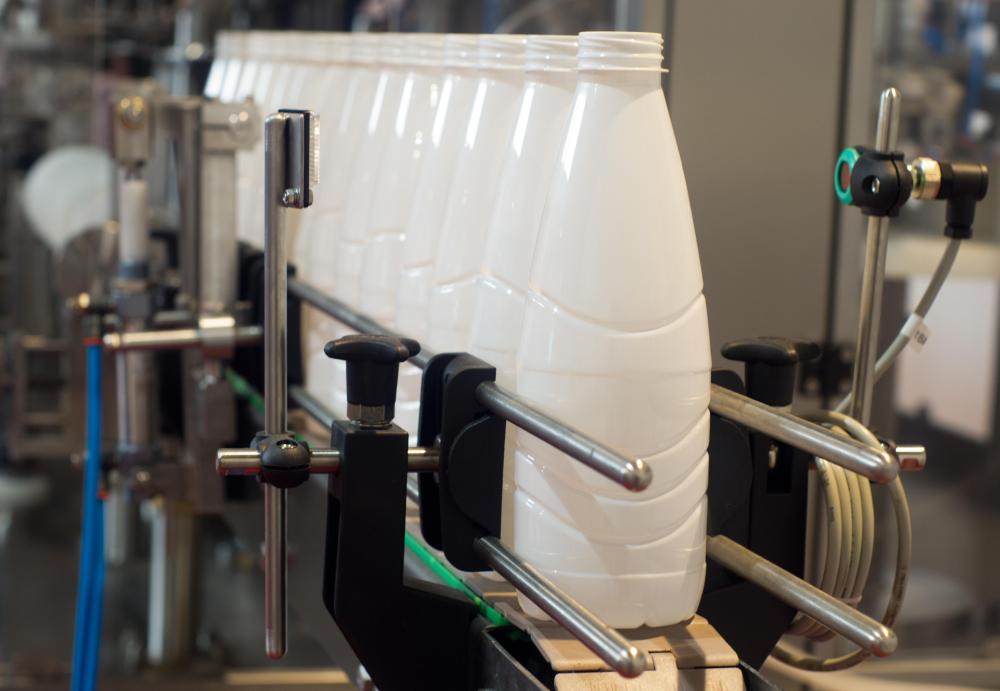
![Pasteurization and other processes that occur during bottling may alter the structure of casein in ways that have not yet been studied.]() By: Budimir JevticPasteurization and other processes that occur during bottling may alter the structure of casein in ways that have not yet been studied.
By: Budimir JevticPasteurization and other processes that occur during bottling may alter the structure of casein in ways that have not yet been studied.




Discussion Comments
Well, two things actually. 1) The casein was added to the diets of the rats, in different proportions for two groups. One got 20 percent and the other 5 percent.
2) The Campbell study was an attempt to replicate a much older study done by Indian researchers, which it did. At the time of the Indian study, critics said, "Well, they're Indian."
And one additional point: during his research, Campbell took it to the next level by seeing what would happen if the proportions were reversed after the rats developed liver cancer. He was able to reverse the cancer, and then by reversing the proportions again, to bring the tumors back. Whatever you think about food, this is some pretty amazing stuff. And it has been known for a long time.
But in whose interest would it be to include nutrition in the cancer cycle?
I work with and am around a large population of people who are aged between 80 and 100 years old. I have yet to meet one who was not nursed on milk from cows, and continued to consume it their entire lives. These are also people who have enjoyed a diet of a wide variety of foods, to include animal meats.
In the 35 years I have worked with these people, I have yet to meet one who was/is a vegetarian or vegan. Some have tried those diets, but quit because they felt their health declined while on them. There is a doctor at Johns Hopkins who has been tracking people from the geriatric community, but also people who have been tracked for in excess of 40 years, and are now over 80 years old. So far, everything he has published indicates that they have never been able to link a diet including animal protein directly to causing cancer.
Some cancers do seem to flourish better with animal proteins present, but the same has been shown to be true for complete plant proteins.
Granted, anecdotal evidence is not considered as sound as a well crafted study, but it is pretty compelling. I will be following this study, as I am now a participant myself. One thing that has always struck me personally as evidence is that I have never met a vegetarian, or vegan who has lived to reach 80, let alone 100. Food for thought, even if it "proves" nothing.
Mention of the china study drives me batty now. I did read the book and I did go vegan. Out of curiosity, I decided to read the criticisms of the book (I didn't before because I thought it was clearly evident that animal protein makes cancer grow). Well! There are many criticisms of his theory. The most pertinent one to me was of the rat study.
In the book, he says that two groups of rats were given alfatoxin (an extremely potent carcinogen) and then fed a 5 percent casein/20 percent casein diet. Casein is a protein found in milk, and has been linked to cancer before. He goes on to say that after a year, lo and behold, the rats fed 5 percent animal protein did not have liver cancer and the rats fed 20 percent animal protein did have liver cancer. Wow! Casein, an animal protein, makes cancer grow, right? And no casein makes it not grow, right?
Not quite. What he doesn't mention in the book, is that all of the rats fed 5 percent casein succumbed to alfatoxin poisoning and all died, whereas the 20 percent casein rats stayed alive, but developed cancer. So basically the first group died before they could develop cancer.
This rat study was repeated later, but instead with a 20 percent casein diet versus 20 percent vegetable protein diet. Casein rats developed cancer, but the vegetable protein rats did not! This is really great. Just eat vegetable protein and no cancer for you! The problem with this is that the vegetable protein (incomplete protein) was missing lysine, an essential amino acid (which means that it is something your body needs but can't make on its own; you have to get it from what you eat), and when they added that, both the 20 percent casein rats and the 20 percent veggie protein plus lysine (now a complete protein too) rats developed liver cancer.
I'm no scientist, but it doesn't take one to hypothesize that maybe cancer does not need animal protein to grow, but just a complete protein (a protein that contains all essential amino acids). Casein is a complete protein, by the way.
So that was just the tip of the iceberg. Also, there was plenty of valid criticism of the way he portrayed the actual china study numbers. (Wheat actually has the highest correlation of death, heart attack and cancer, I believe) But you should read that for yourself. Look up China Study debunked.
I only made this comment to let others know who read the book that the 5 percent casein rat group died before the study was over, and to express my outrage that he did not mention that in the book. It definitely does not sound good to say, "well, the meat eating rats got cancer but these *dead* protein deprived rats over here didn't. Meat causes cancer."
Don't take it from me. Look it up yourself and read the mountain of text that is the critique of the china study and decide for yourself. For what it's worth, I also recommend reading the book "Wheat Belly" and reading the critique of that.
I think it's worth noting that no human society has ever developed a vegan diet -- basically, one avoiding all types of animal protein, like the article mentioned. There are species of mammals, including some primates, that eat an exclusively vegetarian diet. Chimpanzees, our closest living relatives, are *not* among them. (Chimpanzees usually eat plants, but when the opportunity presents itself, they will hunt and eat monkeys. They have also been observed engaging in cannibalism.)
That's not to say that a vegan diet can't be a healthy diet or that it might not be beneficial in some cases, only that it is not how humans evolved or what we are designed for. (Many aspects of modern life, like surviving long past the reproductive years, are not "natural," but I will take them thanks.)
Every person will need to decide for him- or herself what the healthiest diet is, whether that's a vegan diet, a vegetarian diet that includes eggs and some dairy, etc. Certainly, pretty much all Americans would benefit from eating more plants and *fewer* animal products.
Post your comments