
At TheHealthBoard, we're committed to delivering accurate, trustworthy information. Our expert-authored content is rigorously fact-checked and sourced from credible authorities. Discover how we uphold the highest standards in providing you with reliable knowledge.
What is the Connection Between a Yeast Infection and a Urinary Tract Infection?
A yeast infection and a urinary tract infection (UTI) often have similar symptoms, such as pain or irritation in the pelvic area and a burning sensation during urination. They can differ widely in other symptoms and causes, however. Yeast infections are usually caused by the deterioration of good bacteria within the vagina, which allows an increase in the production of yeast. A UTI is caused by bad bacteria entering the urinary tract. Yeast infections may cause a burning or itching sensation in the inner and outer vagina, soreness, and unusually colored or strong-scented discharge, while a UTI may cause cloudy or foul-smelling urine, tenderness in the lower abdomen, and an increased urge to urinate.
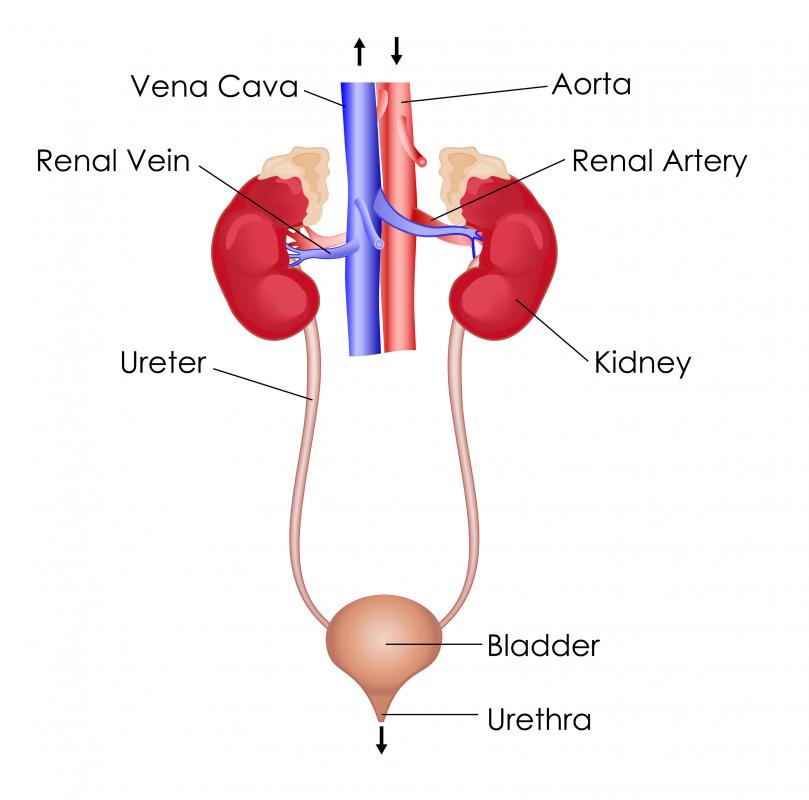
A UTI is an infection that may occur in the kidneys, bladder, urethra, or ureters, and is usually caused by bacteria entering the urethra and then invading the inner areas of the urinary tract. A yeast infection will often come from a drastic increase in candida, or yeast. Healthy bacteria that the body naturally produces generally keep the overproduction of yeast at bay; however, a weakened immune system, some medications, foreign substances, and certain diseases may diminish the amount of healthy bacteria and allow the yeast to multiply. When a woman develops a UTI that does not resolve on its own, she will typically be prescribed an antibiotic. Strong doses of antibiotics can kill off good as well as bad bacteria, causing a yeast infection.

It is not uncommon for some women to confuse a yeast infection and a urinary tract infection, because a urinary and yeast infection cycle can sometimes coincide. A UTI is typically treated with antibiotics, which can lead to a yeast infection, so the similar symptoms can sometimes cause confusion. When UTIs become frequent, which may happen when the immune system is weakened, the cycle will continue.

Both infections can be painful and irritating, but simple cases are often easy to cure. UTIs are almost always treated with antibiotics. Yeast infections are usually treatable with over-the-counter creams, but may require stronger prescription medications. Medical professionals may also recommend that the patient avoid certain feminine cleaning products, maintain proper hygiene, and urinate frequently, especially before and after sexual intercourse. People taking antibiotics are often encouraged to eat plain yogurt with active cultures to help restore the natural bacteria in the digestive tract and reduce the chances that a yeast infection will develop.
AS FEATURED ON:
AS FEATURED ON:


-
![A UTI is caused when bacteria enter the urethra and travel to other parts of the urinary system, resulting in infection.]() By: snapgalleriaA UTI is caused when bacteria enter the urethra and travel to other parts of the urinary system, resulting in infection.
By: snapgalleriaA UTI is caused when bacteria enter the urethra and travel to other parts of the urinary system, resulting in infection. -
![Symptoms of a yeast infection and urinary tract infection can be similar.]() By: Marin ConicSymptoms of a yeast infection and urinary tract infection can be similar.
By: Marin ConicSymptoms of a yeast infection and urinary tract infection can be similar. -
![People taking antibiotics are encouraged to eat yogurt with active cultures to help restore the natural bacteria in the digestive tract to reduce chances of a yeast infection.]() By: Anton MaltsevPeople taking antibiotics are encouraged to eat yogurt with active cultures to help restore the natural bacteria in the digestive tract to reduce chances of a yeast infection.
By: Anton MaltsevPeople taking antibiotics are encouraged to eat yogurt with active cultures to help restore the natural bacteria in the digestive tract to reduce chances of a yeast infection. -
![Antibiotics are the most commonly used treatment for urinary tract infections.]() By: Syda ProductionsAntibiotics are the most commonly used treatment for urinary tract infections.
By: Syda ProductionsAntibiotics are the most commonly used treatment for urinary tract infections.


Discuss this Article
Post your comments