
At AllThingsNature, we're committed to delivering accurate, trustworthy information. Our expert-authored content is rigorously fact-checked and sourced from credible authorities. Discover how we uphold the highest standards in providing you with reliable knowledge.
What is the Chaparral Biome?
Warm, mild winters, hot, dry summers, and a little rain characterize the chaparral biome. Shrubland, or chaparral, doesn't cover much of the planet's surface, but this coastal biome is created when cooler seawater meets a landmass with high average temperatures. Chaparral lies 30-40 degrees above and below the Equator, beyond the tropics. In the north lies the "chaparral" of coastal California and Baja, and "maquis" around the Mediterranean Sea. In the south we find the "matorral" of Chile, "fynbos" of southern South Africa, and the westernmost coast of Australia's "mallee." The landscape can vary from furrowed valleys and plains to rolling hills and rocky mountains.
Across the world, the climate of the shrubland is known as Mediterranean. The dormant season, lasting most of spring, summer, and autumn, has little rain. Temperatures reach up to 100° F (38° C) and average 64° F (17° C), bringing fires in the driest months. Over the winter, the temperature averages a balmy 50° F (10° C), and brings 15-25" (38-64 cm) of rain, which allows vegetation other than cactus to flourish. Chaparral plants, accustomed to drought, use this rainfall to grow much more rapidly than desert scrub.

Some of the plants in the chaparral biome extend into adjacent deserts, but most of the vegetation is shrubs, dwarf trees, and grasses not found in the desert biome. These plants have evolved smaller, firmer leaves, with a waxy surface that conserves moisture. Some species are yucca, myrtle, oak, heather, dwarf Eucalyptus, sagebrush, and manzanita. To access scarce water, either they have a deep taproot, to reach a low water table, or a wide, shallow root system to collect surface moisture.

Animals found in the chaparral biome include jackrabbits, foxes, toads, coyotes, rattlesnakes, gophers, woodpeckers, aardvarks, kangaroo rats, wallabies, and many other insects and birds. They can burrow, extract water from certain plants, or migrate during the hottest months to withstand the heat and drought. There is much more species variation in these animals than in the desert, but they share methods of protection against frequent wildfires.
Frequently Asked Questions
What is the chaparral biome and where can it be found?

The chaparral biome, characterized by hot, dry summers and mild, wet winters, is a shrubland or heathland plant community found primarily in California. It's also present in the Mediterranean region, central Chile, South African Cape Region, and southwestern parts of Australia. This biome is known for its dense, spiny shrubs and is adapted to periodic wildfires.
What types of plants are typical in the chaparral biome?
Chaparral biomes are home to hardy, drought-resistant plants such as scrub oaks, manzanitas, and chamise. These plants have adapted to the dry climate by developing deep root systems and tough, leathery leaves to minimize water loss. Many species also have seeds that require exposure to heat, like from a wildfire, to germinate.
What are some adaptations animals in the chaparral have developed?
Animals in the chaparral biome have evolved various adaptations to survive the harsh conditions. For instance, the jackrabbit has large ears that dissipate heat, while many reptiles are ectothermic, regulating their body temperature through sunbathing or seeking shade. Nocturnal habits are common to avoid the heat of the day, and some animals have burrowing behaviors to escape predators and fires.
How does the chaparral biome contribute to biodiversity?
The chaparral biome, despite its challenging environment, supports a diverse range of species. It acts as a critical habitat for many endemic species, those found nowhere else in the world. According to the California Chaparral Institute, the California chaparral contains over 20% of the state's plant diversity and numerous unique animal species, contributing significantly to global biodiversity.
What are the main threats to the chaparral biome?
Main threats to the chaparral biome include urban development, agriculture, and climate change. Urban expansion leads to habitat fragmentation, while agriculture can introduce invasive plant species that outcompete native flora. Climate change exacerbates drought conditions, increasing the frequency and intensity of wildfires beyond the natural fire regime the biome is adapted to withstand.
How are wildfires both beneficial and detrimental to the chaparral?
Wildfires play a natural role in the chaparral biome by clearing dead plants and triggering seed germination. However, when fires occur too frequently, they can be detrimental, preventing the regrowth of slow-growing shrubs and leading to soil erosion. Excessive fire suppression can also lead to an unnatural accumulation of vegetation, which can fuel larger, more destructive fires when they do occur.
AS FEATURED ON:
AS FEATURED ON:









-
![Rattlesnakes may be found in the chaparral biome.]() By: fivespotsRattlesnakes may be found in the chaparral biome.
By: fivespotsRattlesnakes may be found in the chaparral biome. -
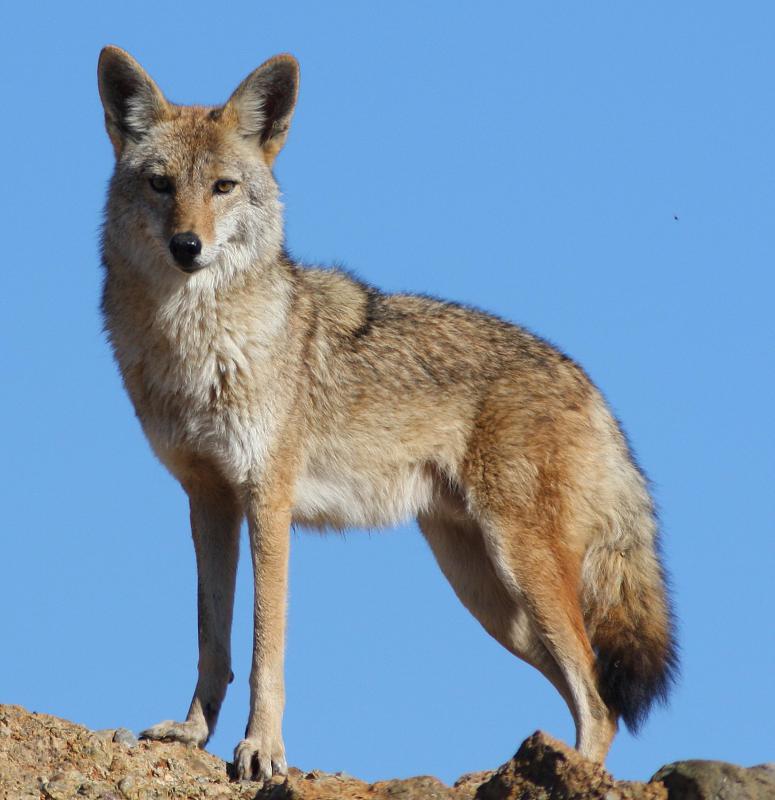
![Coyotes live in the chaparral biome.]() By: Michael IrelandCoyotes live in the chaparral biome.
By: Michael IrelandCoyotes live in the chaparral biome. -
![Temperatures reach up to 100 degrees Fahrenheit in the chaparral biome.]() By: vladischernTemperatures reach up to 100 degrees Fahrenheit in the chaparral biome.
By: vladischernTemperatures reach up to 100 degrees Fahrenheit in the chaparral biome.


Discussion Comments
Chaparral is somewhat known as California’s native landscape. It is very important in the protection from erosion on the hillsides. Some people consider it to be trashy looking and feel the need to burn the chaparral on a regular basis. This, in actuality, is not necessary and can actually be harmful. It can eliminate the last of the old growth chaparral and can lead to the conversion of the younger chaparral to the weedy grasslands by increasing the fire frequency.
The shrubbery in the chaparral is usually so thick and intertwined that it does not permit too many different kinds of plants to prosper.
One of California's chaparral plants is buck brush, or California lilac. The flowers of the plants were uses by Chumash as shampoo. There are other chaparral plants that were used for medicinal purposes, and or tools, such a Chamise and Christmas berry.
Post your comments