
At TheHealthBoard, we're committed to delivering accurate, trustworthy information. Our expert-authored content is rigorously fact-checked and sourced from credible authorities. Discover how we uphold the highest standards in providing you with reliable knowledge.
What is the Cecum?
 Mary McMahon
Mary McMahon
Mary McMahon
The cecum is a structure found at the start of the large intestine. The name comes from the Latin word for “blind,” referencing the fact that the base of the structure is a pouch which goes nowhere, akin to a blind turn in the intestinal tract. This first part of the large intestine is usually located on the right hand side of the body, in the lower right abdominal quadrant, although some people have variations on the typical anatomy and may have a different gastrointestinal arrangement.
This structure connects the ileum to the ascending colon, moving waste along so that they can be excreted. The ileocecal valve allows waste products to be dumped from the ileum into the cecum, but prevents the passage of waste from the large intestine to the small intestine. This one-way exit is designed to support the function of the digestive tract and to ensure that bacteria from the large intestine do not enter the small intestine. The small and large intestine have different functions, making it important to avoid sending waste products the wrong way.

The size of this structure varies in different people and across different species. Some species actually have two, making up for a lack of colon with a double cecum. In animals which eat plant products, the structure contains a wealth of bacteria to help break the plants down, while carnivores tend to have smaller ones, and sometimes the structure is almost wholly absent. As a general rule, the diameter is usually larger than that of the attached large intestine.

The appendix dangles from the bottom of the cecum, sort of like a protruding finger. In people who experience appendicitis, a rigid, hot sensation can be felt in the lower right abdomen, indicating the presence of inflammation. During surgery to remove the appendix, a doctor will also examine the cecum for signs of inflammation or perforation.
Like other parts of the intestinal tract, the cecum can become cancerous if cells start to divide out of control. Cancer in this body part is rare, and it can be treated with a variety of measures, depending on how far advanced it is. This structure can also be damaged by abdominal trauma, bowel obstructions, or accidents in surgery, leading to bruising or perforation, which can cause a patient to go into shock or experience a severe infection.
Mary McMahon
Ever since she began contributing to the site several years ago, Mary has embraced the exciting challenge of being a TheHealthBoard researcher and writer. Mary has a liberal arts degree from Goddard College and spends her free time reading, cooking, and exploring the great outdoors.
Learn more...
Mary McMahon
Ever since she began contributing to the site several years ago, Mary has embraced the exciting challenge of being a TheHealthBoard researcher and writer. Mary has a liberal arts degree from Goddard College and spends her free time reading, cooking, and exploring the great outdoors.
Learn more...AS FEATURED ON:
AS FEATURED ON:


-
![It is important to avoid sending waste products the wrong way, as the small and large intestines have different functions.]() By: ancroftIt is important to avoid sending waste products the wrong way, as the small and large intestines have different functions.
By: ancroftIt is important to avoid sending waste products the wrong way, as the small and large intestines have different functions. -
![Issues with the cecum or appendix can cause severe pain in the lower right quadrant of the abdomen.]() By: photoillustrator.euIssues with the cecum or appendix can cause severe pain in the lower right quadrant of the abdomen.
By: photoillustrator.euIssues with the cecum or appendix can cause severe pain in the lower right quadrant of the abdomen. -
![The large intestine serves as the largest section of the digestive system.]() By: stockshoppeThe large intestine serves as the largest section of the digestive system.
By: stockshoppeThe large intestine serves as the largest section of the digestive system. -
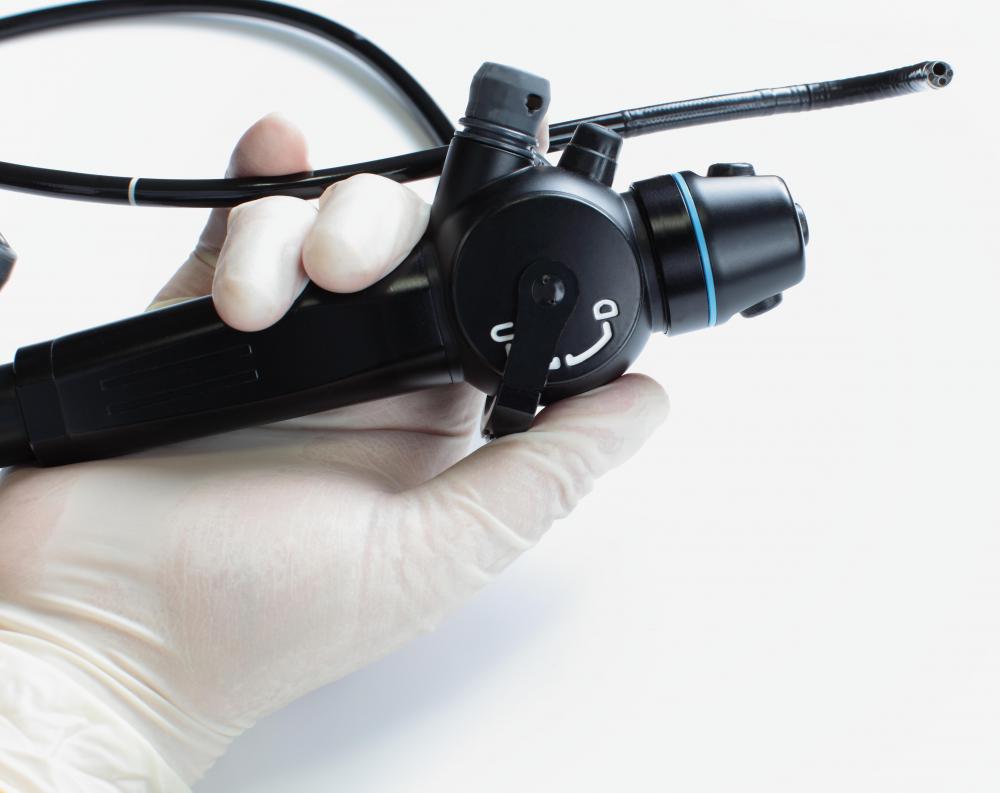
![An endoscopy may be performed to determine the reason for cecum inflammation.]() By: nobasukeAn endoscopy may be performed to determine the reason for cecum inflammation.
By: nobasukeAn endoscopy may be performed to determine the reason for cecum inflammation. -
![The cecum may be damaged by bowel obstructions.]() By: Ljupco SmokovskiThe cecum may be damaged by bowel obstructions.
By: Ljupco SmokovskiThe cecum may be damaged by bowel obstructions.




Discussion Comments
I've been diagnosed with a 1.6 cm soft tissue density nodule at the base of the cecum with associated focal calcifications. How serious is this? I am scheduled for a colonoscopy to see if it tests cancerous. What is the remedy procedure?
I have a history of colon polyps in my family, so I have to go for a colonoscopy every 10 years. I am over 50, and my doctor recommended I come in once every 10 years for this procedure as long as they do not find any polyps or cancers.
I asked him why I couldn’t just get a sigmoidoscopy, because it involves a shorter tube. He told me that a colonoscopy can examine the whole colon, but a sigmoidoscopy only looks at the rectum and the nearby section of colon. He also said the about 50% of colon cancers and colon polyps are found in the cecum, the ascending colon, and the transverse colon. These are all in the upper colon, which cannot be reached by a sigmoidoscope.
@StarJo - If someone were to be in any position other than the squatting position when they eliminate waste, then the appendix could take on waste and become inflamed. My friend was always paranoid about getting germs from public toilets, so she would stand slightly bent over the toilet. She later developed appendicitis. The squatting position keeps the waste from entering the appendix.
The reason for this is that in this position, the right thigh presses up against the lower right abdomen. This pressure squeezes the cecum, forcing the waste to move upward to the ascending colon, away from the small intestines, the ileocecal valve, and the appendix. Since the waste is pushed out of the cecum, it does not collect in the appendix.
If the appendix is attached to the cecum, what keeps the appendix from being filled with the waste matter that flows through the cecum? I know that the appendix has an opening into the cecum.
Post your comments