
At WiseGEEK, we're committed to delivering accurate, trustworthy information. Our expert-authored content is rigorously fact-checked and sourced from credible authorities. Discover how we uphold the highest standards in providing you with reliable knowledge.
What is the Best Way to Clean Pennies?
Many people have a jar or other container of loose change in their home, and it’s often mostly filled with pennies. These coins become worn and tarnished over time, and there are various methods clean them, but most use the same few simple principles of chemistry. One of the easiest and most common ways to clean pennies is to wash them in a mixture of water, salt, and a mild acid.
The first thing to do in order to clean these coins is to be reasonably sure that none of them is a potential collector’s item. If the change came from buying a morning cup of coffee or from a vending machine, then the chance that any are collectible is slim, but it still helps to be sure. Cleaning the tarnish off of a collectible coin may accidentally destroy its value, so it is best to put any aside that you are unsure about.

The materials needed to clean pennies are very simple. A shallow plastic or glass bowl should be filled about halfway with water. To Add 1/4 cup (60 ml) of white vinegar and 1 teaspoon (6 g) of table salt to the water and stir until the salt is dissolved. Put 20 to 30 pennies in the bowl for about five minutes. It’s a good idea to stir them around once or twice during this time. After the five minutes are up, the coins can be rinsed and dried, and they’ll keep their shine for a while.

Pennies get dull and tarnished over time because of the copper that is used in their composition. Copper slowly reacts with oxygen in the air to form copper oxide, which has a dull, greenish color to it, and this is what people see as tarnish on copper pennies. When pennies are washed in a vinegar and salt mixture, the acetic acid contained in the vinegar is able to dissolve the copper oxide, leaving behind shiny, clean coins. It is possible to use lemon juice in place of vinegar, because of the high acid concentration in lemons.

Ketchup and hot sauce can also be used in place of vinegar, because they both contain acids and salt. The presence of salt is more important, chemically speaking, than the type of acid that is used. If you want to clean pennies that were minted after 1982, keep in mind that around this time, pennies began to be made mostly of zinc, rather than copper, because of the rising price of the metal.

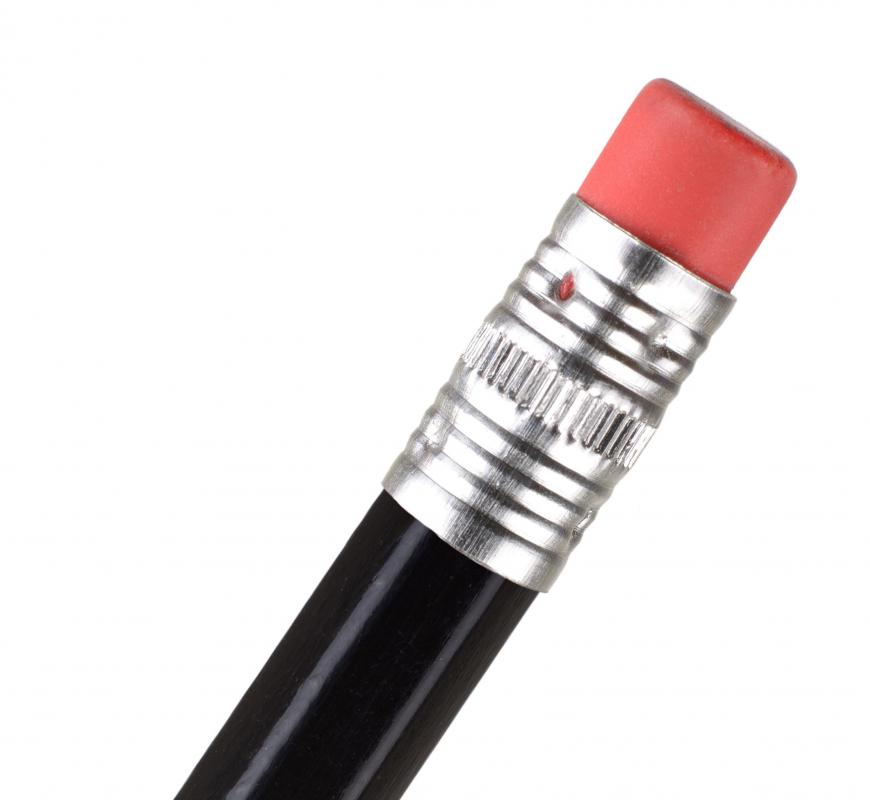
Zinc may be more easily degraded by an acidic solution than copper is. If this poses a problem, the pennies can be cleaned with gentle abrasion. Rubbing a pencil eraser on a penny will remove most of the tarnish, though not as much as salt and vinegar will.
AS FEATURED ON:
AS FEATURED ON:









-
![Pennies minted after 1982 are mostly made of zinc, so a pencil eraser might be better than an acidic solution for cleaning.]() By: Dmitriy SyechinPennies minted after 1982 are mostly made of zinc, so a pencil eraser might be better than an acidic solution for cleaning.
By: Dmitriy SyechinPennies minted after 1982 are mostly made of zinc, so a pencil eraser might be better than an acidic solution for cleaning. -
![The first step in cleaning pennies is filling a shallow bowl about half full with water.]() By: lilyThe first step in cleaning pennies is filling a shallow bowl about half full with water.
By: lilyThe first step in cleaning pennies is filling a shallow bowl about half full with water. -
![Loose change, including pennies.]()
Loose change, including pennies. -
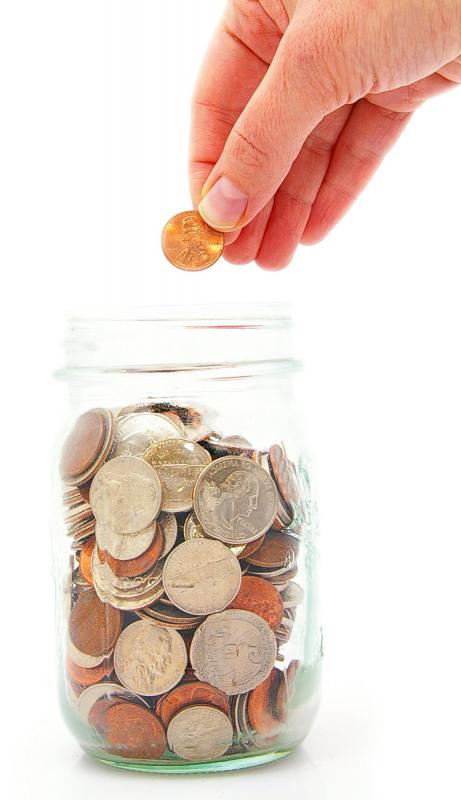
![A person dropping a penny in a coin jar.]()
A person dropping a penny in a coin jar. -
![Salt and vinegar can be added to water to make a cleaning solution for pennies.]() By: Ruslan KudrinSalt and vinegar can be added to water to make a cleaning solution for pennies.
By: Ruslan KudrinSalt and vinegar can be added to water to make a cleaning solution for pennies. -
![Vinegar, which can be mixed with salt to clean pennies.]() By: Aaron AmatVinegar, which can be mixed with salt to clean pennies.
By: Aaron AmatVinegar, which can be mixed with salt to clean pennies. -
![Front and back of a clean US penny.]() By: Sascha BurkardFront and back of a clean US penny.
By: Sascha BurkardFront and back of a clean US penny.




Discussion Comments
People have said silver and other jewelry polishes might work, but I'm here to tell you that is not how it is at all! Silver polish works sort of but not really. I'm going to try waiting 5 minutes with vinegar and salt. I've done it before and it works, but you have to wash or clean them off after because they get a gross white dusty thing that means you have to clean them again.
It did not work. I am a little frustrated with this because it messed up all the pennies I used it on. They all turned an ugly pink and faded color.
@SarahGen-- No, it's not gross! It works extremely well and it's so fast. You don't have to keep the pennies in hot sauce for more than a minute really. You just have to put the hot sauce in a bowl, add the pennies, keep it for a minute and then wash it in water. The pennies will come out clean and shiny, almost like new!
I think it's the easiest method for cleaning pennies and cost free. If you eat at fast food restaurants that serve hot sauce packets, you'll probably end up with a bunch at home like me. Cleaning pennies with those extra packets of hot sauce is a great idea.
Or you could do like my mom does when my six year old sister is being bad. You can have all the bored and super-energetic kids sit down with erasers and have them erase all the pennies. Haha!
Can I use silver polishing solution to clean pennies? Will it damage the pennies?
I can't believe some people actually use things like hot sauce and ketchup to clean pennies. It sounds really weird and gross to me.
I just have one question, will this cleaning method with salt and vinegar also get rid of the weird metal smell of old pennies?
If you clean a collectible penny does it reduce the value? I know that some works of art are reduced in value after they have been cleaned.
A lot of the pennies look really cool but are very dirty. What would be the best way to clean them without damaging the metal? They are thinner than most pennies and I don't want to ruin them.
Can I use vinegar to clean pennies?
1. Mix Pledge Floor Care and white vinegar into a bucket, cup, pan etc. 2. Put pennies in mixture. 3.Take pennies out. 4. Gently wash with water. 5. Dry.
Pennies stay in circulation for about 30 years, no wonder they get dirty.
2009 is pennies 100th birthday.
Post your comments