
At WiseGEEK, we're committed to delivering accurate, trustworthy information. Our expert-authored content is rigorously fact-checked and sourced from credible authorities. Discover how we uphold the highest standards in providing you with reliable knowledge.
What is the Best Keloid Scar Treatment?
Keloid scar treatment can be extremely difficult, as there is no single approach that works in all cases. Methods of keloid scar treatment a doctor may attempt include steroids, surgery, and radiation. For some patients, none of these methods work, and effective treatment may simply not be possible.
What Is a Keloid?

A keloid is a scar that is caused by increased tissue formation after some type of trauma to the skin. When the skin heals, there can be an overproduction of collagen to cover the injured area. Eventually, the excess of collagen builds up into an unsightly red or purplish mass, known as a keloid scar. In addition to being unattractive, it can also itch severely or even be painful. Almost half of all people who experience this type of scarring do so on the earlobes as a reaction to piercing.
Keloid scarring is hereditary, so those who have family members with keloids are more susceptible to scarring in a similar manner. People with darker skin tone are also more likely to develop them, although it is not known why.
Steroid Treatments

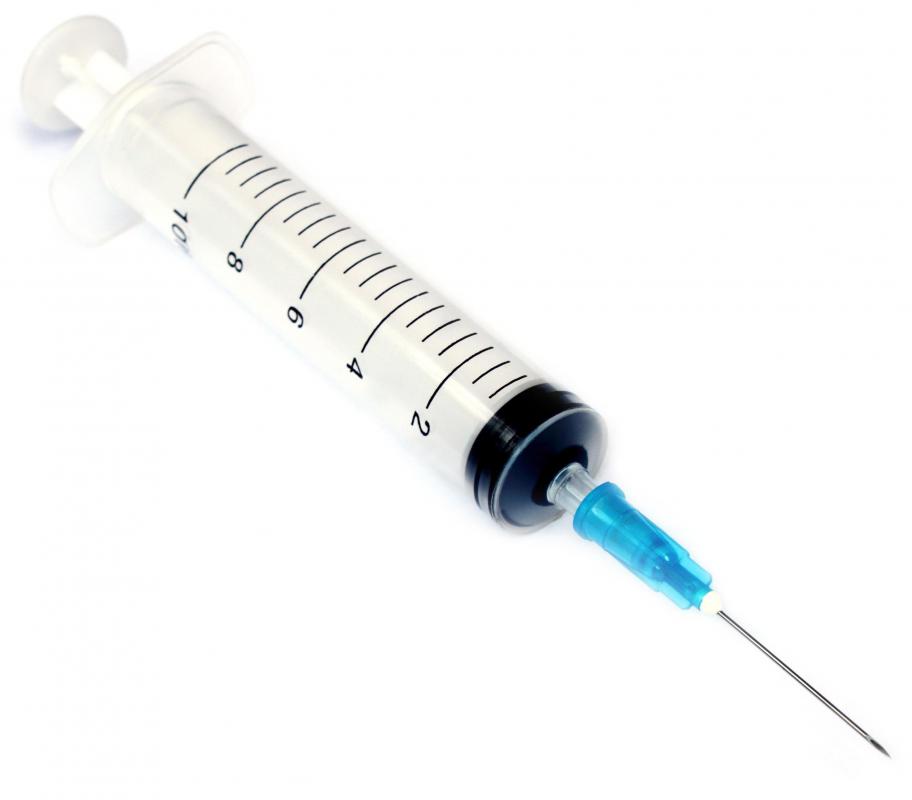
Health care providers can inject steroid drugs into the skin around the keloid in an attempt to treat it. Although steroids have been successful in many cases, they do not work for everyone, and tend to work best on smaller scars. Patients with darker skin can suffer from tissue atrophy or hypopigmentation — the loss of skin color — with this method. Keloid scar treatment using steroids also requires the patient to visit a medical professional multiple times for injections of steroids like hydrocortizone or triamcinolone, which are given every two to three weeks.
Surgery and Radiation Therapy

Excision, the surgical removal of all the scar tissue with a scalpel and local anesthetic, is also a viable method of keloid scar treatment. Removing the scars in this way does not always work, however, and in some cases, the keloid grows back later on. If this happens, there is a risk that it will be worse than before. Surgical excision alone has an average success rate of 65%.

In order to increase this success rate, radiation can be used with surgery as a last resort. In most cases, the area is treated with an external beam after surgery, which can damage the cells and may help prevent them from forming another keloid. Radiation is typically only used in cases where the scar is disfiguring and strongly resistant to every other treatment. The additional risk of cancer is a very important consideration before agreeing to this approach.
Other Medical Options

Some physicians prefer other treatment methods such as cryosurgery, which involves applying liquid nitrogen to the scar in order to destroy the abnormal tissue. As with excision, it is not unusual for the scar to eventually grow back later on; it also may cause it to darken in color. On the other end of the spectrum, there has been some success with the use of lasers to decrease the size of the keloid and improve its color. Another approach is interferon protein injections, which tend to shrink the scars. All of these methods show some promise, but there is not enough data to fully evaluate them, and insurance policies are less likely to cover them.
Homeopathic Treatments
Many people claim to have had luck with homeopathic remedies such as topically applying tea tree oil or compounds rich in vitamin E. Silicone and compression bandages are said to be helpful in reducing the size of keloid scars, but are unlikely to get rid of them completely. There are also a number of treatment products that are sold over-the-counter and online, but few are strongly supported by scientific studies.
Untreatable Cases
Even in the best of cases, treating keloid scarring can be a slow and frustrating experience. New treatments are constantly in development, but there are no definitive cure-alls currently available. When treating keloids, doctors often hesitate to use surgery, because of the chance of re-occurrence. Indeed, if a person is highly susceptible to experiencing keloids, as some tend to be, then the best treatment may be to not treat the area at all.
AS FEATURED ON:
AS FEATURED ON:









-
![Keloid scars can be treated through steroid injections into the skin around the keloid.]() By: SwapanKeloid scars can be treated through steroid injections into the skin around the keloid.
By: SwapanKeloid scars can be treated through steroid injections into the skin around the keloid. -
![Tea tree oil may be able to reduce the size of keloids.]() By: wasansrisawatTea tree oil may be able to reduce the size of keloids.
By: wasansrisawatTea tree oil may be able to reduce the size of keloids. -
![Keloid scars may be removed during surgery using a scalpel.]() By: ittipolKeloid scars may be removed during surgery using a scalpel.
By: ittipolKeloid scars may be removed during surgery using a scalpel. -
![Keloid scars are formed after excess tissue buildup following trauma to the skin.]() By: Tom-HanischKeloid scars are formed after excess tissue buildup following trauma to the skin.
By: Tom-HanischKeloid scars are formed after excess tissue buildup following trauma to the skin. -
![Laser surgery can be used for keloid scar treatment.]() By: mkrberlinLaser surgery can be used for keloid scar treatment.
By: mkrberlinLaser surgery can be used for keloid scar treatment.


Discussion Comments
I used Mudscupper's Bump Free on my nose keloid, hypertrophic scar or whatever they are called, I just call them piercing bumps. Anyway the stuff worked really well. I applied it a few times a day and the bumps were gone about 10 days later.
I'm 23, and I have about six keloids that I am currently getting treatment for. I had probably over 10 injections done on each of my keloids. I have two on the left side of my jaw, one on the right side and three on my left shoulder. They all came from acne. I've already tried gel and pads but neither seem to work. The silicon pad would soften it, but after a few hours not wearing it, it would get back to the original scar. The steroids seem to be the only thing to temporarily work. It flattens out the scars, but only for about three or four weeks, and then it'll start growing. Although the keloids are so much flatter than what they were before I started getting injections, they're still there, and are continuing to grow. The injections greatly reduced the itchiness of the keloid. Each injection treatment is about $130, $85 if I only want to do the ones on my face. Spending $130 for a month of relief might be worth it for some people. I don't know if insurance will cover the injections.
My keloids are there, but not that noticeable anymore unless you get close to my face. I wish it can stay like this but I know it'll keep growing unless I find a definite treatment. It saddens me because I know that most likely I will never find a treatment for it, mainly the ones on my jawline. There's not a minute goes by that I don't think about them. The only treatment that is working is the injections but they are only temporary. As of right now, they're worth it to me and if I have to get them every month for the rest of my life then I'll do it to keep my scars from growing.
Keloids are a problem, but at the end of the day, I'm thankful that I am healthy, have a loving girlfriend who understands me and my keloid problems and say that even if my keloids gets really really big she wouldn't think any different of me; I can't really ask for much more. I guess there could be one good side effect to having a keloid, as it definitely humbled me a lot. It makes me more understanding of people's problems. Whenever I see people with keloids, it definitely saddens me. I just want to come up to them and ask about it but that would be really rude.
I really hope one day that there is a definite treatment. I'm still researching about surgery but as of right now it's too risky to even think about it. If I ever have any updates on working treatments I'll definitely let you guys know.
I have had a keloid on my right below shoulder that's about 2.5 inches as a result of vaccination when I was in grade 1. Yes, my keloid is itching and stinging, especially when the weather is changing. The only thing that annoyed me when the itching and stinging is running through it. I did not use anything to cure it since its not growing quickly but if the science and medicine discover a really 100 percent cure for keloids, I will go with it. As of now, I'll just forget it since it's not worse, I just prayed to God to heal the itchiness and stinging underneath the keloided skin.
I had a keloid scar in the middle of chest which extent to 15c.m vertically after ASD surgery in 1988 suffering from keloid scar for 26 years. Can anybody please help me in curing it better?
I had a keloid as a result of a pimple on my chest. I've had it for over twenty years and it still itches from time to time. It really affected me for a long time, my self-esteem was bad and my girlfriend told me it looked ugly, she seemed as upset as I was. My situation though is different than most. I cut it out myself but it came back. The tissue under it became necrotic. Over time it reduced somewhat but I'm thinking about trying tea tree oil. The problem is that the homepathic remedies take so long. Why can't science spend more time and money on treating this terrible problem rather than on the military death machines?
I have had keloids and hypertrophic scars completely disappear with high doses of Serrapeptase. I don't represent any MLM or webstore. The product I use is called Serra Rx80 from a company called biomediclabs because they offer a pure product with no fillers. My surgical scars disappeared into flat lines over the course of two years, which is remarkable, considering I'd had steroid injections and additional surgery to remove them.
You can purchase from them or find your own source. I've tried many different brands over the years but none have compared to Serra. I could actually feel the difference in the products.
I'm 33 year old African American male and I have a keloid scar on my scalp. Pretty much in the center of the back of my head. I had the steroid treatments and that didn't work for me. I also had surgery to remove it, but it came back. Any ideas on what I can to do to at least make it smaller? It's the size of a quarter. Thanks.
I have keloids on my forearm for the past 15 months. I thought it was SSC at first, but after the biopsy I know they're keloids.
So I've tried nearly everything to beat this and can tell you for me some things that work or help.
First, eliminate new formations that start like a pimple. Get organic turpentine and smother it many times per day. This will kill the new formation within a few days. Don't get the cheap stuff; it must be pure, such as Diamond Forrest. Also, this organic turpentine is very helpful for small to moderate sized keloids. Start small and work the dose up as you see your body adapt over time they reduce to almost nothing -- at least mine have that I tested them on.
I will be trying a process that I believe may totally eliminate them no matter what the size. I will update if it is successful.
I'm 28 years old and have keloid scars on both ears agai. A surgery was carried out nine years ago, on both ears to remove the keloids. Cortisone injection sessions were also carried out after the surgery, for a period of one year. The keloids have started growing back again, after being surgically removed.
I was told by a surgeon that, once the scar had been excised and injected before, my best option was maybe re-injecting them again on a monthly basis until the keloid subsides.
In the past I had injections, but they worsened the situation in my case. Pimples increased and turned into keloids over time. After using roaccutane for a period of time, I was able to get rid of the pimples but the keloids were still there, and they were itchy as hell other than well, being gross.
Then, a surgeon suggested the silicon gel sheets. For the last three or four years, I have been using epiderm silicon gel sheets for the large and small keloids on my chest. It works but it takes time. Itching is completely gone as well. They do not go back to being normal, but they are more flat and their color is close to skin tone. I will use them for about six months as well to make sure they do not ever come back. I'm using them less and less during a day. I started using them 23 hours a day, and now it's more like 20 hours. My plan is to reduce it to 12 hours a day, then I will completely drop using them.
Lastly, I have heard a different treatment based on ice called ice therapy. Did anyone ever try it? Any successful results? I want to take it to completely erase every trace of the keloids but I'm scared that they might pop up again. Stay positive!
About a month ago, I successfully got rid of a keloid scar on my chest, which I had for three years and I'm so excited about it, I have to post somewhere in case it helps anyone else. It had been there for three years. It was in such a prominent position -- on my cleavage. The scar was small but it was growing and I began to research treatments.
I was very discouraged to see that little could be done, any results are very minor, very expensive, and apparently, extremely painful, too. I was upset, and was finally reading about the ingredients of the top scar creams, and looking at a few scientific journal papers on tests, trying to decide which cream to buy when I noticed that the ingredient that did seem to be effective was the active ingredient in this super-cheap, super available antiseptic cream we use here in Australia (you probably have it in the US though) called "Savlon" cream. However, you commonly use it to clean wounds, stop rashes etc., not for healed scars. I used it as you would Mederma or similar, applying it a few times a day and one month later the keloid was gone.
It first changed color, deepened in color actually, then it contracted slightly, then it flattened and continued to flatten. At first, it was hard to tell if I was imagining it but now the site is totally flat, and almost invisible. The discoloration is almost gone and it has been a matter of weeks. I think the ingredient "Cetrimide" is the effective agent, along with the soothing action of the rest of the ingredients, because what I noticed in the medical tests was that the problem with this type of scarring is the skin's overreaction and reactivity. It is trying to heal too much and over-producing collagen, so a large part of the reason this worked, I think, is it stops the irritation, and stops the reactivity of the skin as in an allergic reaction.
Centrimide promotes the healing -- the skin's natural healing process -- and it calms the skin down enough to do it’s thing instead of increasing the injury. You'll notice immediately after applying that the irritation - the itching - is halted and the color of the scar and surrounding area 'calms'.
Well, to my surprise, when I kept going with it a few times a day (so that it’s continually almost moist or really continually 'soothed') it allows the scar to heal which is what the keloid scar was trying to do all along. But, just as a normal wound would increase if you scratched it constantly, the irritation makes the keloid area overreact. And the chest area seems very prone to this overreaction. The skin there, particularly between the breasts, is very fine and sensitive. I totally recommend people try this simple, very cheap cream. It worked wonders for me.
I think a larger scar would, of course, take longer, but without the problems of injections and surgery (I think the steroid injections work in the same way). It stops the skin’s reactivity with the action of the cortisone (they use cortisone to stop rashes too, which I found equally unsatisfactory, an immediate stoppage yes, but not a solution). But Savlon cream is way cheaper, less painful and permanent, and the scar heals beautifully without visible marking.
Every household here has this stuff because it’s known to be so great for wounds and for so many things: bites, rashes, infection, etc., but no one has ever advised its use in treating already healed scars and wound sites, but it works amazingly well. Please try it before considering painful and costly surgery, I beg you. Give it a month and see if your scar is affected. I believe the other creams work in the same way, especially the silicone based ones, by preventing irritation and calming the skin to heal over properly instead of going hyperactive. But this one, I suspect, is more effective, works faster, is cheap, smells nice, not inconvenient to use on the chest or face as is perhaps the case with the silicone strips.
Regarding guys and keloids on the back, I think the salt in sweat (which may be why it occurs on the chest area too) and the irritation of your shirt or rubbing of any clothing slows healing and makes the problem worse. It’s important to prevent irritation or rubbing or sweat build-up, so shower often if you sweat a lot, apply the Savlon cream liberally and wear loose, thin, soft cotton. You should see massive results within three months.
I'd be interested if anyone else tries this cream and gets the same results. Good luck. I know how debilitating and distracting this problem can be.
I have used The Black Paste for almost four years. In fact, I use it every night. My keloid on my jaw is much thinner. But it's still there.
Everyone should look into Lugol's iodine. You're not going to see immediate results; it can take month or years to see improvement. Some take it internally or paint it on the keloid externally.
I'm Asian and have a keloid scar at the back of my left hand, which I got from a bruise about 10 years ago. Initially, I did not care much about it, but now I'm like 20 years old, and it actually affects my self-esteem and I feel self-conscious about it.
I always wear long sleeves to conceal it, but it keeps on growing and is red in color, and very noticeable. I started getting steroid injections last month, and it was painful, especially the side effects of it being very painful and throbbing for a couple of hours (depends on individual). I find it bearable, so I went for the second treatment and the pain got worse and now, the skin area around the keloid scar is swelling (this did not happen after the first treatment).
The dermatologist said that in some cases, the keloid flattens and vanishes for good, but for some other cases, it will come back, so there is no guarantee.
After reading through all of the comments, I'm having second thoughts on whether to continue for these steroid injections, considering the pain and all. I'll probably try something else for a couple of months before deciding on the next steroid injection.
I am quite interested in post 8 that mentioned collagen because I happen to know something about a very good collagen, so I guess I'll try the collagen and see what happens next.
I'll post about it if there's any improvement. All the best, people!
I am a researcher studying keloids and trying to develop better treatments. Reading all your posts I feel sad, but at the same time re-energized. Hang in there! Please know that there are scientists and doctors who are working hard to find a way to make your lives better.
I've seen a lot of negative experiences, but I went the surgery route. I had quite a few on my lower abdomen and one on my right earlobe and left shoulder. To keep it short, I had surgery and had them cut off and the sites were injected with steroids after. I was given silicone pads for them afterward.
The one on my ear is completely gone. The one on my arm started to grow back, but stopped, so it's flat. Better than the bean that used to be there. And the multiple ones on my lower abdomen are gone. Only two grew back pretty huge, but that's much better than the numerous ones I had. It takes time, but it's not all bad. I'm more or less happy with the results. Stay positive.
I don't know how to feel after reading all the comments here on keloids. I have over 30 keloids, which all started as pimples, since I was 17. I am now 37 years old and in pain because of it. They sting, itch so bad and are painful.
I went to a dermatologist 15 years ago and I was given a steroid injection and silicone pads which obviously didn't help at all. I stopped seeing the dermatologist because I saw no improvement at all. Before I was like, it's OK since it is all hidden. The only problem is I cannot wear anything I want because of these keloids that can be seen unless I am fully covered. My confidence is gone, I became very aloof with people, I avoid being too close to people, avoiding physical contact because I am afraid they will know about or see my keloids.
I don't know where to go. Who is the best plastic surgeon who specializes in cases like this one? It is so painful, especially now that I have two kids whose ages are 2 and 1. I hurt every time they bump into me.
Please let me know of any plastic surgeon who can help me with my problem. --sundae_gurl12
I will tell you all that I healed an old reddish scar with lavender tea (drinking one or two cups per day, for five months), and now I'm starting to heal even an older one that I have in my shoulder from a vaccine done in my childhood (I'm now 30). This tea is nice to drink. It only requires persistence, and it has a lot of other health benefits. I mention that the scar I had is not visible anymore. I was about 8 years old, and it was not a keloid, but hypertrophic and red. I wish fast healing for all of you!
I hate myself for having a keloid scar. I tried steroid injections, but it didn't work out for me. Soon maybe I'll try surgery, but I'm scared it might grow bigger. I may get a tattoo on top of my keloid to conceal my keloid, but the keloid appears swollen, but not noticeable. It's nice, but I still want my keloid scar to be removed. I hate keloids too. I wish surgery could help the keloids be gone for good, because sometimes, it's very itchy and painful and I can't help but scratch it. Anyway, please pray for all of us to get rid of our keloid scars, and that surgery will work out for all of us. Good luck guys! God bless. Oops. By the way, I'm Asian.
I have two on my chest, and what might be a third one. I have many of them on my back mostly shoulder blades. I started getting them in my mid twenties. It started with one on my chest right in between but slightly above my breast. I was sent to a doctor who saw it might be cancer then realized she needed to send me to a dermatologist.
I do not have any pain. My injections hurt worse than anything I have ever felt before in my life and I have a piercing and tattoo, but I think the tattoo was more bearable than the injections. He did not give me the number mean solution until after he had already given me the injections and told me to use it before I had the injections next time. Most of mine are fairly small, about the size of a penny. Maybe eraser sized, but it did not seem to make much of a difference.
I have been curious about trying different things but was not aware of what is out there. It makes me sad to know that there is no sure fire cure because I already have scoliosis that is slightly noticeable so this does not exactly help with confidence levels. However I am happy to know that there are people who have tried things that have helped and I think that I might try some of the suggestions that I have seen posted here.
The only keloid I have is from the smallpox vaccine that I got before I went to Iraq. I got steroid injections so it wouldn't look like a bean on my arm on my wedding day in my dress. The scar got flat in a few months, and actually sunk in a bit. But six months later, the scar started to come back out and now is larger then before, and the steroids caused me to get dermatitis. Now I don't know what to do, but there's a keloid that looks like a pinto bean on my shoulder.
There doesn't seem to be a 100 percent effective treatment for keloid scars. I have tried to narrow down the effective treatment with no success.
I too suffer from keloids om my back and on my chest in an area that is hard to cover without looking strange. I have tried what seems like most things available out there, treatments such as five flu injections and gel sheeting had no effect.
I've tried tea tree oil and Vitamin E, but it is such a slow process and honestly, in the application of the oils I could have been more regimented in consistent use so I guess it was not a fair trial. Speaking of which, it's about time someone does a study since there are so many of us who suffer from this scarring and yet there is no understanding of why and how to treat it.
I healed well as a child, got my ears pierced, had chicken pox and second-degree burns with no healing problems. Then, when I started spending less time in the sun, ate more sugar, exercised less and drank alcohol, etc., I can only assume these conditions give rise to the inflammation and I am suffering for that lifestyle, so I am altering my diet to include supplements and super foods.
I've noticed that the iodine treatment thus far had the most obvious results, coupled with a silicon gel, but being impatient I decided to get kenalog, which I put off because I walked out of treatment years before because of the pain, but it turned out I just had a careless practitioner, unlike the one I see now, who is really gentle.
I'm on week two of the healing process, being massaged with pure, off the leaf aloe vera gel and it's getting flatter, so fingers crossed!
I'll update at week six, but at the end of the day, we are all made up of different balances and requirements, so we respond differently to different treatments, but I hope they find the common thread soon.
I am 46 years old, and suffered with Keloids since the age of three. I was in a house fire and had third degree burns on my arms. That is where it all started. I started noticing that I did not heal well, and had keloid formations. Through the years, with major surgeries in the mix, and many other issues, it did become worse until I met a wonderful physician when I was in my 30's who introduced me to some really good products you can use and also gave me steroid shots. I do however, suggest to stay clear of laser treatments. It made mine worse.
Today I still have keloids, but honestly, they look better than before. I was able to get the pigment a lighter shade -- almost faded. The bumps and texture of them are smoother and not as hard. they don't feel so much like a bruise anymore. I have also accepted the fact, compared to most people. I am lucky. They say scars tell a story.
This has been my routine for the past ten years and I do it faithfully every day. I use a product that is for scar treatment, such as Mederma or The Scar Zone green tea and the list goes on.
When you are getting ready for the day, after you shower, moisturize. Dry skin makes wrinkles and does not help the healing process. Where you have keloids, put the scar treatment product on your fingertips, and rub and massage. That is what my doctor told me. Make sure if it does not contain a sunscreen, to apply some if you will have sun exposure to that area that day. I also take Triple Omega 3's. I'm not sure if that helps, but I take it faithfully with good vitamins daily, and people ask me what is the secret of my skin, even though I scar easily.
I feel that a good routine and making an effort daily, is the key to improvement of your keloid issues. I know firsthand how it feels and if I can help one person feel half as good as I do from where I was in the past, it was worth posting this today.
I have a keloid on my hand, right above my pinky on my left hand. I feel so self-conscious about it. I'm a pianist and I'm embarrassed to play in case someone would see it. Someone please help me. I don't like wearing rings on my left hand because of it. I need a miracle.
I tried the apple cigar vinegar. Didn't work. All it did was irritate the skin around it and now my keloid seems even more irritated. I'm going to the dermatologist next week. Keep your fingers crossed.
I had a laser treatment for my keloid which was on my chest. The first treatment was good. It looked like a little sunburn spot and it was flat. Then I went for another treatment and it was nothing like the first time. This time my skin peel of completely and it was deep. The laser was three times bigger on my keloid. I suffered through that nasty thing for almost two weeks.
When it healed, I noticed that it formed into another keloid. It looks even worse now. My dermatologist is out of the country and won't be back for another month. I've been using nothing but scargel on it now. Anyone ever gotten a laser for their keloid? Did it turned out like mine?
I am 24 years old. And due to self inflicted cuts with a blade, I have keloid scars. It was a stupid thing to do, but well, here I am. My scars are light brown in color. Anybody know how to make them disappear?
I've had keloid scars on my chest and shoulders (primarily the left shoulder) after having acne as a teenager. I'm 20 now and they have faded a little but are still pinkish and raised. I've tried a whole host of things.
Tea Tree oil: Appeared to give some immediate result but did end up just irritating the scar. If you have sensitive skin, then dilute it.
Lemon: Again some immediate softening of the skin but stings like hell.
Organic apple cider vinegar: I heard this breaks down the scar tissue because it's a weak acid. I found that this helped to flatten them a little but obviously the downside is that it stings and can irritate the surrounding skin.
Massage with oils (lavender, rosemary, olive oil). If you have a spare pair of hands to gently massage the scars, then you will see some results. I found it lightened the color and reduced the size slightly. However, you may find the scars appear worse before they get better; this is just the blood getting back into the scar. In order for the scar to be broken down, you need to get circulation into the scar again. This is the treatment I would recommend the most. It's non-invasive and cheap.
Lavender oil has been used for years on scars, and coconut oil is also a good choice but have a look online for yourself and create your own blend of oils. Although this treatment did help me, the oils can block the surrounding pores of the skin, which can cause breakouts which again can lead to new scars, but as long as you treat new cuts or spots with aloe vera gel, thyme tincture oil or even good old savlon cream, you should be all right. New research into thyme oil has shown it's great for killing bacteria and helping with inflammation which is essentially what a spot or a keloid scar is.
I did recently go to a dermatologist who was very honest in saying that steroid injections have mixed results. I decided against it because it's not worth the risk really, especially when it's not 100 percent effective or even close to that.
On another note, I would also recommend changing your diet a bit. Try to avoid wheat flour, since wheat causes inflammation along with sugars. I know it's not exactly the easiest thing to avoid, but diet plays a massive role in your skin ability to clean itself. Keep eating green leafy vegetables.
I have to agree with post 66. My son had a couple of keloids-- one on his knee and one on the back of his head. My son is a teenager, so the one on the back of his head has really affected his self-esteem. I did a lot of research and discovered no method is guaranteed.
I ran across a video online featuring a young lady removing her keloid with a couple of tiny black rubber bands. It wasn't that odd to me because I've known people who have removed dog tails with rubber bands by cutting off the blood circulation. Well, I decided to try the knee first to be on the safe side, just in case something went wrong.
Now the knee keloid was much bigger than the one on the back of his head, with a much larger base (about the size of a silver dollar). We started at night. I wrapped two small black rubber bands at the base of the keloid (the base was slightly wider than the top of it). After about two hours, he was in a lot of pain and he was begging me to take it off. I said no and gave him some pain medication (which I should have done 30 minutes before applying the rubber bands). About a hour later the pain eased up and he went to sleep.
The next morning, I noticed it had swelled a little and was darker in color. I gave him more pain medication to stay ahead of the pain, wrapped it up so he wouldn't agitate it and sent him to school. By the time he came home it was even darker and it had shrunk! I applied rubbing alcohol and gave him more medication (that was the last time he needed pain pills). After he took his shower that night, I applied more alcohol and he went to sleep.
We repeated the same routine the next day minus the medication. It was even smaller when he got home. I took the rubber bands off that night and applied fresh ones. The next morning he said the rubber bands were pinching his surrounding skin, so I told him to bend his knee a bit. Instead of bending it a little to adjust it, he was bending his knee throughout the day! That was all bad. When he got home and we checked our progress we discovered the rubber bands had rolled more to the top of the keloid and the base had swelled back up. I removed the rubber bands and when I tried to apply a couple of more the skin came off (so gross) which made it impossible to attach another band. I was so disappointed and a little nervous at the sight of it.
I cleaned it with peroxide and alcohol and ran out to get neosporin and gauzes. When I got home it had dried up a little. I cleaned it again and applied the neosporin and covered it with a gauze (surprisingly he wasn't in any pain). By the next morning it had shrunk to an almost flat scab. Long story short: we kept it cleaned and covered until it completely scabbed. We always put alcohol on it to dry it out. It took about three to four weeks for the scab to fall completely off. It never swelled, filled with pus or bled. My son's knee keloid is gone!
Now he is begging me to do the one on the back of his head, which is the size of a penny with a smaller base. I know it will be easier to remove than the large one that was on his knee, but I'm just a little more nervous and concerned since this one is on his head.
Well, that's our story and rubber bands definitely work. They may be a little painful, but are worth it! I will keep everyone posted once I do the one on his head. Good luck to everyone and remember, do not scratch them! It makes them bigger.
I have a keloid just above my collar bone. I got it 20 years back as a result of scratching chicken pox. It's an itchy and painful one.
I tried steroid injection, which was pretty painful, but the keloid came back even larger than before. Now after five years I'm using Hemming tape, and have been for the past two weeks, and things seem to be working. It has become soft and has started to flatten. I hope it works for me! I will post again after a few months. Good luck to others.
My keloid is located on the back of my left shoulder following a minor cut. I suspect that because it was on a joint, that movement caused it to repeatedly split open and form a keloid.
I had the keloid excised but it came back worse. Silicone pads do nothing. My mother is a physician and she has been using an IPL laser on it. After multiple treatments, the scar is now the same color as the rest of the skin (but the texture is still different/shinier).
I also spoke with a plastic surgeon who highly recommended massaging keloids scars (with a lot of pressure) for at least a half hour a day to break down the tissue and make the scar flatter.
I am 35 years old and I have over 20 keloids on my body: legs, back, chest, shoulders, face, arm. I was fine with them until the past few months, when new ones started to form (from pimples), and they are getting larger. I could deal with the old keloids, but these new ones are too many for me to handle.
I am going to see a plastic surgeon in a week for a consultation. I found him while doing a search for keloid removal on the internet. Look up Dr. Oleh Slupchynksyj; he is a plastic surgeon in NY/NJ. He has a website that shows before and after photos of patients with keloid removal. It is also important to note that those patients had post-op radiation treatment after the excision.
I will let you know how the consultation goes.
My son had surgery to remove a cholesteatoma from his left ear. Afterward, a "line" keloids formed the entire length of the surgical site (which was OK because it was mostly hidden behind his ear). However, another larger keloid started growing in front of his ear along side the bottom of his sideburns. It was extremely noticeable on his face when anyone would look at him.
In the past 1 1/2 years, the facial/hairline keloid started getting larger and larger. His surgeon recommended steroid injections, but because he was 3,000 miles away at college, he had no way to follow up for the regular steroid treatments with his doctor, and he refused to see someone new and where he had no prior medical relationship. He had received several steroid injections (extremely painful) prior to him leaving for college, but by the time he returned home for Thanksgiving, his keloid had doubled in size. He returned home for the summer two weeks ago. His facial keloid was very prominent, and looked to have grown very much in the past several months since his last visit home. His was the size of a nickel plus, but it was extremely wide (it almost looked like it would burst because it was so full in its appearance). It was receiving a healthy blood supply, and clearly looked as though it would only continue to grow larger.
I began to do some research on the Internet. There are no guarantees for any of the procedures the medical professionals suggest, so I suggested to him that he take matters into his own hands! What a let down to think that you'll continue to spend hundreds or thousands of dollars and your keloids may grown back even larger than before. How horrible!
We tied two small (tiny) hair rubber bands (doubled for tighter fit) to the base of the keloid a week ago, and removed the bands daily, washing the keloid with soap and water, and then applying apple cider vinegar (to dry the exterior of the keloid) before promptly placing new rubber bands back onto the base of the keloid. He did this daily. The bands are to "cut the blood supply" to the keloid, and the apple cider vinegar is to try and help to dry out the keloid skin cells.
The first day, he (my son) had some pain (but not significant). As for the keloid's appearance: The keloid began to turn somewhat "red" by day one. On day two (after soap and water, new bands for tightening, and the apple cider vinegar application) the keloid turned a light shade of purple, but remained "full" with no signs of reduction.
On days three through five, he repeated the process. Each day, the keloid got a bit smaller and darker in color. By the fifth day, the keloid was a deep purple color, and had shrunk to about half of its original size. No pus, no blood at any time during days one through five. He was able to tolerate the pain without any over-the-counter medications (but everyone's pain threshold is different) so if anyone were considering trying this method, I'd recommend having pain medication handy in advance just in case !
Today, the keloid is a shrunken remnant that looks like a small, shriveled, dried up raisin. It is completely black in color. It has started to bleed (slightly) at its base, is no longer round, and is hanging on by small dead skin pieces. It will most likely fall off today or tomorrow. He continues to clean it with soap and water (using a Q-tip) but now he applies neosporin instead of apple cider vinegar (now that the dead keloid is separating away from his face and is about to fall off). The neosporin will help to treat potential infection. Once the keloid falls off and a scab starts to form, I'll advise him to use aloe vera and castor oil, both of which have excellent healing properties.
One full week and the keloid is dead. Cost incurred: $1 for a bag of tiny rubber bands (dollar store); $9 neosporin (drug store); $5 aloe vera gel (grocery or drug stores); $3 apple cider vinegar (grocery or drug stores); $1.50 castor oil (1 ounce, grocery or drug stores).
Try this method if you are willing to endure the pain (which may or may not occur, and is different for each individual) of "banding" the keloid, if you are willing to be consistent in changing your bands and washing the keloid site daily (to avoid infection) if you are comfortable touching the keloid (regardless of how painful to the touch it may become during the course of subsequent days). You must be comfortable with the daily application of applying new rubber bands, applying apple cider vinegar (which will sting/can be slightly painful) and with daily cleaning of the wound site (dry blood/some fluid) once the keloid begins to separate.
Much love and success to all of you. You are not alone! God bless!
I had a keloid on my left arm due to tattoo removal, and after a year I started my treatment with steroids. I went to the doctor once a month for the injections. Fortunately it takes away the itching, the reddish color started to fade away, and the size gradually flattened, but I did not continue because I had side effects from the treatment.
I'm relieved in a way to hear that I am not alone with keloids, though I feel I may be luckier than some who have very itchy and painful ones.
I am 23 and developed a keloid on the back of my ear lobe as a result of a piercing when I was about 16. They are so frustrating to have, I have always had longer than normal hair to cover it (I am a guy) and get really self conscious about it. One of the annoying things is that I had my ears pierced when I was quite a bit younger and never had a problem, and I have also had tattoos and cuts, etc., which have caused no problem whatsoever.
I did have some freezing done on it a while back but didn't seem to have an effect. I think this is generally more favorable in early keloids to stop growth.
From what I have read, I am going to stay away from injections and definitely no surgery as, for most people, they seem to come back with a vengeance.
I think I am going to try some tea tree oil and bio oil for a while first and see how this goes, but will keep you posted on how they go.
Good luck everyone, and stay strong!
I have had keloids all over my face for four years now. I feel so worried when I go out or meet people. Please help me with the best treatment.
I'm 27 years old and have had keloids since I was 16. The ones that bother me the most are on my left jaw and my left earlobe (although I have several on my arm, shoulder and back from injections and bra strap friction).
I had the ones on my face and jaw surgically removed and injected with Kenalog but they quickly grew back larger than the original scar. I am now undergoing cryotherapy (extremely painful and messy process--it's been eight weeks and three treatments and my keloids are oozing, bloody messes that must drain and scab over before one final treatment and eight more weeks of oozing and bleeding scars).
I've decided to just live with the other keloids on my back, arms, and shoulders. Good luck everyone and God bless anyone going through this.
I have a large keloid scar on my arm which I've had since I was six from a vaccine injection. I didn't notice it until I was about 12 when it was visibly larger. I tried steroid injections a few times, but it only came back larger. My problem is that I moved a few times over the years so I couldn't stick to one doctor. This time around, I'll be sure to follow the treatments religiously.
It's a confidence killer and I've always been so ashamed of it. Sure people say to accept it, rah-rah-rah, but I don't want to! I want to be able to put on a sleeveless top and not feel self conscious about the ugly red thing on my arm. I always have to wear one shoulder tops/dresses and I can't even wear a bikini at the beach; I have to wear a bolero or a small throw over. It sounds like I'm whining and yeah, there are people with worse conditions/life threatening but God, why is my skin like this?
I'm already developing another on the same arm from a pimple and also on my back, another pimple I think. I don't even know how it started. It just popped up and didn't go away. This time I'll be proactive and start treatment before it gets worse.
I just bought a silicone gel sheet so I'll stick to this religiously for several months and see how it goes! Also, I have started applying tree tea oil and ordered some bio oil.
I hope it works. I'm going to keep at it. I believe I'll see results, if it's the last thing I do.
Don't give up, guys!
My husband suffers from keloid scars and is currently using a vitamin e oil regimin. So far the keloids appear softer and lighter in color. This has also worked wonders for the itchiness.
I work for a plastic surgeon and have been introduced to a product called NewGel+. It is a cream to be used in conjunction with a patch. You use the patch for six hours a day. It is washable and reusable for up to a month. When you are not wearing the patch, you use the cream so you have 24 hours of coverage.
I've been giving the samples to my patients and have had wonderful results. People are seeing results in as little as a week. I would definitely recommend this product to anyone with any type of scarring!
I have numerous keloids on my chest, shoulders, back and neck. They start as cysts and just harden into keloids.
I have tried putting a thick layer benzoyl peroxide with a silicone pad on the keloid as it is forming, which seems to keep them from blowing over too much. Benzoyl peroxide also helps the top layers peel and "bleaches" the color of the keloid. Good luck everybody.
Possible help. This procedure was recorded on a local Houston new station. Look up Dr Canaan Harris, Houston, Keloid removal.
There is also a video. I'd also like to add that I have no affiliation with the doctor at this time, but I have been searching for two years for a solution to my post operative scar. Although it's not a keloid, I have been searching for something to greatly improve the appearance. I am praying and eagerly seeking a solution.
I have a keloid scar, about 13 cm. It's horrible. I am 20 years old, and it seems that this scar is affecting my whole life. There is no morning I wake up and do not think about this scar. If I get any results after injecting it with kenalog, I will post them.
i have had keloids removed twice from my left earlobe, but didn't follow up on my kenalog treatment for the first surgery. I went through the kenalog treatment for the second treatment. I now feel a lump or bump on the same ear and am wondering if it's growing back and what to do if its a keloid again.
I really feel for anyone who has a keloid.I have one on my neck just above my collarbone where my thyroid was taken out. It drives me mad sometimes. I have had numerous treatments: steroid injections-really, really painful and minimal effects, Dermatix cream-which help a bit but was too sticky and drew attention to it because it's shiny and numerous other creams.
People stare at it a lot, but to be honest, I'm past caring. The thing that affects me the most is the itching and stinging. Then sometimes I get these horrible needle-like, stinging shooting pains and it really hurts and all this over two years after the procedure was done.
I can't wear scarves or woolly tops that touch my scar because it makes it so irritated, itchy and stingy. I've noticed that it gets worse when I'm stressed too.
The pharmacist has said that an antihistamine cream applied a couple of times a day can help so I'm going to give it a try. Also I'm trying Acriflex skin cooling gel which cools and soothes red and irritated skin -- also because is has an 'osmosis' technology in it that draws water to the skin which hydrates it. This also promotes natural skin repair. It's worth a try any way.
I hope this helps someone who has these awful and painful scars.
My husband has multiple keloid scars on his shoulder and chest area resulting from acne. He is currently using vitamin e oil on the keloids two or three times a day. So far, the keloids seem to have softened and become lighter in color. We've discovered there are many natural treatments that people are using with some success and we will try different ones, and hopefully one will work for From what I've read surgery seems to be a no go, chances are they would come back larger than ever.
Hello, my husband is afflicted by keloid scars, having numerous on his chest and should areas. He is currently on a vitamin E oil regimen, applying to the keloids two to three times a day. So far the keloids have noticeably softened and become lighter in color. In addition the itchiness has drastically reduced.
Can someone please help me out? I'm 22 years of age and I've had a keloid scar ever since I can remember. It's funny because I have no clue how I even got it. It's on my chest and I had steroid injections a couple of years ago, and surgery a year ago, but no luck there because it came back even larger, which is very annoying. It just lowers my self-esteem. I just need good advice as I'm thinking of going for a second operation including radio therapy first. That's what the doctor thinks I should try! Help, help, help!
I have a keloid on my chest that got lighter and flatter over 20 years. Have a new one on my face, so I can't apply constant pressure. sigh. I know it won't go away, just want it to be less noticeable.
Can dermatix gel remove a 15 year old keloid or scar? Let me know please because I'm suffering from those keloids. I have a swimming lesson next year and I got a keloid from my knee. Does dermatix gel work for this?
I have a bump on my cheek next to my scar, and I think it may be a keloid. Though I tried different treatments, it never left but at least the keloid reduced in size for a while.
Currently I'm trying contractubex gel, and it's good for improving scar appearances, and for the keloid it appears it only helps to hide it.
massaging the keloid helps to break down the excess scar tissue.
I'm 31 now and I currently have roughly 30 keloids ranging in size from a pencil eraser to palm size. Most are on my back and shoulders but I also have them on my chest and above my pubic bone from two c-sections.
I've tried it all: cryotherapy, kenalog 40, creams, silicone, laser removal and excision! While I have had some progress over the years, after time all of my scars have grown and as of today, I feel like my body is alive and against me. Right now, the stinging and pain that comes with these scars is driving me to my limits.
I know that there are no cure and no doctors really doing any research to help us ( most of us are women, because the scars are more aggressive in us for some reason.) After reading all of your comments and stories, I feel better knowing we are fighting together in some way.
Ladies, wear what you like and don’t hide behind your clothes. If we were men, scars would be considered cool and rites of passage into adulthood. Even if our faces, chests, backs, ears, stomachs and necks are scarred we are still exotic beauties in our own way!
I don't know how much this will help some of you with larger keloids, but I thought I'd add my two cents. I had a keloid at the site of a body piercing (on the nape of my neck). It was really painful and itchy and would flare up any time anything touched the area.
I started using tea tree oil on it every night (not diluted, so those with other sensitive skin issues should be careful) and following up with Neosporin. It cleared the keloid up in a matter of days, and though I can still tell where it was, it's nearly flat and the pain is gone. Good luck everyone!
Not a lot of comments on cryotherapy? I had a stubborn keloid rather big (elongated horizontal about 3/4 of inch or an inch) and raised. A doctor pierced horizontally under the keloid with a relatively wide needle (if I'm not wrong, the top skin is not the problem; it is under the skin) and passed through it liquid nitrogen (so the nitrogen exited and was collected), just freezing and thus killing the tissue directly under it. This was performed on an older scar (which are harder to resolve).
This, combined with steroid shots (kenalog), resolved the lumpiness and piercing sensation (making it flat). Color will not go away (it might improve with time). Please be aware it takes patience and not everyone performs this kind of technique.
The best way to deal with keloids is to know that you have the condition and be proactive. The sooner you get the injections the better the results. Steroid injections will most likely work over time. I heard laser improves color.
I have a total of six keloids. I am a fair skinned female. The first thee were results of infected chickenpox pustules when I was 10. I have had pierced ears since I was five, but I wore heavy earrings in junior high school and tore one of my lobes that resulted in another keloid. At age 25, I cut my forearm on a fence. I had a mild infection and recall the cut taking a long time to heal. The last, and of course the largest of my collection I received five years from a Brown Recluse spider bite.
Long story abbreviated: I treated all of them differently and did nothing to my ear except re-pierce it.
Cortisone injection: Very painful and they doubled in size.
Surgical removal: No difference, except now I have visible "train tracks" added onto the original keloid.
Silicon sheet: Appears the same but slightly softer.
Derma Gel stuff: Waste of time.
Prefer On: Softer appearance and slight change in color.
Finally at age 38! Yes, even though, ugly as they are and how keloids have affected my self confidence, not to mention fashion statements I have made attempting to cover them up. I have learned to embrace the keloids because they are not going away! --SJB in SoCal
Please can anybody suggest any working treatments for keloids? my chest bump is increasing like hell. --Prashant
My mom is 58 years old. She has had a keloid in the middle of her breasts since i was born, almost 33 years ago. Now that same keloid has developed into an area the size of my palm. Occasional infusions happen, usually 10-15 times in a year. We had tried injections twice and laser once, but all in vain.
Everyone has discouraged us from surgery, since it may cause the keloid to double in size. My mom is so irritated nowadays since she complains that every second of her life she feels that someone is pricking her from inside which is so frustrating. Can someone suggest anything?
Please pray for my mom. She says she won't live much. longer. I love my mom and don't want to lose her.
I have a keloid scar on my chest when i was 10 years old. Now its almost one inch in length and .5 inch width. Kindly let me know the best treatment for this
put crushed garlic over the keloid. i do it for 10 minutes a day, (it is hard, quite irritating and itchy) then used locoid cream after i noticed changes within two weeks. It's been five months now and it's nearly gone.
As I read all the post I almost feel relieved to know that I'm not the only one in the world that is dealing with the itching, the ugliness, the inability to wear certain clothes and most of all the pain of my keloid(s).
I have a large keloid on my back left shoulder and I don't even know where it came from. I wanted to get a tattoo of my children's birthdays but have been strongly advised against it. This problem limits us so much, and it seems most treatments are fruitless.
At the end of the day, I guess I am thankful that although this may be a life altering issue, it is not a life ending issue. I will continue to pray for those in pain and turmoil and hopefully soon we'll all find a cure! Be blessed.
I have keloids in my vaginal area. they are very annoying.
I have keloids on both of my earlobes. Does anybody know what I can do to get rid of them?
Does surgery + radiation therapy work? I am going for it but I'm a bit scared as I do not wish to have a bigger one coming back. The current one is around 4 inches long on my back. It's very painful ugly and disgusting.
I've had keloids since I was 12. It started after I had chicken pox when I was 12. When I was in college I noticed when I have pimple and when it irritates it turns into a keloid.
Now, I'm working and tried to have treatment on my keloids. I tried steroid injection, it's so painful and I can't take it any more. The result was, they became worse. I have keloids on my chest, at my back, on my arm and on my leg. Every time I looked at them, I feel so upset. And I'm so tired of choosing the clothes I wear just to hide those.
I've heard about tea tree oil, is it good for curing keloids? Can anyone recommend another treatment for keloid except injections? Thank you so much!
I have had keloids on my chest. The first treatment was surgical excision by plastic surgeon in 1984. the result was that it came back bigger.
A second surgery by a dermatologist in 1993, where the techniques used were dermabrasion, layered removal of the keloid followed by a series of steroid injection. I got no relief and keloids came back on multiple sites.
I had a dermatologist recommended combination of steroid and anti-neoplastic agent, but I declined treatment and am currently using Cordran tape (Flurandrenolide tape). It helps control stinging pain and itchiness.
The keloids still occasionally get infected and purulent exudate, along with a cheesy, smelly exudate is a yearly occurrence. Very frustrating indeed. I just have to increase my personal pain threshold and accept that there is no cure for it and we have to just live with it. Hope this helps.
I had keloids on my ear lobes after ear piercings. They got larger over about four years and finally I had them surgically removed. They returned and kenalog steroid injections eventually successfully got rid of them for good. Stick with the steroid injections, they did work for me but took significantly longer than the doctors expected.
I now have another keloid on a subsequent ear piercing (silly decision) which I am having injected again. I have had to keep insisting that the doctor continues the injections as i know they work eventually but the doctor is keen to give up. Don't give up too soon - my first keloids took 7 or 8 injections about six weeks apart, so it took almost a year in total. Stick with it.
I am very white and blonde in color - so keloids don't only affect darker skins.
I'm 48 and have suffered with Keloids for over 26 years on my back, chest, shoulder and more recently my face. I have tried nearly all of the above except surgery.
Haelan tape seems to work the best, It slowly softens and flattens takes approx 18 months to do the job. However it didn't work on my face. I've been offered surgery but am nervous. Has anyone had any success? did the follow up injections affect your complexion.
I'm 37 and I've had Keloid scars since I was 14. The first one, on my shoulder developed a year after a vaccination.I tried removing it only to make matters worse, it not only became bigger surgery after surgery and cortisone shots after cortisone shots, but it is still growing.
I've also tried applying pressure wearing elastic bands and creams, but it is a difficult area to apply constant pressure. I've also had a breast implant surgery and only one of the scars became a keloid. The other didn't because the bra-elastic makes excellent pressure on it. So, pressure is a definite solution, the thing is that it has to be very precise. I've also tried radiation (no results for me) and I have a light (not white) complexion. If I ever find a solution to them I'll let you know.
Thank you to all the people who have posted advice. It made me quite sad to read the other posts because I know what it is like to be desperate for a cure for keloids and how painful they can be both physically and emotionally.
When I was 19 years old, five small keloid scars appeared on my chest. I saw a dermatologist and had injections of Kenacort A10 which reduced them but did not get rid of them completely.
Over the years, they increased in size and the two largest scars fused into one big scar. I saw a new dermatologist who was surprised that I developed scars on my chest despite having no problems with the giant tattoo on my back.
She gave me regular injections of Kenacort A40 but after almost two years had no success in reducing them. They became flatter but also larger in area and now have red capillaries on the edges which make them look worse. The only upside is they are no longer give me stinging pain (although they are still sensitive to pressure). The dermatologist conceded defeat, and suggested surgery.
Rather than try surgery that has a high probability of making things worse, I've been giving Dermatix silica gel a try. After wearing it continuously for eight months I can't tell if the gel has made any difference- they are still increasing in size.
In hindsight, I'm not sure if the first dermatologist I saw had a better injection technique or if the second dermatologist had less success because older scars are apparently more dense and therefore more difficult to inject.
I'll keep trying different treatments and if I find something useful I will let you know.
where do you get the pressure clips and do they work on larger ones?
I had a c-section at my bikini line to deliver my son april 2010. I am now ready to lose this belly fat I have. I am completely healed and now my scar has came up some. It's out like a keloid. Its kind of small but I am still concerned about it.
I plan to have a flat stomach by the summer with a little work. I want to get one of those smooth weighted hula hoops to work out with for a few months.
My question is, if I have a keloid on my bikini line will it be safe for me to hula hoop? Will that make it bigger?
Has anyone had surgical excision and radiation therapy as a treatment for keloids? I've tried everything else, and have a stubborn keloid on my shoulder from having a mole removed years ago. I have surgery scheduled in a couple weeks, and they're going to treat it with radiation afterward. I was wondering what others' results were before I go through with this.
Pressure clip worked well on a keloid on my ear. I tried infections which were very painful but I am happy to report that I am Keloid free on my ear. My serious problem though is a keloid on my chest.
It has resisted injection and I even had it surgically removed only to have it return and is even now larger than before. I've visited a Plastic Surgeon who was quite frank in telling me they are quite difficult to treat and cannot promise me it will not return.
I am afraid to have another surgery for removal. It is quite itchy and painful at times.
I'm going to have surgery in a week for the keloids i have one both of my earlobes. the doctor suggested I get pressured earrings. sadly i can't afford them. are they very necessary?
i could really use some advice on these scars on my chest. there is nothing like the pain i deal with day to day.
i am 26 and have keloid scar on my chest for years. I have tried creams, injections and had surgery but nothing seems to work. Does anyone know of a treatment that can get rid of it permanently?
I'm 24 now and I've had a keloid on my shoulder since age of 11. I've visited quite number of dermatologists none with satisfactory results.
I've tried so many types of treatment:
Surgical removal. Do not do this. It gets a lot worse.
Cica-care silicon sheet: slight effect but not noticeable.
Laser removal: biggest success ever! Reduced it a lot. The healing process however, comes with a number of inconveniences. It's a nasty burn wound.
Steroid injections: very painful, not recommended for your health and poor results.
Dermatix, Contractubex, Zeraderm: all do nothing (after years of applying). I'm currently thinking of cryotherapy.
I will also try with the iodine as advised in one of the post above.
Exchange all your experiences so that we make it through together. All united we know and can more than we know separately. Sorry for my english.
I really cannot stand the itch. please help.
I have had a bump where I had my nose pierced for almost 3 years. Recently I heard that iodine could flatten and improve the appearance of keloid scars so I started applying it to the scar twice and sometimes three times a day and it is working (it has been less than two weeks so far). It stings a bit and there is tons of peeling, but totally worth it in my opinion.
I'm 18 and have two keloid scars on on my lower back (I was 5), and one on my arm(When I was 11). I hate them. I refuse to go swimming or wear any short sleeved tops. Can anyone recommend a painless way of getting rid of them? --
Kelly.
I also had keloids on my ear lobes(after piercing) for 22 years of my life. It was painful and miserable. I tried all kinds of treatments, from creams to cortisone shots, to surgery. But for me the thing that worked was homeopathic medication. I took it along with the cortisone shots, it worked great, slow but definitely worth the wait.
They completely disappeared and there is no evidence I ever had them. Now, (12 years later) I have a huge scar on my back from surgery and have been trying to get rid of it. I tried to contact the doctor who treated me then, sad to know he is not there anymore. But I still have hope, and will surely let you know if I do find out more.
i have had keloid scars for 15 years. Pressure patches do not work, and creams, even the strongest ones take so long, if they ever make a difference. you just become discouraged.
For me, the best treatment has been the steroid injections, but they sometimes seem to flatten and then start to itch and come back, and you will have to treat every single area where the keloid grows different.
Some will require more steroids, some less. I am going to remove them with surgery and have radiation together with steroid injections in hopes of having better results.
I have keloid scar, thin scars, all over my chest and shoulder (back area). I researched online for a full month and decide to go with the silicon gel sheet method for the gel doesn't work for me. For the three weeks that I had the sheet on for 24/7 (even in the shower), I have noticed a slight color change from red to purplish.
Also, I have noticed flattening of the scars and a smoother surface, although I do massage them regularly with with the sheet.
If you don't know where to start, start with a silicon gel sheet. However, some have reported being unsuccessful with these silicon gel sheets.
Just remember to wear it 24/7 for optimal result and from four to six months to see desirable results. - Arisa, girl from California where bikinis matter.
I am 19 years old. I have six to seven keloids on my chest. It looks so bad and I'm very upset. I have been treating for it for five or six years but no change. It's increasing day by day. i want to know how keloids can be reduced.
I've had a keloid on my earlobe since it was pierced when I was a child and eventually it was removed through surgery and a kenalog steroid injection, which had worked great.
Recently, i had a huge cut on my leg and a keloid rapidly formed, but the surgeon prescribed dermatix - a steroid cream which is slow to work but very effective especially if used about three times a day.
There was kenacomb cream by prescription but if it's not working for you, try dermatix. Both are very strong steroids available by prescription only. Good luck my friends.
i had several keloids on my body and face for the last five years. i started to take collagen supplements for my acne scars since last year, but then i noticed that my keloids started to shrink and fading and some of them are already gone for good! i don't know how to explain this but it's worth the try. i am still consuming the collagen supplement once a day.
I am 28 years old and have had keloids since I was 11. I recently started getting steroid injections and have seen improvement. It's a slow process because you can only get a little bit injected each time and it takes awhile for the scars to start to fade, but it seems to be working. It's worth going to speak to a dermatologist about.
I have had keloids for the last 26 years on my chest. They are very itchy and sometimes hurt.
I have had several treatments for them, including laser, steroids injected, patches, but nothing worked. They are very big and seems growing every day.
My complexion is light brown (east Indian). I have seen so many dermatologists in the world and it seems no on can help get rid of these keloids.
Please anyone, help me. I really am very, very sick of keloids. I sometimes don't even feel like living when I suffer so much pain from it.
I'm a pianist and honestly, I would want nice clear hands with no keloids, but keloids keep tending to grow on top of my hand after all the dreadful cuts and wounds. Please heal me. I don't feel good. please.
I had 18 skin tags removed in February, but i have developed keloid scars. please give me info what the fastest cure is. I have experienced itching and redness on each scar and it also rises when it is hot. i use sunblock everyday.
The dermatologist prescribed Cicative skin repair fluid that must be rubbed on the scars only. Please advise if there is another solution. Kind regards, June
i had a keloid scar after i got my ear pierced. i had four surgeries to remove it but it still came back and steroids and a pressure plate didn't stop it from reforming. After the last surgery i had radiation therapy and it has done the trick. i highly recommend radiation therapy as it is the best way to get rid of keloid scars.
Did someone have successful treatment?
Post your comments