
At AllTheScience, we're committed to delivering accurate, trustworthy information. Our expert-authored content is rigorously fact-checked and sourced from credible authorities. Discover how we uphold the highest standards in providing you with reliable knowledge.
What is Terahertz?
 Michael Anissimov
Michael Anissimov
Michael Anissimov
Terahertz means a trillion cycles a second. Most often, the phrase is applied to a type of radiation that has a frequency of about a trillion cycles per second. The term could also apply to anything that happens a trillion times a second, like certain atomic vibrations or futuristic computers with clock speeds several hundred times faster than today's. In technology and industry, terahertz waves are of great interest because this portion of the spectrum is one of the hardest to generate and is just beginning to be exploited. Terahertz radiation is sometimes considered a subset of infrared radiation.
The terahertz part of the electromagnetic spectrum is defined as radiation with a frequency between between 300 gigahertz (3x10¹¹ Hz) and 3 terahertz (3x10¹² Hz), corresponding to wavelengths between 1 millimeter and 100 micrometers. This puts these waves between long-wavelength infrared and short-wavelength microwave radiation. For their wavelength below a millimeter, these waves are also called submillimeter waves, as reflected in the astronomy facilities that capture these waves from the cosmos, like the Caltech Submillimeter Observatory in California and the Heinrich Hertz Submillimeter Telescope in Arizona.

Like infrared waves, which terahertz waves are sometimes considered a portion of, terahertz radiation is emitted in small amounts by all objects with any temperature, which means everything in the universe. However, unlike waves in the near infrared spectrum, terahertz waves are found in small amounts. Like infrared and microwaves, they travel in straight lines, and are non-ionizing, safe, and non-radioactive. They can travel through a variety of non-conducting materials, including clothing, paper, cardboard, wood, buildings, ceramic, and plastic. They can also travel through fog and clouds — more effectively than infrared — but not metal or water. Like infrared light, these waves are almost completely blocked by the Earth's atmosphere.

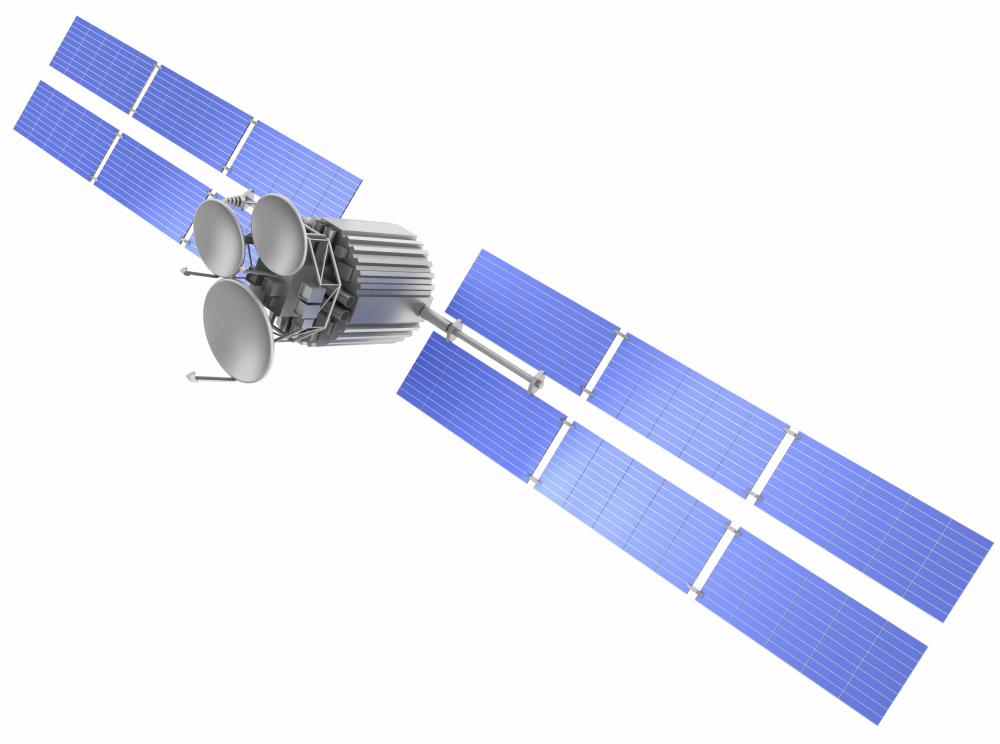
Terahertz waves have proven challenging to generate and observe, as reliable terahertz radiation sources with only developed in the 1990s. These include the gyrotron, the backward wave oscillator, synchrotron light sources, far infrared laser, quantum cascade laser, free electron laser, and photomixing sources. Since the 1990s, research into these waves has taken off, through the commercialization and application of this radiation has been slow. Applications which have been floated include medical imaging, security, materials analysis, the study of condensed matter in strong magnetic fields, submillimetre astronomy, viewing old layers on paint on a piece of art, satellite-to-satellite or aircraft-to-satellite communication, and quality control imaging for manufacturing.
Michael Anissimov
Michael is a longtime AllTheScience contributor who specializes in topics relating to paleontology, physics, biology, astronomy, chemistry, and futurism. In addition to being an avid blogger, Michael is particularly passionate about stem cell research, regenerative medicine, and life extension therapies. He has also worked for the Methuselah Foundation, the Singularity Institute for Artificial Intelligence, and the Lifeboat Foundation.
Learn more...
Michael Anissimov
Michael is a longtime AllTheScience contributor who specializes in topics relating to paleontology, physics, biology, astronomy, chemistry, and futurism. In addition to being an avid blogger, Michael is particularly passionate about stem cell research, regenerative medicine, and life extension therapies. He has also worked for the Methuselah Foundation, the Singularity Institute for Artificial Intelligence, and the Lifeboat Foundation.
Learn more...AS FEATURED ON:
AS FEATURED ON:









-
![Satellite communication is a proposed terahertz application.]() By: yuriySatellite communication is a proposed terahertz application.
By: yuriySatellite communication is a proposed terahertz application. -
![The terahertz part of the electromagnetic spectrum is defined as radiation with a frequency between between 300 gigahertz and 3 terahertz.]() By: Mila GligoricThe terahertz part of the electromagnetic spectrum is defined as radiation with a frequency between between 300 gigahertz and 3 terahertz.
By: Mila GligoricThe terahertz part of the electromagnetic spectrum is defined as radiation with a frequency between between 300 gigahertz and 3 terahertz.

Discussion Comments
Thanks for sharing this article. I got an idea about this new technology and as this technology improves, this could give better protection from harmful waves technology.
@miriam98 - The ability of terahertz waves to penetrate the paint on artwork is interesting indeed. I wonder what kinds of applications you could use for this.
I bet you they used this technology on the Shroud of Turin, that is if you believe that the image on the Shroud is made with paint. I’ve heard that scientists have used lasers and stuff to penetrate the image and try to get some idea of what it’s for.
I think they could use terahertz waves as well. Other applications might be to date a painting I suppose or to determine the authenticity of a piece of art.
Somehow I have the conviction that even if future computers have terahertz systems, that still will not be fast enough. That’s not a commentary on the speed as such, but on the fact that software needs RAM and not just blazing clock speed to run fast.
I’ve bought faster and faster computers and seen all those systems slow to a crawl because I had so much software loaded into RAM or I had very little RAM to begin with.
In either case, it will be RAM that will determine how efficient and how fast a computer ultimately operates in my opinion.
Post your comments