
At TheHealthBoard, we're committed to delivering accurate, trustworthy information. Our expert-authored content is rigorously fact-checked and sourced from credible authorities. Discover how we uphold the highest standards in providing you with reliable knowledge.
What is Telemetry Monitoring?
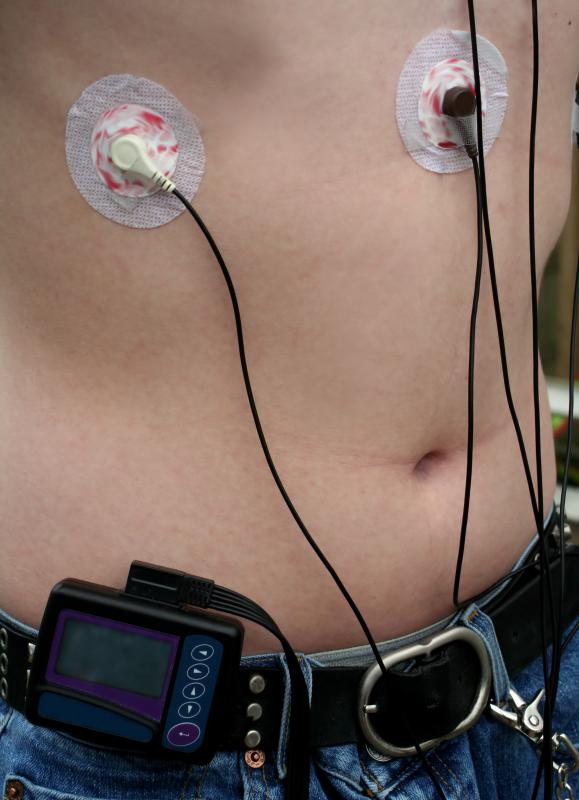
Telemetry monitoring involves watching and analyzing data received at a distance from its source. It usually refers to a certain way of monitoring a hospital patient's heart activity, but it is also the way in which information is received from spaceships and orbiting satellites, among other things. In the context of cardiac monitoring, it serves the same purpose as an ordinary heart monitor, with the difference being that the patient is fitted with a transmitter that sends the data to the area of the hospital where the monitoring occurs.
One of the main advantages of monitoring a patient in this way is that it allows the person to get up and move around, at least within the device's transmitting range. In many cases, this is highly preferable to having a patient confined to a bed so that his heart's activity can be observed. Telemetry monitoring has been the subject of a small amount of controversy within the medical community, however. Some medical professionals feel that it is overused and have even suggested discontinuing the practice.

Most medical experts agree, however, that the practice can be highly valuable for some patients, particularly those going through a physical rehabilitation process. It allows a patient whose recovery depends on movement to pursue that recovery effectively, without his healthcare team having to give up the ability to monitor his heart. This extra security measure is a great advantage for many patients.

Those who make a living by doing telemetry monitoring in a hospital usually act in the capacity of a nurse's assistant. Information received by the system is observed and tracked by a monitor, who will alert the nursing staff if any negative changes occur with a patient. The ability to make quick decisions and take detailed notes is essential for someone working in this position.

Of course, monitoring the condition of patients' hearts is not the only application for this practice. Almost anything that needs to be constantly or periodically monitored can be observed from a distance. This includes not only tracking objects in space, as earlier noted, but also remote observation of power plants, the reading of gas and electric meters, and the tracking of endangered species in the wild. Weather data can also be gathered in this way to provide real-time information and computer models, ideally leading to more specific and accurate forecasts.
AS FEATURED ON:
AS FEATURED ON:


-
![Hospitals sometimes equip patients with radio transmitters so they can be monitored as they walk around.]() By: LuftbildfotografHospitals sometimes equip patients with radio transmitters so they can be monitored as they walk around.
By: LuftbildfotografHospitals sometimes equip patients with radio transmitters so they can be monitored as they walk around. -
![Data broadcast from spacecraft to human operators on the ground is a form of telemetry.]() By: MechanikData broadcast from spacecraft to human operators on the ground is a form of telemetry.
By: MechanikData broadcast from spacecraft to human operators on the ground is a form of telemetry. -
![During cardiac monitoring, a patient is fitted with a telemetry transmitter that sends data to the area of the hospital where the monitoring occurs.]() By: Susan StevensonDuring cardiac monitoring, a patient is fitted with a telemetry transmitter that sends data to the area of the hospital where the monitoring occurs.
By: Susan StevensonDuring cardiac monitoring, a patient is fitted with a telemetry transmitter that sends data to the area of the hospital where the monitoring occurs. -
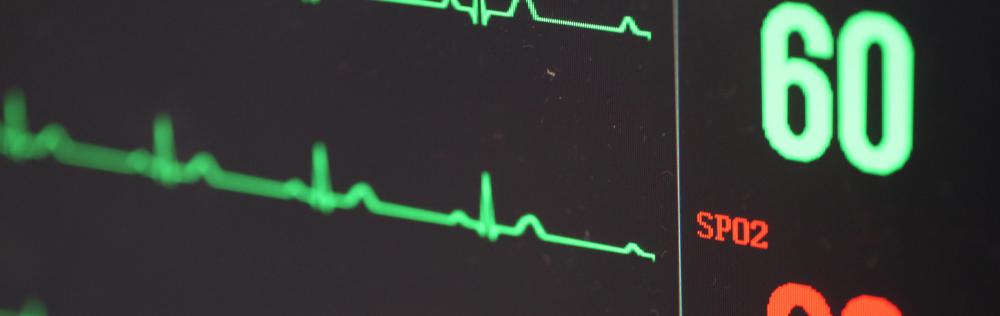
![Telemetry plays an important role in monitoring critically ill patients in the intensive care unit.]() By: sudok1Telemetry plays an important role in monitoring critically ill patients in the intensive care unit.
By: sudok1Telemetry plays an important role in monitoring critically ill patients in the intensive care unit.


Discussion Comments
There should be guidelines to how many one tech can watch.
Isn't it like what spy satellites use?
@galen84basc -- Unfortunately there are no set standards when it comes to telemetry monitoring.
Some hospitals don't even have telemetry techs, the nurses just have to do it.
Besides being a pain for the nurses (just one more thing to do) only having one telemetry tech in a large ward, or having too few (or no) techs at all can raise the chances of missing something, or putting a patient in danger.
Scary stuff.
With telemetry monitoring, are there standards in place for how many monitors one person can watch at once?
What with hospital overcrowding, I would think that there could be some major issues with having one person watch too many monitors.
Does anybody know if there is a set standard out there?
My best friend is a telemetry monitor tech, and she says those things are lifesavers.
Medical staff, and especially nurses, need all the help they can get when it comes to patient care, and being able to check up on patients remotely can save a lot of time and energy that can be used elsewhere.
Post your comments