
At DelightedCooking, we're committed to delivering accurate, trustworthy information. Our expert-authored content is rigorously fact-checked and sourced from credible authorities. Discover how we uphold the highest standards in providing you with reliable knowledge.
What is Tagine?
 Mary McMahon
Mary McMahon
Mary McMahon
Tagine is a North African dish that is prepared in a special cooking pot, also known by the same name. These dishes are incredibly diverse, as one might imagine since they are consumed all over North Africa, and they are often on offer at North African restaurants abroad. Tagine can also be made at home; acquiring a cooking pot for the purpose of making the dish is highly recommended, as tagines are specifically designed for the cooking of this famous and beloved food.
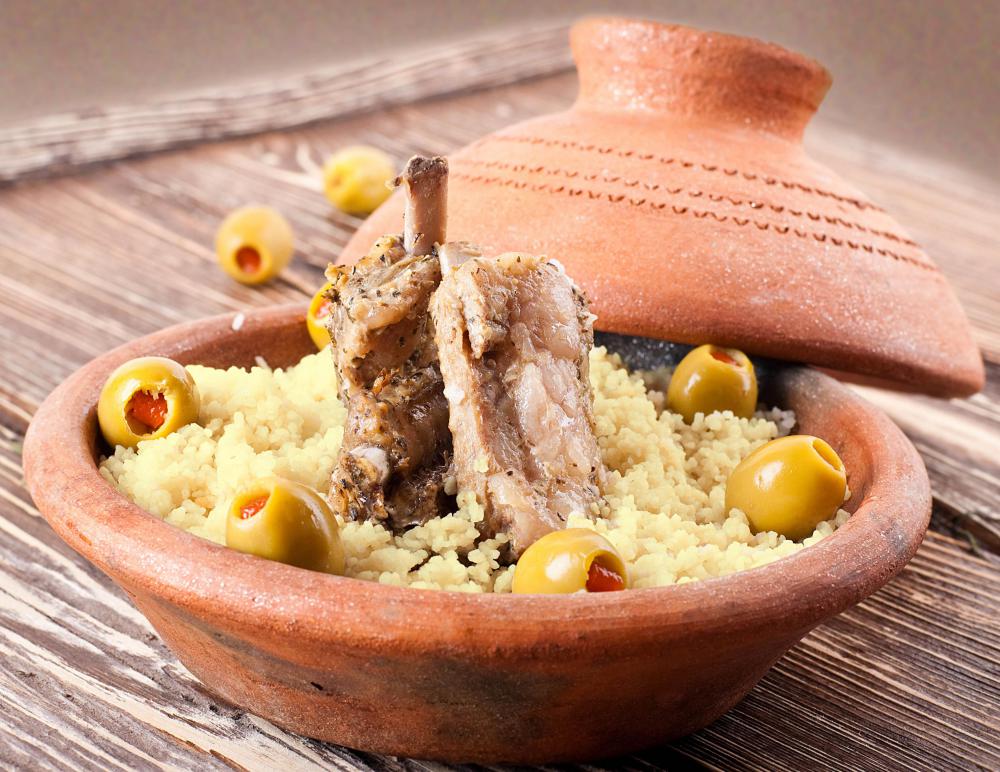
The cooking pot known as a tagine comes in two pieces of thick stoneware. The bottom piece is essentially a large, flat-bottomed bowl. The top piece is domed or fluted, and it is designed to nest inside the bottom piece, creating a seal. Together, the two pieces make a sort of clay oven that would have traditionally been placed into an open fire for cooking. Modern cooks generally prepare their tagine in the oven, and in some cases on the stovetop.

The design of the pot is intended to concentrate moisture in the dish, as well as promoting a very high temperature inside. The retention of moisture ensures that the resulting meal does not dry out, because the ingredients are essentially steamed. The high temperatures help to caramelize the ingredients and the liquids they cook in, concentrating the flavor and creating a very rich final product.

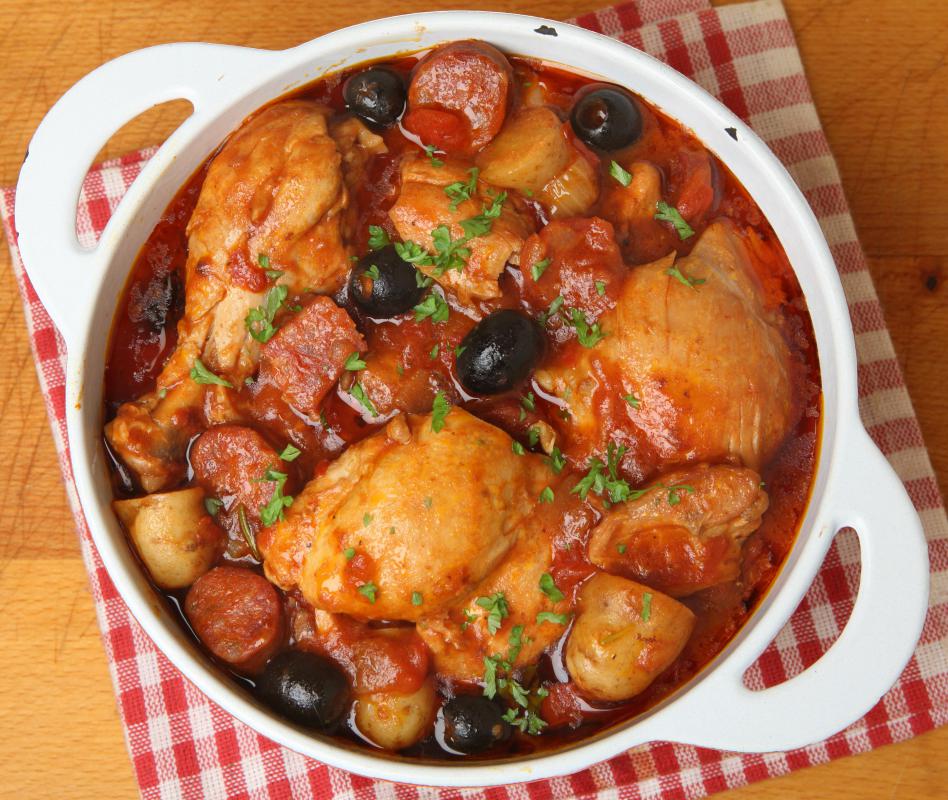
Basically, a tagine is a sort of stew. It incorporates ingredients that take well to long, slow braising at low temperatures, such as lamb and squab. Depending on the origin of the tagine, the spicing of the dish varies widely, and is possible to find them with vegetables, beans, and various grains in addition to meat stews. After several hours of cooking, the ingredients are extremely tender and very intensely flavored, and diners can ladle the tagine over rice or scoop it out of the dish with hunks of bread.

People may also see tagine spelled as “tajine.” These dishes often incorporate regional specialties like saffron, raisins, cinnamon, various nuts, citrus fruits, olives, paprika, turmeric, cumin, and coriander, and they can include meats like lamb, chicken, squab, veal shanks, pigeon, goat, and so forth. Depending on where in North Africa the tagine comes from, it may even be inspired by French or Italian cooking, incorporating ingredients and seasonings from these regions.
Mary McMahon
Ever since she began contributing to the site several years ago, Mary has embraced the exciting challenge of being a DelightedCooking researcher and writer. Mary has a liberal arts degree from Goddard College and spends her free time reading, cooking, and exploring the great outdoors.
Learn more...
Mary McMahon
Ever since she began contributing to the site several years ago, Mary has embraced the exciting challenge of being a DelightedCooking researcher and writer. Mary has a liberal arts degree from Goddard College and spends her free time reading, cooking, and exploring the great outdoors.
Learn more...AS FEATURED ON:
AS FEATURED ON:


-
![Tagines are made out of thick stoneware and come in two pieces.]() By: OligoTagines are made out of thick stoneware and come in two pieces.
By: OligoTagines are made out of thick stoneware and come in two pieces. -
![Tagine dishes are a type of stew featuring braised meat with spices.]() By: seqoyaTagine dishes are a type of stew featuring braised meat with spices.
By: seqoyaTagine dishes are a type of stew featuring braised meat with spices. -
![Tagine is often flavored with coriander.]() By: zoë biggsTagine is often flavored with coriander.
By: zoë biggsTagine is often flavored with coriander. -
![Cooks without a tagine can simmer any Moroccan stew in a large pot.]() By: Joe GoughCooks without a tagine can simmer any Moroccan stew in a large pot.
By: Joe GoughCooks without a tagine can simmer any Moroccan stew in a large pot. -
![Cooks often take advantage of regional spices like turmeric when making tagine.]() By: Photographee.euCooks often take advantage of regional spices like turmeric when making tagine.
By: Photographee.euCooks often take advantage of regional spices like turmeric when making tagine.



Discuss this Article
Post your comments