
At WiseGEEK, we're committed to delivering accurate, trustworthy information. Our expert-authored content is rigorously fact-checked and sourced from credible authorities. Discover how we uphold the highest standards in providing you with reliable knowledge.
What is Sushi Rice?
Sushi rice is a preparation of rice — typically a short-grained, white Japanese rice — commonly used to make sushi. It is usually mixed with sugar, salt, and rice vinegar, and may also include kombu and sake. The rice used in sushi is sometimes made with a combination of this and other types of rice, and even with wild rice.
Rice is, itself, an essential part of sushi, and in many ways is the defining feature of this dish. The most classic type of sushi, nigiri-zushi, is simply a mound of pressed sushi rice with fish on top of it. Nigiri-zushi may include nori seaweed in a thin strip around it, especially pieces made with squid or eel. The most common type of sushi found in the west, however, is maki-zushi. Maki-zushi consists of rolls of rice wrapped with nori seaweed either on the inside or the outside, and some sort of filling.

Sushi rice must be quite sticky to function as required. This is especially true in dishes such as uramaki, where the rice is on the outside of the nori, and so must cling to it. Good rice should have a level of stickiness where all of the grains stick firmly together, but it should not be so sticky that it becomes an amorphous mash of rice. Because long-grained rice tends to be fairly dry, it is not appropriate for use in sushi, since the lack of moisture makes it insufficiently sticky. Short-grained rice is wet enough that, when properly prepared, it sticks together well.

To cook sushi rice, a chef prepares the Japanese rice as usual, cooking it and letting it steam for a while. The sauce is then prepared, mixing the sugar, salt, and rice vinegar together in a bowl. The sugar should be fully dissolved on a low heat, and then the mixture should be allowed to cool. The steamed rice, while still hot, should then be spread out in a large wooden or ceramic bowl, or on a large plate. The sauce is then drizzled on top of the rice, and it is quickly folded over itself. For particularly shiny rice, a fan can be set up to cool and dry it as the sauce is being mixed in.

The mixture of the sauce itself is what makes different sushi rice preparations. At its most basic, 3 cups (558 grams) of dry rice would use about 1 teaspoon (6 g) of salt, 3 tablespoons (37.5 g) of sugar, and 0.33 cup (78.8 ml) of rice vinegar. Different regions have their own versions of this recipe. For example, in Tokyo, 2 teaspoons (12 g) of salt might be used, while in Osaka, 4 or even 5 tablespoons (50 or 62.5 g) of sugar would be used, resulting in much sweeter rice. Some regions also add little pieces of dried kombu seaweed, or small amounts of Japanese rice wine, sake, to spruce up the recipe a bit.
AS FEATURED ON:
AS FEATURED ON:









-
![White Japanese rice is used to prepare sushi.]() By: Viktor LugovskoyWhite Japanese rice is used to prepare sushi.
By: Viktor LugovskoyWhite Japanese rice is used to prepare sushi. -
![Nigiri sushi assortment.]()
Nigiri sushi assortment. -
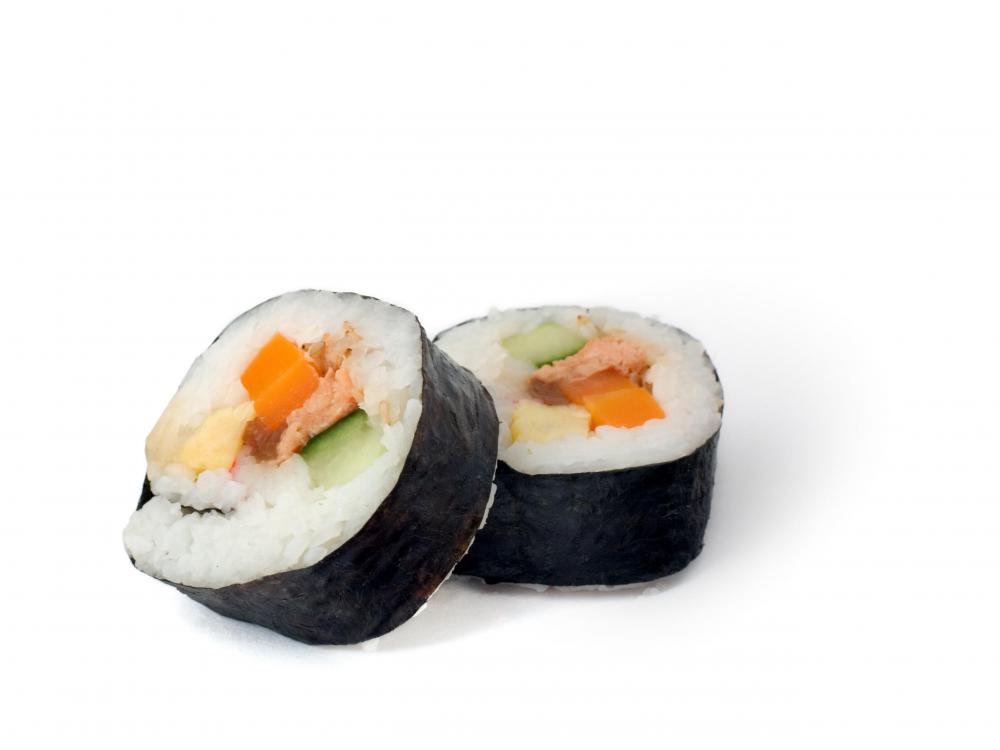
![Two futomaki rolls.]() By: BlueOrange StudioTwo futomaki rolls.
By: BlueOrange StudioTwo futomaki rolls. -
![A temaki cone.]() By: Radu RazvanA temaki cone.
By: Radu RazvanA temaki cone. -
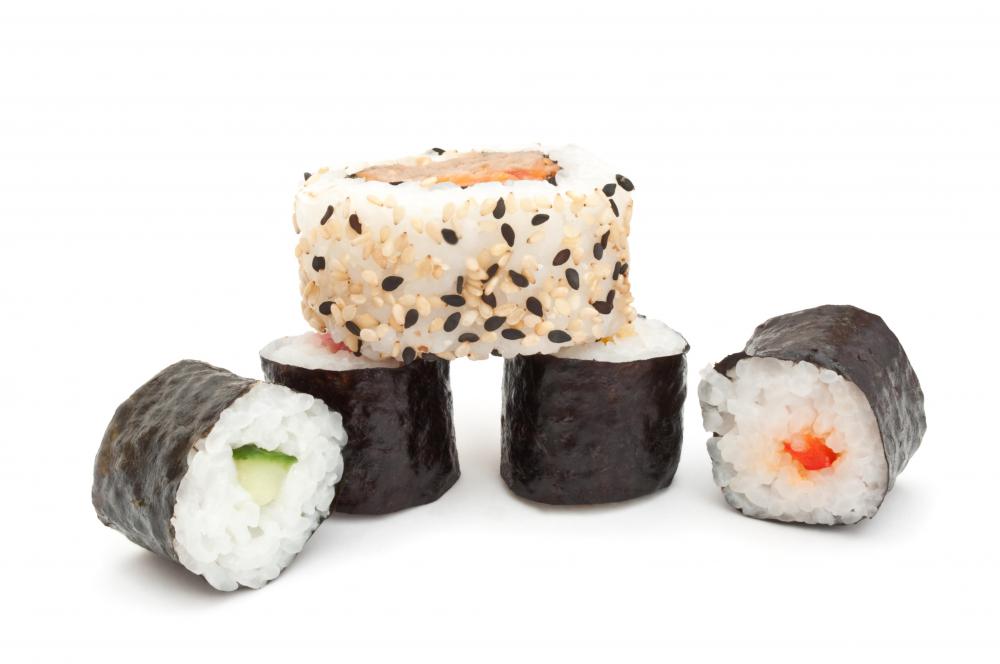
![Hosomaki rolls underneath an uramaki roll.]() By: creative soulHosomaki rolls underneath an uramaki roll.
By: creative soulHosomaki rolls underneath an uramaki roll. -
![Dried kombu, which is sometimes used in making sake.]() By: Jovan NikolicDried kombu, which is sometimes used in making sake.
By: Jovan NikolicDried kombu, which is sometimes used in making sake. -
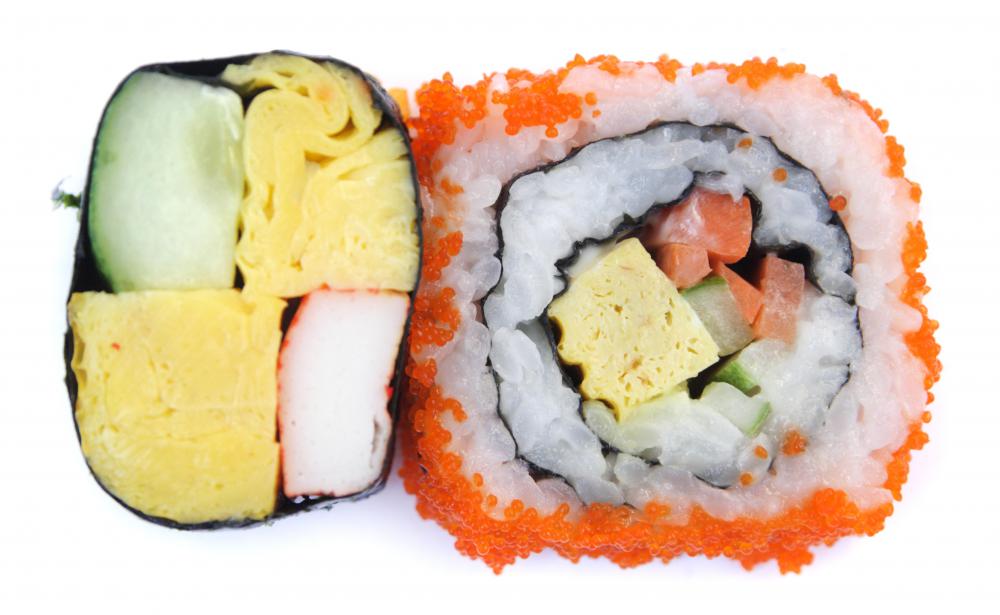
![Some sushi has crab in it.]() By: nalineimagesSome sushi has crab in it.
By: nalineimagesSome sushi has crab in it. -
![Squid is a popular sushi ingredient.]() By: hiphoto39Squid is a popular sushi ingredient.
By: hiphoto39Squid is a popular sushi ingredient. -
![Rice is usually mixed with sugar, salt and rice vinegar before making sushi.]() By: uwimagesRice is usually mixed with sugar, salt and rice vinegar before making sushi.
By: uwimagesRice is usually mixed with sugar, salt and rice vinegar before making sushi. -
![Tokyo is said to be home to the best sushi restaurants in the world.]() By: shirophotoTokyo is said to be home to the best sushi restaurants in the world.
By: shirophotoTokyo is said to be home to the best sushi restaurants in the world. -
![Some variations of traditional sushi may use wild rice.]() By: Kondor83Some variations of traditional sushi may use wild rice.
By: Kondor83Some variations of traditional sushi may use wild rice.






Discussion Comments
I didn't know that sugar was actually added to the rice. I had some unusually sweet sushi last week, and I just thought the sweetness was coming from the mango sauce on top.
It tasted so different from the sushi I had eaten the week before. That sushi was much saltier and more savory. I believe it was topped with teriyaki, so I just assumed that this was where it got its saltiness from.
After reading this article, I think that I probably ordered a type of sushi that was meant to be prepared with more sugar. Maybe it originated in Osaka!
I may never learn how to make sushi rice, but I am content to let the experts at the sushi restaurants prepare it for me. The whole process of making sushi, from the rice to the fish itself, just seems like such an art form. It might take years to learn it properly!
@donasmrs-- You should use Japanese rice, that is the best rice for sushi.
Sometimes people who are making sushi for the first time pick up Thai sticky rice instead of Japanese rice but that's not good. Thai sticky rice is different, it's much more fragrant than sushi rice.
Also, tezu-- the vinegar, sugar and salt mixture-- is as important as the rice. The amounts for four sushi rice rolls should be two and a half cups of water, one quarter cup of rice vinegar, two tablespoons of sugar and one teaspoon salt. I also always use Japanese rice vinegar.
@donasmrs-- Sticky rice and sushi rice are used interchangeably and they are the same kind of short-grain rice. Technically, there is one difference between them-- sticky rice has more starch because it is not rinsed like sushi rice.
The higher the proportion of starch in rice, the stickier it is. So short-grain rice is more sticky than long-grain rice and what is labeled as "sticky rice" is more sticky than regular sushi rice.
What's the difference between sushi rice and sticky rice? Are they the same thing?
Does it matter what type or brand of short grain rice I use for sushi?
Post your comments