
At AllThingsNature, we're committed to delivering accurate, trustworthy information. Our expert-authored content is rigorously fact-checked and sourced from credible authorities. Discover how we uphold the highest standards in providing you with reliable knowledge.
What is Sturgeon?
 Mary McMahon
Mary McMahon
Mary McMahon
A sturgeon is a a fish in the family Acipenseridae, which contains over 20 known species. Humans are most familiar with the fish because it is a famous source of caviar, unfertilized roe collected from female fish. Since 1998, many species have been regulated by the Convention on International Trade in Endangered Species (CITES), because of concerns about overfishing. Legally traded sturgeon products are accompanied with a CITES certificate verifying that they have been inspected and the fishery has been approved.
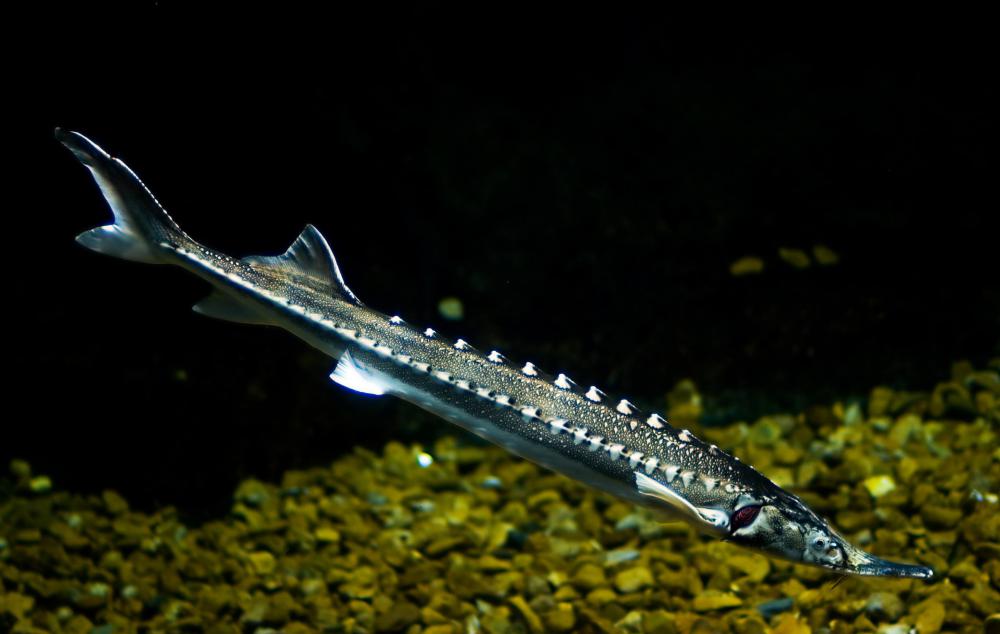
The physical appearance of a sturgeon is somewhat primordial. The fish are long, with several rows of bony plates along their bodies, along with an elongated snout which has protruding barbels. The fish are bottom feeders, using their wedge-like snouts to churn up the bottom of waterways for food. Most eat mollusks, worms, and larvae. They are classified as ganoid fishes, in a reference to the bony plates which line their bodies.

The Northern hemisphere exclusively supports sturgeon, and they prefer temperate, rather than tropical waters. Some are anadromous, which means that they travel between salt and fresh water. Others live solely in fresh water, usually within landlocked bodies of water, and some species spend their lives at sea. The largest species is the Russian sturgeon, which can reach a length of 13 feet (almost 4 meters). Fish of approximately half that size are much more abundant.

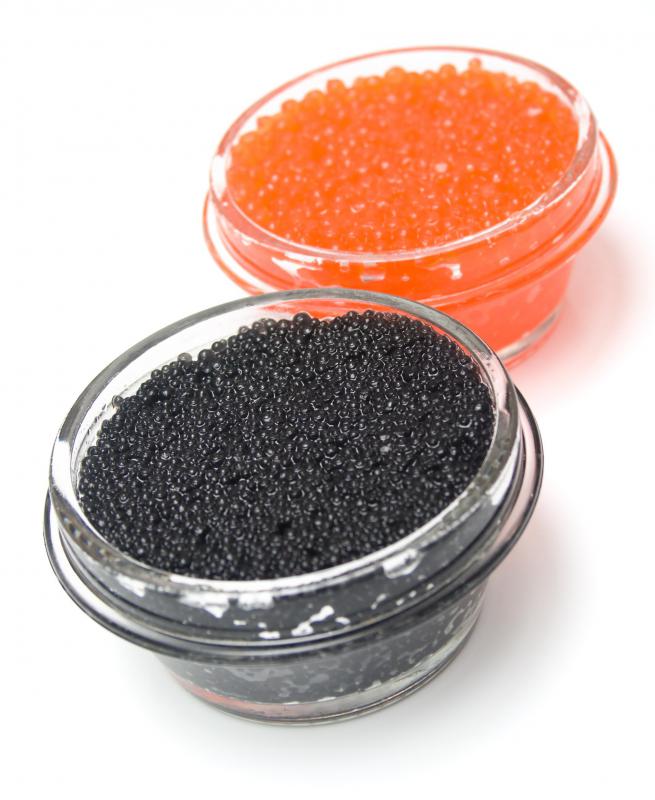
Humans have been eating sturgeon and their products for centuries. The caviar is the most prized product of this fish, but the flesh is eaten as well. Sturgeon meat is rich, high in fat, and very dense with a mild flavor. When obtainable, it is eaten fresh in many parts of Europe. In Russia, where large numbers of the fish are harvested for their roe, the meat is dried or smoked before being sold. Humans also use the swim bladder of the fish to extract isinglass, a type of gelatin used to clarify foods such as beer.

As is the case with many other threatened fish species, attempts are being made to make sturgeon fishing more sustainable. In nations where the trade in caviar is an important part of life and the economy, many fisheries are working with conservationists to preserve fish stocks. Public awareness campaigns have also begun to alert consumers to the problem, encouraging them to eat caviar from less threatened species, and to purchase only products that have been certified.
Frequently Asked Questions
What exactly is a sturgeon?
Sturgeons are ancient, bony fish known for their distinctive features, including elongated bodies, scute-covered skin, and barbels that dangle near their mouths. They belong to the Acipenseridae family and are among the oldest families of fish in existence, with fossils dating back to the Late Cretaceous period. These bottom-feeders are also prized for their roe, which is processed into caviar.
How many species of sturgeon are there, and where can they be found?
There are approximately 27 species of sturgeon, according to the International Union for Conservation of Nature (IUCN). These species are distributed across temperate waters in the Northern Hemisphere, including North America, Europe, and Asia. They inhabit large rivers, lakes, and coastal waters, with some species being anadromous, migrating between fresh and saltwater for breeding.
Why are sturgeons considered to be at risk?
Sturgeons are considered to be one of the most threatened group of animals on the IUCN Red List, with over 70% of sturgeon species at risk of extinction. This vulnerability is due to factors such as overfishing, poaching for their valuable caviar, habitat loss, pollution, and dam construction which disrupts their migratory patterns and breeding grounds.
What is the lifespan of a sturgeon, and how big can they get?
Sturgeons are known for their longevity and can live for several decades, with some species like the beluga sturgeon potentially reaching over 100 years of age. They are also among the largest fish, with certain species growing up to 12 feet in length and weighing over a ton. Their size and lifespan are indicative of their slow growth and late maturity.
How do sturgeons reproduce, and what is their conservation status?
Sturgeons are slow to mature and have a unique reproductive cycle, often not breeding until they are 15 to 20 years old. They spawn in fast-flowing rivers, where they lay a large number of eggs on the riverbed. Due to their slow reproduction rate and high demand for caviar, many sturgeon species are critically endangered and require conservation efforts to prevent extinction.
Can sturgeons be farmed, and how does this impact their conservation?
Sturgeon farming has become increasingly popular as a means to produce caviar without further depleting wild populations. Aquaculture practices allow for controlled breeding and harvesting of roe, which can alleviate pressure on wild sturgeons. However, sustainable farming practices are crucial to ensure that farmed sturgeons do not negatively impact wild populations through habitat competition or disease transmission.
Mary McMahon
Ever since she began contributing to the site several years ago, Mary has embraced the exciting challenge of being a AllThingsNature researcher and writer. Mary has a liberal arts degree from Goddard College and spends her free time reading, cooking, and exploring the great outdoors.
Learn more...
Mary McMahon
Ever since she began contributing to the site several years ago, Mary has embraced the exciting challenge of being a AllThingsNature researcher and writer. Mary has a liberal arts degree from Goddard College and spends her free time reading, cooking, and exploring the great outdoors.
Learn more...AS FEATURED ON:
AS FEATURED ON:









-
![Black caviar is the most prized product of sturgeon.]() By: amletBlack caviar is the most prized product of sturgeon.
By: amletBlack caviar is the most prized product of sturgeon. -
![There are 20 known species of sturgeon.]() By: Marion WearThere are 20 known species of sturgeon.
By: Marion WearThere are 20 known species of sturgeon. -
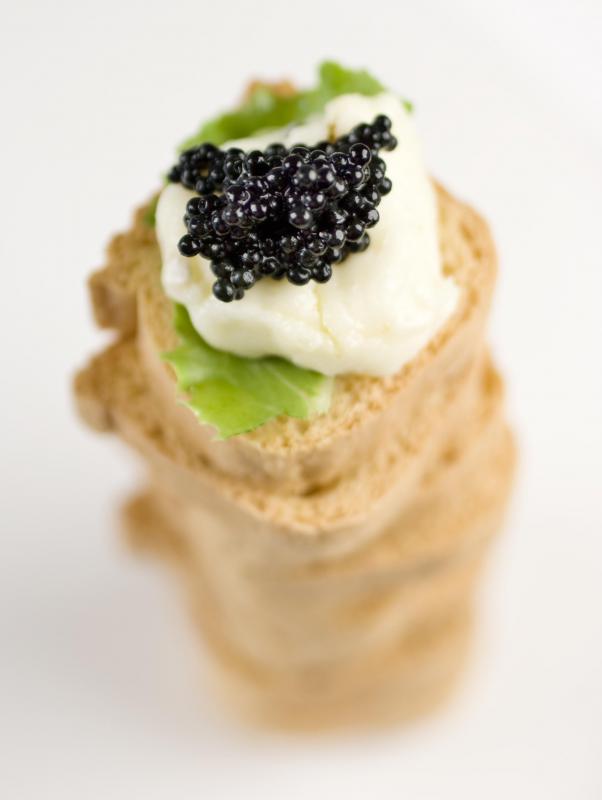
![Caviar appetizer with crème fraîche and basil.]() By: Betty AbrantesCaviar appetizer with crème fraîche and basil.
By: Betty AbrantesCaviar appetizer with crème fraîche and basil.
Discuss this Article
Post your comments