
At EasyTechJunkie, we're committed to delivering accurate, trustworthy information. Our expert-authored content is rigorously fact-checked and sourced from credible authorities. Discover how we uphold the highest standards in providing you with reliable knowledge.
What is Structured Programming?
 Malcolm Tatum
Malcolm Tatum
Malcolm Tatum
In the world of computer programming, structured programming is a logical construct that allows for the efficient operation of a program. With this in mind, many programmers understand it as being one of the disciplines that make up the overall process of procedural programming. One of the advantages to the implementation of a structured model of programming is the ability to either eliminate — or at least reduce — the necessity of employing the GOTO statement.
The essential composition of any type of structured programming tends to include three basic elements: concatenation, selection, and repetition. Concatenation has to do with the logical sequence of the statements that make up the basics for the order to be executed. Each step in the sequence must logically progress to the following step without invoking any undesirable activities.

Selection step allows for the selection of any one of a number of statements to execute, based on the current status of the program. Generally, the selection statements will contain keywords that help to identify the order as a logical executable, such as “if,” “then,” “endif,” or “switch.”
A third component is repetition. Within this element, a selected statement remains active until the program reaches a point where there is a need for some other action to take place. A repetition normally will include keywords such as ”repeat,” “for,” or “do ... until.” Essentially, the repetition instructs the program how long to continue the function before requesting further instructions.

The exact nature of structured programming will vary, depending on the purpose and function of the program. Most forms will begin with a single point of entry, but may allow for more than one point of exit. Some types, sometimes called modular programming, will allow for the creation of subsets or modules within the overall structure of the program that interact with one another, based on the type of order that is executed.
Malcolm Tatum
After many years in the teleconferencing industry, Michael decided to embrace his passion for trivia, research, and writing by becoming a full-time freelance writer. Since then, he has contributed articles to a variety of print and online publications, including EasyTechJunkie, and his work has also appeared in poetry collections, devotional anthologies, and several newspapers. Malcolm’s other interests include collecting vinyl records, minor league baseball, and cycling.
Learn more...
Malcolm Tatum
After many years in the teleconferencing industry, Michael decided to embrace his passion for trivia, research, and writing by becoming a full-time freelance writer. Since then, he has contributed articles to a variety of print and online publications, including EasyTechJunkie, and his work has also appeared in poetry collections, devotional anthologies, and several newspapers. Malcolm’s other interests include collecting vinyl records, minor league baseball, and cycling.
Learn more...AS FEATURED ON:
AS FEATURED ON:









-
![Structured programming is built logically for program efficiency.]() By: LeoStructured programming is built logically for program efficiency.
By: LeoStructured programming is built logically for program efficiency. -
![One of the basic elements of structured programing is concatenation, which has to do with logical sequencing.]() By: krasnopolOne of the basic elements of structured programing is concatenation, which has to do with logical sequencing.
By: krasnopolOne of the basic elements of structured programing is concatenation, which has to do with logical sequencing. -
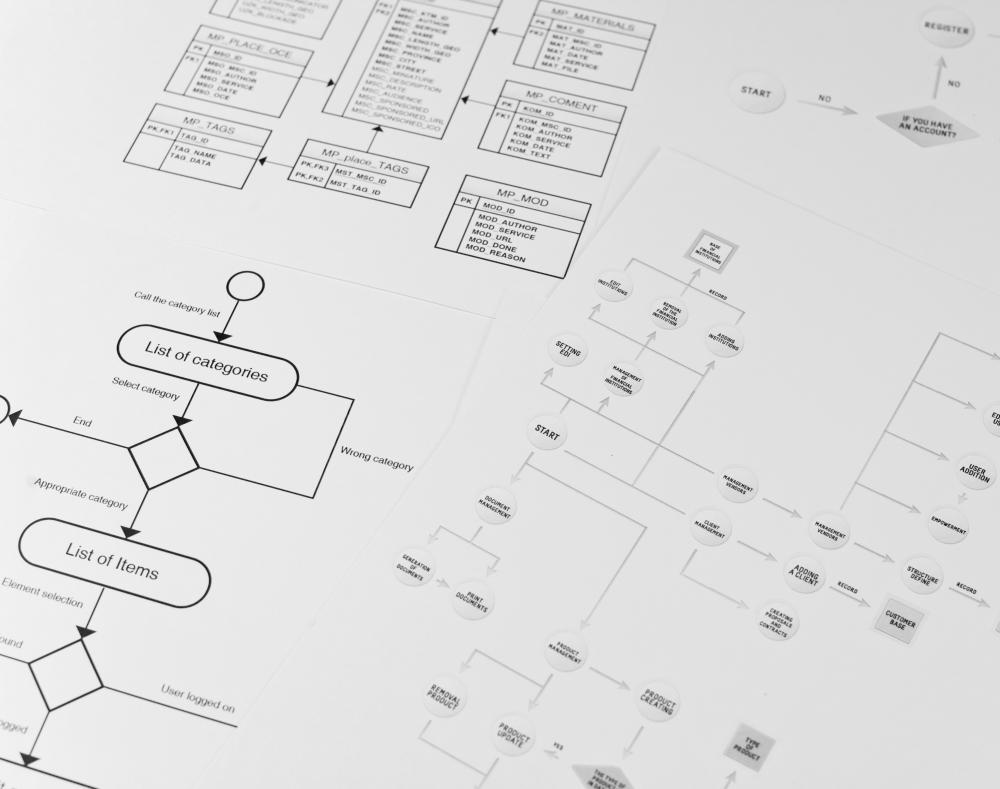
![Structured programming is a discipline of procedural programming.]() By: GudellaphotoStructured programming is a discipline of procedural programming.
By: GudellaphotoStructured programming is a discipline of procedural programming.


Discussion Comments
Very nice, but why is it introduced? I mean the structured programming. I want to understand.
@FitzMaurice
I doubt that this will be AI at its best, because AI will still be merely a pawn and a tool for our bidding. When AI is programmed to think and innovate for itself, the "concatenation" may become obsolete, and we may be the ones being chained.
Programming languages like C++ and Javascript are making the computer world increasingly accessible. The chain is being made simpler and easier to manipulate with less computer learning. It is to be hoped that we will one day be able to speak to computers to direct them how to function. This will essentially be AI at its best.
@Renegade
This "chain" is linked together in a complex process by computer programmers who understand all the basic problems of computers and know how to make them accessible to the everyday user. This is how the money is made: we empower individuals to connect and use machines to function well and pool their ideas on the internet.
"Concatenation" comes from the Latin root for "to chain together." Even in Spanish, the word for chain is "cadena." The world of modern programming is much like a chain of computer codes linking the user with the programming.
Post your comments