
At BeautyAnswered, we're committed to delivering accurate, trustworthy information. Our expert-authored content is rigorously fact-checked and sourced from credible authorities. Discover how we uphold the highest standards in providing you with reliable knowledge.
What is Stearyl Alcohol?
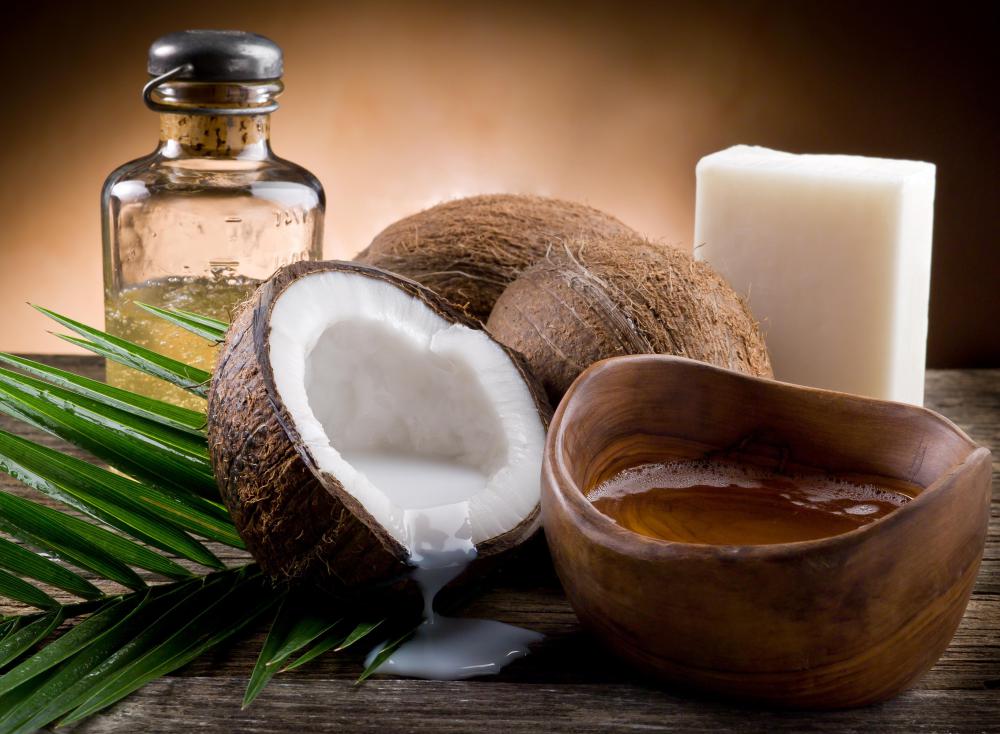
Stearyl alcohol is an organic compound that is derived from fatty acids and is commonly used as a moisturizer and as a thickening agent in a range of different cosmetic products. Most of the time it is derived from stearic acid deposits in shea nuts and coconut oil, though it can be made from animal fats, too. This sort of alcohol is what is known as a “fatty alcohol,” though products labeled “alcohol free” sometimes contain it because it doesn’t have the same core characteristics as most other alcohols. It typically occurs as a solid, for one thing, and won’t dry or dehydrate skin, hair, or tissues.
Where it Comes From

There are a couple of different ways to get this alcohol, but starting with stearic acid is standard. Stearic acid is very common in plants and animals both. The majority of cosmetic manufacturers get their supplies from shea and coco butters, which come from nuts and fruits that grow quite easily in many of the world’s more tropical regions. They are a popular choice because they also typically have a number of skin-soothing benefits that can improve a range of different products. Many different vegetables also contain it, though usually in smaller amounts; fish oils and animal fats are good sources, too.

In acid form the compound is fatty and generally somewhat viscous; as an alcohol, it’s basically solid, and often looks like flakes or granules. Manufactures bring it from one phase to the next through a process known as catalytic hydrogenation, which is a chemical reaction involving hydrogen and other gasses in an enclosed space. Stearyl alcohol has the chemical formula CH3(CH2)16CH2OH.
Use in Emollients and Lotions

One of the main uses for this product is as a skin or hair softener in a lotions, creams, and conditioners. It enhances these products’ moisturizing properties and functions as a humectant, which essentially allows water to bind to the skin or, alternatively, to follicles of hair. This can give a soft and smooth look, and with continued use can help to maintain that appearance over time.
Makeup and Other Cosmetics

The alcohol is also an emulsifier, which means that it can help different ingredients resist separation when blended together. As a result it is a popular addition to a number of different liquid makeup products, shampoos, and soap gels that depend on a smooth, even consistency. It is often found in perfumes, as well.
The fatty nature of the alcohol also means that it can act as a thickener. When used in the right proportions it can give a creamy, smooth texture to a range of different products. These properties also make the alcohol popular in a number of different non-cosmetic applications, particularly when it comes to topical medications and more industrial-grade cleansers and lubricants.
Differences From Other Alcohols

Many skincare professionals recommend that people stay away from cosmetic products that contain alcohol, though in most cases stearyl alcohol is an exception. This is largely because of its fatty structure; the nutrients it contains tend to soften, rather than dry, the skin. Alcohols that should generally be avoided in skincare products include ethanol, methanol, denatured alcohol, and methyl, ethyl, benzyl, or isopropyl alcohol. These compounds tend to be harsh and can have a severe impact on the state of a person's skin. Side effects often include dryness and irritation. More seriously, alcohol can dilate the blood vessels in the skin, which creates a reddish appearance; it can also reduce the absorption of vitamin A, which can cause wrinkles and fine lines to appear in the skin prematurely. These effects aren’t common with fatty compounds.
Risks and Side Effects
Stearyl alcohol is not without risks of its own, though. People are usually cautioned from putting products containing it on or around their eyes, for example, because the skin tissues in the eye area tend to be particularly delicate and can easily become irritated. It shouldn’t normally be ingested and it can cause minor stomach upset if it is. Some studies also claim that the ingredient is an environmental toxin, which means that it can harm the environment, particularly the air or waterways, when not disposed of properly.
AS FEATURED ON:
AS FEATURED ON:


-
![Coconut oil is a major source of stearyl alcohol.]() By: Marco MayerCoconut oil is a major source of stearyl alcohol.
By: Marco MayerCoconut oil is a major source of stearyl alcohol. -
![A lotion containing stearyl alcohol.]() By: picsfiveA lotion containing stearyl alcohol.
By: picsfiveA lotion containing stearyl alcohol. -
![Beauty products that contain methanol should be avoided.]() By: Nico ArmbrustBeauty products that contain methanol should be avoided.
By: Nico ArmbrustBeauty products that contain methanol should be avoided. -
![Many cosmetics products contain stearyl alcohol that is derived from stearic acid.]() By: arminaMany cosmetics products contain stearyl alcohol that is derived from stearic acid.
By: arminaMany cosmetics products contain stearyl alcohol that is derived from stearic acid. -
![Stearyl alcohol may be found in certain shampoos.]() By: Piotr MarcinskiStearyl alcohol may be found in certain shampoos.
By: Piotr MarcinskiStearyl alcohol may be found in certain shampoos.


Discuss this Article
Post your comments