
At DelightedCooking, we're committed to delivering accurate, trustworthy information. Our expert-authored content is rigorously fact-checked and sourced from credible authorities. Discover how we uphold the highest standards in providing you with reliable knowledge.
What is Spinach?
 Mary McMahon
Mary McMahon
Mary McMahon
Spinach is a dark green leafy vegetable native to Southeast Asia. This crop has been used as a source of food for centuries in Asia, and it had reached Europe by the eighth century CE, ensuring that spinach would follow along on the ride to the New World. Most markets that stock produce of any form carry spinach, often year-round, and it can also be found in canned and frozen form. There are a huge number of ways to use this vegetable, and it is extremely popular in many corners of the world.
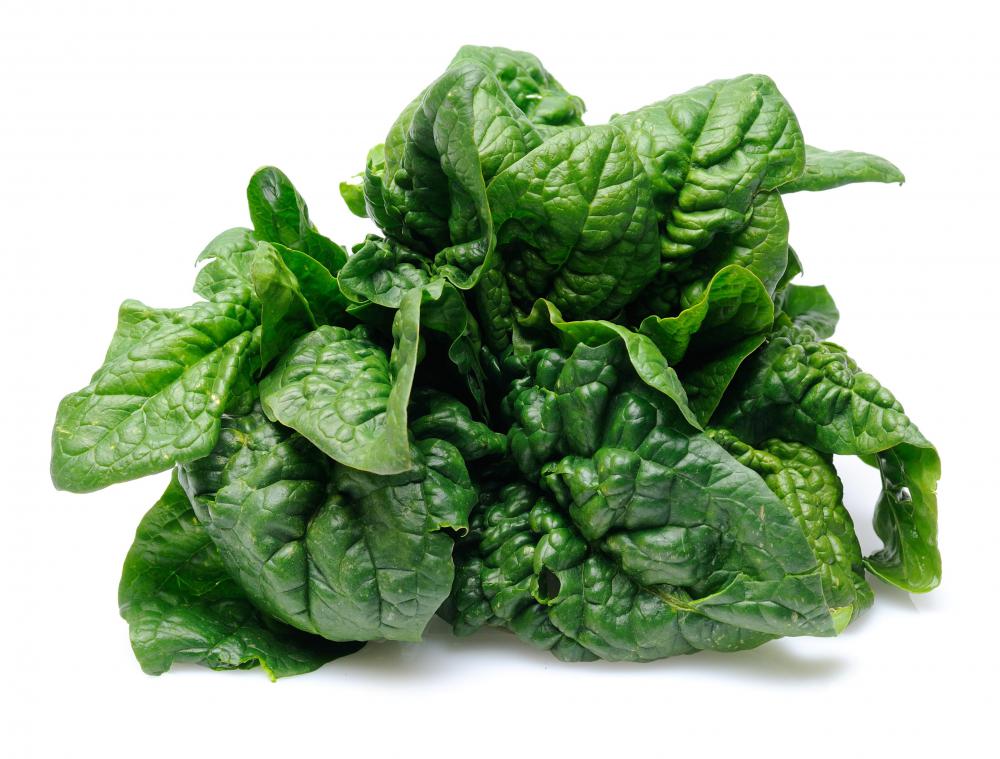
The low-growing plant has roughly spade-shaped leaves, which may be crinkly in the case of the Savoy variety, or smooth in the case of the flat-leaf variety. When allowed to grow unharvested, the annual will go to seed in the late summer, allowing the leaves to die off. In rare instances, spinach grows as a biennial plant, typically in more temperate climates, but the best plants tend to be grown in cool climates, because spinach seeds like to be chilled for several months before sprouting.

Spinach leaves are tender, with a faintly bitter flavor. The plant is naturally rich in vitamins A and C, folate, calcium, and iron, which lead many people to regard it as a superfood and a valuable addition to the human diet. However, spinach is also rich in oxalic acid, which interferes with the body's ability to absorb calcium and iron. Raw spinach in particular has a greatly reduced nutritional value, but even when cooked, it still contains some oxalic acid. This makes it difficult to benefit from the nutritional content of this vegetable. Furthermore, the oxalic acid will also interfere with the absorption of calcium and iron from other foods consumed at the same time.

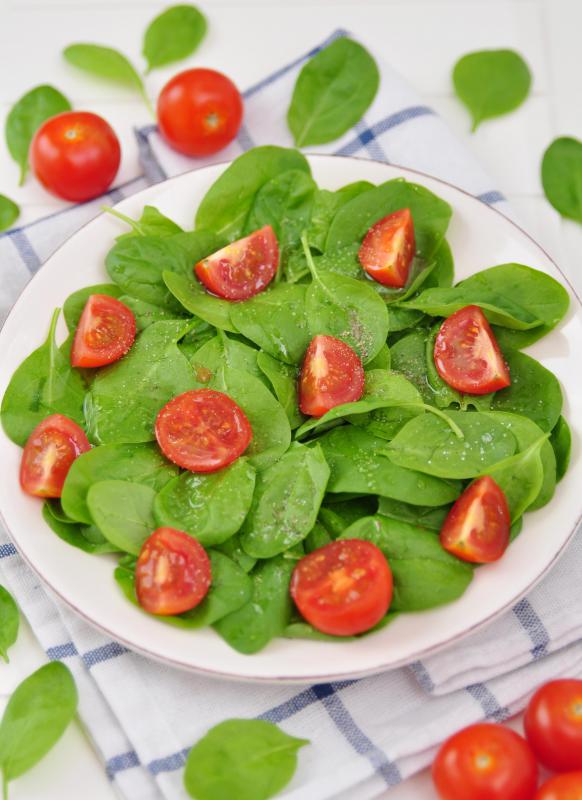
The leaves can be eaten raw, for those who are less concerned about the nutritional value and more interested in flavor. Raw spinach is a frequent addition to salads. It can also be cooked in a variety of preparations, and included in things like soups, quiches, casseroles, burritos, sandwiches, sauces, and a number of other foods.
When selecting fresh spinach in the store, consumers should look for crisp, evenly colored leaves. If the leaves are still on the stalk, they should not be wilted at all and should be free of slime and spots. Spinach also needs to be washed very thoroughly, because it grows close to the ground, collecting grit and dirt, and sometimes a few slugs or snails hide in the leaves.
Mary McMahon
Ever since she began contributing to the site several years ago, Mary has embraced the exciting challenge of being a DelightedCooking researcher and writer. Mary has a liberal arts degree from Goddard College and spends her free time reading, cooking, and exploring the great outdoors.
Learn more...
Mary McMahon
Ever since she began contributing to the site several years ago, Mary has embraced the exciting challenge of being a DelightedCooking researcher and writer. Mary has a liberal arts degree from Goddard College and spends her free time reading, cooking, and exploring the great outdoors.
Learn more...AS FEATURED ON:
AS FEATURED ON:


-
![Spinach.]() By: Alessio ColaSpinach.
By: Alessio ColaSpinach. -
![Spinach may be served as a dip.]() By: dreambigphotosSpinach may be served as a dip.
By: dreambigphotosSpinach may be served as a dip. -
![Spinach can be used to make healthy, green smoothies.]() By: tashka2000Spinach can be used to make healthy, green smoothies.
By: tashka2000Spinach can be used to make healthy, green smoothies. -
![Spinach may be served in salads.]() By: A_LeinSpinach may be served in salads.
By: A_LeinSpinach may be served in salads. -
![Spinach adds color and flavor to quiche recipes.]() By: MIGUEL GARCIA SAAVEDSpinach adds color and flavor to quiche recipes.
By: MIGUEL GARCIA SAAVEDSpinach adds color and flavor to quiche recipes.



Discussion Comments
On one hand Spinach is a super food, one the other hand Spinach is high in oxalic acid, which makes it difficult to benefit from the nutritional content of spinach, and other foods if eaten in conjunction with spinach. So then what you are saying Spinach is no good for you!
Spinach is a great source of vitamin K. Actually all green leafy vegetables are rich in vitamin K. This vitamin is heart friendly and it also helps in bone building.
Post your comments