
At DelightedCooking, we're committed to delivering accurate, trustworthy information. Our expert-authored content is rigorously fact-checked and sourced from credible authorities. Discover how we uphold the highest standards in providing you with reliable knowledge.
What is SOLE Food?
 Mary McMahon
Mary McMahon
Mary McMahon
Sustainable, Organic, Local, and Ethical (SOLE) food is part of a larger movement to change the way that people eat, and the sources of their food. Proponents believe that eating food produced this way will help people to live longer, healthier lives, and will also benefit the environment. They also believe that it is important to combine all of the elements of SOLE, as food could be organic but not ethical, or local but not sustainable. It is hoped that this type of food will enhance people's connection to the environment, food producers, and the food itself. Adherents of the movement range from proponents of slow food worldwide to major corporations that are trying to change the way they care for their employees and the world.
The sustainable aspect refers to farming and harvesting processes that are supportable in the long term. For example, a farmer who rotates crops and allows fields to lie fallow is farming sustainably, because the land will continue to support agriculture for centuries if well cared for. A farmer who continually plants the same crop and douses the land in fertilizer is not farming sustainably, because this exhausts the land. Proponents believe that the growing global population is putting intense pressure on the food supply, and that the only way to guarantee food for future generations is to start thinking long term, and farming in a sustainable way.

The term "organic" is a nod to organic agriculture, which is a type of sustainable farming practice. Organic agriculture goes another step, though, and tries to take care of the environment in general by producing food naturally, without the use of herbicides and pesticides. Farmers rotate crops, use natural pest control, and do not use artificial drugs or hormones for their animals. Most organic farmers also adhere to humane standards that dictate the amount of room animals have to move in, and how animals are slaughtered.

Adherents of SOLE food also believe that it is very important to obtain food locally. Food that comes from long distances is highly inefficient, and uses a lot of fossil fuels for transit. Local food also supports the local economy by keeping food dollars in the area rather than in the hands of large companies and agribusinesses. Eating local also allows for a greater connection to the people who produce food, and helps to bridge the gap between city dwellers and farmers, consumers and producers.

In this movement, food should also be ethically produced. Ethical food standards include concepts like Fair Trade, which ensures that people are paid a living wage for their labor. But ethical food is also produced humanely and in a way that benefits the environment. Companies that produce ethical food are expected to pay their workers well, complement the communities they live in, donate to ethical charities, and care about more than just the bottom line of profits.

By combining these four cornerstones, SOLE food proponents believe that they will nourish their bodies and the environments in a healthy way. With rising concerns about food supplies, food contamination, and obesity, many consumers are looking at how they choose foods and the way food is produced globally. It is also hoped that a growing demand for sustainable, organic, local, ethical food will result in higher production and lower prices, making it accessible to all consumers, not merely the wealthy.
Mary McMahon
Ever since she began contributing to the site several years ago, Mary has embraced the exciting challenge of being a DelightedCooking researcher and writer. Mary has a liberal arts degree from Goddard College and spends her free time reading, cooking, and exploring the great outdoors.
Learn more...
Mary McMahon
Ever since she began contributing to the site several years ago, Mary has embraced the exciting challenge of being a DelightedCooking researcher and writer. Mary has a liberal arts degree from Goddard College and spends her free time reading, cooking, and exploring the great outdoors.
Learn more...AS FEATURED ON:
AS FEATURED ON:


-
![Generally, organic farmers are concerned with giving farm animals ample space and humane treatment.]() By: xalanxGenerally, organic farmers are concerned with giving farm animals ample space and humane treatment.
By: xalanxGenerally, organic farmers are concerned with giving farm animals ample space and humane treatment. -
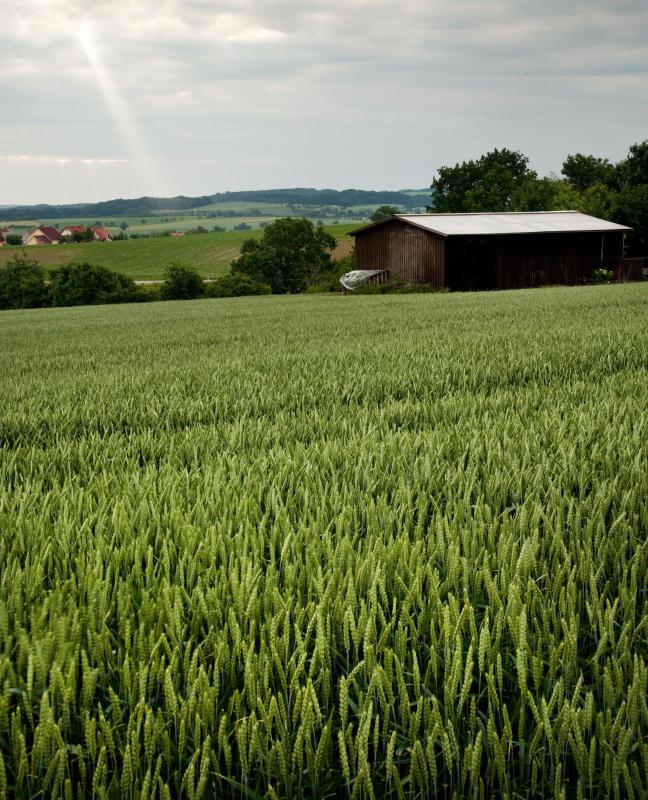
![SOLE food is produced on farms that use sustainable and organic methods.]() By: ValchoSOLE food is produced on farms that use sustainable and organic methods.
By: ValchoSOLE food is produced on farms that use sustainable and organic methods. -
![Many growers are making use of farming and harvesting processes that are sustainable, organic, local and ethical.]() By: Sami KallioniemiMany growers are making use of farming and harvesting processes that are sustainable, organic, local and ethical.
By: Sami KallioniemiMany growers are making use of farming and harvesting processes that are sustainable, organic, local and ethical. -
![Obesity is a public health problem in many wealthy, industrialized countries.]() By: JanMikaObesity is a public health problem in many wealthy, industrialized countries.
By: JanMikaObesity is a public health problem in many wealthy, industrialized countries.



Discussion Comments
@fify-- That's a good question. I think ethical means whatever is ethical for you. So if you're a vegetarian, only a vegetarian diet is ethical for you. For example, some people only eat free-range meat or fair trade products.
SOLE food reminds me of something that my dietitian told me "eat local, think global." She says that local food is fresh, nutritious and more beneficial to us. I guess this is why SOLE food consumers chose this way of eating.
I wish I could eat SOLE, but it's hard. First of all, it costs more to eat that way and it's not easy to track local farmer's markets for groceries.
@John57-- I have also never heard of SOLE before. Has it formed very recently?
I understand the "sustainable," "organic" and "local" aspects of the movement, but I don't really understand "ethical." What is that supposed to mean? "Ethical food" is such a new and foreign concept to me.
If there are any SOLE representatives here, please share with us any information on this.
@anon34478-- Is there even a company associated with SOLE? I don't think so, I think this is mainly a grassroots movement and people decide as individuals if they will follow SOLE or not.
It would be great if supermarket chains got involved, but I doubt that will ever happen. Well, maybe some smaller organic or natural markets might join in. But for the most part, companies are trying to make money and there isn't that much money to be made with organic food.
Organic food is still cultivated narrowly in this country, hence the organic produce prices. Farmers who decide to go the organic way have a difficult time making it. If SOLE succeeds, and I hope it does, it will happen with the support and effort of individual Americans, not companies.
I like the idea of slow food. For so long we have been a fast food society and I think we have seen how unhealthy this has been for us.
It may be a slow process getting people to change the way they eat, but I think we are taking the right steps to start making those changes. Educating people about SOLE food is just one of the ways that can help make a difference.
Buying food at local farmers markets is one way to support local farmers. You also have the chance to visit with the owner and can ask questions about how they grow their crops.
I have found most of them more than willing to answer questions and talk about organic and sustainable food. The number of farmers markets around our area keeps growing and I think this shows that many people are interested in the SOLE food concept. I know I am making much more of a conscious effort to look for SOLE food.
This is an organic farm where they raise vegetables, fruit trees and plants. They don't use any chemicals and sell their products to members of the program or at their country store.
This place is also a home for adults who have autism and the farm gives them a place where they can work and earn some of their own money. I think it is important to show support for programs like this.
I see SOLE food as something that not only benefits everyone involved but the environment as well.
@anon36433-- I have heard the term SOLE food in recent months, but have no idea who first coined the phrase. I think it is something that we will begin to hear more about though.
I like the fact they are taking all four aspects into consideration when they are describing what SOLE food is. I can see how it would be easy to say you are selling organic food but it might not be sustainable, etc.
Do you know who first coined the phrase SOLE Food?
Who regulates what companies are *sole* if anyone? How does a company claim being a *sole* company?
What companies are support *sole* now?
Post your comments