
At DelightedCooking, we're committed to delivering accurate, trustworthy information. Our expert-authored content is rigorously fact-checked and sourced from credible authorities. Discover how we uphold the highest standards in providing you with reliable knowledge.
What is Soba?
 Mary McMahon
Mary McMahon
Mary McMahon
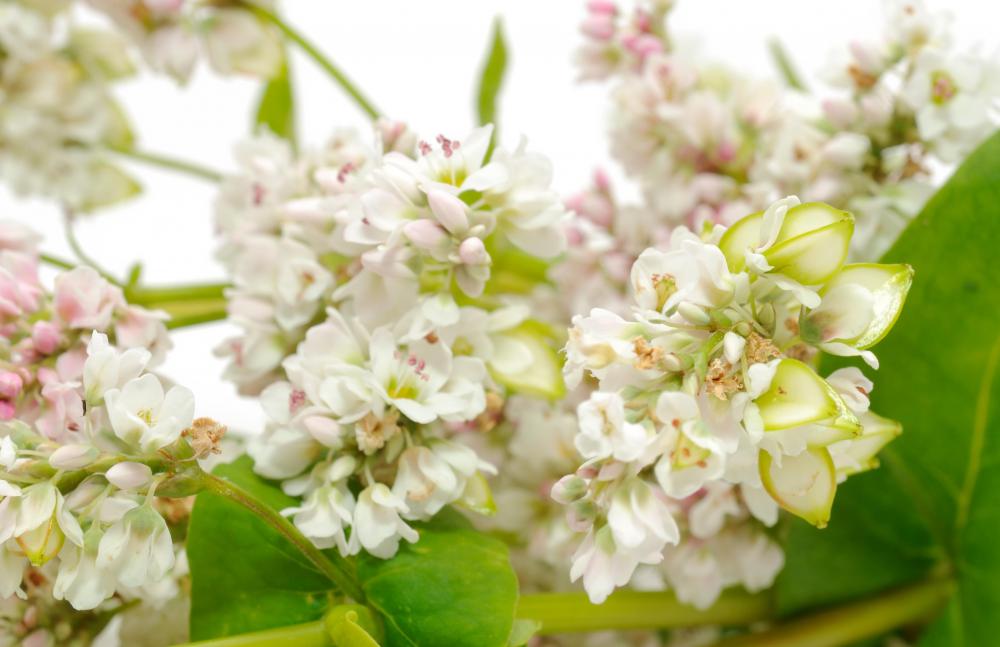
Soba is the Japanese word for buckwheat, although it has come to be used to refer specifically to buckwheat noodles, an integral part of Japanese cuisine. The noodles are served both hot and cold in a variety of dishes and can be found all over Japan. Asian specialty stores also carry them, and many major markets stock it as well. The nutritious and delicious buckwheat noodle has a distinctive taste which is very appealing to some consumers.
The noodles have a brown to grey color, depending on the percentage of buckwheat used to make them. Because pure buckwheat noodles tend to fall apart when cooked, most soba is made with a binder, such as wheat or rice flour. Generally, they are more highly prized if they have a higher buckwheat content. Individuals with gluten intolerance often seek out gluten free soba as a pasta replacement, as buckwheat is naturally gluten free, although they must be careful to make sure that wheat flour has not been mixed in.

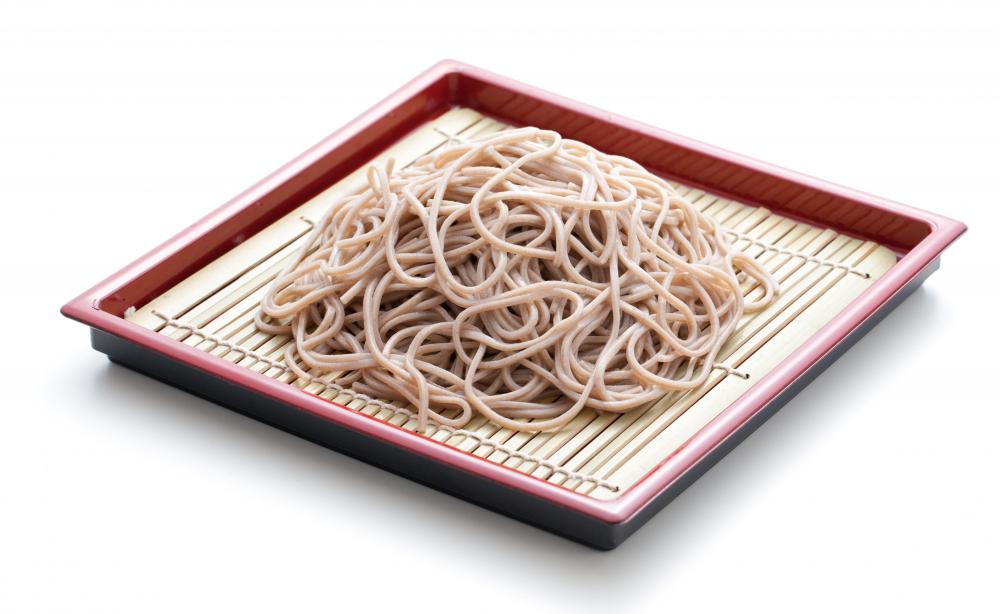
Served cold, soba is a popular summer time dish and is often served as an appetizer before large meals. The most common presentation is zarusoba, cold noodles served with a chilled broth or soy sauce to dip them in. They can also be served with a variety of vegetables and other sauces, and are often found at Japanese restaurants running the gamut from casual to sophisticated. Oroshi soba, another type of cold dish, involves adding cold noodles to a chilled broth to make a cold soup, which can be quite refreshing in the summer.

Soba is also eaten hot in a variety of preparations. The noodles are often served with a topping of fish or vegetables and a side dish of sauce to dip them in. Sometimes, they are added to broth to make a rich and filling noodle soup. They are also delicious plain with a simple sauce and make an ideal quick, tasty, and healthy meal. Some eating establishments mix soba and other noodles such as udon for texture and flavor variation.

Like other types of pasta, soba tastes the best when fresh. To make fresh noodles, buckwheat flour, water, and a binder are mixed together into a smooth, elastic dough. After mixing and resting, the dough is rolled out into a thin square, and cut into fresh noodles. The noodles can be sold fresh if they are going to be cooked within a few days, or they are dried and packaged for longer shelf life.
Mary McMahon
Ever since she began contributing to the site several years ago, Mary has embraced the exciting challenge of being a DelightedCooking researcher and writer. Mary has a liberal arts degree from Goddard College and spends her free time reading, cooking, and exploring the great outdoors.
Learn more...
Mary McMahon
Ever since she began contributing to the site several years ago, Mary has embraced the exciting challenge of being a DelightedCooking researcher and writer. Mary has a liberal arts degree from Goddard College and spends her free time reading, cooking, and exploring the great outdoors.
Learn more...AS FEATURED ON:
AS FEATURED ON:


-
![Soba noodles.]()
Soba noodles. -
![Plate of cooked soba noodles.]()
Plate of cooked soba noodles. -
![Flour from the buckwheat plant is used to make the Japanese soba noodle.]() By: VidadyFlour from the buckwheat plant is used to make the Japanese soba noodle.
By: VidadyFlour from the buckwheat plant is used to make the Japanese soba noodle. -
![Wheat may be used as a binder for soba noodles.]() By: womueWheat may be used as a binder for soba noodles.
By: womueWheat may be used as a binder for soba noodles.


Discussion Comments
There is also a Japanese dish called yakisoba. When I first saw yakisoba on a menu, I though that it was a kind of soba dish because of "soba" in the name. But apparently, it has nothing to do with soba, it's not made with buckwheat noodles.
Yakisoba is made with egg noodles and tastes much different. Soba tastes more plain because it's actually healthier than egg noodles. Yakisoba is fried so that's probably why it tastes better and I've heard it being referred to as the Asian junk food.
I actually like both soba and yakisoba and wouldn't mind eating either one. But I wanted to note the difference for people who want to have buckwheat noodles and not egg noodles. You might get confused and order the wrong one.
I've had hot soba several times at restaurants, but just got to try cold soba recently. I have never been a fan of cold meals, even in the summer and I don't enjoy cold soups much either. But I have to say that I have changed my mind after tasting cold zaru soba.
It was a really hot day when my friend I had some for lunch. It tasted as good as the hot soba I had in winter, but was even better because the sauce and the noodles were cold. It was really filling and I really felt cooler after having it.
Now I know why soba is eaten cold in the summertime and warm in winter. If you are not too sure about trying this like I was, I think you should give it a chance. It's really worth it!
I also really liked how the restaurant served the soba. It was on a plate that was actually a basket. The soba and sauce came separately and we ate it by taking the soba and dipping it in the sauce. It was really interesting and fun to eat!
Soba is an excellent food if you are sick. You can make it with different ingredients like a variety of vegetables and add meat, tofu or eggs in it for protein.
I have a lot of Japanese friends and they all recommend soba for colds and flu. It's a very comforting, but also healthy dish and it guarantees feeling better!
There are a lot of recipes out there for different soba dishes. But I always boil them and then add whatever I feel like having at the moment. Or whatever I can manage to put in it, if I am sick and running out of energy. No matter what though, it always makes me feel better.
You can also get the soba sauce, tsuyu, all ready at Asian stores. So you just have to cook the soba, add any veggies you want and the tsuyu and it's ready to go! It's the best "feel better" food I have had!
Post your comments