
At HomeQuestionsAnswered, we're committed to delivering accurate, trustworthy information. Our expert-authored content is rigorously fact-checked and sourced from credible authorities. Discover how we uphold the highest standards in providing you with reliable knowledge.
What is Slub Yarn?
 Malcolm Tatum
Malcolm Tatum
Malcolm Tatum
As an example of a textile issue that was once considered a defect, slub yarn has proven to be an advantage in some instances. One of the early problems with automated carding and spinning processes was the appearance of an incidental section of the yarn that was fuller than the yarn was intended to be. This soft lump, or slub, would appear from time to time over each run of one thousand linear feet of yarn, and would have to be removed before the material would be ready for warping or twisting. Over time, however, the concept of yarns containing a high count of slubs as a textural and style alternative began to develop.
Yarn used in the production of various types of fabrics and materials often begins life in the form of raw product delivered to the textile plant in large bales. This is true of both natural fibers like cotton as well as synthetic creations like polypropylene and other olefin blends. Using various carding, spinning, and twisting techniques, this raw material is converted into yarn that can then be woven into patterns or used in the creation of sheets of material suitable for the production of clothing, household linens, or upholstery.

Originally, there were standards set in place that established what was considered an acceptable amount of slubbed or nubby yarn for first quality grading and sale. Typically, textile manufacturers would work to adjust or modify their machines in order to make sure the presence of slub yarn remained within acceptable perimeters. Yarn with slubs started to be used to add texture to fabrics, however, and it began to be used in the creation of what was referred to as slubbed silk.

While retaining an overall smooth texture, slub silk also is characterized by what is referred to as roves. Essentially, a rove is an intentional pattern of slub yarn that is produced when spinning and twisting machinery is adjusted to allow the presence of the fuller lumps in the yarn itself. The result is that when the fabric is woven, the slubs form a continuous pattern in the material, often with a very pleasing effect.
Depending on the intention of the manufacturer, slub yarn may be considered a big problem or be an intentional element in fabric design. When producing goods that need to have a high level of durability, such as with upholstery for furniture or car seats, its presence is decidedly a liability that must be addressed. Yarn that is used to create soft material for table lines, window treatments, and other similar projects, however, may include slub for the added visual impact.
Malcolm Tatum
After many years in the teleconferencing industry, Michael decided to embrace his passion for trivia, research, and writing by becoming a full-time freelance writer. Since then, he has contributed articles to a variety of print and online publications, including HomeQuestionsAnswered, and his work has also appeared in poetry collections, devotional anthologies, and several newspapers. Malcolm’s other interests include collecting vinyl records, minor league baseball, and cycling.
Learn more...
Malcolm Tatum
After many years in the teleconferencing industry, Michael decided to embrace his passion for trivia, research, and writing by becoming a full-time freelance writer. Since then, he has contributed articles to a variety of print and online publications, including HomeQuestionsAnswered, and his work has also appeared in poetry collections, devotional anthologies, and several newspapers. Malcolm’s other interests include collecting vinyl records, minor league baseball, and cycling.
Learn more...AS FEATURED ON:
AS FEATURED ON:


-
![Variation in thickness gives slub yarn personality.]() By: star athenaVariation in thickness gives slub yarn personality.
By: star athenaVariation in thickness gives slub yarn personality. -
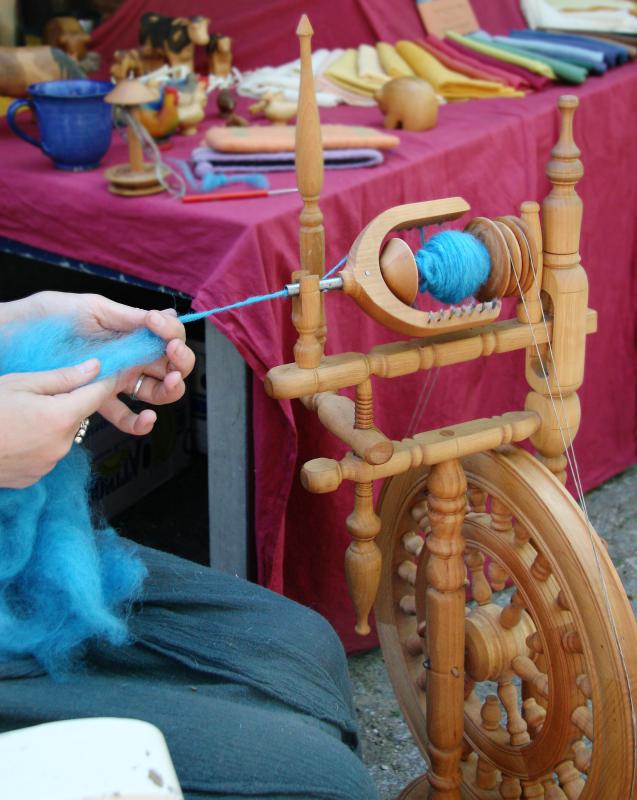
![Yarn is made by spinning fibers together into a single strand.]() By: AmbroseYarn is made by spinning fibers together into a single strand.
By: AmbroseYarn is made by spinning fibers together into a single strand.

Discussion Comments
Hello, does anyone know how to say "slub yarn" in Portuguese?
Type of silk with contrasting coloured warp and weft threads?
Slub yarn is usually thought to be fat places that occur in the yarn, whereas flying yarn is more often used to refer to foreign fibers that work their way into the weave of the yarn - most textile manufacturers make it a point to place barriers between frames of machinery that run yard in order to minimize the amount of flying yarn contamination between lots and merges. Flying yarn and foreign yarn are often used interchangeably.
Any type of fabric, including bamboo yarn, could include slubs or be compromised by flying yarn fibers, if other yarn materials are being ran in close proximity to the bamboo yarn fiber.
what is a flying yarn define?
Is foreign yarn consider a flying yarn?
Can both Slub and foreign yarn consider as flying yarn?
Is all these acceptable as a natural fiber create from Bamboo fabric???
Tks for answer due to encounter this issue on bamboo fabric.
Post your comments