
At WiseGEEK, we're committed to delivering accurate, trustworthy information. Our expert-authored content is rigorously fact-checked and sourced from credible authorities. Discover how we uphold the highest standards in providing you with reliable knowledge.
What is Skin Cancer?
Skin cancer, the uncontrolled growth of skin cells, is one of the most commonly diagnosed forms of cancer. Several different types of skin cancers exist.
Basal cell carcinoma is the most common type of skin cancer. It is a slow growing cancer that normally appears in patients aged 40 or over. Basal cells are normal skin cells that can develop into cancerous cells. Basal cell cancer usually occurs on areas of the body or scalp that are regularly exposed to the sun. People with light skin, hair, and eye color are at greater risk of developing basal cell carcinoma, as are those who have been overexposed to x-rays.

Although this type of skin cancer can spread to nearby tissues, basal cell carcinoma does not normally spread to distant parts of the body. A skin lesion that has a pearl-like or waxy appearance and is flat or slightly raised could indicate a basal cell carcinoma. The lesion could be white or light pink, flesh-colored, or brown, and may contain blood vessels that are visible either in the lesion or nearby skin.

Another warning sign is a sore that won’t heal or a lesion that looks like a scar, but is not related to a skin injury. It is important to see your doctor about any suspicious skin lesion. The border, color, size, and lack of symmetry sometimes indicate a cancerous growth.
Squamous cell carcinoma occurs in the middle layer of the epidermis, or skin. It is more likely to spread to another area of the body and is more aggressive than basal cell carcinoma. It often begins after age 50 and can occur in normal skin or in a burned or injured area.

Melanoma is not as common, but more deadly than other skin cancers. Four types of melanoma exist, and they vary according to the location on the body where they are likely to occur, the age group they affect, and the groups of people most likely affected. Depending on the type of melanoma, surgical removal of the lesion is normally required. More serious forms may require radiation treatments or chemotherapy.

One of the best ways to prevent skin cancer is to avoid the sun’s strongest rays, basically from 10 a.m. to 4 p.m. You should also use a sunscreen daily that has a sun protection factor (SPF) of 15 or higher. Other preventative methods include wearing sunglasses and wide-brimmed hats. Children should be protected with sunscreen and kept out of the midday sun as well. Spending time outdoors, but in the shade, also reduces your chances of getting skin cancer.
AS FEATURED ON:
AS FEATURED ON:









-
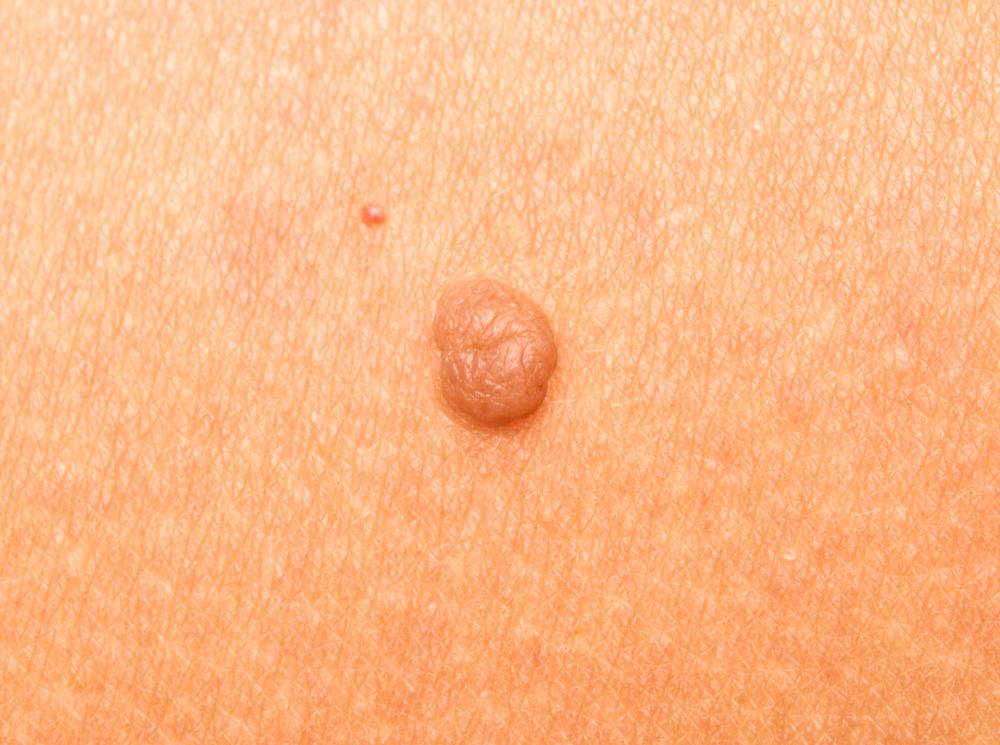
![A skin mole.]()
A skin mole. -
![Parents should dress their children appropriately when they are outdoors as a preventative measure against skin cancer.]() By: Karen RoachParents should dress their children appropriately when they are outdoors as a preventative measure against skin cancer.
By: Karen RoachParents should dress their children appropriately when they are outdoors as a preventative measure against skin cancer. -
![Sunglasses may help protect the skin around the eyes.]() By: javiindySunglasses may help protect the skin around the eyes.
By: javiindySunglasses may help protect the skin around the eyes. -
![Melanoma may require chemotherapy.]() By: Monkey BusinessMelanoma may require chemotherapy.
By: Monkey BusinessMelanoma may require chemotherapy. -
![Skin cancer is one of the most commonly diagnosed forms of cancer.]() By: Deyan GeorgievSkin cancer is one of the most commonly diagnosed forms of cancer.
By: Deyan GeorgievSkin cancer is one of the most commonly diagnosed forms of cancer. -
![Non-melanoma skin cancers are typically classified into two categories: squamous cell and basal cell.]() By: NetwalkerNon-melanoma skin cancers are typically classified into two categories: squamous cell and basal cell.
By: NetwalkerNon-melanoma skin cancers are typically classified into two categories: squamous cell and basal cell. -
![Wearing a sun hat while outside is a good way to prevent skin cancer.]() By: Christian SchwierWearing a sun hat while outside is a good way to prevent skin cancer.
By: Christian SchwierWearing a sun hat while outside is a good way to prevent skin cancer.





Discussion Comments
It is clinically proven that most of the sun damage that can lead to skin cancer occurs before the age of 12. Therefore, you will want to make sure that you put lots of sunscreen on your children before they go out in the sun.
Getting burnt a lot before the age of 12 has been proven to potentially lead to melanoma skin cancer and squamous skin cancer.
beachgirl05- I agree that people should never use tanning beds. Tanning beds are just as dangerous as going out into the sun without sunscreen on.
People should also avoid using baby oil when sun bathing. Some people use baby oil because they think it helps them tan without causing them to burn. However, this is not true. You will still burn.
Individuals should also avoid tanning beds to prevent skin cancer. Many people think that tanning beds are a safe alternative to sun bathing. However, tanning beds use UV rays to help people achieve a tanned looked. UV rays are extremely harmful to the skin and can cause skin cancer after repeated use.
Tanning beds are also very dangerous because you sit very close to the tanning bed bulbs. You sit only a couple of feet away from the bulbs and the skin is fully exposed to the rays. This can cause damage in a very short amount of time.
Post your comments