
At TheHealthBoard, we're committed to delivering accurate, trustworthy information. Our expert-authored content is rigorously fact-checked and sourced from credible authorities. Discover how we uphold the highest standards in providing you with reliable knowledge.
What is Sjogren's Syndrome?
 Tricia Christensen
Tricia Christensen
Tricia Christensen
Sjogren's syndrome is an autoimmune disorder that affects about 1 in 500 people, mostly middle-aged women, who make up about 90% of those affected. The most common symptoms are excessively dry eyes and mouth due to lower tear and saliva production, although other symptoms occur in varying degrees. These can include arthritis, pain in the muscles and nerves, low thyroid function or a swollen thyroid gland, and increased pain or swelling in the lymph nodes. Those affected may also suffer from fatigue and sleep deprivation.
Although Sjogren's syndrome can present alone (primary), it may also be secondary, linked to other autoimmune disorders like lupus and rheumatoid arthritis. Though perhaps caused by several genes, it does not tend to be passed easily from one generation to the next. Other researchers have suggested it is not inherited, but may be brought on after exposure to certain viruses. More research is necessary to confirm the cause.

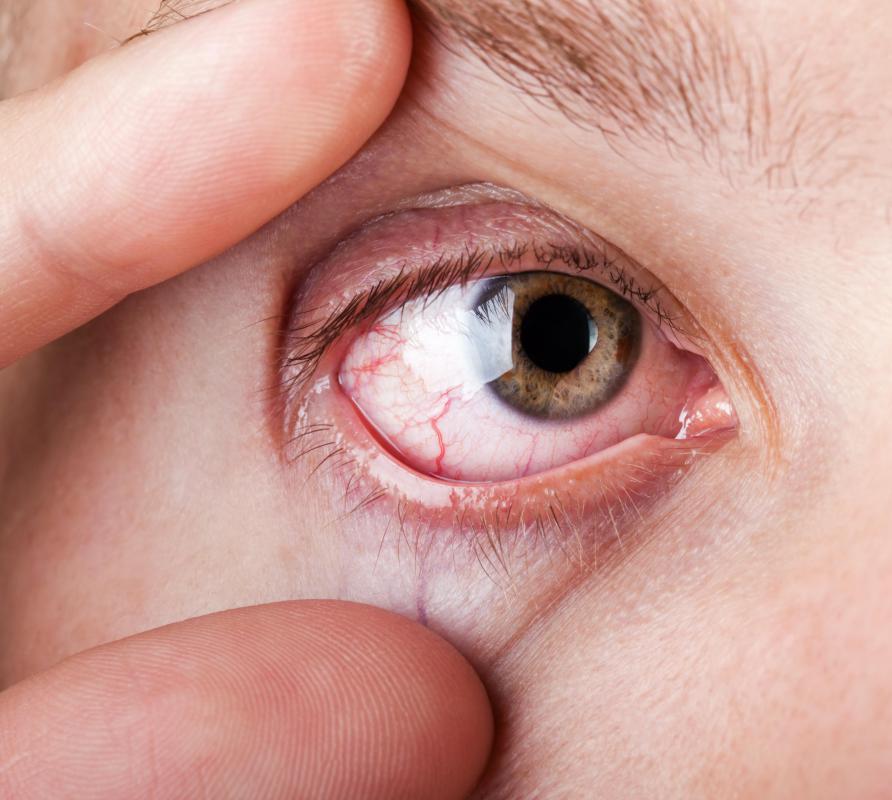
In autoimmune disorders, the body fails to recognize normal body functions and chemical productions. In Sjogren's, the body's white cells attack and fight the natural processes of tear and saliva production. Dry eyes may result in redness, burning, and itching. Dry mouth can increase dental cavities, create very sore throats, and, in more severe cases, can cause difficulty in speaking or in swallowing. Sense of taste may also be reduced.

A diagnosis is often made when secondary Sjogren's is detected. Patients with known autoimmune disorders who present with dry eyes and dry mouth often do not need much additional testing. Medical professionals also screen for patients who use certain medications like tricyclic antidepressants, since these can cause similar effects.
For primary Sjogren's syndrome, an ophthalmologist can examine the eyes and measure the production of tears. In some cases, a biopsy of the inner lip is performed, which can show damage to the salivary glands. Most patients with suspected cases also have blood tests to look for certain chemicals in the blood that cause autoimmune disorders.

As with most autoimmune disorders, this condition has no cure, but there are treatments that can help allay the effects. For dry eyes, the most common method of treatment is artificial tear eye drops. Particular care should be taken to use these in dry air environments, such as on airplanes or in offices that use air conditioning. When artificial tears do not sufficiently address the problem, surgery is occasionally attempted to slow the destruction of the tear-producing glands.

Good oral hygiene is essential. Regular dental cleanings are a must, and toothpastes should contain low levels of peroxide. Reducing intake of liquids that deplete the body of moisture, such as sodas with caffeine or coffee, can also help. In addition, the use of medications that cause dry mouth may need to be evaluated for risk versus benefits.
When other painful symptoms present, anti-inflammatory medications such as ibuprofen or naproxen sodium may be prescribed to alleviate pain. If the disease is seriously affecting the organs of the body, healthcare professionals may prescribe steroids to decrease both pain and possible infection. Sjogren's syndrome patients are also observed for lymphatic cancer, as it tends to occur in about 5% of those affected.

In addition to medications to treat symptoms, patients are generally advised to follow a program of gentle exercise, which can help reduce fatigue and also combat some of the pain associated with swelling in the muscles and joints. Without additional complications like lymphatic cancer, Sjogren's does not affect life expectancy. With appropriate management, many with this disorder do not suffer a reduced quality of life.
Tricia Christensen
Tricia has a Literature degree from Sonoma State University and has been a frequent TheHealthBoard contributor for many years. She is especially passionate about reading and writing, although her other interests include medicine, art, film, history, politics, ethics, and religion. Tricia lives in Northern California and is currently working on her first novel.
Learn more...
Tricia Christensen
Tricia has a Literature degree from Sonoma State University and has been a frequent TheHealthBoard contributor for many years. She is especially passionate about reading and writing, although her other interests include medicine, art, film, history, politics, ethics, and religion. Tricia lives in Northern California and is currently working on her first novel.
Learn more...AS FEATURED ON:
AS FEATURED ON:


-
![The most common symptoms of Sjogren's Syndrome are dry eyes and mouth because the body's ability to produce saliva and tears is reduced.]() By: ia_64The most common symptoms of Sjogren's Syndrome are dry eyes and mouth because the body's ability to produce saliva and tears is reduced.
By: ia_64The most common symptoms of Sjogren's Syndrome are dry eyes and mouth because the body's ability to produce saliva and tears is reduced. -
![While there is no cure for Sjogren's, good oral hygiene is one of the most effective ways to stave off the effects.]() By: Igor MojzesWhile there is no cure for Sjogren's, good oral hygiene is one of the most effective ways to stave off the effects.
By: Igor MojzesWhile there is no cure for Sjogren's, good oral hygiene is one of the most effective ways to stave off the effects. -
![Ibuprofen may be used to relieve the pain and inflammation caused by Sjogren's syndrome.]() By: Geo MartinezIbuprofen may be used to relieve the pain and inflammation caused by Sjogren's syndrome.
By: Geo MartinezIbuprofen may be used to relieve the pain and inflammation caused by Sjogren's syndrome. -
![Sjogren's Sydrome affects about 1 in 500 people, mostly middle-aged women.]() By: Karin & Uwe AnnasSjogren's Sydrome affects about 1 in 500 people, mostly middle-aged women.
By: Karin & Uwe AnnasSjogren's Sydrome affects about 1 in 500 people, mostly middle-aged women. -
![Sjogren's syndrome may cause the lymph nodes to swell.]() By: auremarSjogren's syndrome may cause the lymph nodes to swell.
By: auremarSjogren's syndrome may cause the lymph nodes to swell. -
![A swollen thyroid gland or low thyroid function may be symptoms of Sjogren's syndrome.]() By: nerthuzA swollen thyroid gland or low thyroid function may be symptoms of Sjogren's syndrome.
By: nerthuzA swollen thyroid gland or low thyroid function may be symptoms of Sjogren's syndrome.





Discussion Comments
Does anyone that has Sjogren's have BMS - Burning Mouth Syndrome?
I believe I have this syndrome. I have had a dry mouth (which I mistook for thirst) for what seems forever, and my eyes are tired all the time, as is my body. I find swallowing not particularly hard, but I always feel as if something was left behind on the back of my tongue.
I have aches in my joints to the point where it hurts and I have a lack of appetite. My nerves appear to be changing as I get pins and needles and cold feels like ice, while ice feels like burning. The salivary gland on my left side is swollen and hurts a lot! All these things have been inspected individually and nothing has been found, except I have low D3 and non existent B12. I feel as if I'm going nuts, but think this might be the cause of all these symptoms. What do you think?
I am a 39 year old male and I have been diagnosed with secondary hypogonadism. I take susanton 250 injections every week to boost up my testosterone levels to a normal level. I am currently being tested for Sjogren's as i am still very unwell.
My symptoms are earache, sore glands, burning red eyes, dry throat, dry mouth, burning chest, nausea, joint pain and hot flushes. This has been going on for two years now but at the start, I would get these symptoms for a few weeks, then they would go away for a few months or so, then the months turned to weeks then days and now it is 24/7. Anyone else out there like me?
I was diagnosed with Sjogren's six years ago. I feel like I'm just existing. I was a combat medic and pharmaceuticals sales rep. I raised two children and remained physically fit an active. Now I must hold my head due to severe vertigo. Lymphocytic colitis has manifested along with muscle and joint pain daily.
I empathize with all of you who can't tolerate grocery shopping. Now I have facial numbness and migraines. My old rheumy never connected the dots. She told me Sjogren's had nothing to do with my colitis or skin rashes, but the biopsies proved otherwise. Time for a new doctor.
For so many of us with Sjogren's, daily activities of life have become extremely difficult, if not impossible. Keep sharing your stories and educating others. It's hard because we need every drop of strength to do the simplest tasks. Take care, you are not alone. Also, check into dysautonomia. When Sjogren's attacks the vascular system it can cause problems with blood pressure, heart rate, digestion, vertigo, fainting, etc. I now wear Ted hose at 49 yrs of age. What a fashion statement. You have to laugh to keep from crying.
I am currently going through the processes to diagnose Sjogren's. I produced absolutely no tears with the shimmer test, have a dry mouth, which is now full of broken, decayed teeth, have difficulty swallowing and a tight chest when I walk. I also have asthma, oral allergy syndrome, lichen sclerosis, vitiligo and ehlers danlos syndrome. I also suffer from chronic dizziness, fatigue, painful joints and muscles, hot flushes, intolerance for heat (Am I the only person in the middle of winter to have a short sleeved T shirt on heating off and the patio doors open in middle of freezing temperatures?)
I always have bruises and muscle fatigue. Even brushing my hair can sometimes cause my muscles to burn as if I had been lifting weights. The hospital now testing to see if I have rheumatoid arthritis.
What on earth is going on with my body? I'm really a bit scared.
This is the problem with getting anything done with this miserable disease. Too much sugarcoated fluff that makes it sound like you can overcome this with some eyedrops and a water bottle.
There is so much misinformation that my rheumatologist, of all people, don't think this disease can cause brain involvement or pancreatic involvement -- both of which I suffer with since being diagnosed. I also have nerve damage. My legs feel dead, my feet and hands alternate between pinprick pain, and I have the feeling of uneven rocks lodged under my skin.
And the dryness is anything but minor! People can't swallow, eat and even breathing can be affected when the disease hits the lungs. Sometimes it feels like being wrapped in saran wrap from the inside out. Good god doctors, help us learn from your patients. This illness is terrible.
My Rheumatologist has given me Cytoxan IV, ( chemotherapy) for 10 months. You can read about this treatment on the internet. Ohio State University also does this. All of my juices are back.
I am starting to get sore again, so I will do Cytoxan quarterly for what my doctor thinks may take two years. He then believes I may be cured. This is the only thing that has worked for me. I have tried all of the meds. Prednisone is an essential and I am not too happy about that. I take 5 mg. except for the week of Cytoxan. It works for me.
I was diagnosed with celiac disease in '97 and in August of this year had a positive biopsy for Sjogren's. Since I have been on a strict gluten-free diet since '97, I cannot say it has helped, unless my symptoms would have been worse if I hadn't been on the diet. My Sjogren's has manifested itself as severe neuropathy, fatigue and very dry skin. I am now also experiencing symptoms of Rheumatoid Arthritis. Two yeas ago I could get around pretty well and thought nothing of spending an entire day shopping. Now I have serious mobility problems and can shop for 30 minutes at most. My quality of life has decreased dramatically in two years, which is depressing, and that is giving me another problem to deal with.
I am always open to what others have tried and what has worked and what has not. Thank all of you for your suggestions.
I have Sjogrens and I am so sick of people telling me I am not sick when I am! When I hear people complaining about going to the store, I want to yell, "Hey, I'll go if I can do it just like you do," because when you can walk into a store or jog into a place when you're in a hurry, you don't realize just how much of your life that is, until you're unable to do it any more.
I would give my left eye tooth to be able to walk across a parking lot with out getting dizzy. But wait – I can't give that tooth because it's rotted and broken away, but I can't get that and many others taken out until my breathing is stabilized form the many bouts with pneumonia! Quality of life, my arse! I used to be able to walk to the store, but now I can't even walk across my kitchen!
And forget social functions. Sometimes my throat feels like it is closing up and whatever I am drinking I have to spit out while I'm choking on it! That is way attractive, I'm telling you! I had the same doctor for years who told me I had an autoimmune disease, but then wouldn't listen to what I said was wrong. He tried to give me sea sick medication for my dizzy spells. Like that worked! It made them worse. Then he treated me like he had no clue I could be so sick. Can you say, “new doctor,” boys and girls? And yet he seems to think I can work outside my home.
I am so sick of these fools making boards online and telling me some new textbook idea of what they think this disease it even though they don't have it! I don't need some smart arse punk coming online and telling me how I feel based on information from a 20-cent pamphlet they got from a pharmaceutical company.
It's about time the people in the white coats get those stethoscopes out of their ears and listen to us -- the people with this disease – instead of guessing about some fool has told them! The people on this board and I are the real deal. We are going through this.
I know you meant well by your article, but guess what? I only told the sunshiny half of the story! We have no quality of life. We have to change everything in our lives and not one person except other sufferers of this disease understand what we are going through. I say we start our own support group.
While I appreciate that you are writing about Sjogren's syndrome in the first place, this article would have better served the readership if it had been more thorough regarding multi-system complications of the disease. One reason the disease remains under-diagnosed is the lack of awareness about the extent and variability of signs and symptoms. The average time to diagnosis is over seven years.
I have primary Sjogren's syndrome and, like another commenter, I have experienced seizures and balance problems (brain-based, not due to inner ear). I also have peripheral and autonomic neuropathy, renal impairment, and pancreatic and thyroid involvement. Lymphoma is far from the only life-changing complication of this syndrome. About a third of Sjogren's syndrome patients have these sorts of potentially serious extra-glandular manifestations; glossing over them only creates more misinformation.
My problems got a lot better when I stopped eating food that caused inflammations. Caffeine gave me rheumatic pains in my hands which meant I had to stop drinking coffee and stop eating chocolate.
When I was at my worst, I had red panda rings around my eyes where the skin kept peeling off over and over again and my lips were permanently cracked and bleeding. But since I stopped eating grains and avoided lactose, it's slowly getting better. Reason: When you're gluten intolerant, the bristle thingies in your small intestine retract, which leaves the body unable to absorb the vitamins and minerals it needs and it stops being able to break down the lactose. So eating gluten and drinking milk was preventing my body from healing the small intestine and making my body unable to absorb enough vitamins and minerals for my skin to heal. (The small intestine will usually take 1 1/2- two years to fully recover from the damage, but already after a couple of months on a gluten free diet, people will feel a lot better).
I was unable to even consider looking for a job in December, and now it's February and I feel more like I used to before my Sjogren's got really bad. I don't have to worry about if I will be able to work or whether I will need to convince someone to put me on sick pension at the age of 28 anymore.
So anyone claiming dietary changes can't help at all when in fact they help tremendously, needs to hush. Just because you aren't ready to get better does not give you the right to possibly stop others from getting better.
I'm newly diagnosed this year and really struggling! How long does a flare last and how come I have so many symptoms? I am losing my mobility fast. I believe I have had some symptoms off and on for years, however this time they are not diminishing and I am scared.
Some of my symptoms include: near fainting, hot flashes, severe head pain and headaches,painful throat, glands, ears and extreme pain in eyes. In addition, my entire body is in extreme pain when I walk or move, and this is what is taking away my mobility,
Also, I have severe bladder issues, speech and swallowing issues. The doctor ran tests to see if the disease has spread into my organs and so far I am good. I am waiting for one more test to come back.
I also have fibromyalgia. Will this get better? I've been on placinel, gabapentin for nine weeks now.
@anon143171: True, dietary changes won't "cure" Sjogren's but it can help if you have allergies or sensitivities to certain foods. Both autoimmune diseases and allergies cause inflammation. Therefore, allergies can exacerbate existing inflammation and can increase your white blood cell count, which attack various moisture producing glands. So there is a definite correlation even if you don't have celiac disease.
Also, people of Native American decent have a higher rate of Sjogren's as well as have milk allergies (as I do) and can be less tolerant of wheat products. So people finding dietary changes that help them isn't quackery. It's common sense.
Low grade fevers all the time, hair loss, dry eyes, joint pain, extreme fatigue... I was finally diagnosed with Sjogren's and my doc tried to put me on all these different meds. I came to the internet to research and basically all I found were forums upon forums of women who'd been on all these same meds for years and were still sick as dogs and had no quality of life.
I decided that at 32, I was not going to become a slave to my medicine cabinet and start layering other meds to counteract the side effects from another, etc.
I started thinking, "We are what we eat. It has to be something I'm eating." I found many testimonials about going gluten free and how it helped many women. I had nothing to lose, so I paid Enterolab out of Dallas $400 to test my stool sample for gluten intolerance gene. Turns out I have not one, but two gluten intolerance genes. Since this discovery, I have gone gluten free. The only pills I take now are vitamins and I've never felt better. My hair is back and I have the energy to make it through the day. I am actually starting law school this fall. I never would've had the energy to this before going gluten free.
I cannot recommend going GF enough. I know it won't work for everyone, but if it does work for you, getting your life back and being pill free is the greatest gift you can give yourself! Good luck to you and God bless.
I, like most, find the comment of being able to have a normal life an insult. It is as much as I can do to get out of my bed in the morning.
For many years i have suffered with cronic illness, graves disease,hypoparathyroidism,fibromyalgia, etc.
I am now being tested for Syogren's, and like most i have the dry eyes, dizziness, pain, dry itchy
skin, loss of sensation in my limbs, serious ear problems, etc.
The wheat thing interests me as I blow up like a balloon if I eat it and then go into brain fog.
All quality in life has gone. I now cannot walk very far and this is referred to as a normal quality in life?
Guess what? When in the consulting room you're asked if you're depressed? Yes I'm depressed. I am grieving for what I have lost.
I remember the days when I used to laugh, my laughter has turned to tears, but I can't even cry now. The tears have gone.
Bless you all for sharing your stories. I feel for each and every one of you.
Changing your diet is not going to cure Sjogren's. There is no cure -- period! Don't be fooled by people claiming that changing diets to gluten free or other diets will cure you.
Amen to those who've commented that their quality of life is often not so great with Sjogren's. I have Sjogren's and also moderate lupus, but the Sjogren's symptoms bother me the most.
The fatigue, joint aches, sun-sensitivity, difficulty swallowing, insomnia etc. have lowered my quality of life quite a bit, even with meds. It took five plus years to get diagnosed as well so that interim time was pretty miserable. Wish the doctors could connect the dots faster with these immune disorders.
Recently experienced severe, constant eye pain in my right eye. First I was told it was keratitis and a serious bacterial infection of the eye. Then I was told it was "arthritis of the eye". I was treated with antibiotic eye drops, steroid eye drops and artificial teardrops.
I started researching on my own and came across Sjogren's. The first article I read said that the symptoms of this could include uveitis, optic neuritis, dry mouth. And yes, I had all of those things, plus I have had psoriasis and psoriatic arthritis for 27 and 25 years respectively.
I'm still confused. I don't know if I have Sjogren's or not. But I am wondering why none of my doctors have even thought of that since they all have my complete medical history. I guess my biggest concern is developing some of the more debilitating symptoms because of my history. The illnesses already mentioned are only a small number of the major medical issues I've dealt with over the years. My plan for now is to find out more about natural remedies that help. I've had enough of the toxic medicines.
I have to agree on the quality of life statement. I have Sjrogrens and know a couple of others with it. None of us would say you can have a good quality of life.
I feel tired, run down, muscles are sore. Find I sleep more and depression usually takes over. And when I do get sick it compounds the problem.
I am 37 years old diagnosed with and suffering from Sjogren's syndrome, I am trying to manage it by cutting down on gluten and dairy products, and taking vitamins and collagen.
I use pure honey to sweet my food instead of refined sugars and I exercise at least two days a week. I have been following all this for almost two months. I saw an improvement in RA, still some stiffness in the mornings, but way better. Before, i could not even go to work or even wash my hair; it was terrible.
The dryness of eyes and mouth and hoarseness are still there, but I am hanging on. I do not want to give up. I am still searching for the best.
I loved the idea that changing to a gluten free diet would cure my Sjogren's. As someone who has tried everything, I had to chime in here. Gluten/wheat free did not help me at all.
I do feel better when I refrain from coffee and drink tea instead. Sweeteners from the stevia plant caused me both migraines, and abdominal inflammation.
And nothing feels better that standing in a steam shower until all the hot water is gone. I think the arthritis, fatigue and fibromyalgia are all helped by exercise though it is hard to get started (hire a trainer if you can afford it.)
When no one seems to care, try not to despair, Jesus is still there! Let's keep praying for a cure.
I have the symptoms of sjogren's. Though not diagnosed yet. I have dry eyes, mouth, skin, and neuropathy in the feet. i also have started getting vertigo and dizzy spells.
I have been researching this disease on line for many weeks now. I want to tell everyone what I have discovered. Wheat and gluten makes these symptoms worse. Stop eating wheat. Research Celiac Disease extensively. Do the diet and decide for yourself.
I had cured all my celiac/gluten symptoms, then was advised by a doctor that they could not test me for celiac if i wasn't eating gluten/wheat. i ate it for two months, got tested and the test was negative, but all my symptoms had come back including, but not limited to the symptoms above and narcolepsy, chronic fatigue, joint pain. The eye pain was the worse.
It's then when I started making myself sick for the test that I realized the dry eyes had cleared up but returned upon eating wheat. Now the celiac symptoms are gone but the sjogren's symptoms are hanging on and harder to get rid of this time.
I remain gluten free and am seriously researching kidney, liver and gallbladder cleanses. Researchers don't know what causes many autoimmune diseases such as fibromyalgia, sjogren's or celiac - they say it's genetic. I say it's gluten. Good luck to you. - L
With all due respect and great sympathy for your situation, I cannot say this article assures people or all people of good quality of life. For some people, with management, quality of life remains better. You are suffering two difficult diagnoses at once, for which I am so sorry, and we all know that individual response to disease is just that-- it's individual. An article like this can only give the basics for people who want general information, and I do think I emphasized the issues that can arise from Sjogren's. You paint a very difficult picture of what you manage on a day to day basis and I'm really glad you commented, since that helps readers know there is great variation in cases. My best to you. Tricia EC
As someone who has both Sjogren's and Scleroderma, I found the statements in the above to be insulting. Sjogren's can be extremely debilitating, causing seizures, loss of balance, and the inability to digest food properly. You try slowly starving, struggeling to swallow, walking with a cane, unable to play with your grandchildren. Then tell me how good a quality of life you think Sjogren's allows.
Post your comments