
At WiseGEEK, we're committed to delivering accurate, trustworthy information. Our expert-authored content is rigorously fact-checked and sourced from credible authorities. Discover how we uphold the highest standards in providing you with reliable knowledge.
What is Serum Ferritin?
Ferritin is a protein that stores iron and allows the body to use iron. Serum ferritin is the ferritin that is in a person’s bloodstream. Many healthcare professionals use a blood test to measure the amount in a patient’s blood in order to assess his or her health. Several medical conditions can cause an individual to have high or low levels of ferritin in the bloodstream, and a blood test may be used to monitor the progress of a disease.
A ferritin test can help to confirm an anemia diagnosis and may be used in conjunction with tests that measure the amounts of hemoglobin and hematocrit in an individual’s blood. Some people with certain medical conditions that cause abnormally high amounts of iron in the blood may also need to undergo periodic blood tests. Other tests that may be performed include a tranferrin test, an iron test and a total iron-binding capacity test.

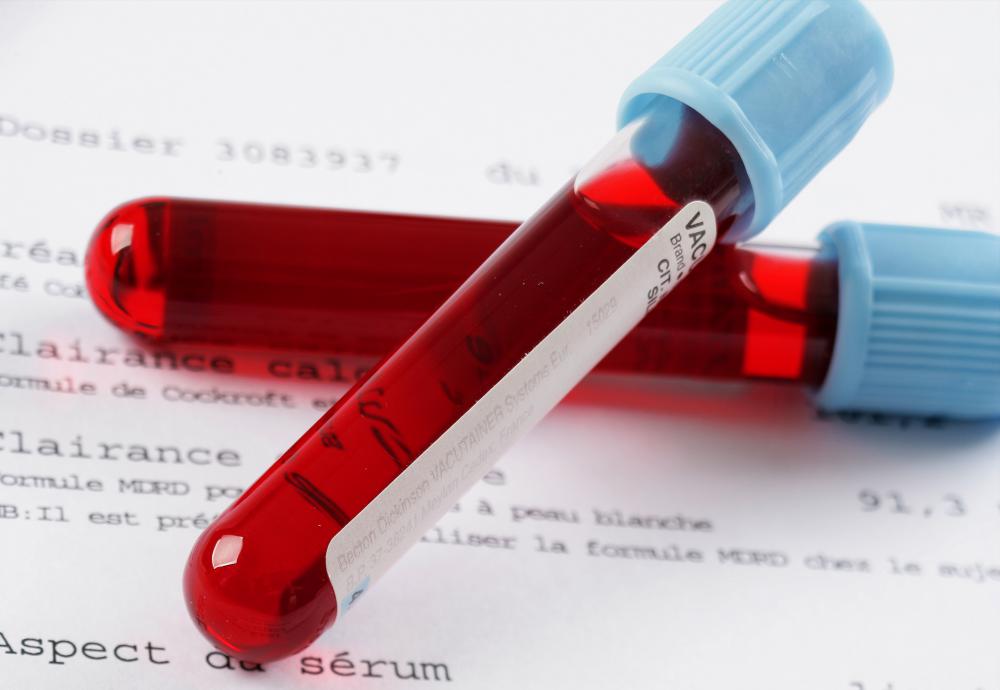
During a serum ferritin test, a healthcare professional typically draws blood from a patient’s vein with a needle, usually from a vein in the back of a hand or the inside of an elbow. The collected blood sample is sent to a laboratory, where the test is conducted and the results are sent to a patient’s doctor. Normal results usually show between 24 and 336 nanograms of ferritin per milliliter of blood for male patients or 11 to 307 nanograms per milliliter for female patients. In some instances, patients with results near the lower end of the normal range may have insufficiently low levels of iron in their bodies.

Patients may develop abnormally high blood levels of ferritin due to frequent transfusions using packed red blood cells or from hemochromatosis or alcoholic liver disease. Infections, leukemia and liver disease can also result in high amounts of this protein in the blood. Diets that are high in iron and inflammatory medical conditions such as lupus and arthritis may also increase the amount in a person’s bloodstream. When high amounts of ferritin cause iron to build up in a person’s heart, pancreas, or other major organs, they may not be able to function well.

Low serum levels of ferritin can result from anemia as well as heavy menstrual bleeding, poor absorption of iron in the intestinal tract, and long-term bleeding in the intestines. Pregnancy and insufficiently low amounts of iron in the diet may also cause a person to have low levels. In some rare instances, people have developed low levels as a result of a loss of iron in urine or from a skin disease such as psoriasis.
AS FEATURED ON:
AS FEATURED ON:









-
![Patients may develop abnormally high blood levels of ferritin due to frequent blood transfusions.]() By: PavlePatients may develop abnormally high blood levels of ferritin due to frequent blood transfusions.
By: PavlePatients may develop abnormally high blood levels of ferritin due to frequent blood transfusions. -
![During a serum ferritin test, a blood sample is taken and sent to a laboratory.]() By: JPC-PRODDuring a serum ferritin test, a blood sample is taken and sent to a laboratory.
By: JPC-PRODDuring a serum ferritin test, a blood sample is taken and sent to a laboratory. -
![Patients suffering with leukemia may have high levels of ferritin in the blood.]() By: FrantabPatients suffering with leukemia may have high levels of ferritin in the blood.
By: FrantabPatients suffering with leukemia may have high levels of ferritin in the blood. -
![High levels of ferritin in the blood may be present in individuals suffering with arthritis.]() By: nebariHigh levels of ferritin in the blood may be present in individuals suffering with arthritis.
By: nebariHigh levels of ferritin in the blood may be present in individuals suffering with arthritis. -
![Pregnancy may result in low serum levels of ferritin.]() By: Valua VitalyPregnancy may result in low serum levels of ferritin.
By: Valua VitalyPregnancy may result in low serum levels of ferritin.




Discuss this Article
Post your comments