
At WiseGEEK, we're committed to delivering accurate, trustworthy information. Our expert-authored content is rigorously fact-checked and sourced from credible authorities. Discover how we uphold the highest standards in providing you with reliable knowledge.
What is Sea Lice?
 Mary McMahon
Mary McMahon
Mary McMahon
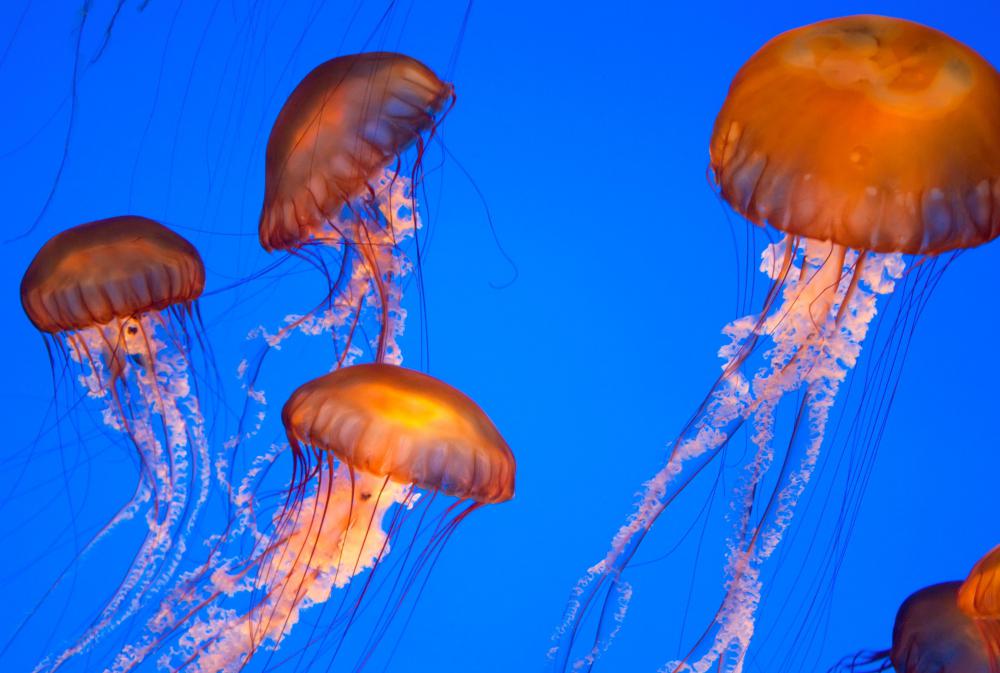
The term “sea lice” is used to refer to two very different groups of marine organisms. In the first sense, they are parasites that attack fish, especially salmon. In the second sense, they are actually the larval form of organisms like jellyfish and sea anemones. Both are of interest to humans, for very different reasons.
In terms of parasites, sea lice can be found attacking fish all over the world. Some fish manage to cope just fine with these copepods attached to them, but smaller fish are vulnerable. If a parasitic infestation is severe enough, the lice can cause an infection or even kill the host organism. They are an especially common problem with farmed fish, leading some producers to use specialty chemicals in the water to deter them from their fish. Fish that escape from farms can also carry a payload of parasites that infect native fish species.

The “sea lice” of interest to swimmers are the larvae of marine animals with stinging cells, also known as nematocysts, which cause problems for humans when they brush up against divers, swimmers, and sea bathers. These tiny organisms can pack a formidable punch, even though they are only babies, and they can generate nasty rashes and welts along with an itching and burning sensation. In regions where these young marine organisms are especially common, periodic sea lice advisories may be posted to warn bathers.

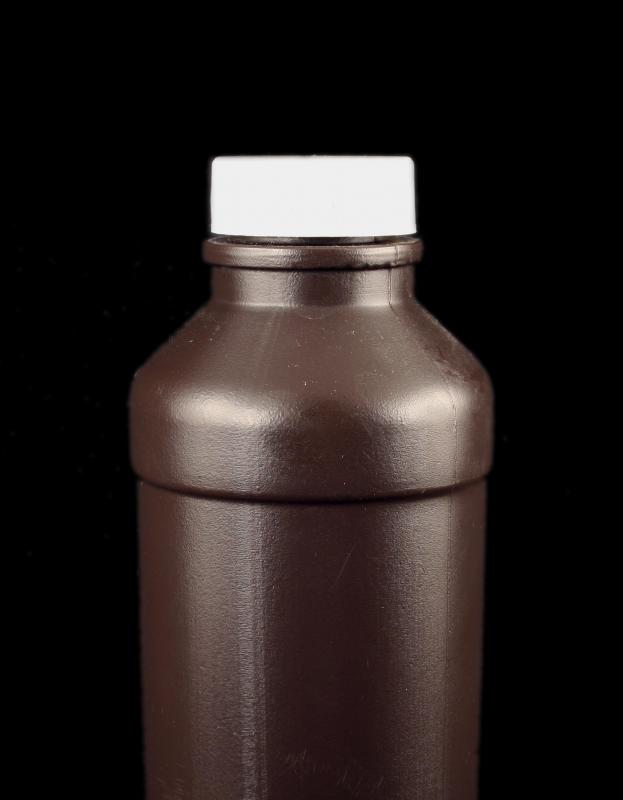
For humans, sea lice are primarily annoying. The rash and welts can be treated with a mild soap and water wash, or a hydrogen peroxide rinse, and follow up monitoring to check for signs of infection. Some people also like to use soothing creams or gels to ease the itching and burning sensation. Most people recover from the stings without additional medical treatment.

The best way to deal with sea lice is to avoid them, which is easier said than done. They are microscopic, and impossible to detect without a microscope until the characteristic skin rash arises. Public beaches are often monitored for these hazards so that advisories can be posted, alerting people to the fact that they may want to stay out of the water. In the case of people who have experienced violent reactions to jellyfish stings, staying out of the water altogether in spring and summer, when the presence of these organisms tends to peak, may be a good idea.
Mary McMahon
Ever since she began contributing to the site several years ago, Mary has embraced the exciting challenge of being a WiseGEEK researcher and writer. Mary has a liberal arts degree from Goddard College and spends her free time reading, cooking, and exploring the great outdoors.
Learn more...
Mary McMahon
Ever since she began contributing to the site several years ago, Mary has embraced the exciting challenge of being a WiseGEEK researcher and writer. Mary has a liberal arts degree from Goddard College and spends her free time reading, cooking, and exploring the great outdoors.
Learn more...AS FEATURED ON:
AS FEATURED ON:









-
![Hydrogen peroxide provides relief from the rash associated with sea lice.]() By: Jim MillsHydrogen peroxide provides relief from the rash associated with sea lice.
By: Jim MillsHydrogen peroxide provides relief from the rash associated with sea lice. -
![The term 'sea lice' may refer to the larval form of jellyfish.]() By: Dmitry LobanovThe term 'sea lice' may refer to the larval form of jellyfish.
By: Dmitry LobanovThe term 'sea lice' may refer to the larval form of jellyfish. -
![Producers of farmed fish, such as salmon, may put chemicals in the water where the fish live to prevent sea lice.]() By: pilipphotoProducers of farmed fish, such as salmon, may put chemicals in the water where the fish live to prevent sea lice.
By: pilipphotoProducers of farmed fish, such as salmon, may put chemicals in the water where the fish live to prevent sea lice. -
![Public beaches are often monitored for the presence of sea lice in the water.]() By: AntonioguillemPublic beaches are often monitored for the presence of sea lice in the water.
By: AntonioguillemPublic beaches are often monitored for the presence of sea lice in the water.


Discussion Comments
@stormyknight: There is no risk to humans for eating fish with sea lice or to eat fish that have been treated for sea lice. Sea lice live on the outside part of the fish and they feed on the mucus on the skin of the fish. Usually, the lice fall off or are cleaned off during harvesting before the fish ever reaches the consumer.
@momothree: Will eating salmon infected with sea lice make me sick? Or how about the salmon that have been treated with the chemicals?
@googie98: There is something called Emamectin benzoate, also known as SLICE, that was available under the Emergency-Drug Release (EDR) to control the massive numbers of sea slice on Atlantic salmon farms. It has since been approved for sale in Canada.
SPLICE is orally administered and it delivered to the salmon through fish feed. It targets the immature, developing, and adult stages of sea lice, removing them from the fish.
How do you get rid of sea lice?
Post your comments