
At WiseGEEK, we're committed to delivering accurate, trustworthy information. Our expert-authored content is rigorously fact-checked and sourced from credible authorities. Discover how we uphold the highest standards in providing you with reliable knowledge.
What is Sage?
 Mary McMahon
Mary McMahon
Mary McMahon
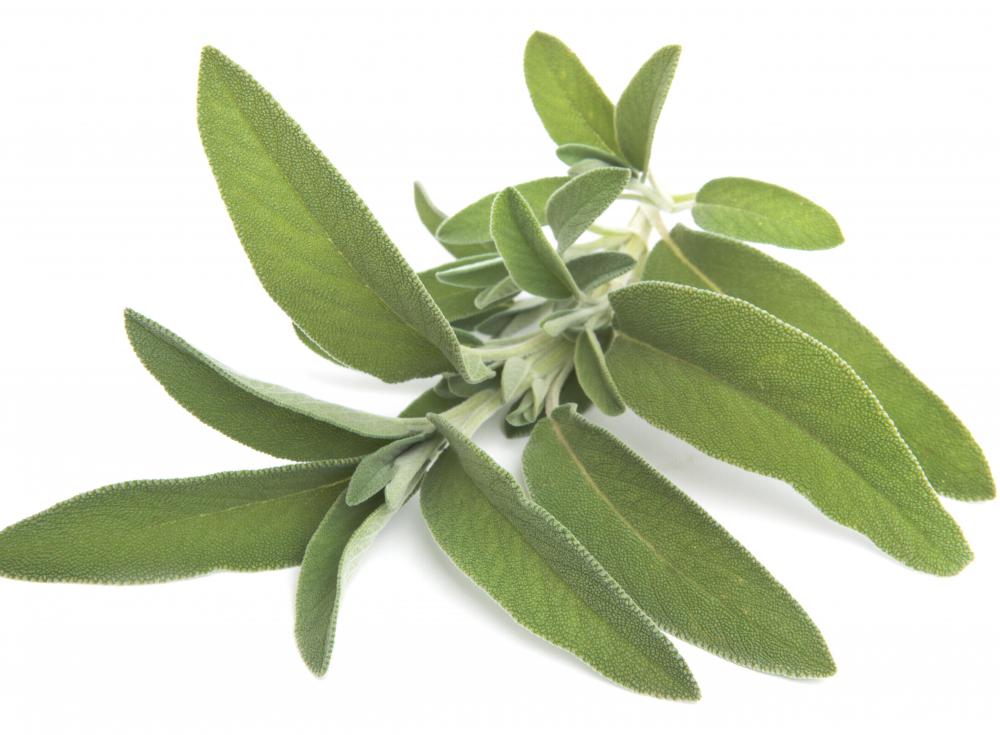
Sage is an herb with oblong gray-green leaves that are used in cooking and herbal medicine. The herb has a pungent, mildly astringent, slightly bitter to peppery flavor that accents many foods, including roasts, soups, savory sauces, and stuffing. It is also used in extracts and teas to improve digestive problems and to help regulate the menstrual cycle. Extracts and concentrated sage should be avoided by pregnant women, as the herb stimulates uterine contractions, and by people prone to convulsions and seizures, as it contains a compound which can cause convulsions. Studies have also shown that sage has a compound which may enhance memory, although large amounts of it would need to be consumed.
There are hundreds of species of sage in the Salvia genus, but the version most frequently used in cooking is Salvia officinalis. This variety is native to Southern and Eastern Europe, and has been included in regional European cuisine for centuries. In addition, sage is widely cultivated in other parts of the world as a seasoning, and it is readily available in dried form at most markets. Stores with a selection of fresh culinary herbs usually also carry fresh leaves, although it is one of the few culinary herbs that actually has a more intense and concentrated flavor after drying. If cooks purchase dried sage, they should keep it in a cool dark place in an airtight container to keep it flavorful.

Whole sage leaves can be included in foods to add flavor and texture, or the herb can be used in a crushed or powdered form. In either case, it should be used with discretion, because the flavor can be intense, and a mildly flavored dish can be overwhelmed by the bitterness in sage, which varies depending on the season and what variety is being eaten. This herb is especially excellent with fatty cuts of meat, and can be included with roasts, pan fried, barbecued, or used as a rub along with a mixture of other spices.

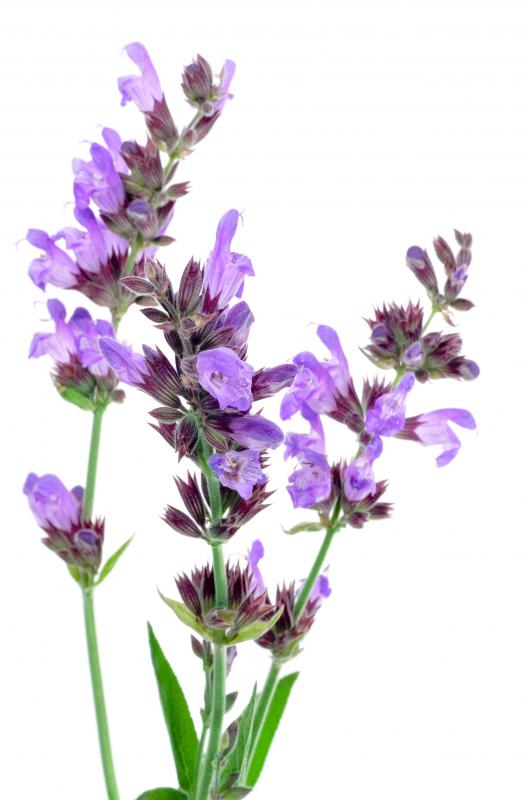
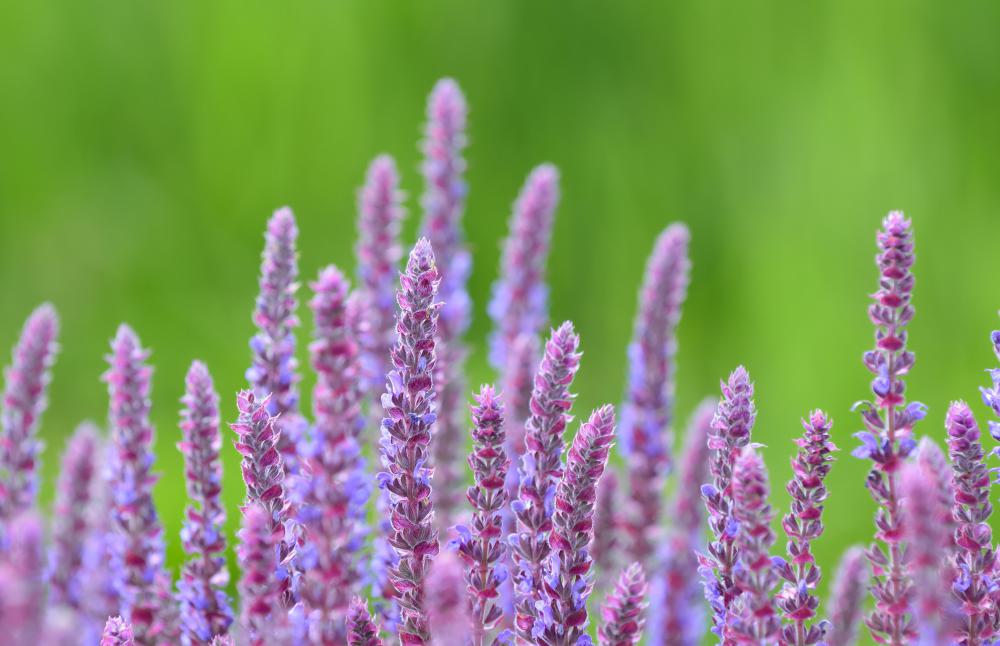
Sage is relatively easy to grow, and will thrive in most environments as long as it is in sunny, well drained soil. The plant prefers to dry out completely before it is watered again, and the low bush will produce purple flowers in the height of summer. Because sage is a perennial, it will return year after year, although it may start to look slightly weedy in the fall; it can be trimmed back closer to the ground for winter when gardeners winterize the garden.
Mary McMahon
Ever since she began contributing to the site several years ago, Mary has embraced the exciting challenge of being a WiseGEEK researcher and writer. Mary has a liberal arts degree from Goddard College and spends her free time reading, cooking, and exploring the great outdoors.
Learn more...
Mary McMahon
Ever since she began contributing to the site several years ago, Mary has embraced the exciting challenge of being a WiseGEEK researcher and writer. Mary has a liberal arts degree from Goddard College and spends her free time reading, cooking, and exploring the great outdoors.
Learn more...AS FEATURED ON:
AS FEATURED ON:









-
![Sage can be used as an accent to flavor many foods including roasts, soups and stuffing.]() By: Irina BelousaSage can be used as an accent to flavor many foods including roasts, soups and stuffing.
By: Irina BelousaSage can be used as an accent to flavor many foods including roasts, soups and stuffing. -
![The Salvia genus contains many varieties of sage.]() By: nitoThe Salvia genus contains many varieties of sage.
By: nitoThe Salvia genus contains many varieties of sage. -
![Sage is a perennial that appears in a variety of colors and is often used as a spice and herbal medicine.]() By: matka_WariatkaSage is a perennial that appears in a variety of colors and is often used as a spice and herbal medicine.
By: matka_WariatkaSage is a perennial that appears in a variety of colors and is often used as a spice and herbal medicine. -
![The low bush of sage will produce purple flowers in the summer.]() By: NooThe low bush of sage will produce purple flowers in the summer.
By: NooThe low bush of sage will produce purple flowers in the summer. -
![Sage is used to help regulate the menstrual cycle.]() By: blueringmediaSage is used to help regulate the menstrual cycle.
By: blueringmediaSage is used to help regulate the menstrual cycle. -
![Pregnant women should avoid sage extract.]() By: pedrosalaPregnant women should avoid sage extract.
By: pedrosalaPregnant women should avoid sage extract.



Discussion Comments
where can i find sage?
In some Mediterranean countries, where sage grows freely in nature, the custom used to be to use cut sage, together with other local plants, during some religious holiday processions. Little girls would carry baskets of sage and other plants and throw these fragrant concoctions on the ground in front of the procession.
Post your comments