
At WiseGEEK, we're committed to delivering accurate, trustworthy information. Our expert-authored content is rigorously fact-checked and sourced from credible authorities. Discover how we uphold the highest standards in providing you with reliable knowledge.
What is Saccharin?
As diabetics are advised to cut down on their sugar intake, they have appealed to science for help in finding an artificial sweetener. Saccharin, one of the oldest, has been on shelves for many years, sweetening candy, cookies, soft drinks and other foods.
Saccharin was discovered accidentally in 1879 by Ira Remsen and Constantin Fahlberg, researchers at Johns Hopkins University. They were experimenting with toluene and discovered its sweetness while eating shortly thereafter--they had not washed it all off their hands.

Saccharin is 300 times sweeter than sugar, which means only a little is needed for sweetening. However, like most artificial sweeteners, it has an unpleasant, bitter aftertaste. It is stable when heated, which means it is good for cooking. It also passes through the body without having any impact on the blood sugar levels, making it ideal for diabetics. It is a complex mix of elements such as calcium, sodium, hydrogen and oxygen, all combining to make the substance.

In the middle 1970s, a great controversy arose over saccharin: was it a cancer-causing agent? A now infamous study with rats made a case for saccharin as a carcinogen. A debate had gone back and forth for years over the safety of saccharin, but this study prompted the U.S. Food and Drug Administration to put warning labels on all products containing the substance.

Although these fears have not been borne out by further studies, the controversy did prompt the scientific community to look for other, safer forms of artificial sweeteners. One notable success was aspartame, which has been popular for about 20 years. The most recent artificial sweetener to hit the market has been sucralose, often carrying the Splenda brand name. These sweeteners do not have as much aftertaste as saccharin and sucralose is also stable when heated.

Saccharin is still widely used, often with other artificial sweeteners, and they work to cancel out each other's weaknesses. Since the studies have not confirmed a carcinogenic link with saccharin, the warning labels have been removed. Saccharin is still valuable in helping diabetics eat a more palatable diet, without harming their health.
AS FEATURED ON:
AS FEATURED ON:









-
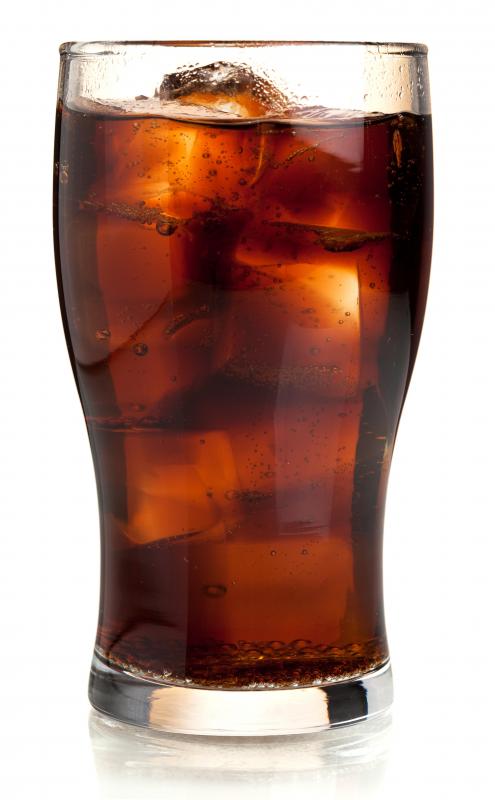
![Soda may be flavored with saccharin.]() By: karandaevSoda may be flavored with saccharin.
By: karandaevSoda may be flavored with saccharin. -
![A study with rats made a case for saccharin as a carcinogen.]() By: lculigA study with rats made a case for saccharin as a carcinogen.
By: lculigA study with rats made a case for saccharin as a carcinogen. -
![Some people opt to use stevia, a natural product, in lieu of saccharin when sweetening coffee.]() By: al62Some people opt to use stevia, a natural product, in lieu of saccharin when sweetening coffee.
By: al62Some people opt to use stevia, a natural product, in lieu of saccharin when sweetening coffee. -
![The majority of a diabetic's diet should be composed of unprocessed foods, although the occasional sugar substitute is OK for most people.]() By: Gordan JankulovThe majority of a diabetic's diet should be composed of unprocessed foods, although the occasional sugar substitute is OK for most people.
By: Gordan JankulovThe majority of a diabetic's diet should be composed of unprocessed foods, although the occasional sugar substitute is OK for most people. -
![Some diabetics use low-glucose saccharin as a sweetener.]() By: dalaprodSome diabetics use low-glucose saccharin as a sweetener.
By: dalaprodSome diabetics use low-glucose saccharin as a sweetener.


Discussion Comments
@Suntan12 -I agree but I can understand how people want to limit their risks of cancer. I did want to say that they have done studies with people that eat a lot of foods with artificial sweeteners and they have said that it actually makes people eat more.
I don’t know if the saccharin side effects that cause an increase in appetite or people think because something is sugar free they are allowed to eat more of it.
Either way I just stick with plain old sugar. I put a little in my coffee and it tastes great. While other substitutes for sugar will work for me, I personally don’t like the taste.
The only time that I drink anything with an artificial sweetener is when I drink a diet soda. I have gotten so used to the taste that I can’t drink regular soda because it is too sweet.
I am always looking for a substitute for sugar whenever I can, and I really like the taste of sucralose saccharin. It does not give me any side effects and it tastes great.
I know that there have been studies on saccharin dangers but in actuality in those tests the rats were given so much saccharin at a time that it would be impossible to have that much saccharin in a lifetime.
If that were the case then most diabetics would have cancer because they probably ingest more foods with saccharin than the average person and we don’t see that happening.
I think that the link of saccharin and cancer is really overrated.
what the...? how come i never heard of this saccharin stuff? i mean wow! look at what it does! that is so amazing!
I have heard so many conflicting stories about aspartame, one is that it is a man made chemical. I am concerned about it because my diabetic drinks diet drinks containing aspartame. Is it dangerous for her in the long run?
Post your comments