
At HomeQuestionsAnswered, we're committed to delivering accurate, trustworthy information. Our expert-authored content is rigorously fact-checked and sourced from credible authorities. Discover how we uphold the highest standards in providing you with reliable knowledge.
What is Rug Yarn?
 Mary Elizabeth
Mary Elizabeth
Mary Elizabeth
Rug yarn is the name for several different things. First, it is the term used for a specific type of yarn, usually a thick, 3-ply yarn often chosen by crafters for making rugs, though 4-ply and 6-ply yarns also exist. Rug yarn is in the bulky class of yarn, category 5 as defined by the Craft Yarn Council of America (CYCOA). Yarn of this description is often wool, acrylic, cotton-rayon blend, and polyester, but crafters can also find alpaca and mohair-wool blend.
The term can also be applied generically to any yarn used to make rugs. Used this way, the term can include yarns with different characteristics from those described above. Tapestry yarn, a 4-ply tightly twisted yarn, is often used in rug making, as is Rya yarn, a 2-ply yarn with a ropelike twist, and Lopi, a traditional Icelandic 1-ply wool yarn. The important factor, if the crafter is using a pattern, is to match the knitting gauge recommended.

Rug yarn also comes in several novelty styles, though less variety is found in yarns with this label than in yarns meant for, say, socks and sweaters. One novelty form is glitter yarn, and flake and nub yarns are also available. Color is another area in which rug yarn has a bit less variety than some other weight yarns. Natural, undyed yarn is available, along with a wide variety of colors, including some heathered colors. Some natural yarns may accept dyes.

Another factor to be aware of is that while some rug yarns are designed for for hand-crafted rugs made by punch needle, latch hook, or Rya stitch, others are created specifically for loom weaving. Products for loom weavers include cotton warp, a linen/cotton blend called cottolin, linen warp, wool warp, and seine twine, also used for warp. Both yarns made for hand work and those made for loom weaving may be used on knitting machines, but it is a good idea to check the manufacturer’s recommendations.

Note, however, that even the rug yarn specifically made for rugs is not limited to that use. It can be used for making other products, such as hot pads, hats, afghans and other throws, and knitting garments. Other crafts, such as crochet, macramé, and collage, can also be made with this type of yarn.
Mary Elizabeth
Mary Elizabeth is passionate about reading, writing, and research, and has a penchant for correcting misinformation on the Internet. In addition to contributing articles to HomeQuestionsAnswered about art, literature, and music, Mary Elizabeth is a teacher, composer, and author. She has a B.A. from the University of Chicago’s writing program and an M.A. from the University of Vermont, and she has written books, study guides, and teacher materials on language and literature, as well as music composition content for Sibelius Software.
Learn more...
Mary Elizabeth
Mary Elizabeth is passionate about reading, writing, and research, and has a penchant for correcting misinformation on the Internet. In addition to contributing articles to HomeQuestionsAnswered about art, literature, and music, Mary Elizabeth is a teacher, composer, and author. She has a B.A. from the University of Chicago’s writing program and an M.A. from the University of Vermont, and she has written books, study guides, and teacher materials on language and literature, as well as music composition content for Sibelius Software.
Learn more...AS FEATURED ON:
AS FEATURED ON:


-
![Rug yarn refers to the types of yarn used to create rugs, including acrylic.]() By: Max TacticRug yarn refers to the types of yarn used to create rugs, including acrylic.
By: Max TacticRug yarn refers to the types of yarn used to create rugs, including acrylic. -
![Some rug yarns are specifically made for loom weaving.]() By: oscar williamsSome rug yarns are specifically made for loom weaving.
By: oscar williamsSome rug yarns are specifically made for loom weaving. -
![Four-ply tapestry yarn can be used to make rugs.]() By: JMFontechaFour-ply tapestry yarn can be used to make rugs.
By: JMFontechaFour-ply tapestry yarn can be used to make rugs. -
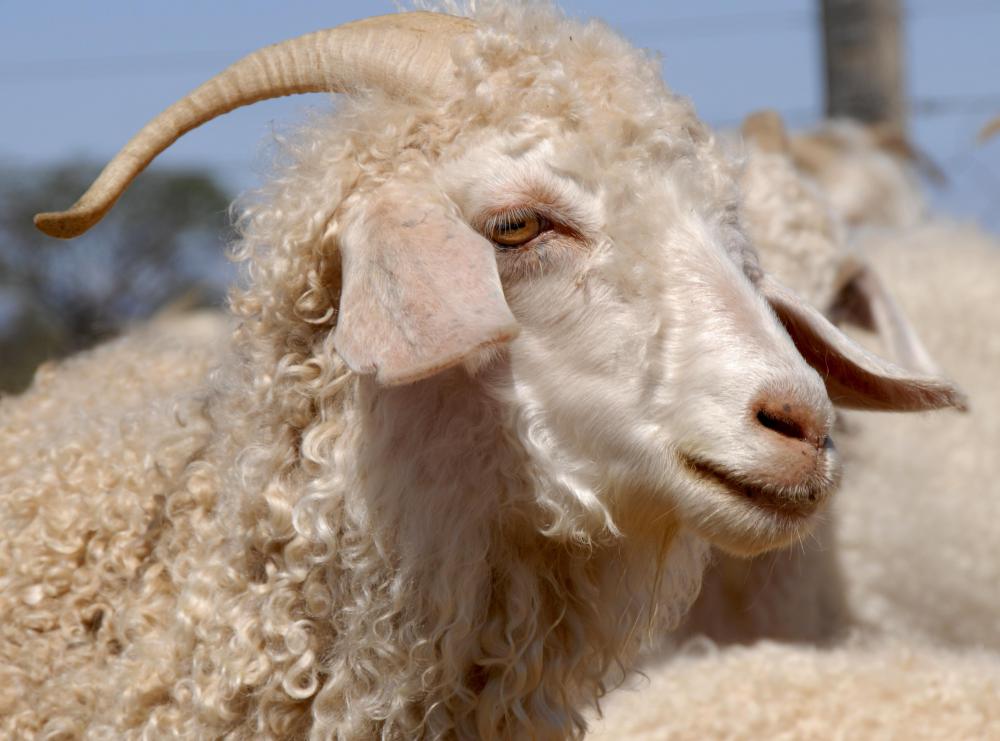
![Mohair, produced from the hair of angora goats, may be used to make rug yarn.]() By: blackcurrentMohair, produced from the hair of angora goats, may be used to make rug yarn.
By: blackcurrentMohair, produced from the hair of angora goats, may be used to make rug yarn.


Discussion Comments
Does anyone know where I can find books to work with rug yarn?
Seeking pre-cut latch hook yarn 4-ply wool. Repairing old Skilcraft latch hook rug (loon design)
I'm having trouble finding what yarn to use for punch needle rug hooking. And also what is the best ply of yarn to use for punch needle rug hooking? Please help.
I am looking for yarn for making navajo rugs. authentic yarn, one ply. does anyone know where i can find some?
I am having trouble finding what yarn to use for punch needle rug hooking. Please help.
How many strands of a worsted weight 3 ply yarn (and also 4 ply yarn) would equal one strand of Aunt Lydia Lion Brand rug yarn?
anon57
I have an old pattern for an Irish crochet rug that calls for 34 skeins of Reynolds Tapis Pingouin Rug Yarn (1 3/4 oz. skein). This yarn is no longer made, and I cannot find a description of the characteritics of the yarn. Do you know what yarn(s) would be a good substitute?
Post your comments